
Pharmaceutical advertising is the promotion of prescription or over-the-counter medicines to patients, caregivers, or healthcare professionals in ways that inform demand while staying aligned with evidence, labeling, and disclosure rules across channels such as TV, websites, search, point-of-care media, and social. This guide is for U.S. pharma brand teams, omnichannel leads, commercial ops and CRM owners, and agency partners who need a practical view of the rules, the main ad types, and how to execute compliant HCP and patient campaigns.
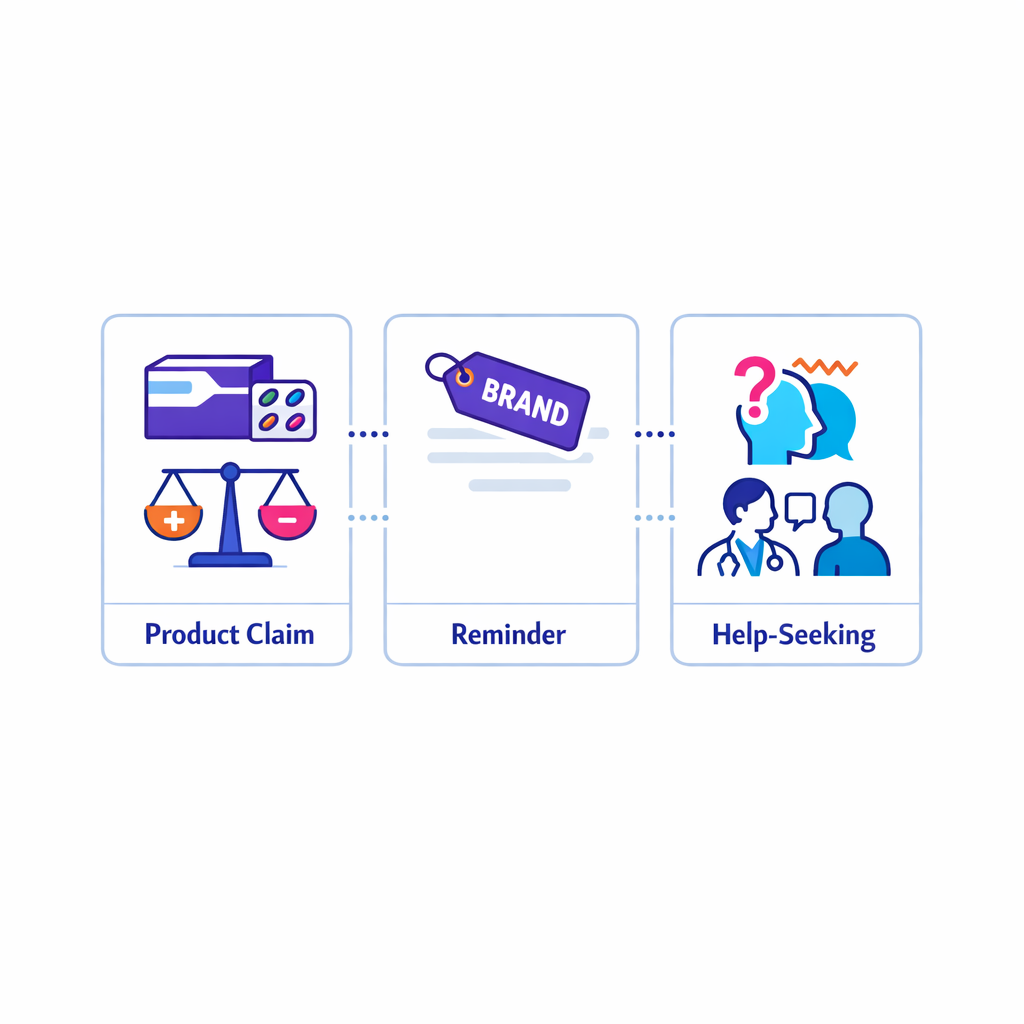
- Product claim ads name a drug and make claims about what it treats or how it works.
- Reminder ads name a drug but avoid a use claim and work in a much narrower lane.
- Help-seeking ads focus on a condition or symptoms and encourage people to seek care without naming a specific prescription brand.
Is it illegal to advertise pharmaceuticals?
No. In the United States, pharmaceutical advertising is allowed, but the rules change based on the product type, the audience, the claim type, and the channel. That is why compliant pharma advertising feels less like ordinary media buying and more like coordinated brand, regulatory, medical, legal, and operational execution.
What is pharmaceutical advertising?
Pharmaceutical advertising definition
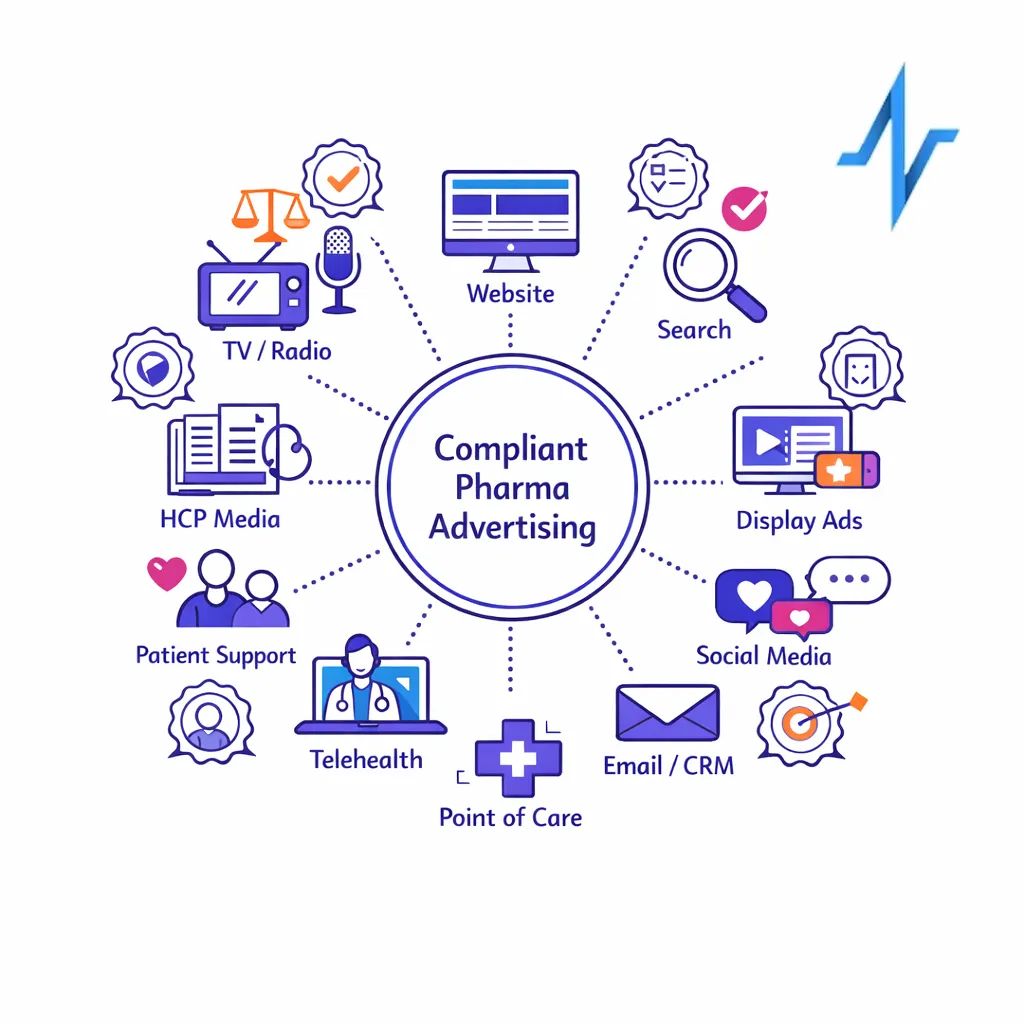
At a working level, pharmaceutical advertising includes any paid or controlled promotional message designed to influence awareness, consideration, discussion with a clinician, prescribing, persistence, or enrollment into a support path. It is broader than TV commercials. It also includes websites, paid search, display, email, point-of-care placements, online video, programmatic HCP media, and paid social when the content is promotional rather than purely educational.
That matters because pharma teams do not just manage creative. They manage the claim path from first impression to landing page, form fill, rep follow-up, CRM nurture, and measurement. A message that is compliant in a long-form page may not be compliant when compressed into a six-second video or a tight search format.
Prescription vs OTC advertising
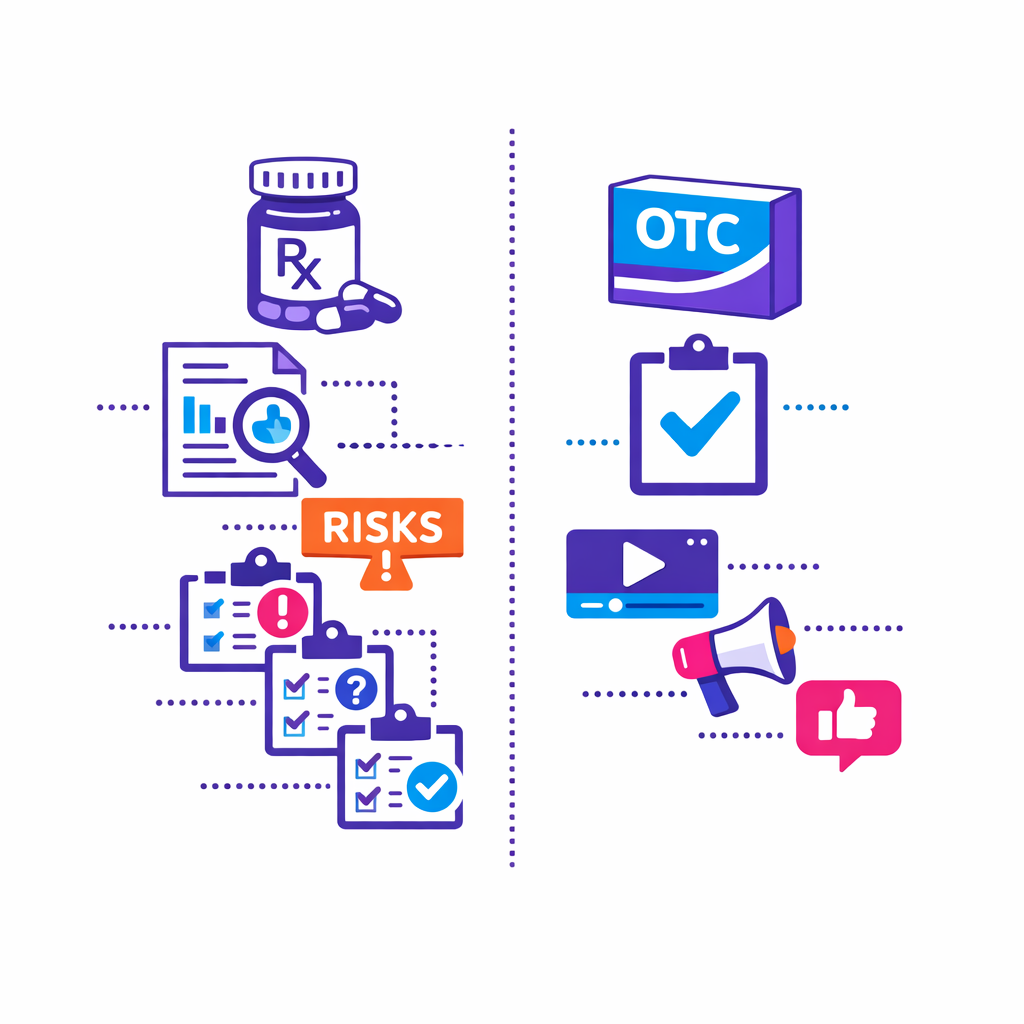
Prescription and OTC campaigns can sit on the same media plan, but they do not move through the same compliance path. Prescription brands carry the heavier burden because each benefit claim has to stay tightly linked to the approved label and the risk story. OTC campaigns still need evidence and substantiation, but the operating model is usually closer to consumer health marketing than to prescription drug promotion.
DTC vs HCP promotion
Direct-to-consumer promotion is built for patients and caregivers, so plain language, channel accessibility, and prominent risk communication matter more. HCP promotion can be more technical and data-heavy, but it still has to be accurate, balanced, and appropriate for the format. The practical difference is not whether compliance matters. It is how much clinical detail, targeting logic, and follow-up orchestration the audience can reasonably support.
Why pharmaceutical advertising is different from other industries
Why U.S. policy stands out globally
Pharma advertising draws more scrutiny than most categories because it blends consumer-style media with product claims that sit on top of clinical evidence, labeling limits, and safety obligations. That tension shapes everything from creative brief language to audience selection, landing-page architecture, and measurement design. A campaign can be commercially sharp and still fail if the total impression makes the benefit feel bigger, broader, faster, or safer than the evidence supports.
Why pharma ads face stricter scrutiny
For pharma teams, the creative unit is never just the ad. It is the ad, the landing experience, the audience logic, the approved claims library, the review record, and the internal proof that the same message was not stretched differently in each channel. That is why omnichannel execution in pharma usually depends on tighter governance than retail, finance, or most B2B campaigns.
Main rules that govern pharmaceutical advertising
FDA and OPDP oversight for prescription drugs
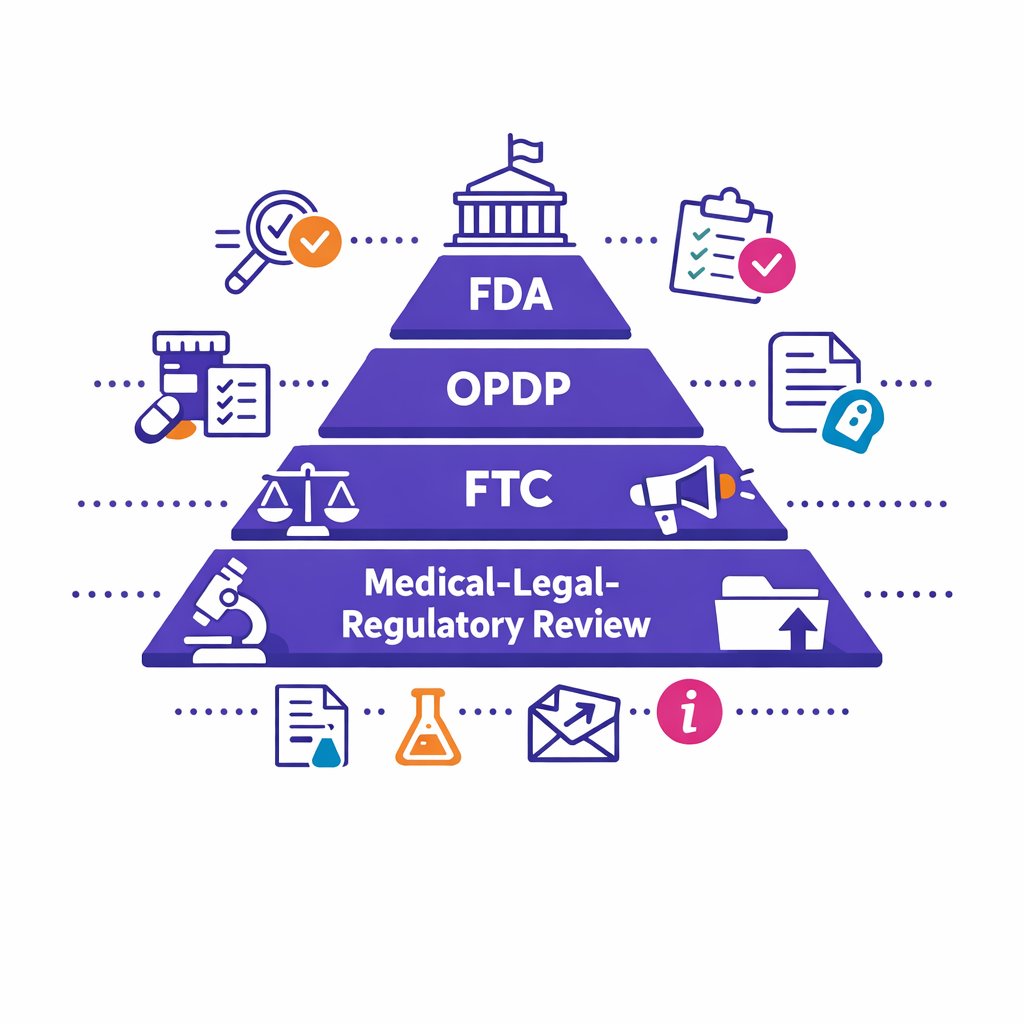
The Office of Prescription Drug Promotion oversees prescription drug promotion for human drugs. For brand teams, that means consumer ads, professional promotion, many websites, and other branded digital assets are judged against drug-promotion standards, not just general brand-advertising norms. OPDP also issues enforcement letters and advisory comments, which is why review teams care about the net impression of the message, not just whether a few sentences look technically safe on their own.
FTC oversight for OTC products
For OTC medicines and many non-prescription health claims, the relevant federal advertising baseline is the FTC health claims framework. That keeps substantiation at the center of the brief. If a benefit claim cannot be supported clearly and consistently across copy, creative, testimonials, and landing pages, the media plan will not solve the underlying compliance problem.
Fair balance, major statement, brief summary

Under 21 CFR 202.1, prescription drug ads cannot be false or misleading and are expected to present benefits and risks with fair balance, while category-specific rules shape when brief summary or adequate provision concepts apply. For TV and radio, FDA’s final rule on the major statement makes the expectation more explicit: risk information has to be presented in a clear, conspicuous, and neutral manner, not rushed, buried, or visually minimized. In practice, that affects voiceover pace, supers, contrast, screen time, sequencing, and how well the risk story stays connected to the benefit story.
Off-label promotion and misleading claims
The fastest way to turn a strong campaign into a compliance problem is to let creative language outrun the label. That can happen through explicit off-label claims, selective use of endpoints, visual storytelling that implies unsupported outcomes, or audience flows that make an unbranded message function like a branded promise. The operational lesson is simple: evaluate the total impression, not just whether each isolated phrase once passed review in another asset.
Form 2253 submission basics
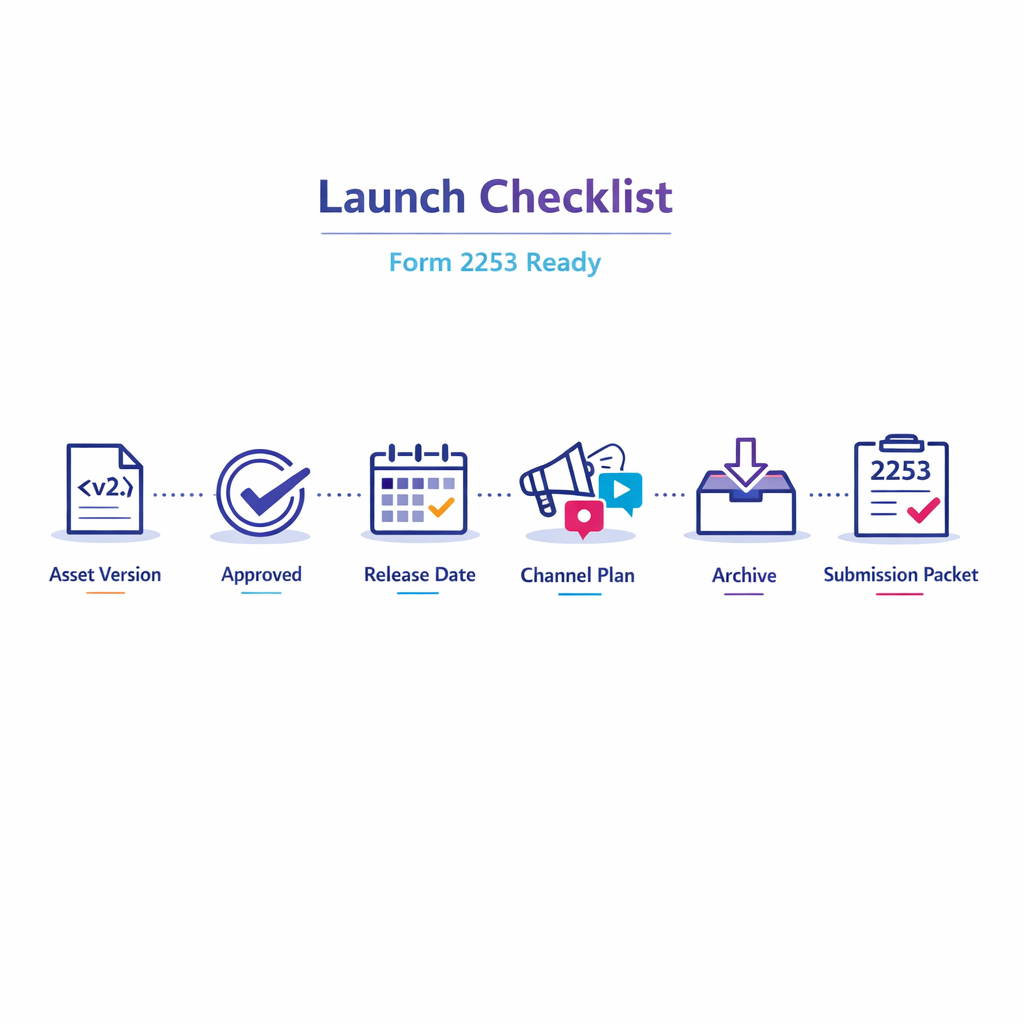
Submission discipline matters too. 21 CFR 314.81 sets the postmarketing reporting framework that includes submission of specimens of promotional labeling and advertisements, which is why Form 2253 belongs inside launch operations rather than at the end of production. If versions, dissemination dates, placement details, and final approved assets are not organized before launch, the administrative burden and error risk rise quickly.
What are the FDA regulations for pharmaceutical advertising?
The practical answer is that prescription drug advertising must stay truthful, non-misleading, on-label, and balanced in how it presents benefit and risk. Teams also need to think at the channel level. What works in a detail aid does not automatically work in a 15-second video, a display unit, a search ad, or a telehealth intake flow.
Types of pharmaceutical ads
Product claim ads
Product claim ads do the most commercial work and carry the most visible compliance burden because they name the drug and discuss what it treats or how it works. They can be effective when the message architecture is disciplined and the audience is well defined. They also leave the least room for casual copy changes, derivative versions, or loosely governed reuse across channels.
Reminder ads
Reminder ads are narrower and usually best for awareness objectives where the brand needs name recognition without a full therapeutic message. They are not a shortcut for implying efficacy without carrying the matching risk context. Smart teams treat reminder advertising as a specialized format with tight guardrails, not as a lighter version of a product claim campaign.
Help-seeking and disease-awareness ads
Help-seeking or disease-awareness campaigns focus on the condition, symptoms, burden, or need to talk to a clinician rather than on a named prescription product. That gives marketers more room to educate, segment, and build qualified demand, especially when a brand wants earlier-funnel patient engagement or sign-up intent without putting a full branded claim into every impression. They are often useful where the job to be done is awareness and action, not immediate brand persuasion.
HCP-directed advertising and professional promotion
Professional promotion reaches HCPs through channels such as point-of-care media, programmatic HCP media, journals, email, conference media, and rep-enabled digital follow-up. The advantage is precision and relevance. The risk is assuming that a professional audience permits loose evidence handling, unsupported extrapolation, or inconsistent claim phrasing across specialty segments. It does not.
Pharmaceutical advertising channels
TV and radio
TV and radio remain strong reach channels for broad patient awareness, especially when a brand needs scale quickly. They are also expensive places to make small compliance mistakes. The safest builds are the ones where creative, legal review, production, and media timing are planned together so the major statement, super treatment, narration pace, and landing-page handoff all make sense as one experience rather than separate deliverables.
Print and point-of-care media

Print still works when the audience needs more time with the message, whether that is a consumer magazine page, an office poster, a waiting-room screen, or a professional journal placement. Point-of-care media is especially useful when the job is to turn awareness into a discussion with a clinician. But the benefit and risk story still has to remain readable, proximate, and logically connected instead of split across disconnected panels or footnote-like design treatments.
Search, display, and websites
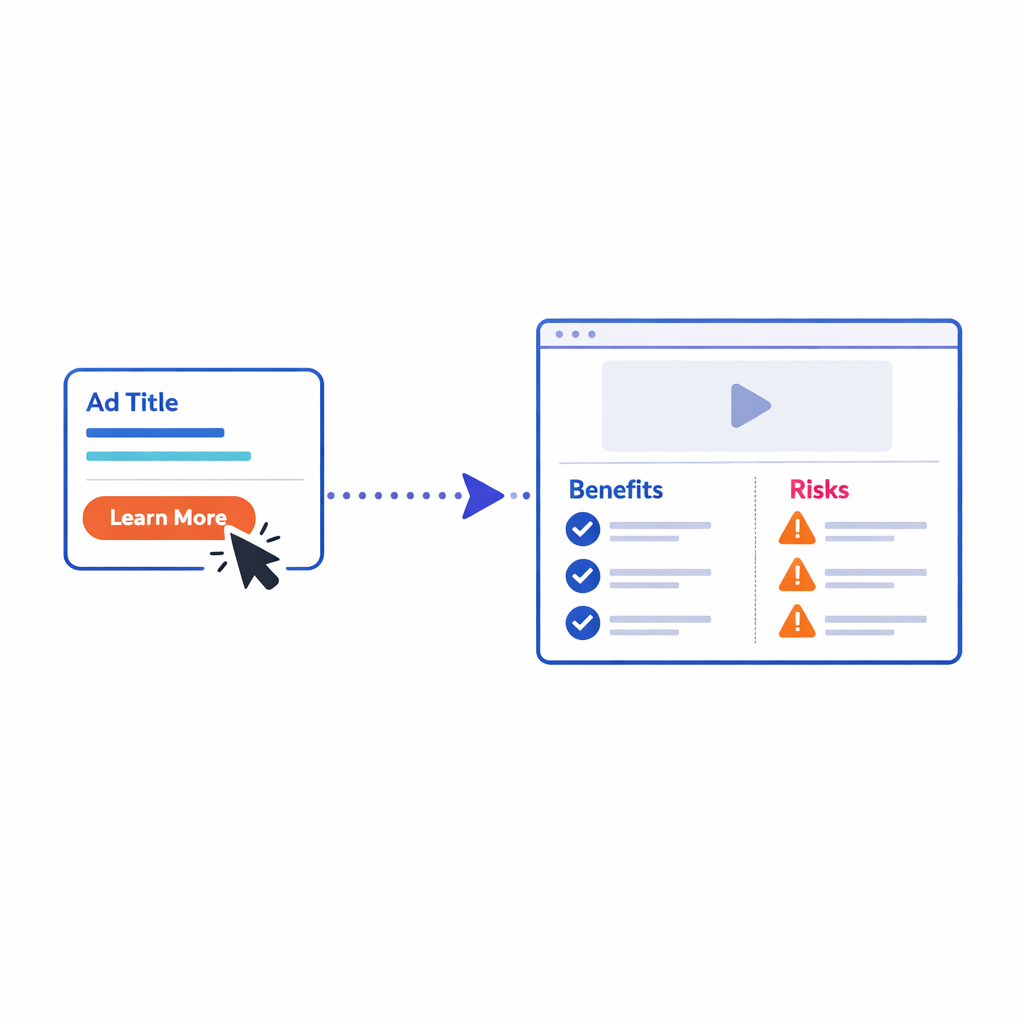
Search and display are where channel mechanics often collide with compliance. If the unit is too small to carry a branded claim responsibly, the better move is often a different format, a disease-awareness path, or a landing experience that keeps the user journey consistent with what the ad can safely promise. Brand sites should be treated as part of the promotional system, not as separate destinations that can repair weak ad copy after the click.
Social media, influencers, and online video
Social can work for awareness, education, community reach, and retargeted follow-up, but it needs tighter governance than many teams expect. The FTC Endorsement Guides require clear disclosure of material connections in endorsements, which is why influencer content, patient ambassador programs, creator-style video, and sponsored testimonials need rules for disclosure, moderation, escalation, and adverse-event awareness before the first post goes live. In pharma, native-looking content is not a compliance exemption.
Telehealth and emerging direct-to-patient channels
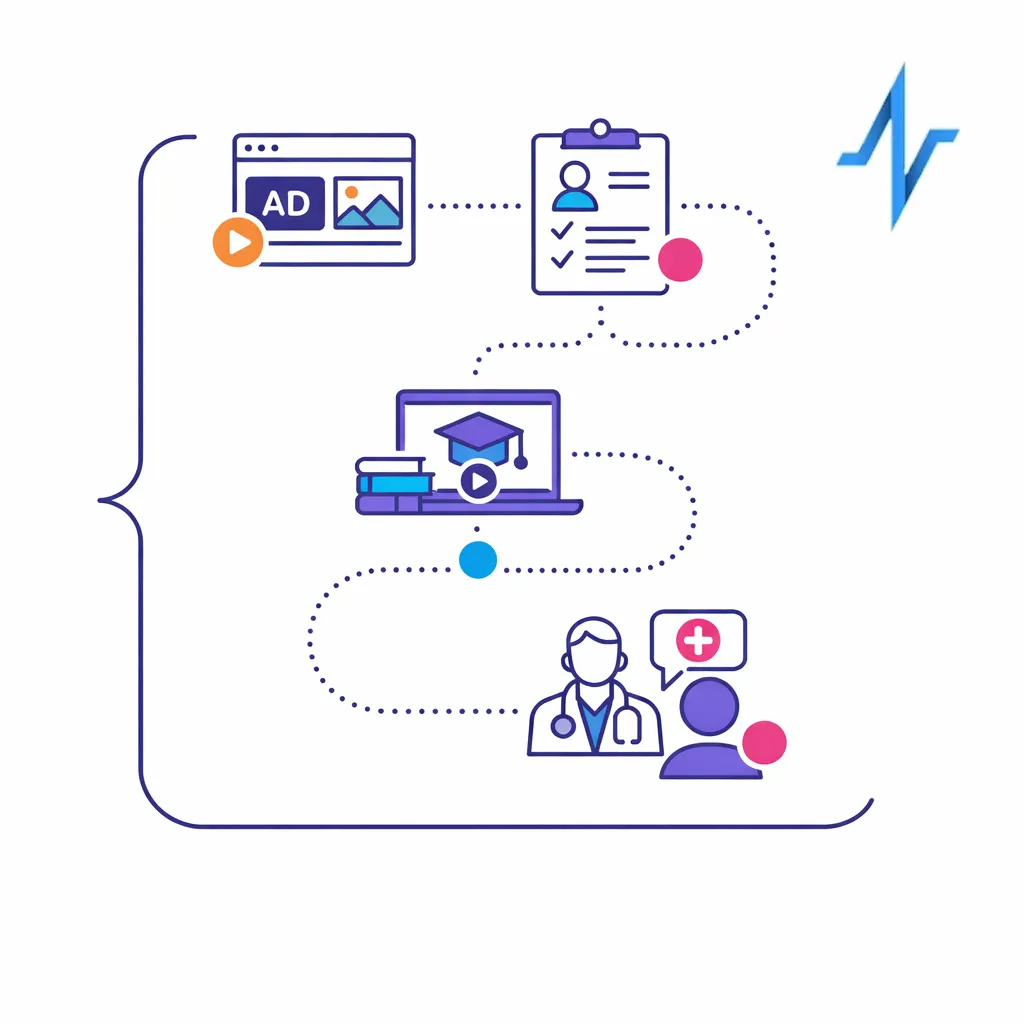
Telehealth funnels compress awareness, intent, intake, education, and prescriber interaction into one path. That can create real efficiency and measurable lift, but it also means the ad, the questionnaire, the educational layer, and the conversion path should be reviewed as a connected experience. If the landing flow pushes users faster than the evidence and labeling support, the compliance risk simply moves downstream with them.
How do pharmaceutical companies advertise?
They rarely rely on one channel. The strongest programs usually combine broad awareness channels such as TV, streaming, or online video with lower-funnel media such as search, patient education hubs, point-of-care placements, HCP media, CRM, and rep-enabled follow-up. The differentiator is usually not reach alone. It is whether identity, audience permissions, claims governance, and measurement stay aligned across the whole journey.
How pharma reaches HCPs and patients compliantly
Audience segmentation and message tailoring
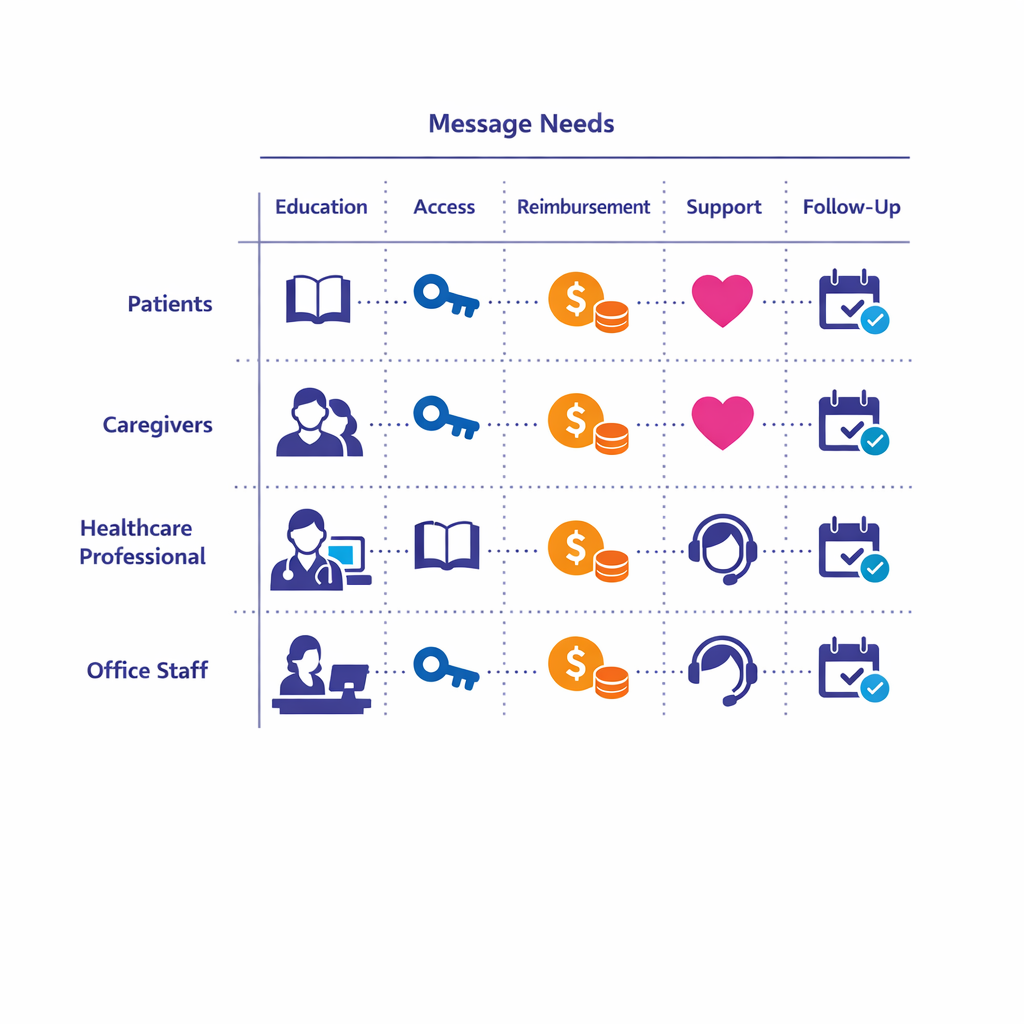
Compliant targeting starts with the job to be done, not with the media inventory. Patients may need symptom education, affordability information, adherence support, or sign-up paths. HCPs may need indication-specific data, access details, reimbursement context, or a clean handoff to field or medical teams. Segmentation should narrow message choice and improve relevance, not become a reason to stretch the claim for a smaller audience.
Medical, legal, and regulatory review workflows
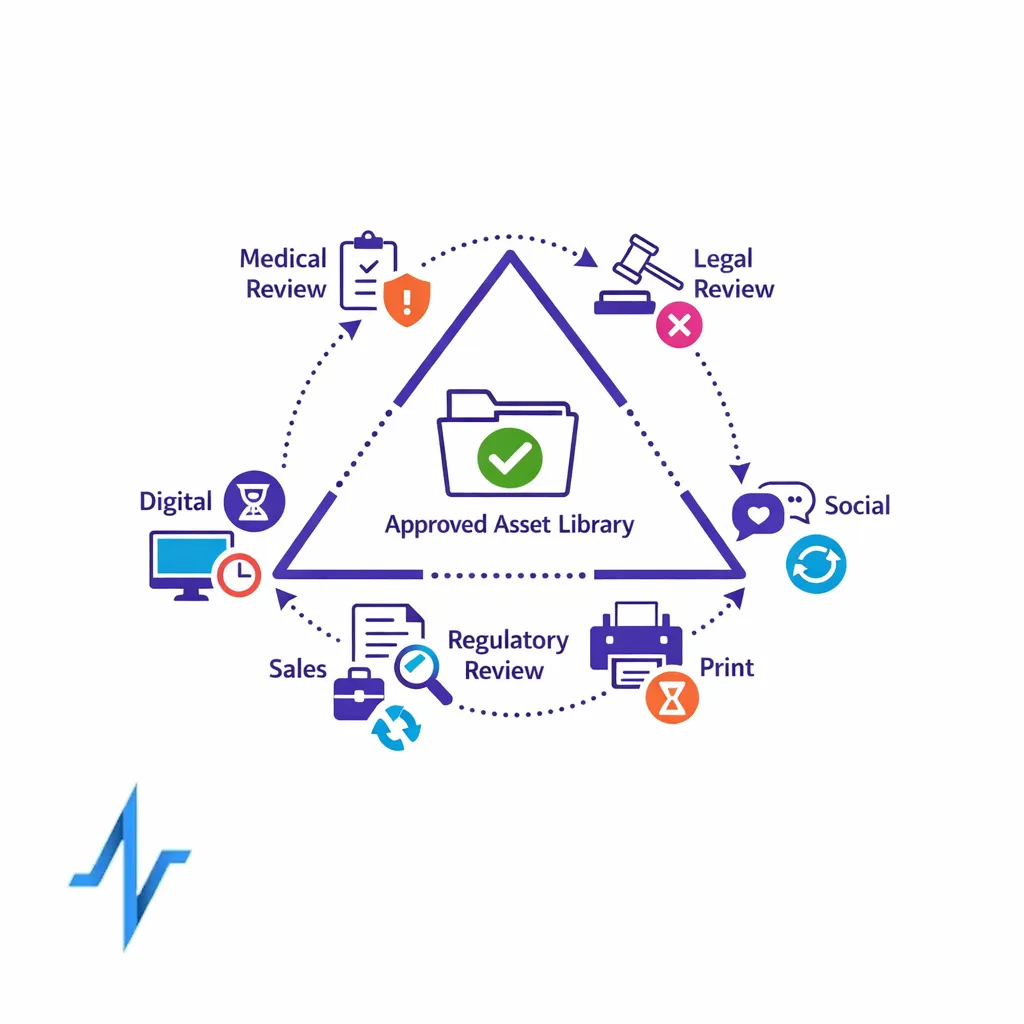
A practical operating model routes every asset through medical, legal, and regulatory review before launch, then preserves the approved version, claim source, audience logic, and expiration status in one place. This is where platforms such as Pulse Health can help. The value is not just orchestration. It is making approved content easier to activate across HCP and patient journeys without recreating the same review problem in every channel and every vendor handoff.
Fair-balance execution in each channel
Fair balance is not a paragraph you paste at the end. It is a design problem. In video, it is pacing, audio, supers, and sequence. In search, it is whether the format can support the claim at all. In CRM and websites, it is whether benefit copy, risk copy, and next-step actions remain proportionate instead of pulling the user toward an overly promotional reading of the page.
Documentation, monitoring, and corrective actions
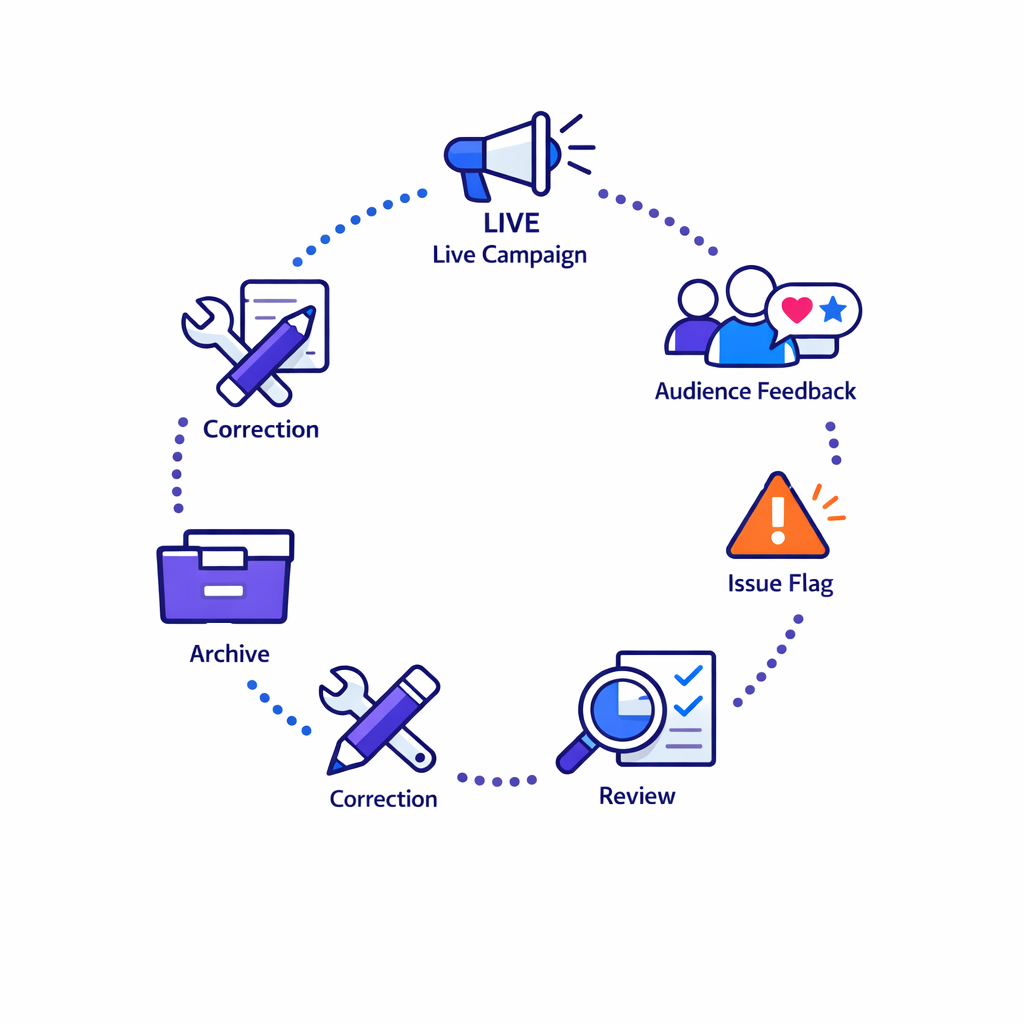
Strong teams document what ran, where it ran, which version was approved, who the intended audience was, and how issues are escalated if comments, complaints, or misleading interpretations appear. Monitoring matters just as much after launch as before launch because real user behavior often exposes gaps that static review misses. Good governance is not anti-performance. It is how brands keep learning without losing control of the message.
What is changing in 2025-2026
Clearer risk-disclosure expectations are now the baseline
For 2025 and 2026 planning, the key shift is not that the rules suddenly became unfamiliar. It is that the bar for operational execution is clearer and easier to test. Teams should assume readability, audibility, timing, and neutral presentation will be examined more concretely, especially in audio and video formats where risk can be technically present but practically easy to miss.
Adequate provision questions are moving into digital design
Older regulatory concepts increasingly show up as modern UX questions. Can a user actually reach the risk information? Does the journey make the branded promise feel larger than the safety context? Is a landing path doing too much persuasive work before the user sees the full picture? These are no longer edge questions. They are central to compliant website, search, and streaming workflows.
Digital and social campaigns are getting less room for sloppy execution
Digital does not excuse a weak risk story. If anything, fast iteration, short-form video, creator formats, fragmented landing paths, and partner-led activation make governance more important. Teams planning for 2025 and 2026 should expect more scrutiny of the complete user journey, including the ad, the page, the follow-up communication, and the measurement logic used to optimize performance.
Are prescription drug ads going away?
For most brand teams, the useful planning answer is no. What is changing is the tolerance for shortcuts. The strategic question is shifting from whether a brand can advertise to whether it can prove that each channel, audience, and message handoff preserves fair balance and an accurate net impression.
Common compliance mistakes to avoid
Overstating efficacy
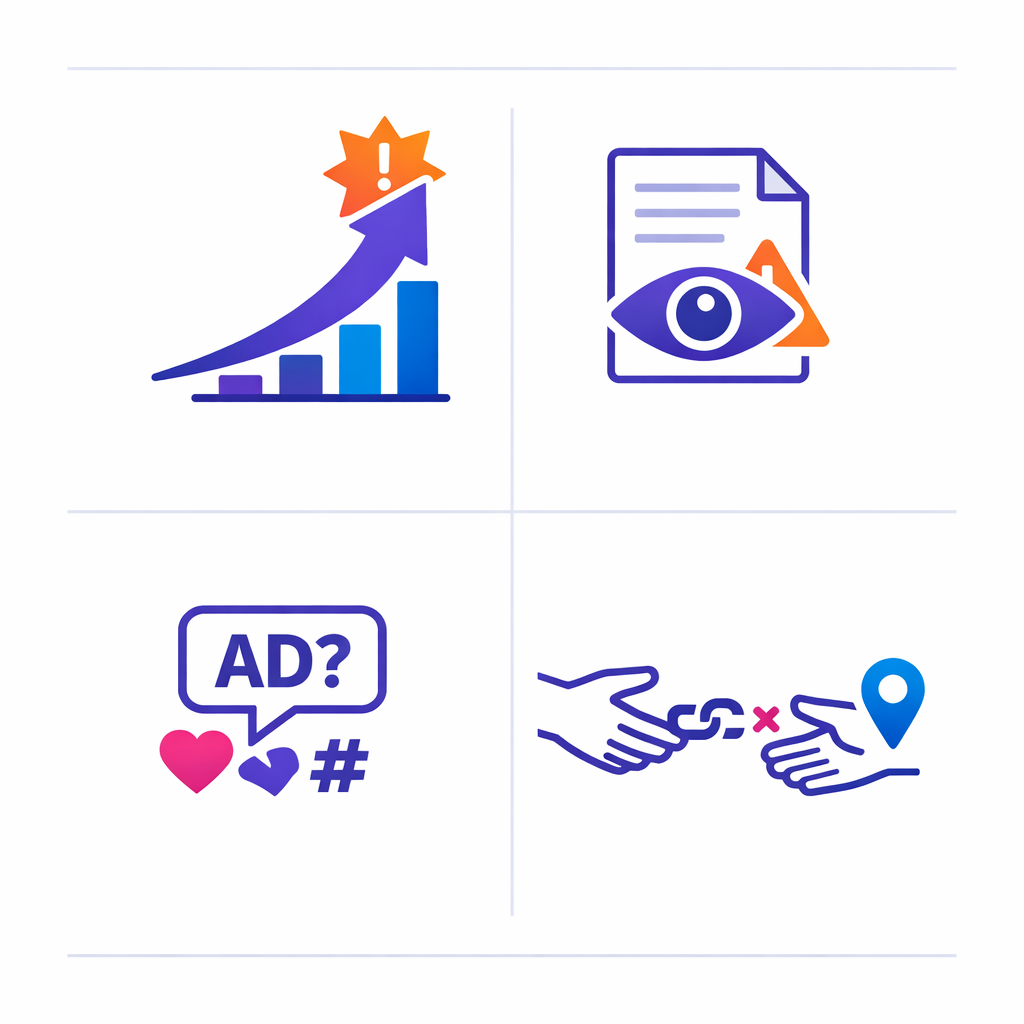
The first mistake is making the outcome sound cleaner, broader, faster, or more certain than the evidence supports. That can happen in headlines, visuals, audience sequencing, comparative framing, or even in which proof points a landing page surfaces first.
Omitting or minimizing risks
The second mistake is treating risk as a legal appendix instead of part of the message. If users can absorb the benefit quickly but have to work to find the limitation, the campaign has a design problem, not just a copy problem.
Poor influencer disclosures
The third mistake is assuming creator content feels native enough to escape health-advertising rules. If a sponsor relationship or compensation is material, disclosure needs to be obvious to ordinary viewers, not buried in hashtags, profile text, or fleeting on-screen language.
Weak telehealth and landing-page controls
The fourth mistake is reviewing ads and conversion paths separately. In pharma, the handoff is part of the claim experience. Intake forms, support-program enrollments, appointment flows, and educational hubs should be governed like extensions of the campaign, not as unrelated product pages.
FAQ
Is pharmaceutical advertising legal?
Yes, in the U.S. it is legal, but it is highly regulated and heavily dependent on product type, claim type, audience, and channel.
Why does the U.S. allow pharmaceutical advertising?
The U.S. approach is to regulate drug promotion rather than ban it outright. In practice, that means the system allows advertising while imposing rules on truthfulness, substantiation, labeling consistency, and risk presentation.
How much do pharmaceutical companies spend on advertising?
There is no single useful benchmark. Spending changes by launch stage, therapeutic area, brand maturity, and channel mix, and the biggest programs often combine mass media with search, point-of-care, HCP media, CRM, and support-program activation rather than relying on TV alone.
Are prescription drug ads going away?
Not as an operating assumption for current U.S. planning. Teams should instead plan for tighter disclosure expectations, stronger monitoring, and less room for weak digital execution.
What countries allow pharmaceutical advertising?
If you market across borders, do not assume U.S. rules travel cleanly. Local treatment of branded prescription drug advertising varies significantly, so global campaigns should be localized with market-specific legal review instead of copied from U.S. creative.
What to do next
- Classify the asset first: product claim, reminder, disease awareness, or professional promotion.
- Map audience and channel together: patient, caregiver, prescriber, office staff, or rep follow-up should not share the same assumptions.
- Tie every claim to support: keep label, evidence, and approved language connected to the asset version that will actually run.
- Review the full journey: ad, landing page, form, CRM follow-up, call center, telehealth path, and measurement tags should work as one experience.
- Build submission and version control early: do not leave Form 2253, archival, or expiration tracking until launch week.
- Monitor live campaigns: document what changed, what users saw, what issues surfaced, and how corrective actions were handled.
See how compliant orchestration works
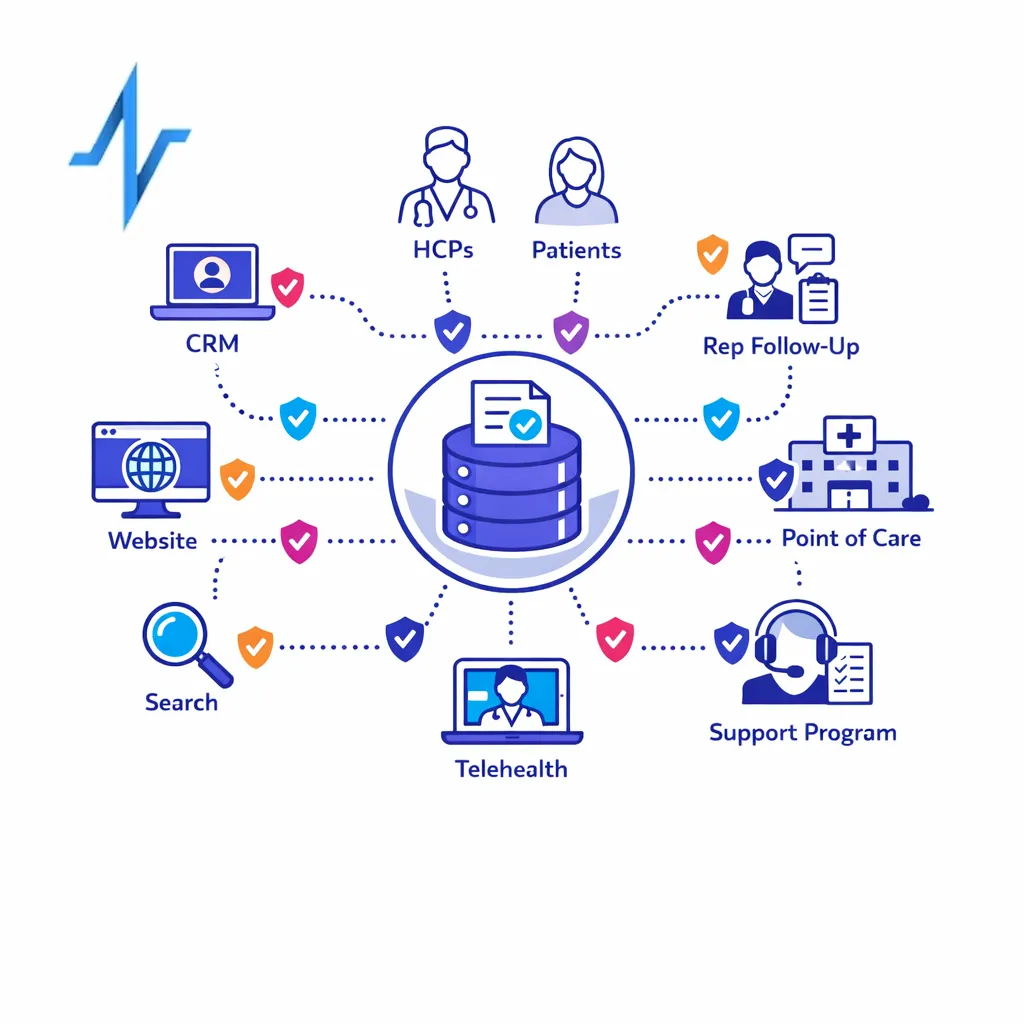
If your team is trying to connect audience identity, approved content, channel activation, and measurement without creating new review risk, Pulse Health can help. If you want to see how it works, compare integration options, or get the platform overview, the best next step is to Request a Demo and talk through your HCP and patient engagement workflow with a compliance-aware team.