
Medical device marketing is harder than standard B2B demand generation because the audience is broader, the proof standard is higher, and the path from awareness to adoption usually runs through clinical, operational, and commercial checkpoints. A surgeon, service-line leader, procurement team, finance stakeholder, distributor, and field rep may all influence whether a device gets evaluated, purchased, implemented, and used consistently.
This guide is for US medtech marketers, commercial operations leaders, CRM owners, and agency partners who need a more practical medical device marketing strategy. You will learn how medical device marketing differs from generic B2B marketing, who manufacturers need to reach, which channels matter most, and how to build a compliant cross-channel engine that drives demos, pipeline, and adoption.
The through-line is simple. Strong medtech marketing does not just create awareness. It translates clinical evidence and product value into messages that each stakeholder can understand, approve, act on, and measure.
Medical device marketing is the practice of turning a device’s clinical value, business value, and implementation requirements into messages, content, and programs that move buyers from awareness to adoption. It spans positioning, evidence communication, demand generation, sales enablement, channel support, and post-launch follow-up.
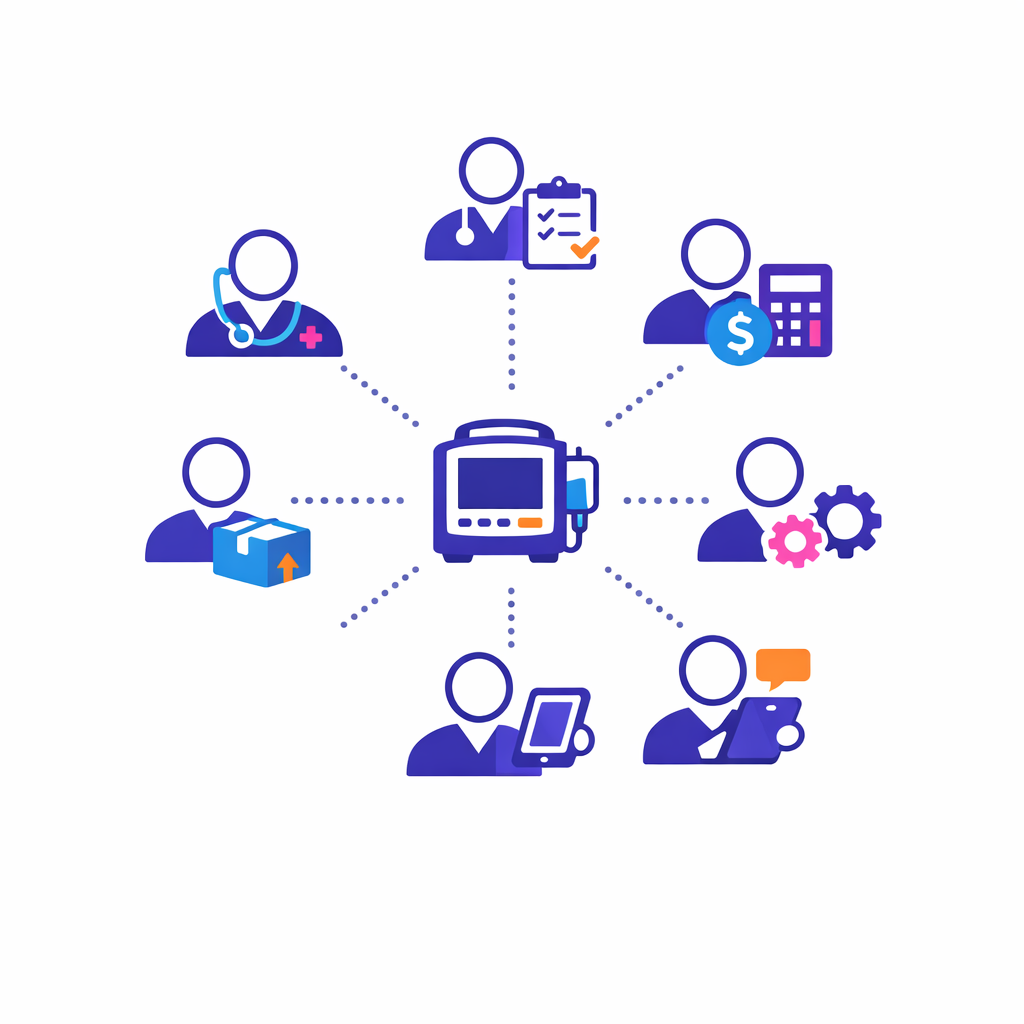
- 1. Map the full buying group. Do not stop at the physician or clinical champion. Include procurement, finance, operations, service-line leadership, distributors, and field sellers.
- 2. Build messaging from approved claims. Start with what the product can say credibly and compliantly, then adapt the proof and language by audience.
- 3. Match channels to buying stage. Search and educational content work early, while demos, webinars, calculators, and rep follow-up work later.
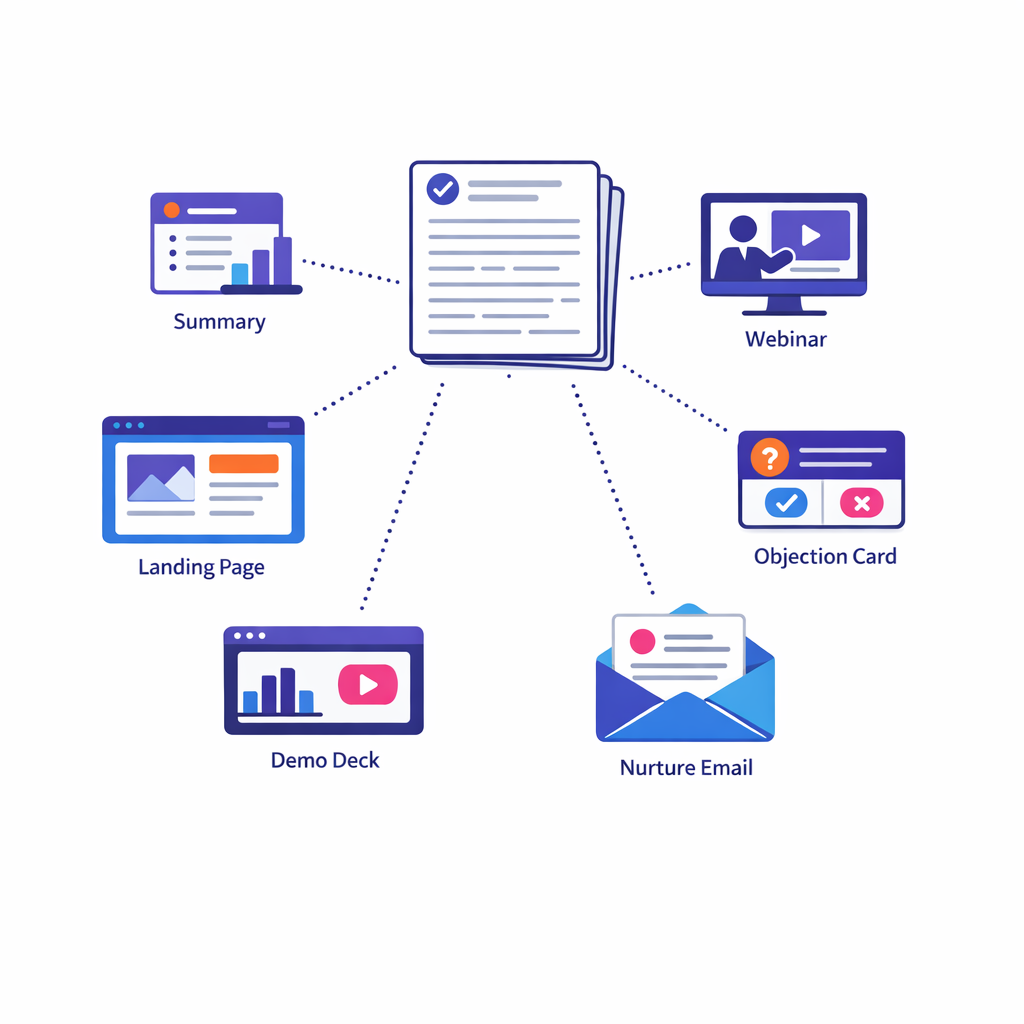
- 4. Create evidence in usable formats. A clinical paper alone is not a campaign. Convert it into summaries, objection handling, decks, landing pages, and nurture content.
- 5. Orchestrate around accounts, not just leads. Medical device B2B marketing improves when marketing, sales, and channel partners see the same account activity and next best action.
- 6. Measure through adoption. The real outcome is not a click or form fill. It is qualified evaluation, demo completion, purchasing progress, implementation, and repeat use.
What medical device marketing is and why it differs from standard B2B marketing
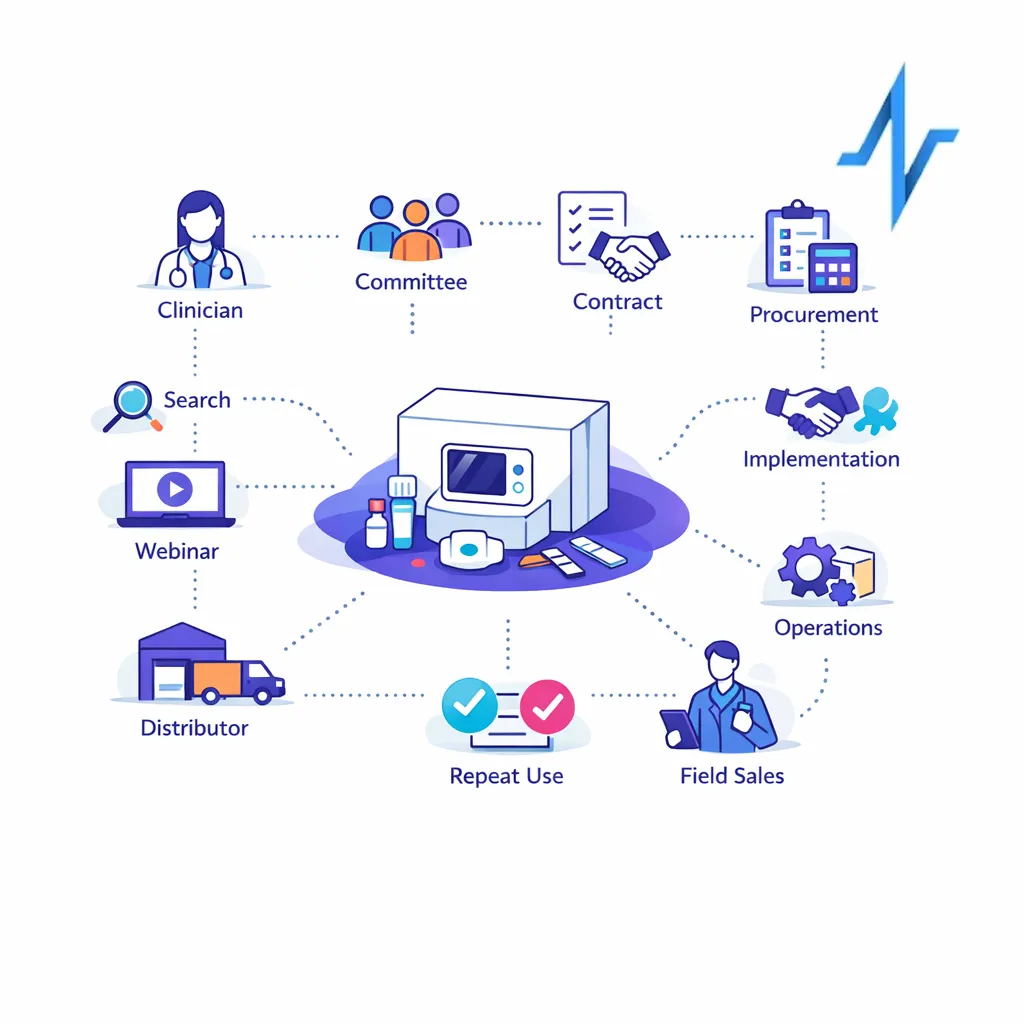
At a high level, medical device marketing still includes positioning, segmentation, content, campaign execution, and measurement. What makes it different is the tight link between commercial communication and regulatory reality, plus the number of people involved in a typical buying decision.
Regulatory constraints and claim substantiation
In the US, FDA classifies medical devices into Class I, II, and III and uses different premarket pathways, including 510(k), De Novo, and PMA. That matters because commercial distribution generally depends on the appropriate FDA authorization or an applicable exemption, so medical device marketing cannot be separated from regulatory strategy.
Just as important, intended use can be inferred from labeling, advertising, and other circumstances surrounding distribution. A headline, sales deck, webinar slide, product video, or nurture email can therefore create risk if it stretches beyond the cleared or approved use, overstates outcomes, or implies unsupported superiority.
For promotional substantiation, the FTC expects health-related claims to rest on competent and reliable scientific evidence. In practice, that means medtech marketing teams should treat every asset as a governed asset. Claims need an owner, a source, approved wording, audience rules, and a review path before they are copied across channels.
Long sales cycles and multi-stakeholder buying committees
Many medical device purchases move more slowly than classic SaaS or general industrial B2B deals because the product affects patient care, clinical workflow, training, supply chain, and economics at the same time. Interest from a clinician may open the door, but it rarely closes the deal by itself.
That is why device marketing has to do more than generate demand. It has to equip the field with proof for different moments in the process: clinical relevance for physicians, implementation confidence for operators, commercial justification for finance, and practical enablement for channel partners.
Upstream vs downstream marketing in medtech
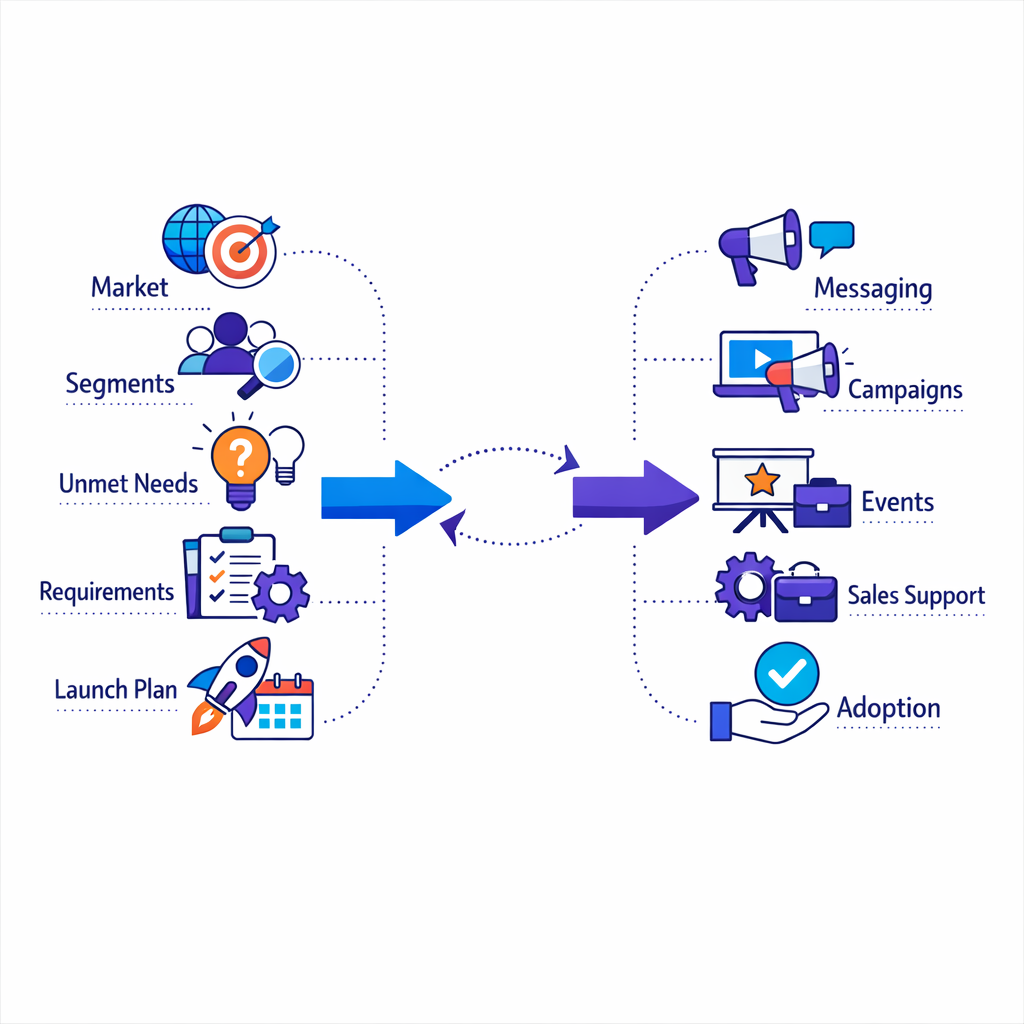
Upstream marketing in the medical device industry focuses on market definition, segmentation, unmet need, product requirements, portfolio strategy, pricing inputs, and launch planning. Downstream marketing focuses on go-to-market execution: messaging, campaigns, channel programs, events, sales enablement, and adoption support.
The best medical device marketing strategies connect the two. If upstream work defines the ideal buyer, proof points, and differentiation clearly, downstream teams can execute faster and with less review friction. If upstream work is vague, downstream teams usually compensate with too many assets, inconsistent stories, and weak measurement.
Who medical device manufacturers need to reach
A device manufacturer usually sells into a committee, even when the first conversation looks like a one-to-one clinical relationship. The practical question is not “Who is the buyer?” It is “Who has to say yes, who can say no, and what evidence does each person need?”
Clinicians and clinical champions
Clinicians care about patient selection, safety, workflow fit, ease of use, and whether the device improves decision-making or outcomes in a meaningful way. They also want the evidence translated into usable language, not buried in a dense study bibliography.
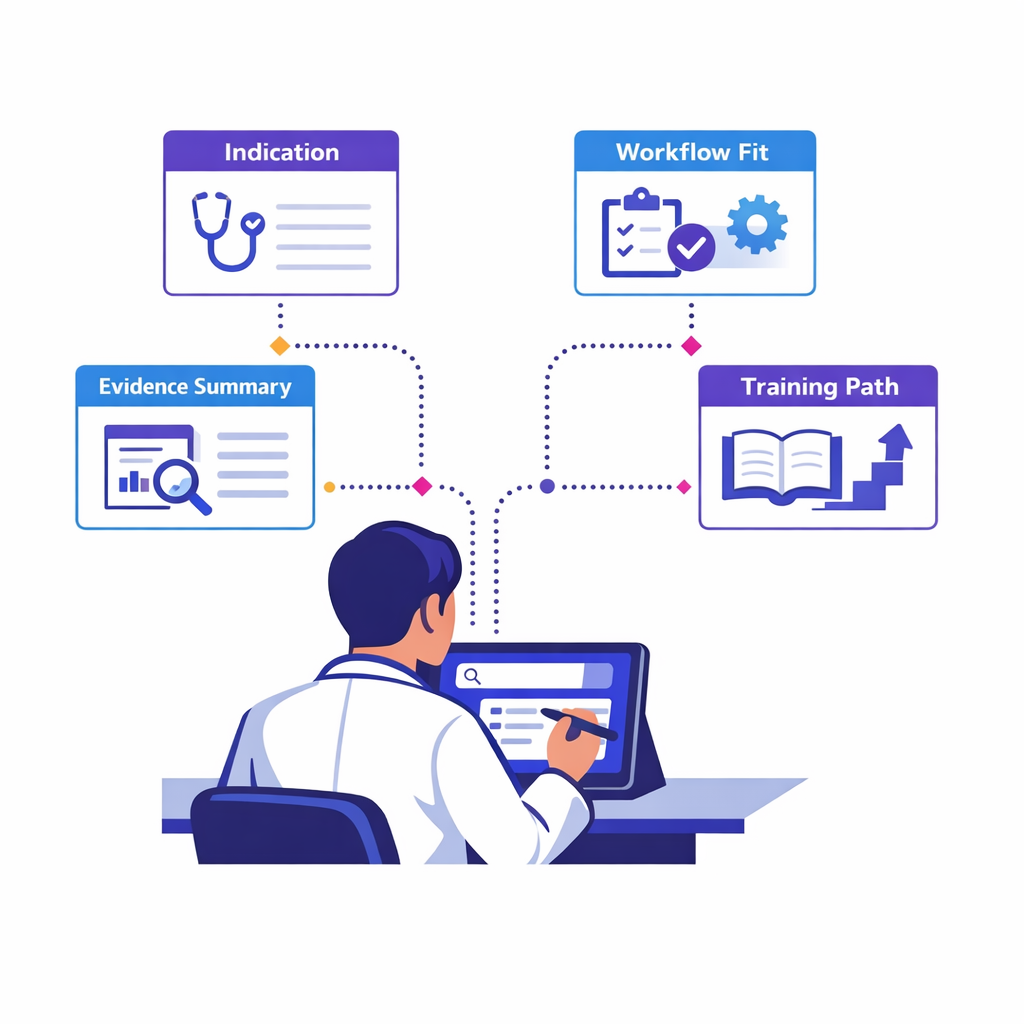
Your marketing job here is to reduce cognitive load. Show the indication, use case, mechanism, evidence summary, training path, and implementation implications clearly. A strong clinical champion often needs shareable materials for peers, administrators, and committees, not just a product brochure.
Hospital procurement and value analysis committees
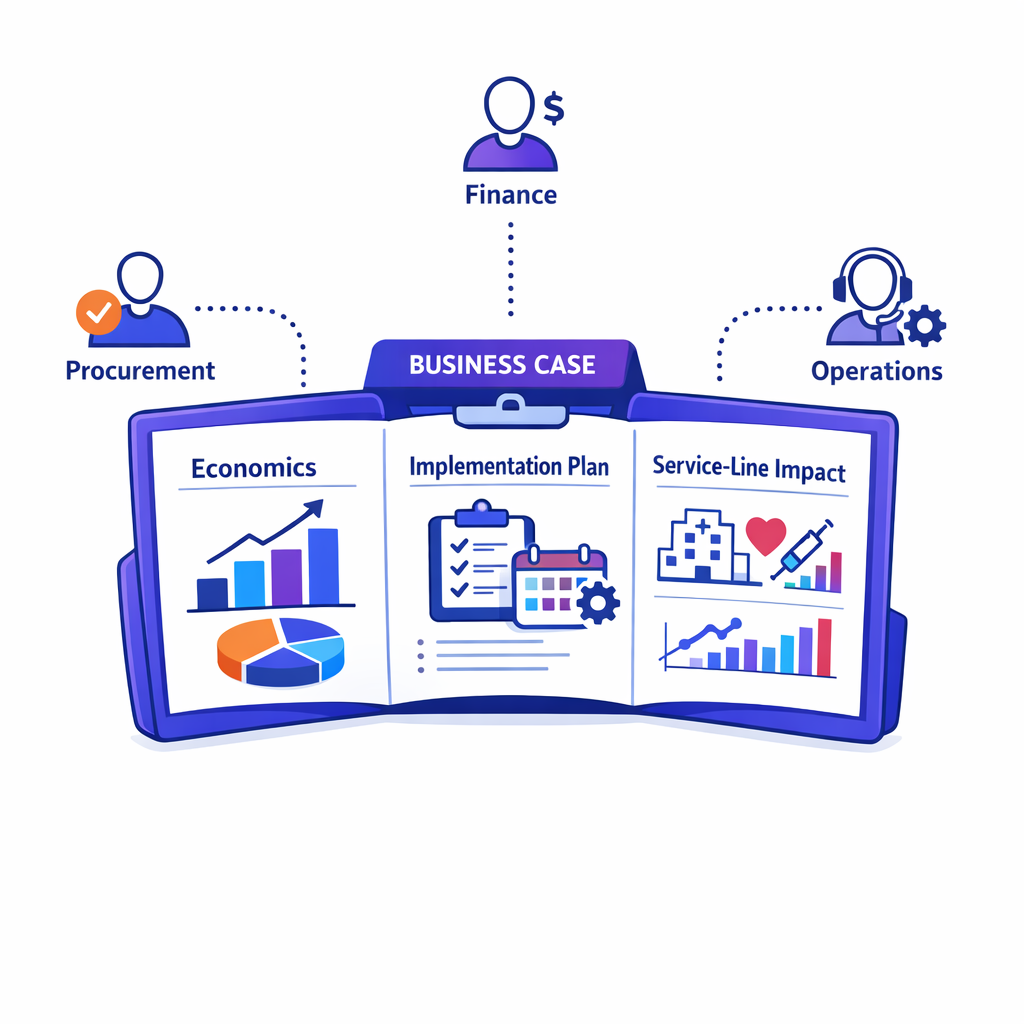
Procurement and value analysis stakeholders look at a different set of questions. They want to understand pricing structure, utilization assumptions, supply reliability, service coverage, training burden, and whether adoption introduces new operational complexity.
This is where many medtech marketing programs break down. They create strong awareness content for physicians, then hand procurement a thin PDF with features and no operational story. A better approach is to prepare economic framing, implementation detail, and comparative decision support before the account reaches formal review.
C-suite, finance, and operations buyers
Executive and operational buyers usually care less about the device in isolation and more about what it changes across the service line. Does it improve throughput, reduce friction, support a new program, protect margin, reduce readmissions risk, or help the organization standardize care delivery more effectively?
These stakeholders respond to concise business cases. They do not need every technical detail. They need a credible link between the device, the workflow, and an operational or financial outcome that matters to the institution.
Distributors, channel partners, and field sales teams
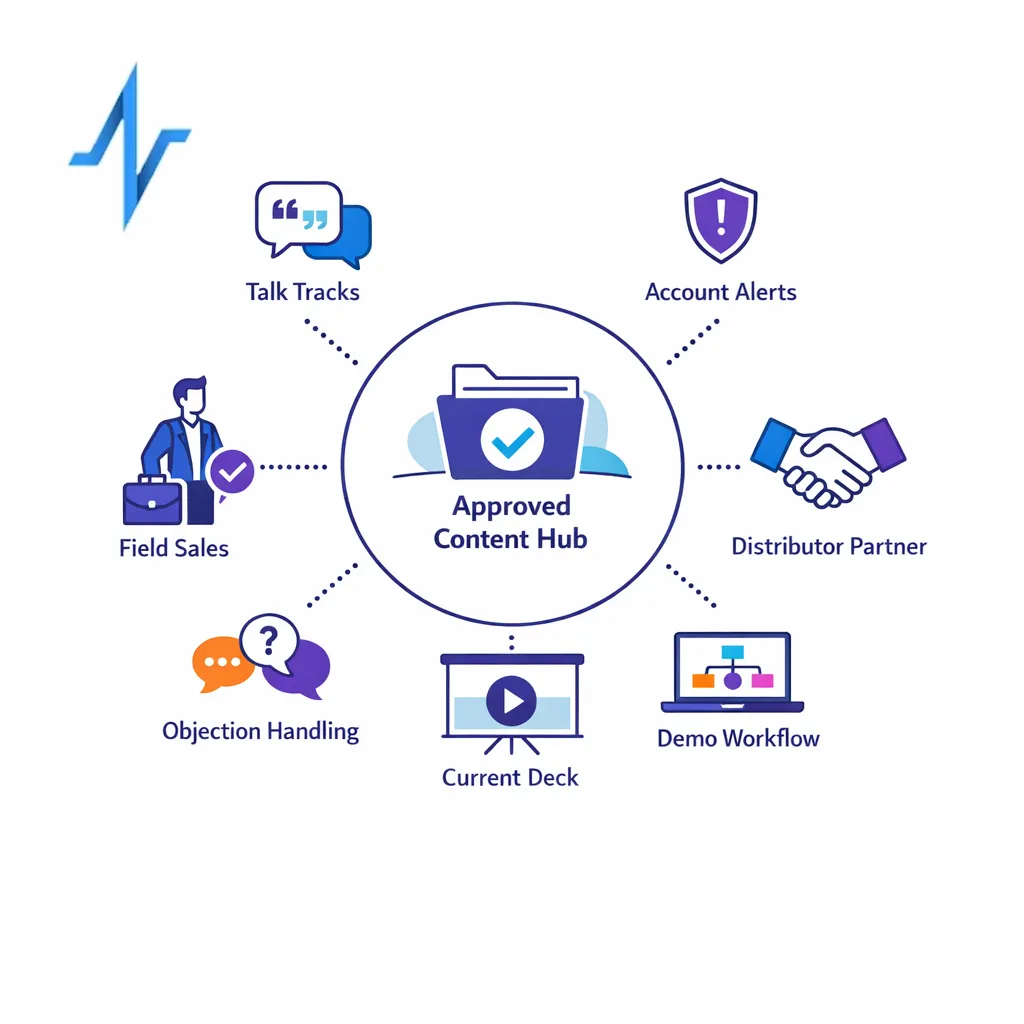
In many categories, distributors and field teams are the force multiplier. They need more than product facts. They need approved talk tracks, objection handling, localizable content, demo workflows, account intelligence, and a clear handoff between marketing-generated engagement and sales-owned follow-up.
If channel teams cannot tell what content is current, what claims are approved, or which accounts are warming up, execution slows down fast. Good device marketing makes the field smarter at the moment of action, not just better informed in a quarterly training session.
Quick stakeholder map
- Clinicians: Prioritize evidence, patient fit, workflow, and training. Best channels include search, peer education, webinars, rep follow-up, and product demos.
- Procurement and value analysis: Prioritize economics, implementation, contracting, and risk reduction. Best channels include account-based email, one-to-one follow-up, calculators, committee-ready summaries, and sales enablement materials.
- Finance and operations: Prioritize business case, service-line impact, and operational feasibility. Best channels include executive briefs, business cases, account meetings, and targeted nurture tied to named accounts.
- Distributors and field sellers: Prioritize message consistency, speed, and visibility into account activity. Best channels include CRM alerts, partner portals, playbooks, approved decks, and post-event workflows.
Core channels for medical device marketing
The right channel mix depends on product complexity, sales model, and audience. Still, the strongest medical device marketing programs usually combine discoverability, account engagement, evidence delivery, and sales enablement instead of relying on a single hero channel.
SEO and content marketing for clinical research intent
Search is often the first touchpoint for clinicians, researchers, and commercial stakeholders trying to understand a condition, procedure, device category, or therapy option. This is where medical device digital marketing can earn attention long before a rep meeting is booked.
The winning content is usually not generic brand copy. It is structured content that answers real evaluation questions: who the device is for, how it fits workflow, what evidence supports it, what training it requires, and what the next step looks like. For medical device marketing, SEO is less about volume alone and more about attracting high-intent visits from the right clinical and institutional audiences.
LinkedIn, email, and ABM for account-level engagement
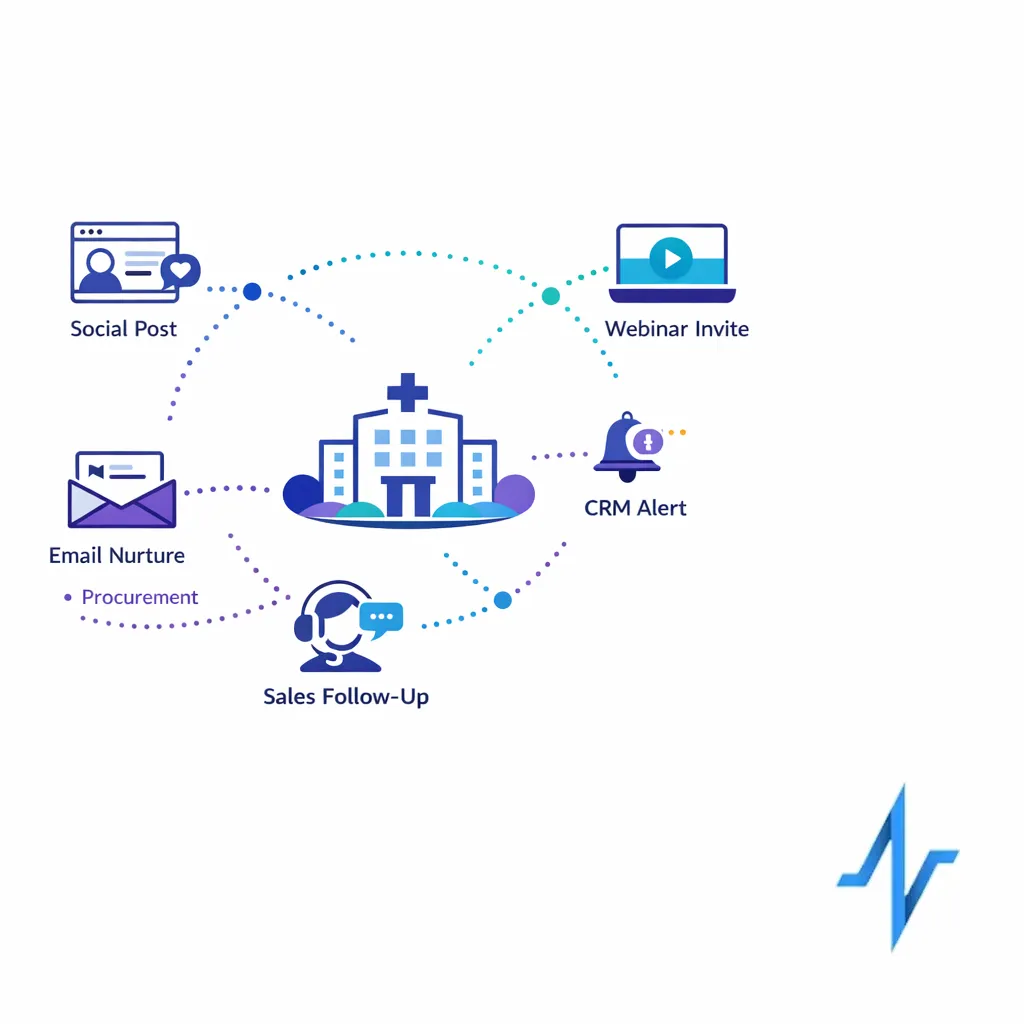
Medical device B2B marketing often works best when marketing thinks in accounts instead of isolated leads. Named-account campaigns can sequence sponsored content, email nurture, sales outreach, and webinar invitations around the same hospital, IDN, or specialty practice.
This is also where segmentation matters most. A physician should not receive the same email stream as procurement. A distributor should not see the same landing page as a health system operator. Account-based orchestration works when audience logic, message versioning, and CRM visibility are designed together.
Webinars, white papers, and peer-reviewed evidence
Evidence still carries the conversation, but format determines whether people use it. A peer-reviewed publication matters, yet decision-makers often need an evidence summary, a use-case brief, an implementation guide, or a short speaker session before they ask for the full paper.
Think of content as a ladder. The top rung is the underlying evidence. The next rungs are the commercial formats that help each stakeholder understand why the evidence matters to their role. Good medtech marketing turns static evidence into repeatable commercial motion without distorting the underlying claim.
Trade shows, demos, and sales enablement content
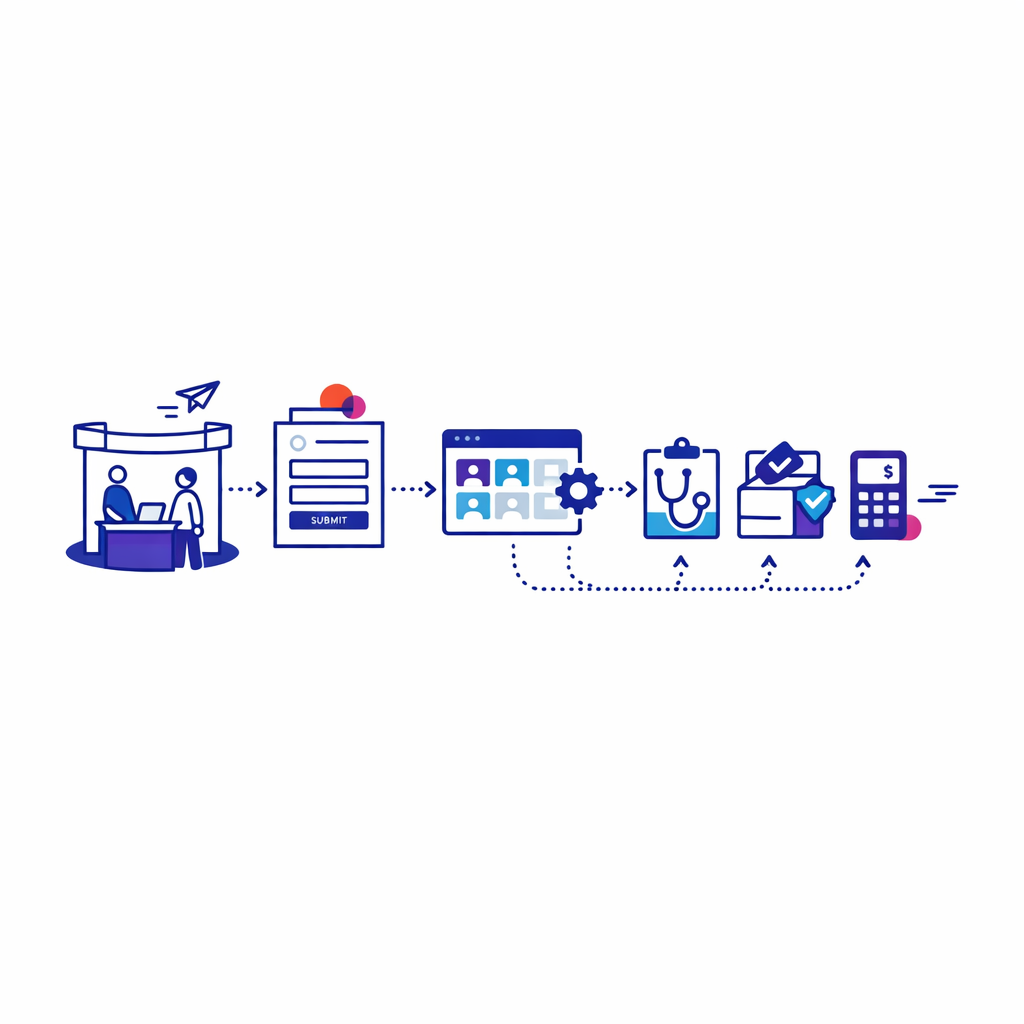
Trade shows and in-person demos still matter because many devices need hands-on explanation, workflow visualization, and direct question handling. The mistake is treating the event as the campaign instead of one moment inside a broader journey.
The most effective teams capture interest, route it fast, personalize follow-up, and keep momentum moving after the booth conversation ends. That means demo forms connected to CRM, event-based nurture, role-specific follow-up assets, and visibility for the field on what happened before and after the event.
What changed in channel execution
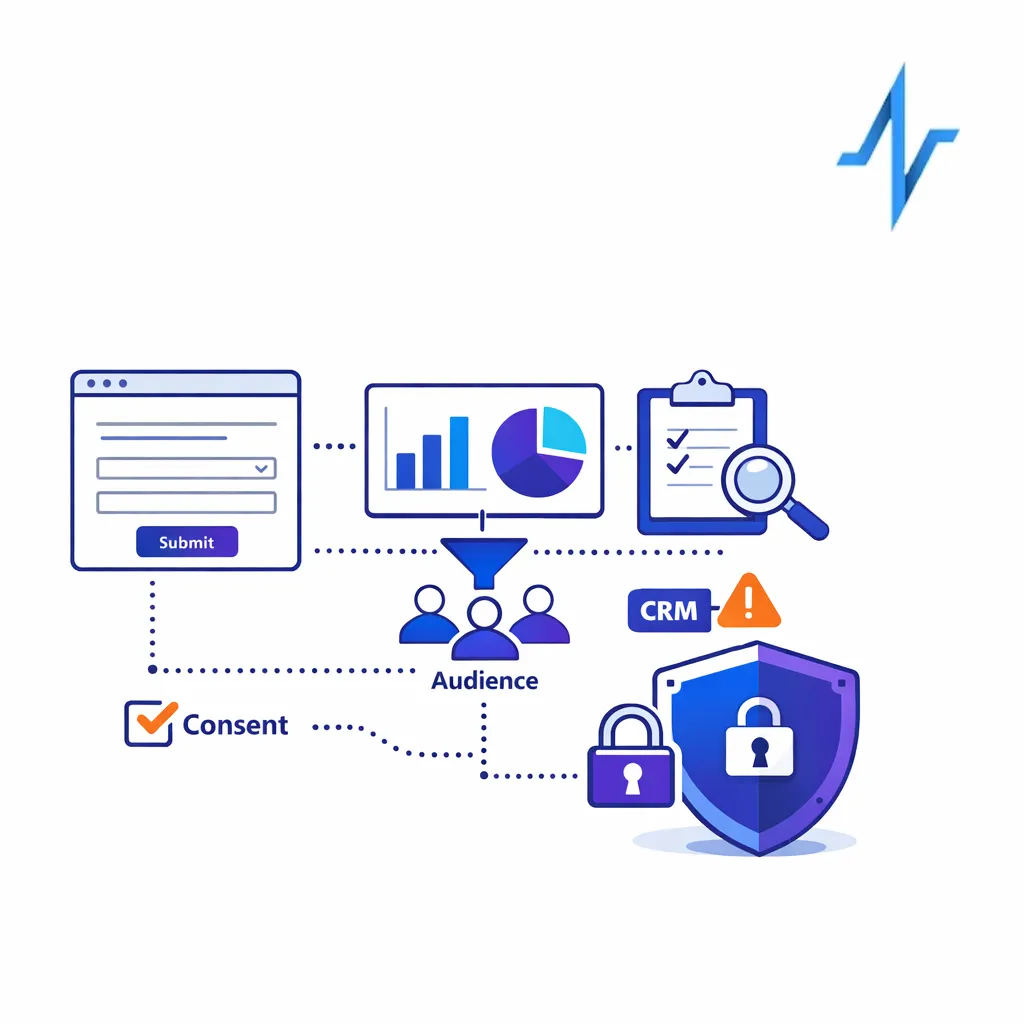
The fundamentals of device marketing have not changed. You still need clear positioning, strong evidence, and stakeholder-specific messaging. What has changed is the operating environment: more digital touchpoints, more measurable interactions, and more scrutiny over what teams say and what data they collect.
Digital execution now brings privacy into campaign design. If patient-facing or support experiences involve protected health information, HHS has issued guidance on HIPAA and online tracking technologies, which means pixels, forms, and event tags may need legal review before launch. Even outside that scenario, device marketers benefit from collecting only the data they truly need and making consent, disclosure, and audience rules explicit.
The other change is that fragmented content creates more risk than it used to. A claim can travel from a product page to a paid ad, then into email, webinar slides, distributor decks, and sales follow-up. When teams do not centralize approved language and proof, cross-channel growth can multiply inconsistency instead of multiplying performance.
How to build a compliant cross-channel strategy
Claims library and MLR or review workflow
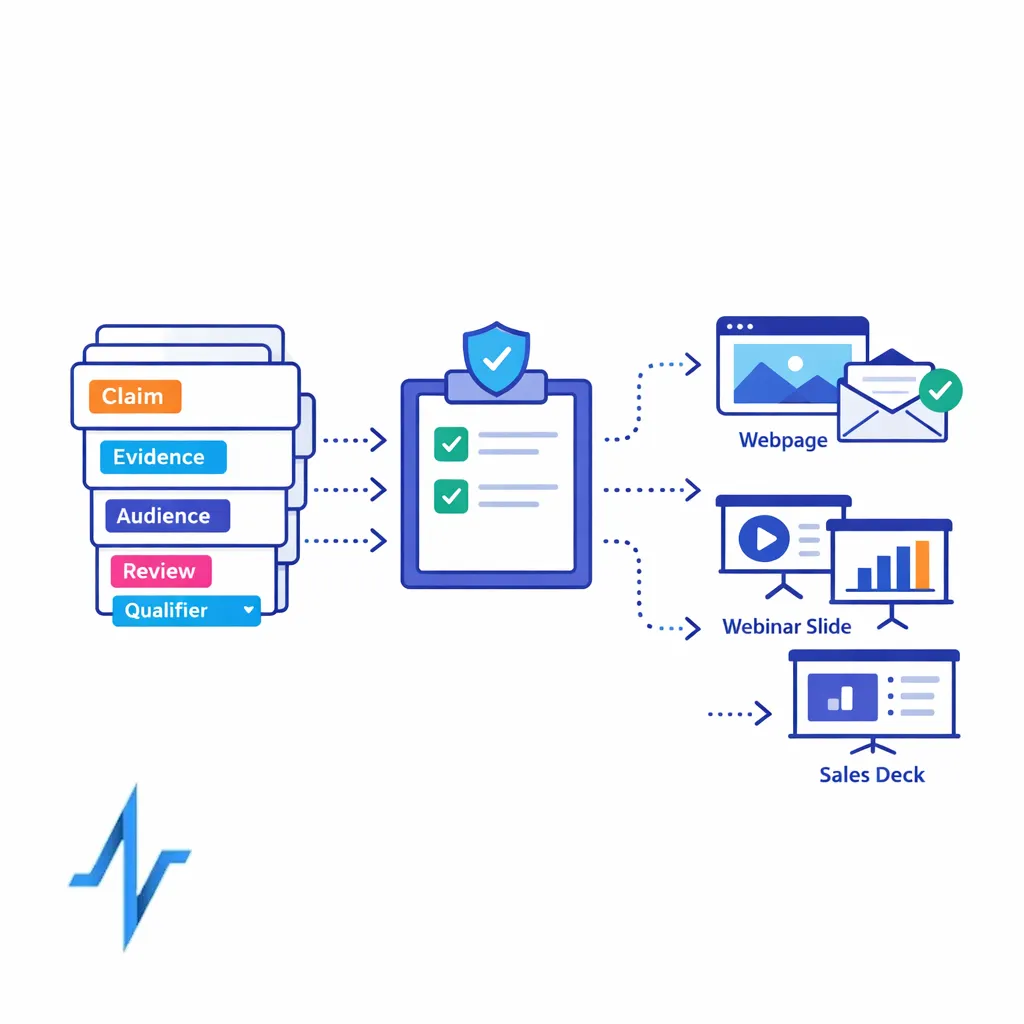
Start with a claims library before you start with channel expansion. For each approved claim, document the exact wording, supporting evidence, intended audience, required qualifiers, prohibited shortcuts, review owner, and date last approved.
Then build a repeatable review path across regulatory, legal, medical, and commercial stakeholders. The goal is not bureaucracy for its own sake. The goal is faster activation because teams are reusing governed building blocks instead of re-litigating every headline and every email variant from scratch.
Matching content to buying stage and stakeholder needs
A useful device marketing strategy maps content to both stage and stakeholder. Early-stage clinician content should create understanding. Mid-stage account content should help the buying group compare options and build consensus. Late-stage content should reduce implementation friction and make approval easier.
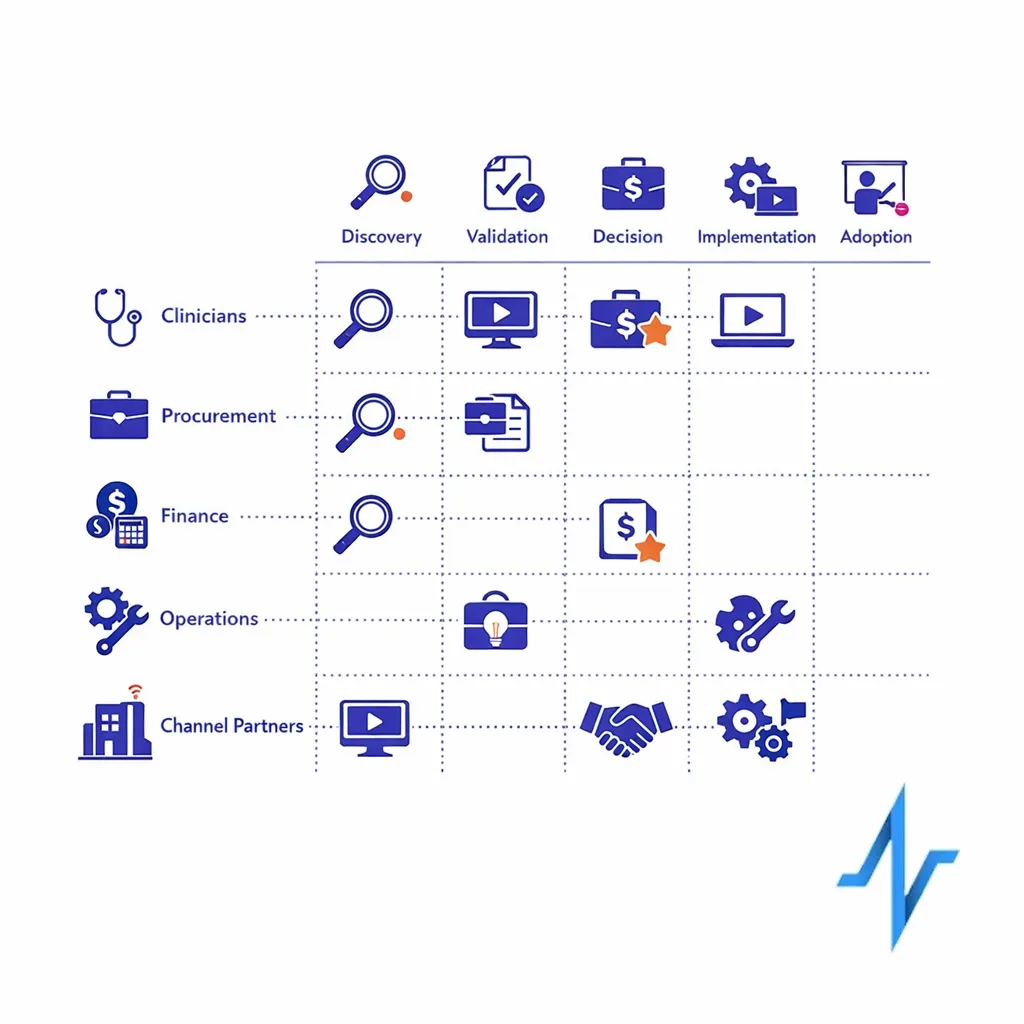
A practical sequence often looks like this: educational search content for discovery, webinar or evidence brief for validation, account-specific follow-up for committee formation, demo and business case tools for decision support, and training plus onboarding content for adoption. The message evolves, but the underlying claim set stays consistent.
Measurement: pipeline, demos, influenced revenue, and adoption
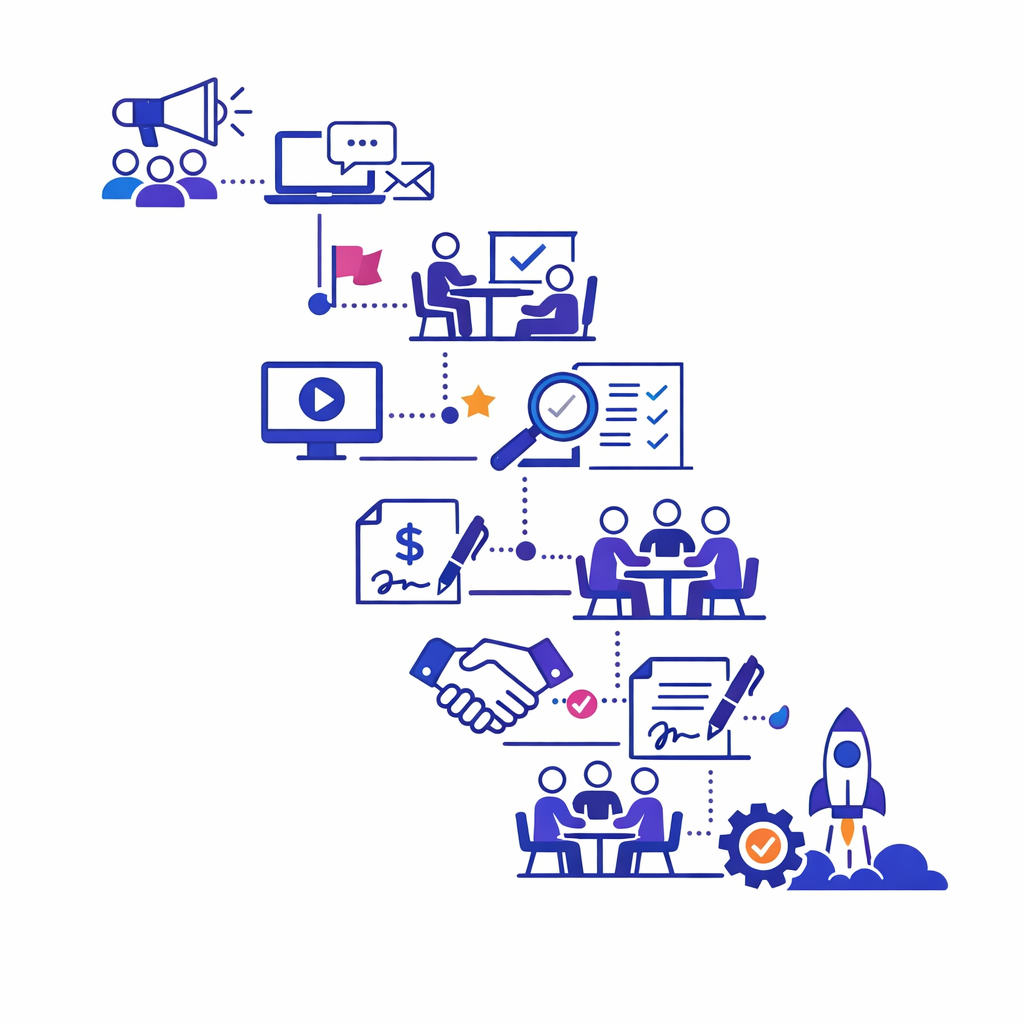
Measure the full commercial path, not just top-of-funnel volume. For medical device marketing, that usually means tracking account engagement, meetings set, demo completion, evaluation or trial milestones, quote activity, committee progress, contract signature, onboarding, and early utilization signals.
This is where CRM and orchestration matter. If webinar engagement, field activity, email response, form submissions, and distributor updates live in separate systems, the team cannot see momentum clearly. The best measurement model ties channel activity to account progression and then back to the content and campaigns that helped move the opportunity forward.
Common mistakes manufacturers make
Leading with features instead of outcomes
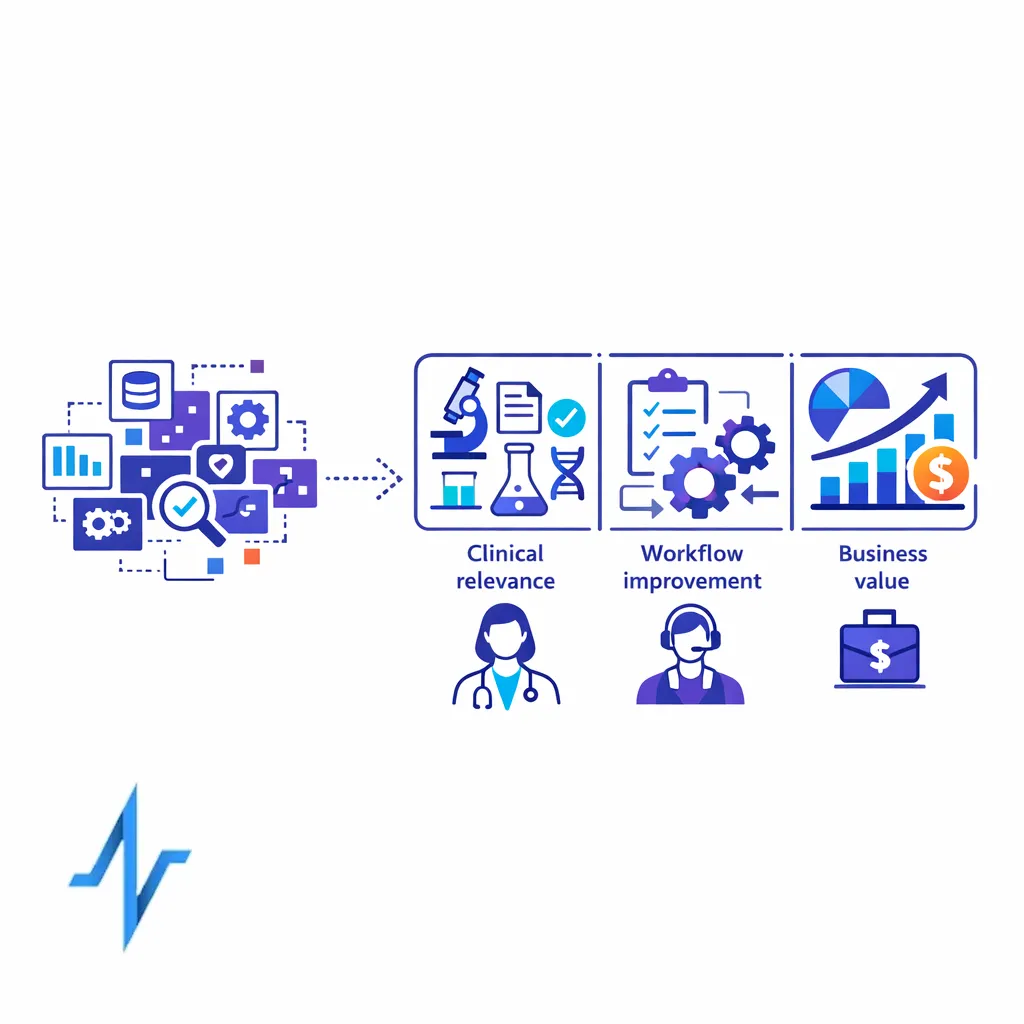
Features matter, but they are rarely the first thing a buying group needs. Buyers want to understand what changes because the device exists. Does it improve workflow, support better clinical decisions, reduce friction, or create a measurable operational advantage?
Feature-first messaging forces the audience to do the translation work themselves. Outcome-led messaging does that work for them while staying rooted in approved claims and defensible evidence.
Treating all buyers the same
One of the most common problems in medtech marketing is message flattening. The same deck, same email, same landing page, and same proof points get used for everyone because it feels efficient.
It is not efficient if it lowers conversion. Clinicians, procurement, finance, operations, and channel partners each need different framing. The underlying truth can stay the same while the story, proof order, and next step change by audience.
Underinvesting in post-launch and digital follow-up

Some manufacturers put most of their energy into launch events, conference presence, and the first wave of field materials. Then digital follow-up is thin, nurture stops early, and late-stage buyers struggle to find practical content for evaluation and implementation.
Post-launch is where many programs either compound or stall. A disciplined follow-up engine keeps the device visible, supports the field, feeds account insight back into marketing, and gives buyers confidence long after the initial announcement.
Example framework for a medical device marketing plan
Positioning
Define the category context, ideal buyer segments, top clinical use cases, and the exact problem the device solves. Then write a short positioning statement that explains why the product matters, for whom, and under what circumstances it is differentiated.
Keep the positioning simple enough that downstream teams can use it everywhere. If a rep, marketer, distributor, and product leader cannot all repeat the same core story, the market will hear several different ones.
Channel mix
Select channels based on stakeholder behavior and buying stage, not habit. A common mix is search content for discoverability, webinars and evidence briefs for validation, LinkedIn and email for account engagement, events and demos for conversion, and CRM-driven nurture for follow-up.
For complex device categories, channel mix should also include internal channels: field alerts, distributor communications, approved content libraries, and performance dashboards. Internal readiness is part of the go-to-market, not a separate workstream.
Content assets
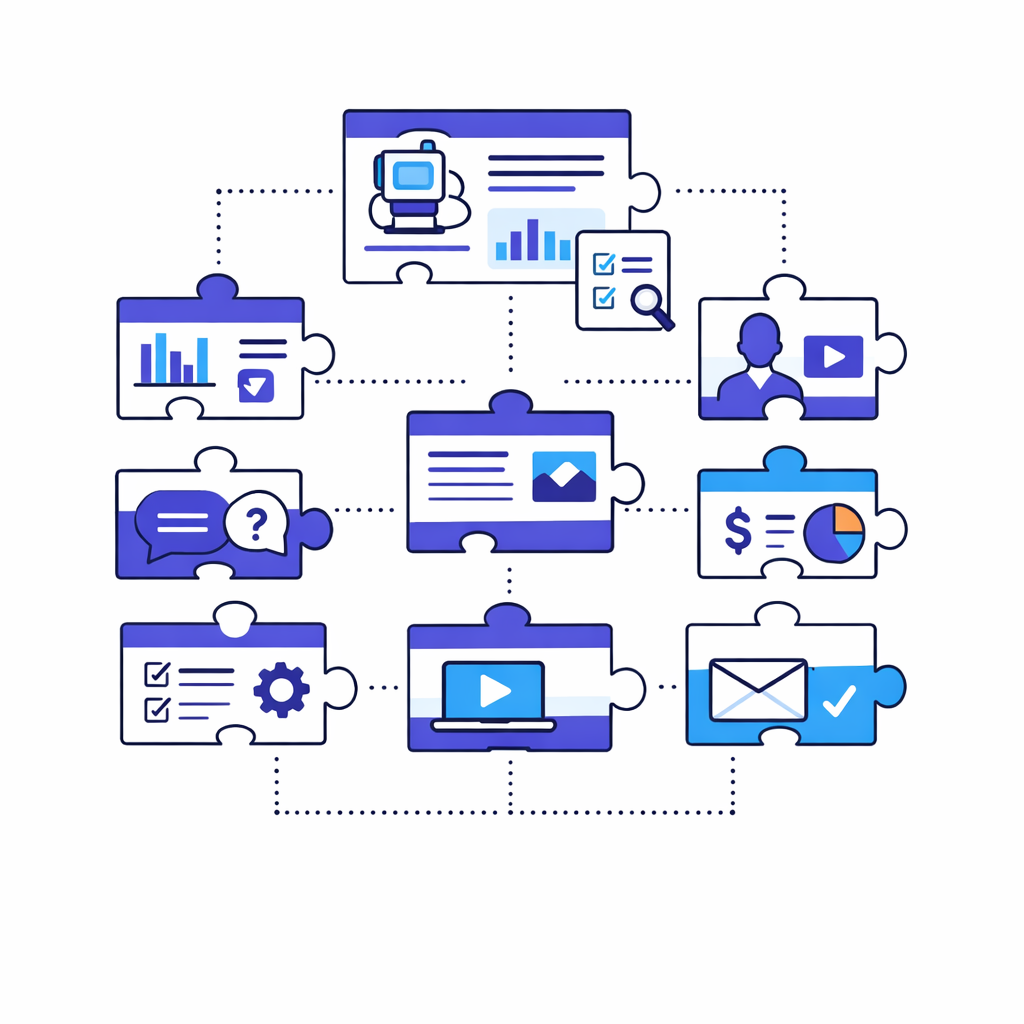
Build a core asset stack that can be reused across programs. That usually includes messaging pillars, claim sheets, product pages, evidence summaries, KOL or speaker content, competitive objection handling, business-case materials, implementation guides, demo scripts, and post-event follow-up templates.
The key is modularity. Create once, tailor many times. That is how manufacturers scale medical device marketing without losing control of message quality or compliance.
KPIs
Choose KPIs that reflect both channel efficiency and commercial progress. Useful measures include engaged target accounts, buying-group penetration, content consumption by role, meeting rate, demo rate, opportunity creation, opportunity progression, win support, and early adoption indicators after purchase.
Avoid metrics that look impressive but do not help decisions. Reach without relevance, leads without fit, and downloads without progression rarely tell the field what to do next.
Common questions
Can you market a medical device without FDA approval?
In the US, usually not for commercial distribution unless the device fits an exempt pathway. FDA explains that the applicable route may be exemption, 510(k) clearance, De Novo classification, or PMA approval before a device is marketed. The practical rule for marketers is to align every external claim with the product’s actual regulatory status and cleared or approved use.
What is the role of marketing in medical devices?
The role of marketing in medical devices is to connect validated product value to each stakeholder in the buying journey. That includes segmentation, positioning, evidence translation, campaign execution, sales enablement, and measurement across awareness, evaluation, purchase, and adoption.
How do you get into medical device marketing?
A strong entry path is a mix of healthcare or life sciences familiarity, B2B marketing fundamentals, and comfort with regulated content. Learn device basics, claims review, evidence interpretation, CRM workflows, and how different hospital and practice stakeholders make decisions. The marketers who advance fastest are usually the ones who can simplify complex products without oversimplifying the evidence.
What to do next
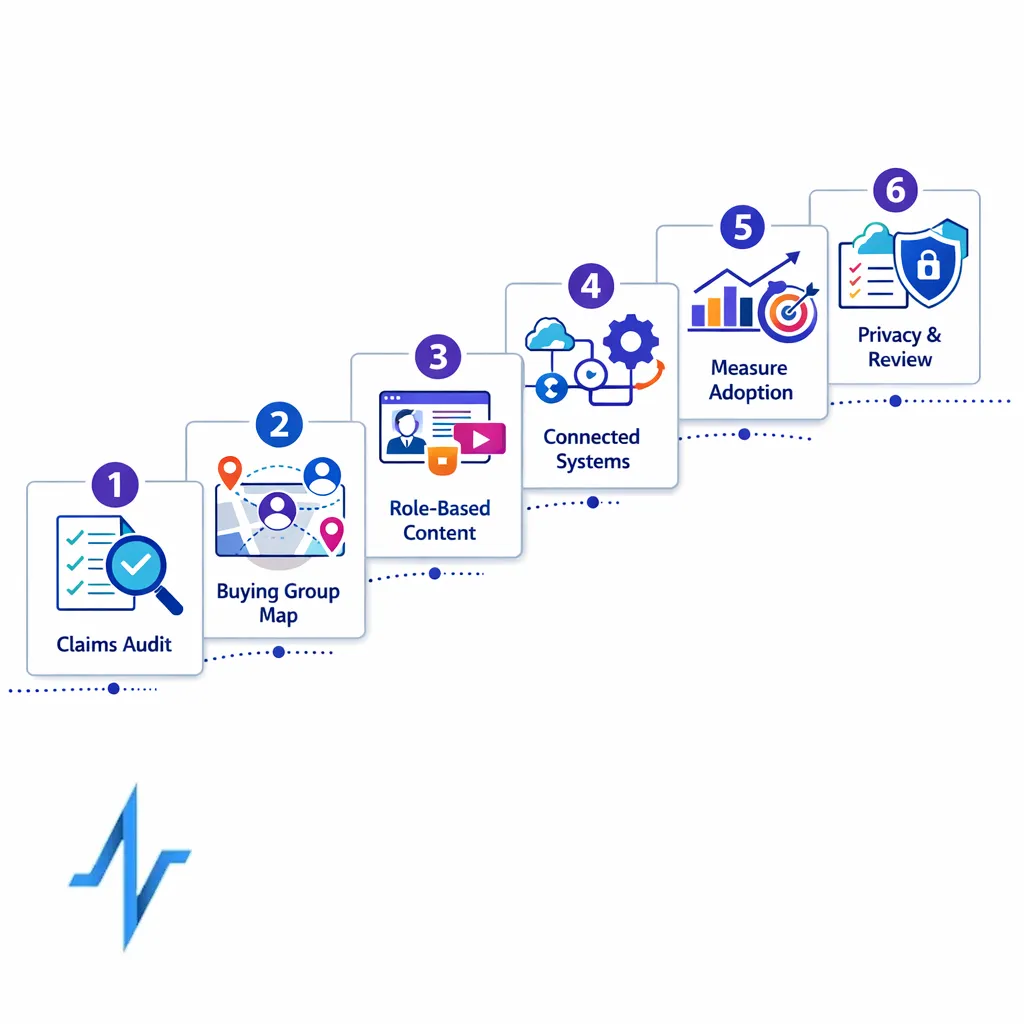
- Audit your claims. Identify which messages are approved, which need refreshed substantiation, and where language differs across channels.
- Map the buying group. List your clinician, procurement, finance, operations, and channel audiences, then document what each one needs to believe to move forward.
- Rebuild your content around roles and stages. Create a practical path from search and education to demo, committee review, and implementation.
- Connect systems. Make sure CRM, marketing automation, webinar tools, event capture, and partner workflows share enough data to show account momentum.
- Measure through adoption. Define success as progression, not just inquiry volume.
- Pressure-test privacy and review workflows. Verify how patient-facing data is handled, who approves copy, and how approved assets are distributed to the field.
If you do those six things well, your medical device marketing will become easier to scale. More importantly, it will become easier for clinicians and buyers to trust, evaluate, and act on what your team puts into market.
Talk to Pulse Health

If your team is trying to turn medical device marketing into a more coordinated HCP engagement and account-orchestration engine, Pulse Health can help you connect campaigns, CRM, field follow-up, and measurement without losing compliance discipline. When the goal is better engagement with clinicians and buyers across channels, the workflow matters as much as the message.
Request a Demo to see how Pulse Health supports cross-channel execution, or start by asking for the platform overview, seeing how it works, or exploring integration options for your current commercial stack.