
Approved email looks simple from the outside: create a template, route it for review, and let the field send it. In practice, that approach usually breaks down once brand teams, commercial ops, CRM owners, medical reviewers, and compliance stakeholders all need the program to scale at the same time.
This guide is for US pharma brand teams, omnichannel leads, marketing ops and CRM owners, plus agency and implementation partners supporting HCP engagement. You will learn what approved email means in pharma, how it differs from broader pharma email marketing, which design elements teams most often overlook, how to structure content and workflow, what common failure modes to avoid, and what to ask vendors before you commit.
What approved email means in pharma
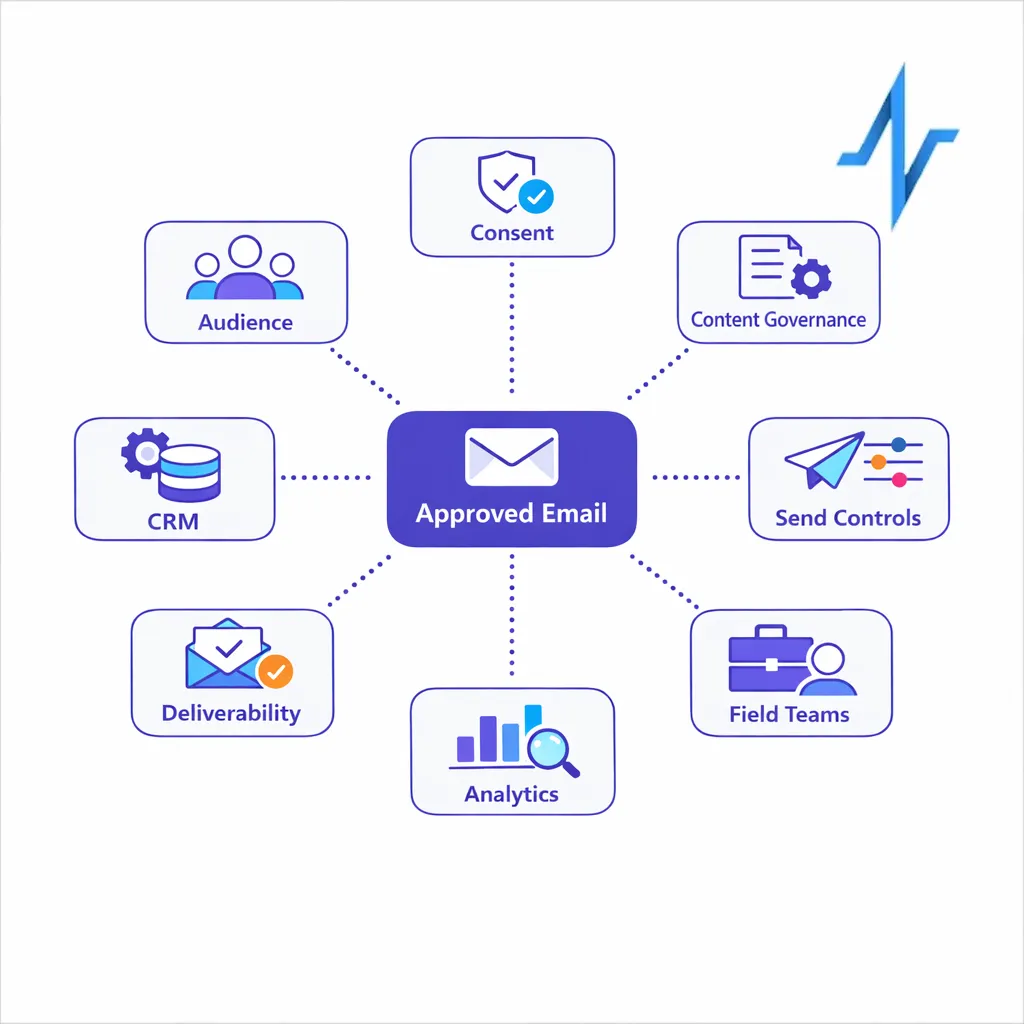
In this guide, approved email means a governed email model that lets pharma teams send pre-reviewed messages using approved templates, modular content, and defined personalization rules instead of free-form copy. The point is to make compliant HCP outreach repeatable, auditable, and usable in real workflows rather than treating every message like a custom legal exercise.
Approved email vs mass email vs rep-triggered email
For planning purposes, think of approved email as a controlled operating model, not just a channel. A mass email program is usually centrally scheduled for broader segments, while an approved email program is typically used for narrower follow-up, rep-sent email, MSL outreach, or triggered journeys where content control and sender guardrails matter more than pure scale.
Generic marketing automation can send large volumes efficiently, but it does not automatically create the governance model pharma teams need. Approved email adds the missing discipline: locked content where needed, clear role permissions, approved email templates and fragments, and a send process that fits medical, legal, and regulatory review rather than working around it.
You may also hear teams say “Veeva approved email.” In practical terms, that usually refers to the same broader idea executed inside a specific CRM stack: approved templates, controlled personalization, and auditable sending. The more important question is not the vendor label. It is whether the program design is strong enough to work across content, data, compliance, and reporting.
Why approved email matters for HCP engagement
Approved email matters because it solves a real operating tension. Field and omnichannel teams need timely follow-up after meetings, events, sample discussions, speaker programs, patient education requests, or content engagement, but uncontrolled messaging creates inconsistency, review risk, and weak measurement.
A well-designed approved email program makes the workflow clearer for everyone involved. Brand teams manage message strategy, ops teams manage audience logic and orchestration, reviewers approve modular content once with traceable rules, and field teams send within guardrails instead of improvising claims or attachments.
What changed
The biggest recent shift is operational, not conceptual. Gmail’s current email sender guidelines place much more emphasis on sender authentication, spam-rate control, and easy unsubscribe for bulk mail, so approved email programs now need deliverability ownership as well as content governance.
At the same time, approved email is increasingly expected to support a broader omnichannel email strategy. That raises the bar for identity resolution, consent checks, workflow orchestration, and measurement because the email itself is only one touchpoint in a larger HCP journey.
9 program design elements teams often miss
If you want a fast diagnostic, use the nine elements below. Teams rarely fail because they forgot to buy software. They fail because one or two of these design choices were never made clearly.
- 1. Audience and HCP segmentation. Do not start with the creative asset. Start with who should receive the message, why they qualify, what the trigger is, what should exclude them, and what the next best action should be if they do not engage. Good approved email pharma programs define audience rules before subject lines.
- 2. Consent and preference management. The CAN-SPAM Act sets baseline rules for commercial email, including sender identification and opt-out handling, but pharma teams usually need tighter channel, brand, and role-based preference logic than the legal minimum. If patient education, support enrollment, or sign-up flows involve protected health information, the HIPAA Privacy Rule can also become relevant.
- 3. MLR-ready content governance. Promotional email content needs a repeatable review model for claims, references, and fair balance because FDA prescription drug advertising regulations require truthful promotion and risk disclosure. Governance should cover subject lines, body copy, links, attachments, and any destination the email opens.
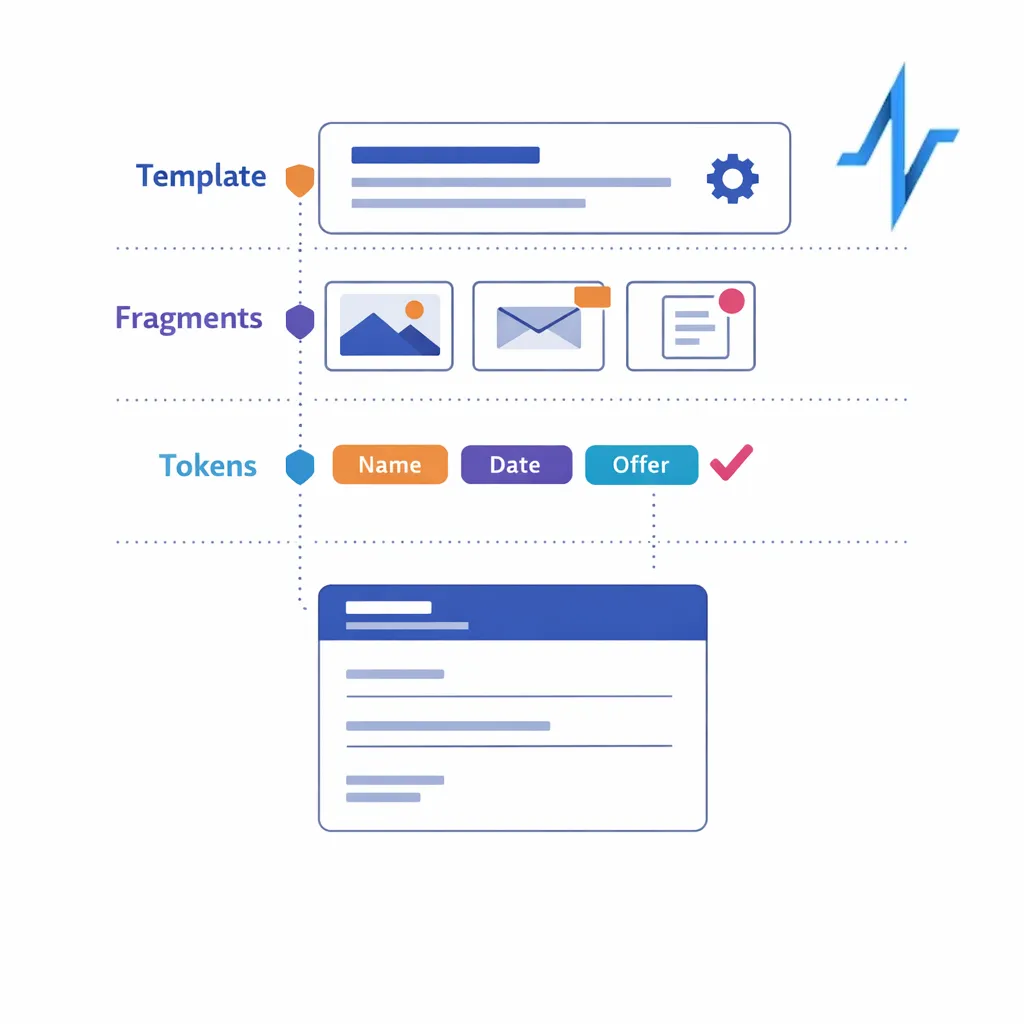
- 4. Template and fragment architecture. One flexible shell with clear reusable sections usually works better than dozens of nearly identical templates. Build modular content blocks for headers, approved claims, indication-specific language, safety text, signatures, and links so updates happen once and propagate consistently.
- 5. Personalization guardrails for reps and MSLs. Personalization should improve relevance without reopening compliance risk. Decide which fields are tokenized, which free-text areas are allowed, which attachments are permitted, and which roles can send which content to which audiences.
- 6. Deliverability foundations. Mailbox-provider expectations for SPF, DKIM, DMARC, and easy unsubscribe should be treated as launch criteria, not technical cleanup after rollout. Suppression management, bounce handling, sender reputation, and list hygiene belong in the same workstream as content approval.
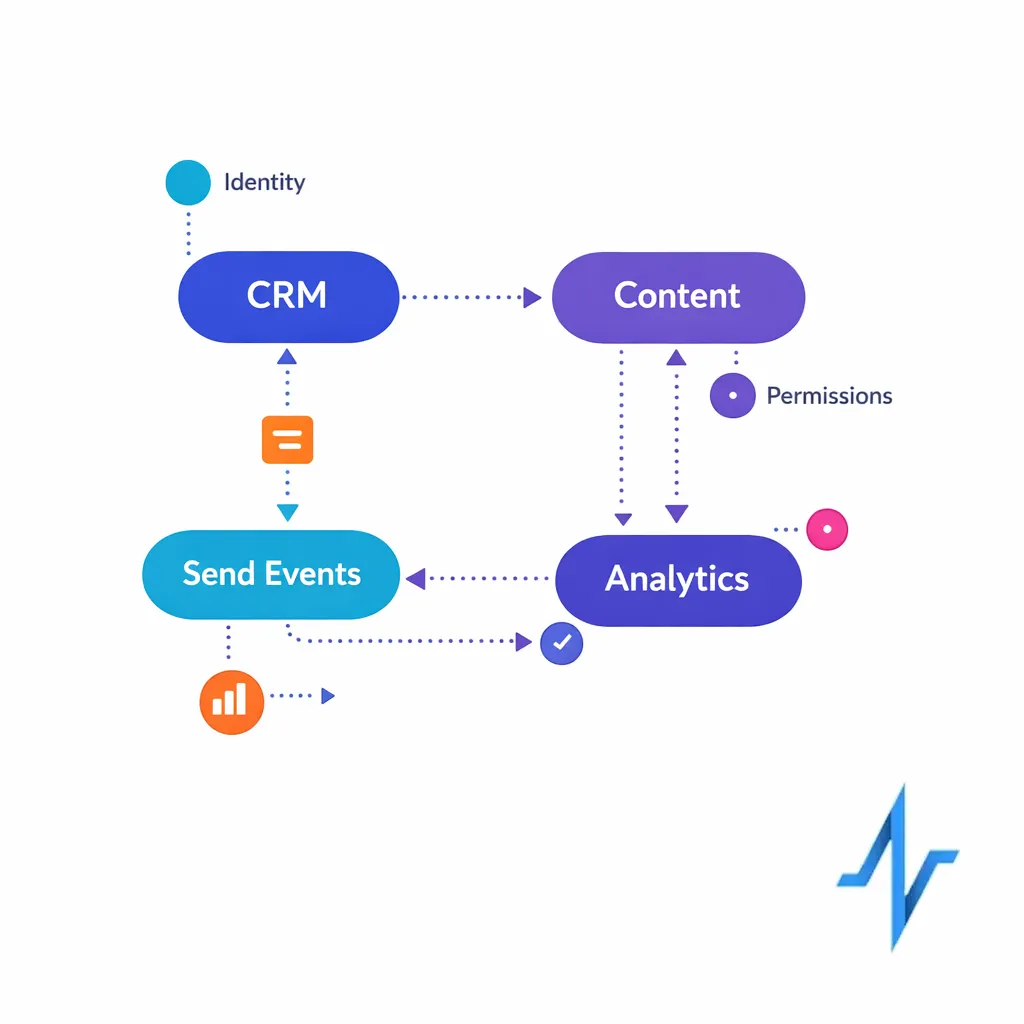
- 7. Workflow orchestration across CRM, content, and analytics. Approved email works best when recipient data, approved content, send events, and downstream engagement signals are connected. If handoffs are manual, the program may look compliant on paper while remaining fragile in production.
- 8. Measurement beyond opens and clicks. Measure what the email changes, not just what the email records. For many teams that means tracking delivery quality, meaningful content interaction, meeting follow-up, form completion, field action, or progression to the next channel.
- 9. Vendor evaluation and implementation readiness. A strong demo is not the same as a strong operating fit. If a vendor cannot explain data inputs, consent checks, approval states, audit trails, fallback logic, and reporting ownership, the platform will not solve the real problem behind compliant HCP outreach.
The important point is that these elements interact. Weak segmentation makes consent logic harder, weak governance creates fragment sprawl, weak deliverability reduces measurement quality, and weak reporting makes it harder to justify the program internally even when good content exists.
How approved email content should be structured
Templates, fragments, tokens, and modular content
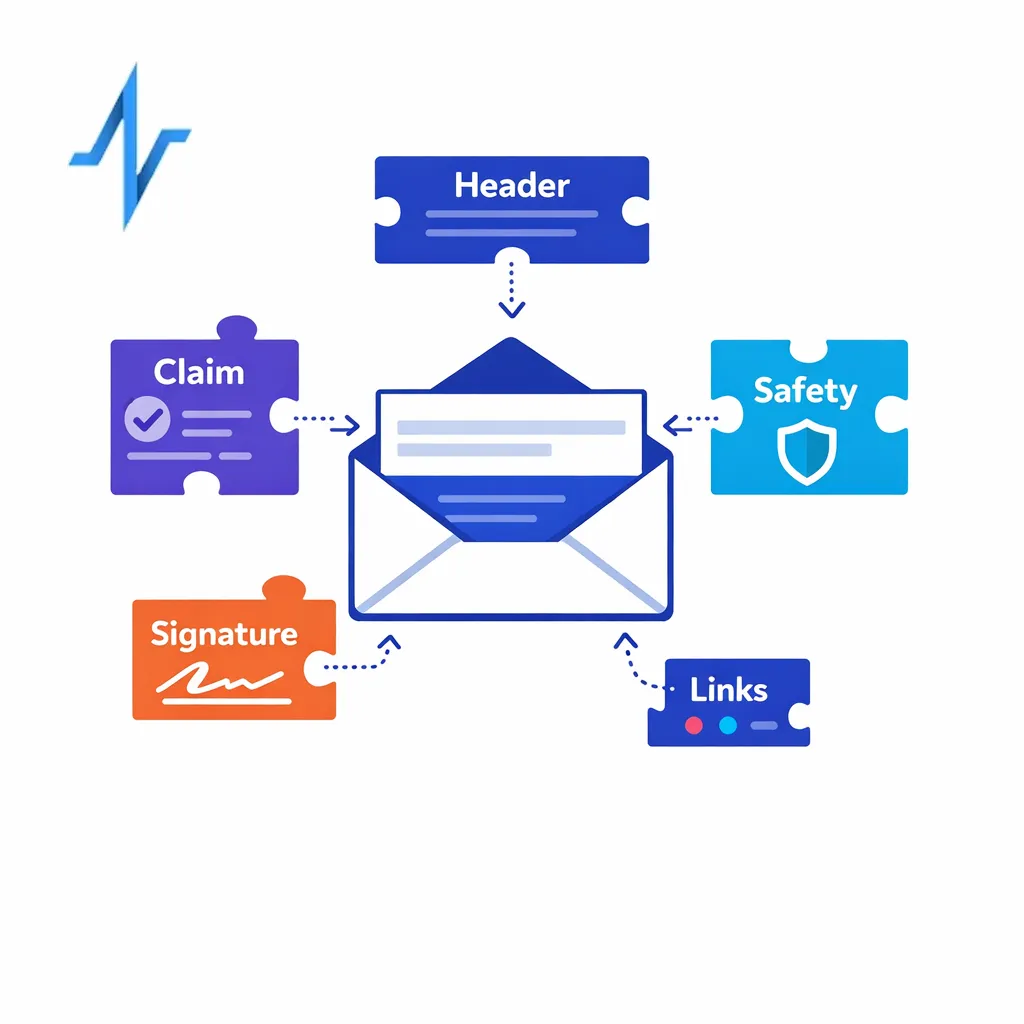
The best approved email templates do not try to solve every use case with one giant asset. They define a stable shell, then swap approved fragments for indication, specialty, call objective, audience type, and journey stage.
That modular approach shortens review cycles and reduces version confusion. It also makes it easier to adapt content without breaking the underlying governance model, which is especially important when multiple brands, agencies, or field teams are involved.
Tokens should be used where they add safe relevance: name, sender details, territory context, event follow-up references, or approved resource links. What you want to avoid is open-ended personalization that lets the sender imply unsupported efficacy, add off-script positioning, or create medical or promotional ambiguity.
Safety information, PI/ISI, and required links
For promotional content, required safety elements cannot be treated as something the sender remembers to add later. The real design question is whether every send path reliably presents the right balance of branded message, clinical context, and required safety information for the indication and audience.
A practical way to manage this is to lock the compliance-critical components as fragments. That usually includes core risk language, prescribing information links, mandatory disclosures, approved references, unsubscribe language, and destination URLs that should never be edited in the field.
Mobile-first and hospital-firewall-aware design
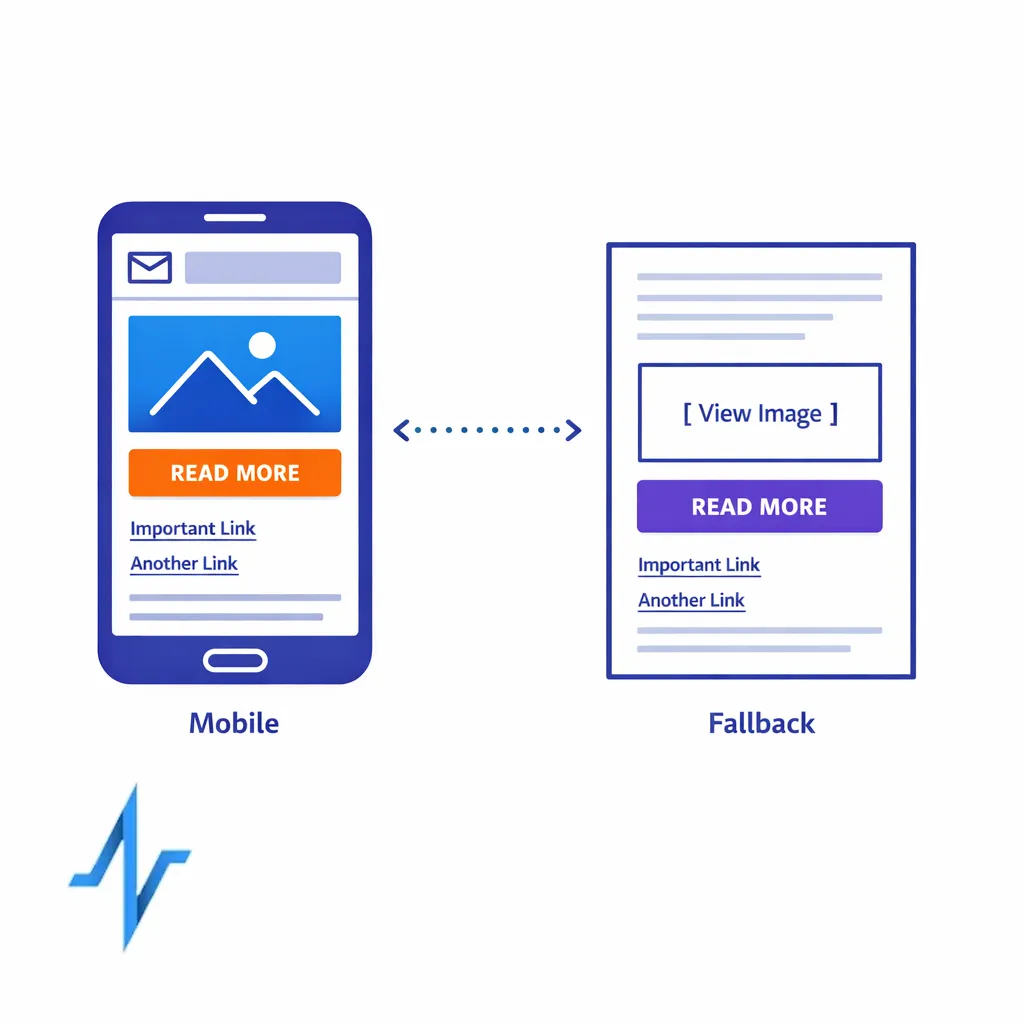
Approved email should read cleanly on a narrow screen, with the primary message visible early and the main action easy to tap. Dense hero images, tiny link targets, and overly decorative layouts may look polished in review but underperform in the environments where HCP emails are actually opened.
Design as if images may load late, styling may degrade, and links may be rewritten by security tools. Simple HTML, clear text hierarchy, descriptive link text, and a plain-language fallback usually outperform heavy visual treatment in institutional settings.
You may also hear the “60/40 rule for email.” Treat that as a loose design heuristic, not a compliance standard. In pharma, the better test is whether promotional value, clinical clarity, and required safety content feel intentionally integrated rather than forced into separate visual layers.
Common failure modes in approved email programs
Over-personalization that breaks compliance
A common misconception is that more personalization always means better performance. In approved email, relevance should usually come first from better targeting, better timing, and better content selection, then from tightly governed personalization.
Free-text fields are where many programs quietly lose control. They start as a helpful note area, then expand into quasi-custom messaging that no longer fits the reviewed claim set.
Weak consent logic and stale lists
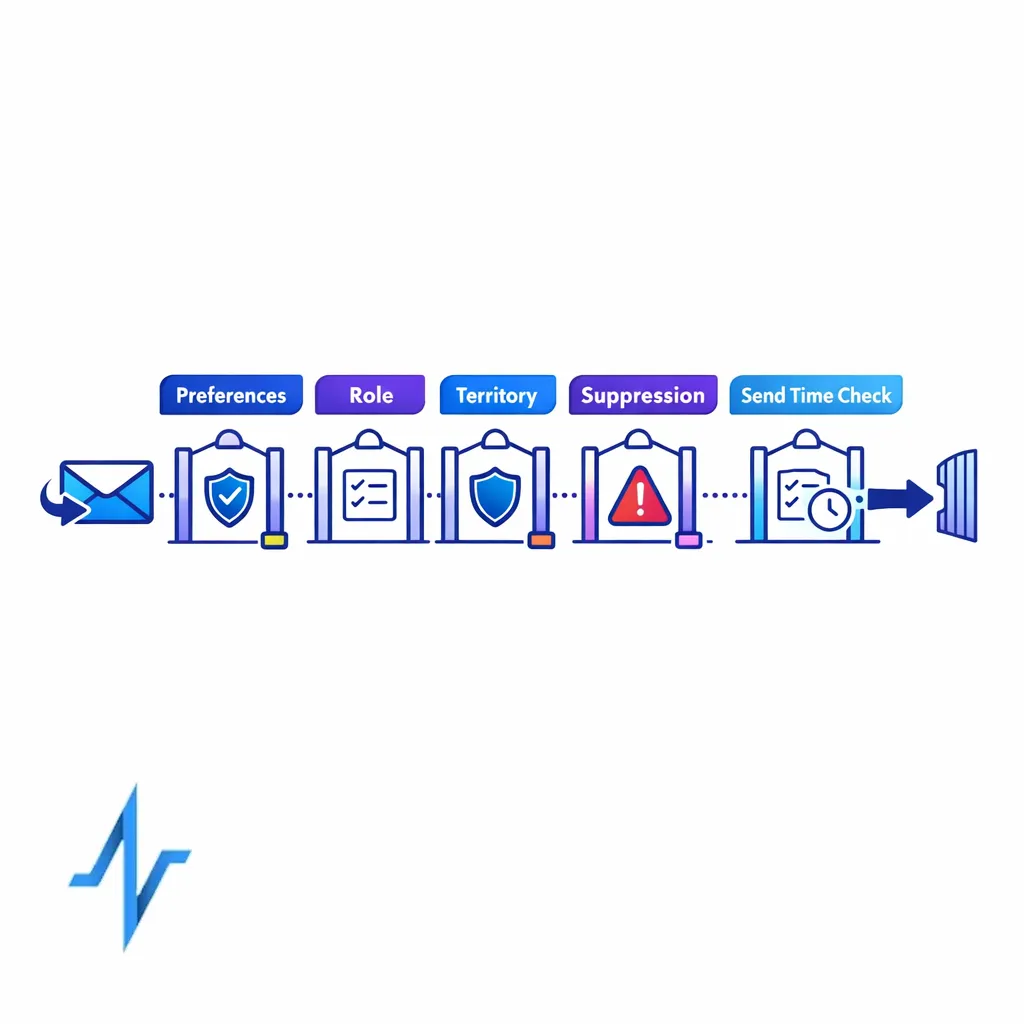
Another failure mode is treating consent as a one-time attribute instead of a live decision. Programs degrade when opt-outs lag, duplicate identities remain unresolved, or recipient eligibility is checked too early in the process and not again at send time.
This is why consent-aware workflow design matters so much in pharma email marketing. The send engine should check suppression, role suitability, territory rules, and current preference status as part of execution, not as a spreadsheet exercise before the campaign is loaded.
Fragment sprawl and version confusion
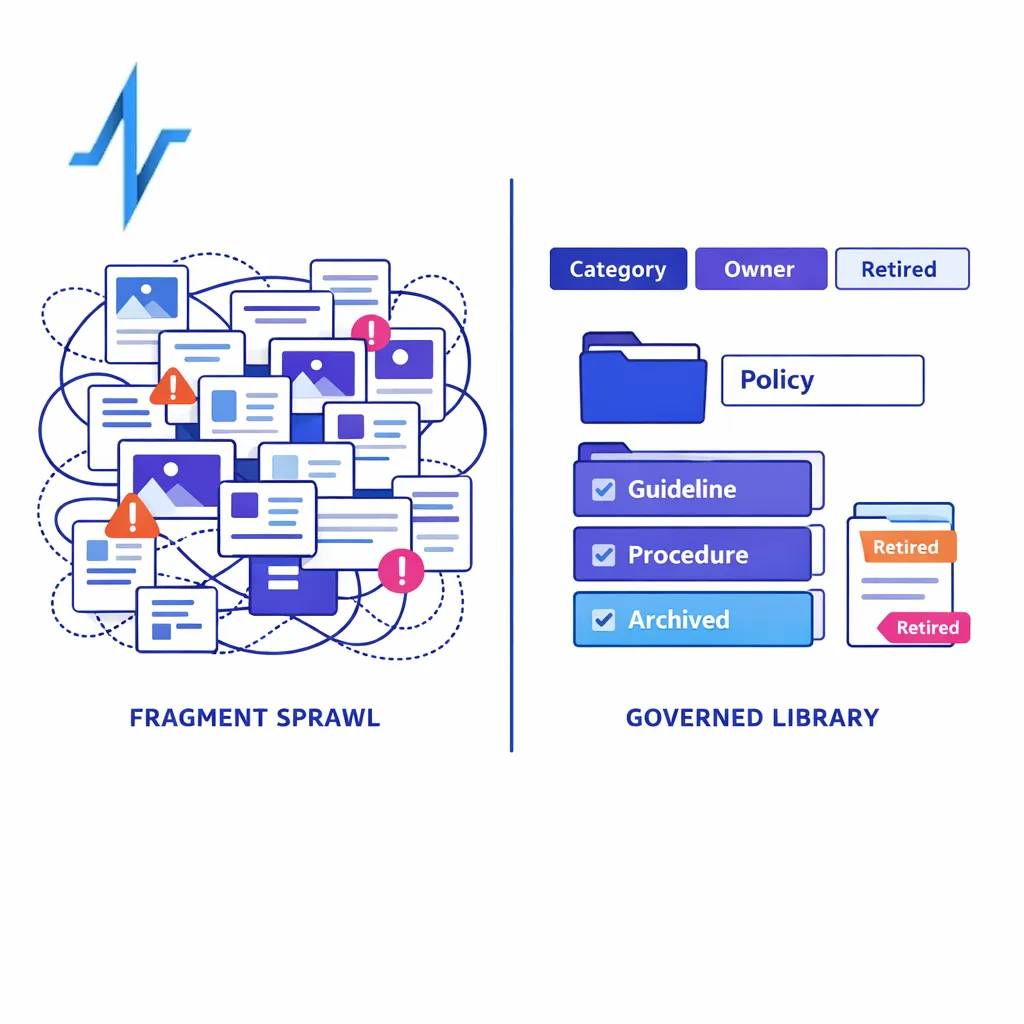
Approved email can become harder to govern than ordinary email if teams create too many look-alike fragments with weak naming rules. Once that happens, reviewers slow down, senders lose confidence, and outdated content stays available longer than anyone intends.
Good governance solves this with a simple taxonomy, explicit ownership, retirement dates, and reporting on which fragments are actually used. If a fragment is not reused, not measured, and not tied to a real use case, it is probably adding noise instead of scale.
Tracking without actionability
Many organizations can report opens and clicks but still cannot answer what should happen next. Measurement only becomes useful when it feeds orchestration, field follow-up, content optimization, suppression logic, or audience refinement.
That means email measurement should answer operational questions. Which segment responds to which trigger? Which content block produces a qualified next step? Which sends should suppress future touches, and which should escalate them into another channel or rep action?
Approved email vendor checklist
CRM and content-system integration requirements
Your vendor should be able to show how recipient data, account context, sender permissions, approved content, and engagement signals move between systems with minimal manual handling. If the answer depends on repeated CSV exports, expect delays, higher error rates, and weak reporting integrity.
Ask whether the platform supports both central and field-triggered workflows, how it handles identity and duplicate records, and whether template logic can adapt by audience, brand, and user role without multiplying assets beyond what your reviewers can manage.
Audit trail, approval workflow, and reporting needs
Any platform managing approved email content should maintain a durable history of versions, approvals, and sender actions consistent with electronic record control expectations in 21 CFR Part 11. That does not force every team into the same validation model, but it does mean auditability cannot be treated as a future enhancement.
Ask to see approval states, reviewer comments, effective dates, expired-content handling, and the exact reporting objects available after launch. A vendor that cannot show those basics clearly in the demo is giving you useful information about implementation risk.
Questions to ask in demos and pilots
- How is consent checked at send time? Look for real-time or near-real-time eligibility checks, not just batch list preparation.
- What content is locked versus editable? The answer should be role-based and explicit.
- How are templates, fragments, and tokens governed? Ask how the system prevents fragment sprawl and outdated content use.
- What happens when a send fails? You want clear logic for retries, suppressions, bounce handling, and logging.
- Which metrics are native, and which require custom work? This separates a strong reporting foundation from a polished demo.
- How long does implementation really take? Press for dependencies on CRM data quality, DNS changes, approval workflow design, and integration ownership.
What to do next
- Map the current workflow. Document who owns audience selection, consent checks, content approval, send execution, and reporting.
- Inventory current assets. Separate reusable approved email templates and fragments from one-off emails that should be retired or rebuilt.
- Define sender guardrails. Decide what each role can personalize, attach, trigger, or edit.
- Review deliverability basics. Confirm authentication, suppression rules, unsubscribe handling, and domain ownership before scaling volume.
- Redesign measurement. Choose a small set of operational outcomes that matter more than vanity engagement metrics.
- Run a vendor readiness review. Evaluate governance fit, audit trail needs, integration ownership, and internal resourcing before procurement.
What a scalable approved email operating model looks like
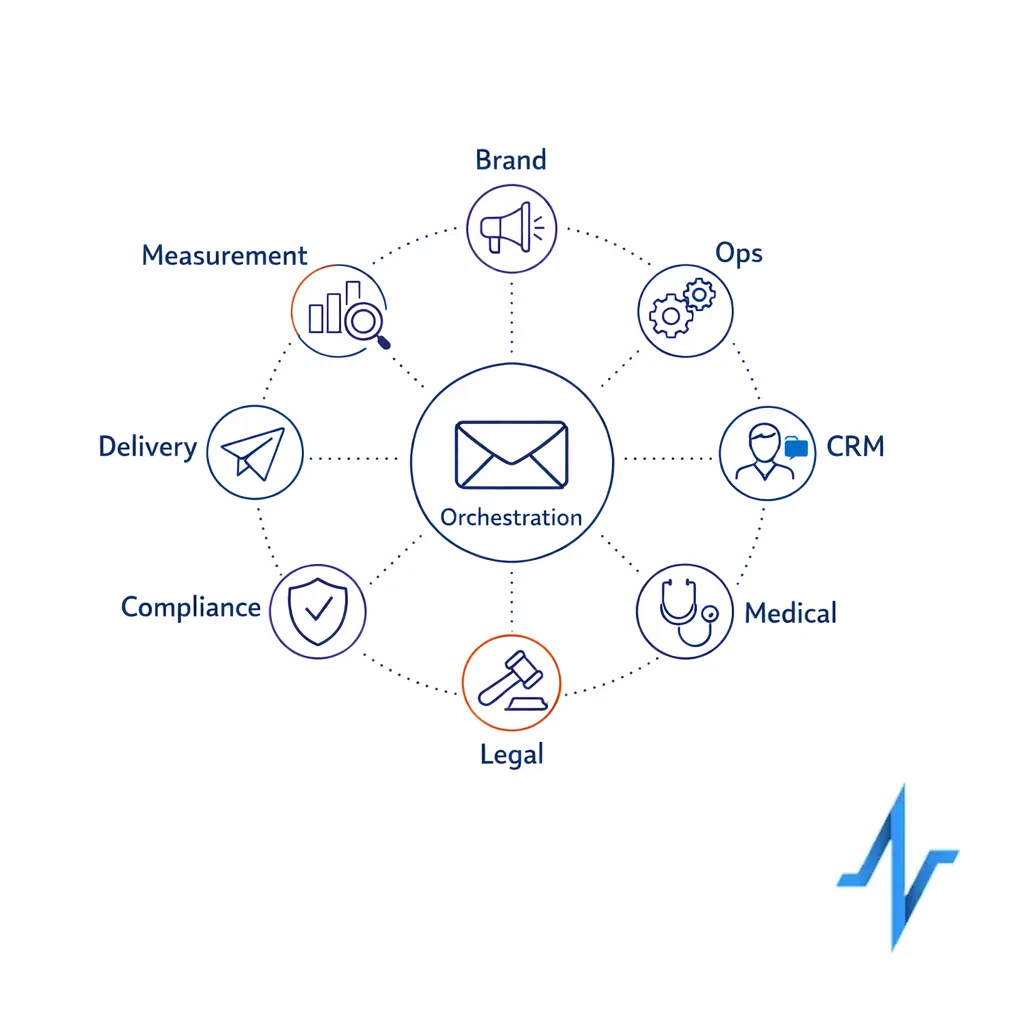
A mature approved email program is not just a compliant send tool. It is a shared operating model in which brand, commercial ops, CRM, medical, legal, and compliance teams agree on audience logic, content modules, approval rules, delivery standards, and downstream measurement.
When that model works, HCP emails become faster to launch, easier to govern, and more useful to the field. More importantly, approved email stops behaving like an isolated tactic and starts supporting broader omnichannel engagement.
That is the practical opportunity Pulse Health is built around. The goal is not more workflow for its own sake. It is a connected system that makes compliant HCP outreach easier to execute, easier to measure, and easier to improve.
Request a Demo
If your team is reworking approved email, vendor selection, or cross-channel orchestration, Pulse Health can help you translate governance requirements into an execution model your field, ops, and compliance teams can actually use. Request a Demo to see how consent-aware workflow, modular content, delivery controls, and measurement can fit together in one pharma-ready operating approach.