

Launching a therapy is not just a brand exercise. For US pharma brand teams, omnichannel leads, commercial ops, CRM owners, and agency partners, the final 12 months before launch are when strategy has to become an operating system.
This guide explains what drug launch planning means in practice, why the 12-month window matters, how to phase the work, and what commercial teams should have ready before day one. The goal is simple: arrive at launch with clear audiences, usable data, compliant content workflows, and measurement that helps the team improve quickly.
Quick answers
What is drug launch planning?
Drug launch planning is the structured process of turning a future approval into a coordinated go-to-market program. It aligns medical, commercial, market access, analytics, field, and operational teams around the decisions, assets, and workflows required to activate effectively at launch.
What should be included in a drug launch plan?
- Launch goals and success metrics
- Priority audience segmentation for HCPs, accounts, patients, and internal teams
- Message architecture and evidence support
- Channel plan and content operations model
- Data, identity, and reporting dependencies
- Market access and affordability assumptions
- Field enablement and internal governance
- Launch-day monitoring and post-launch optimization rules
What are the phases of drug launch?
- 12–9 months: set objectives, segment audiences, and map dependencies
- 9–6 months: build the channel plan, workflows, and content operations
- 6–3 months: validate readiness across systems, teams, and reporting
- 3–0 months: execute, monitor signals, and optimize quickly
What drug launch planning means for pre-commercial teams
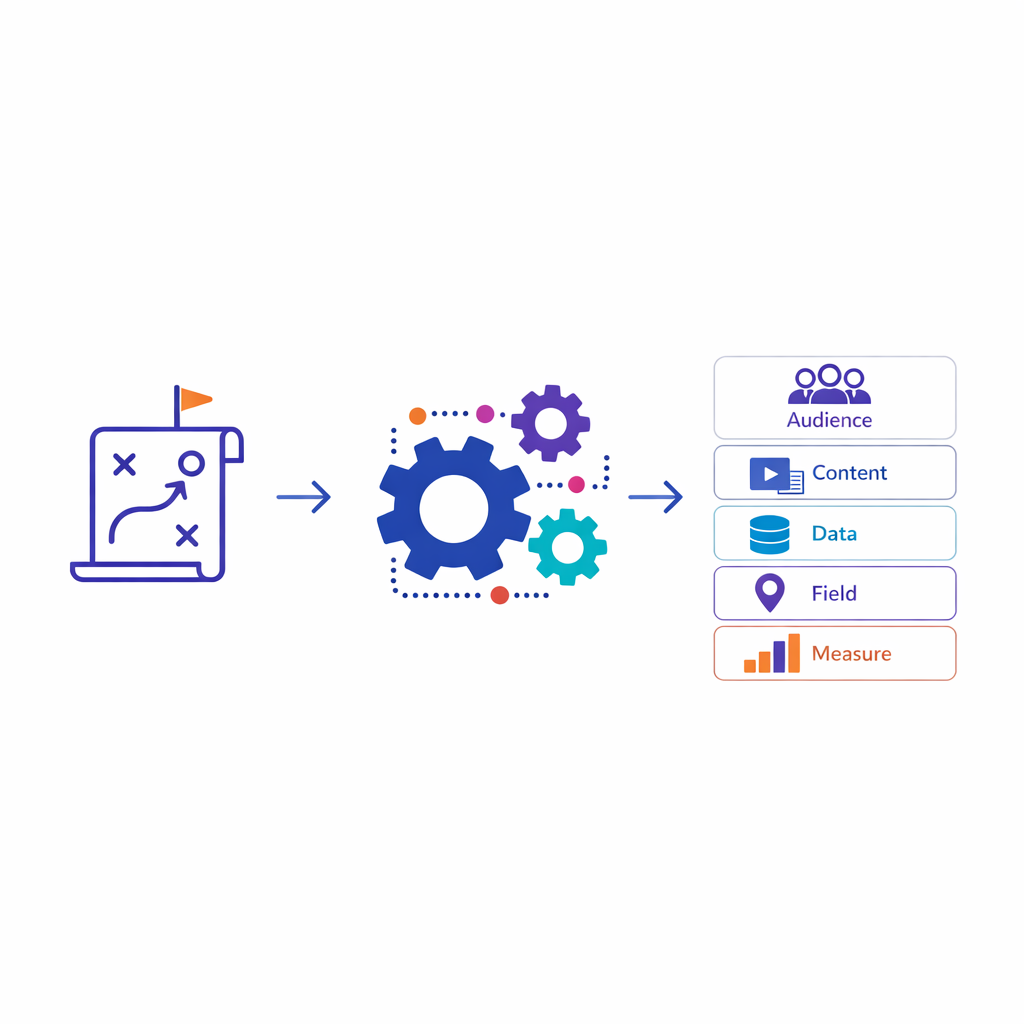
A drug launch plan is narrower than broad commercialization strategy. Commercialization spans pre-launch market shaping, launch, and post-launch growth. Drug launch planning focuses on the final operating window when decisions about audiences, content, systems, owners, and measurement have to be translated into execution.
For pre-commercial pharma teams, that means moving from ambition to operating clarity. It also means building launch materials within FDA prescription drug advertising oversight, instead of treating compliance as a last-minute check after channels and assets are already locked.
Why 12 months before launch is the inflection point
Twelve months out is usually the last moment when teams can still fix upstream problems without breaking timing. If segmentation, review rules, data feeds, or system ownership are still vague here, every downstream workstream slows down.
- Audience readiness: decide which HCPs, sites of care, payer accounts, patients, caregivers, and internal stakeholders matter first.
- Data readiness: confirm what data exists, what is missing, and which joins or integrations must be live before launch.
- Cross-functional alignment: make owners, approvals, and dependencies visible early so launch work does not move in parallel but disconnected tracks.
- Measurement readiness: define what the team will monitor daily, weekly, and monthly before campaigns go live.
The central question is not whether the organization is busy. It is whether the team can activate the right audience, in the right channel, with the right message, and see what happened fast enough to improve.
What changed in launch planning
Commercial teams preparing launches today need to account for the Medicare Part D redesign under the Inflation Reduction Act, especially when affordability, adherence, or patient support assumptions touch Medicare populations. Access, reimbursement, patient support, and brand teams should work through those implications before field questions start.
Digital planning also leaves less room for vague channel strategy. If brand or disease content may run in constrained digital formats, teams should design for FDA guidance on presenting risk and benefit information on character-limited internet and social media platforms from the start rather than trying to retrofit assets later.
A 12-month drug launch planning timeline
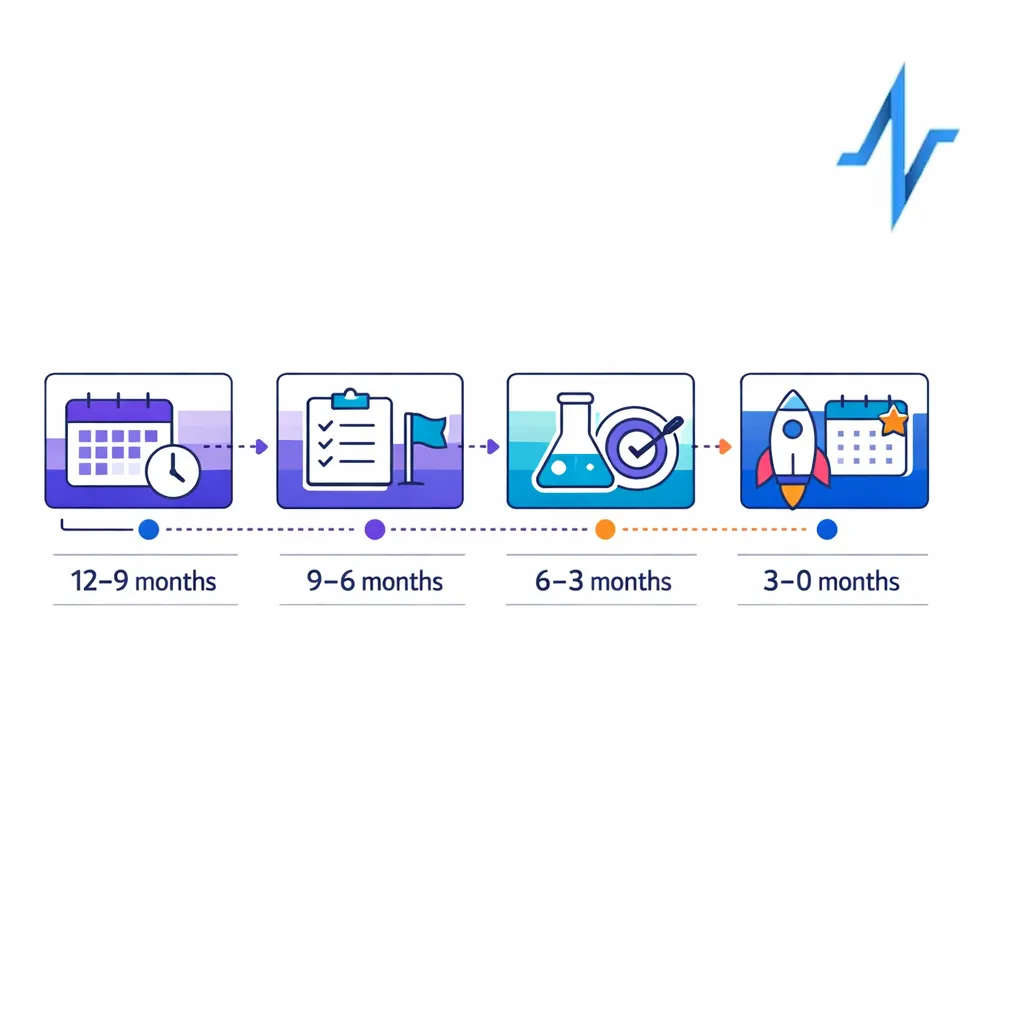
12–9 months before launch
This phase is about decisions, not polishing. The goal is to define the launch math: who matters, what success looks like, and what must exist for day one to work.
- Set launch objectives across HCP engagement, patient program planning, access, field activation, and analytics.
- Build a KPI tree that links business outcomes to leading indicators such as audience reach, engagement quality, access milestones, consented participation, and follow-up speed.
- Segment priority audiences by need, behavior, and channel fit rather than relying on broad targeting alone.
- Audit data gaps, evidence gaps, and system dependencies across CRM, media, content, consent, and reporting.
- Map every decision that requires medical, legal, regulatory, market access, analytics, or executive approval.
9–6 months before launch
This is the build phase. Strategy now has to become workflows, briefings, routing logic, reviewer timelines, dashboards, and a shared launch calendar.
- Finalize the omnichannel launch strategy for HCP, patient, and account-facing teams, including channel roles and trigger logic.
- Stand up content operations around a source-of-truth message map and reusable modular assets.
- Align medical, commercial, market access, and analytics workstreams so evidence planning and channel activation move together.
- Define field and digital coordination rules, including what should trigger rep outreach, reimbursement support, nurse educator follow-up, or nurture messaging.
- Confirm agency, vendor, and platform responsibilities so no critical launch task sits in a gray area.
6–3 months before launch
This phase is about proving that the machine works. Every major workflow should be tested under realistic pressure before launch week exposes the weak points.
- Run readiness reviews across teams, tools, routing logic, dashboards, and reporting definitions.
- Stress-test approval timelines, version control, claims governance, and submission workflows for materials that may require Form FDA 2253 submission.
- Validate audience data joins and identity rules so HCP engagement, patient education, and field activity can be measured in one view.
- Train internal teams on launch priorities, escalation paths, and feedback loops.
- Document what will be monitored daily, weekly, and monthly once launch begins.
3–0 months before launch
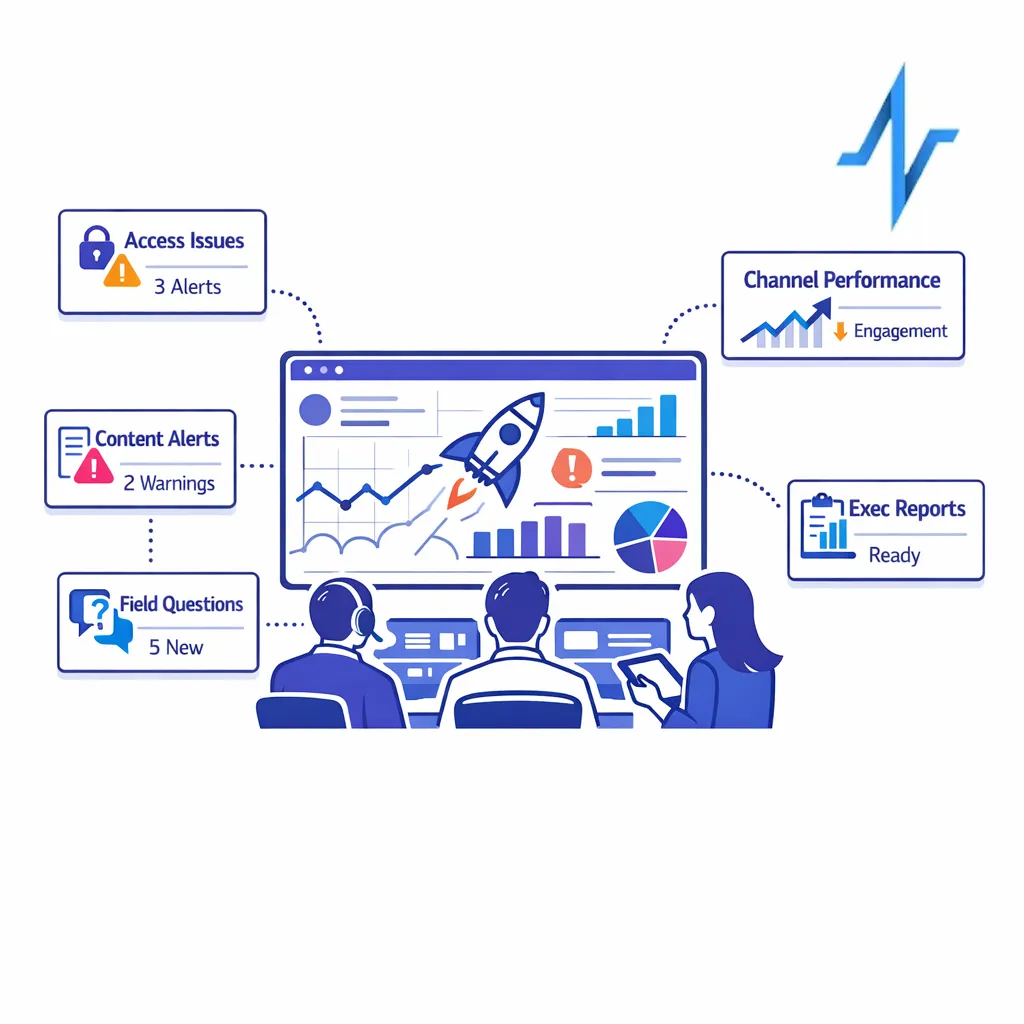
In the final stretch, simplicity wins. The best teams reduce ambiguity, shorten escalation paths, and make launch-day decisions easy to execute.
- Activate a launch command center with clear owners for access issues, content issues, channel performance, field questions, and executive reporting.
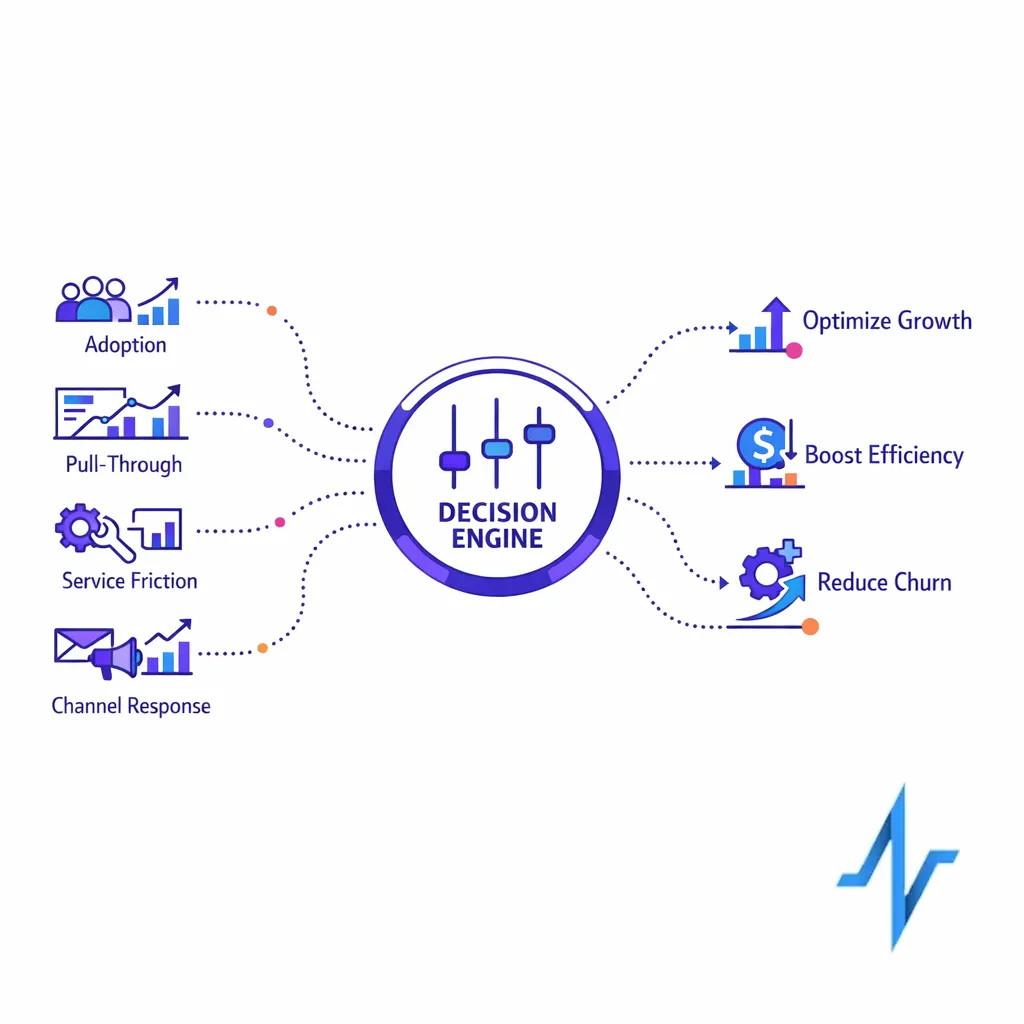
- Monitor early adoption signals, pull-through, patient service friction, and channel-level response patterns.
- Predefine the first optimization moves the team will make if uptake, access, or engagement trails expectations.
- Make sure post-launch reporting starts on day one, not after the first month closes.
- If the therapy has Risk Evaluation and Mitigation Strategy requirements, confirm training, documentation, and operational workflows are live before first use.
The core workstreams commercial teams should prepare
Audience and market readiness
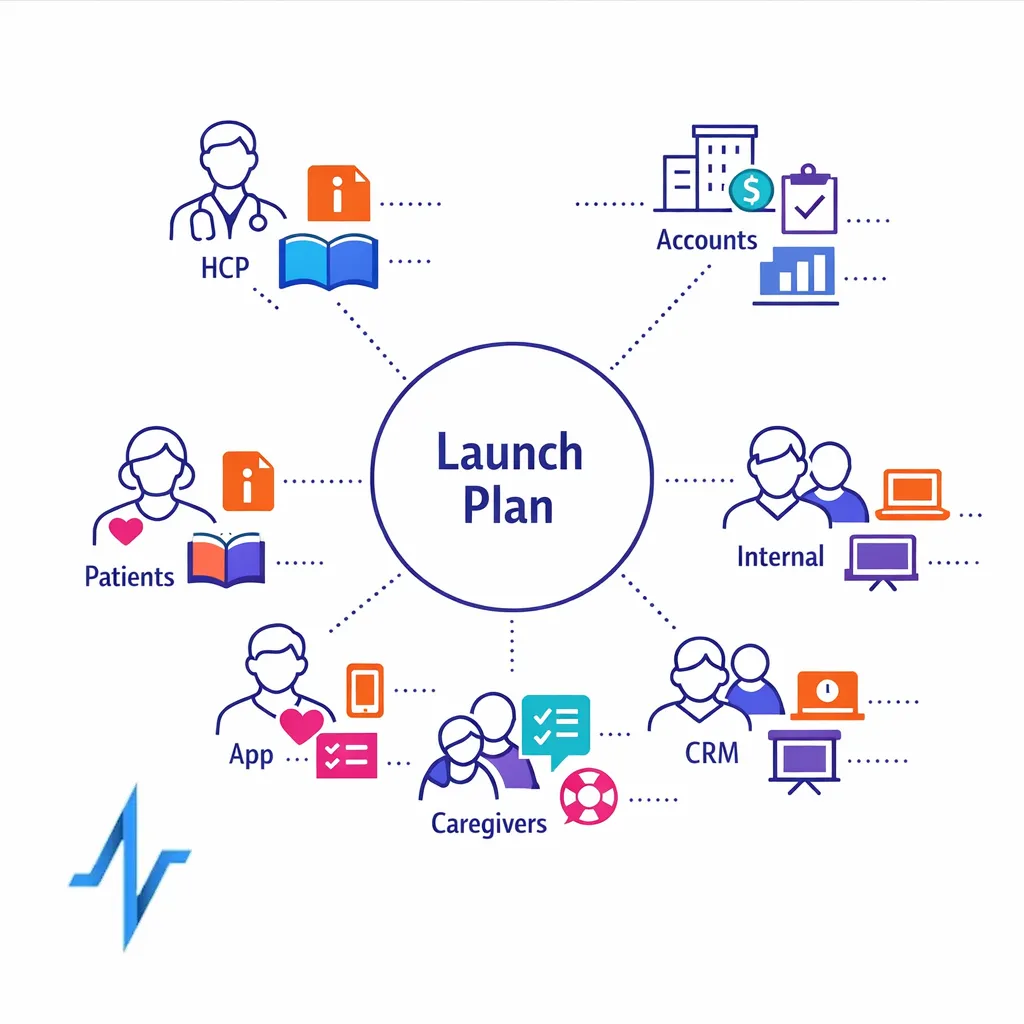
Build a usable audience model. That means defining priority HCPs, target accounts, patient opportunity segments, caregiver needs, and internal stakeholder groups in ways that actually change execution.
Good drug launch planning turns segmentation into action. Each segment should have a clear objective, a channel plan, a message angle, and a next best action when engagement happens or stalls.
Channel and content readiness
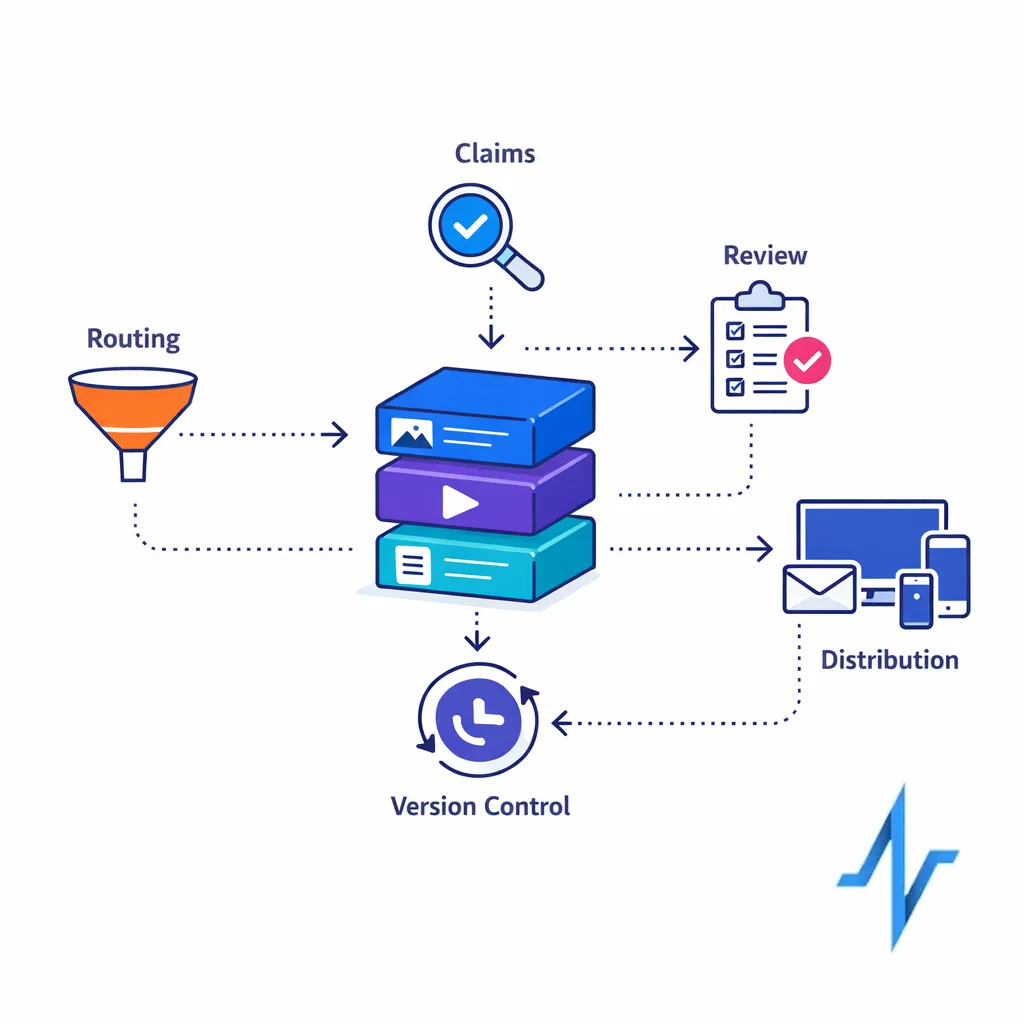
A channel plan should explain why each channel exists, not just list every tactic the team could buy. Email, media, websites, field, patient support, webinars, and rep-triggered follow-up should work as one coordinated system.
Content operations matter as much as creative quality. Teams need modular assets, claims traceability, reviewer routing, expiry rules, and a fast way to update materials without rebuilding everything.
Data, analytics, and KPI setup
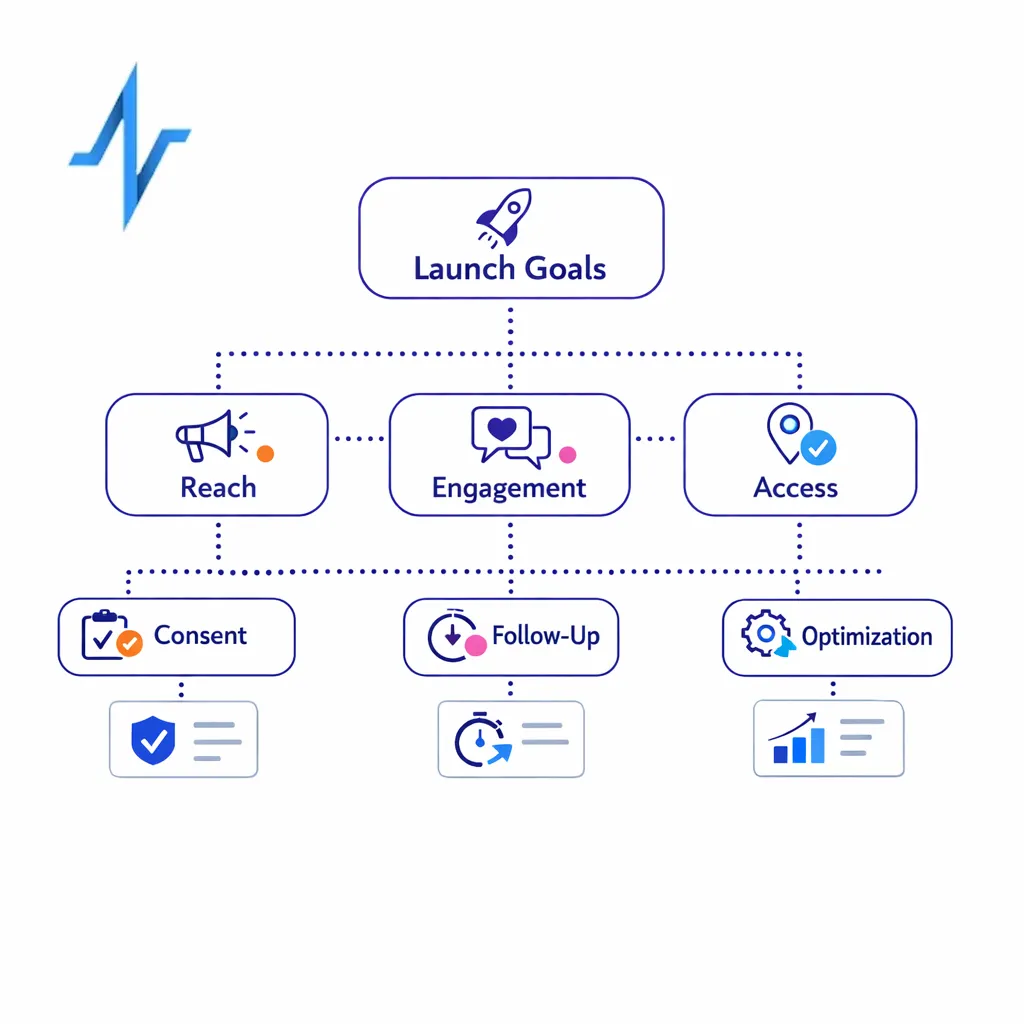
Measurement should start with decisions. If a metric does not help someone reallocate spend, adjust sequencing, change targeting, or escalate an access issue, it is probably not a launch KPI.
At minimum, define a KPI tree, data sources, refresh cadence, ownership, alert thresholds, and the business questions each dashboard is meant to answer. That is how you avoid a common launch problem: lots of data, little operational clarity.
Market access and payer readiness
Access planning should be built into the commercial launch plan, not parked in a separate track. Messaging, field pull-through, patient services, and affordability education all depend on realistic access assumptions.
Because Medicare Part D drug plans use formularies and utilization management tools, teams should translate payer scenarios into concrete plays for reimbursement support, field reimbursement, patient education, and escalation rules before launch.
Medical affairs and evidence planning
Medical affairs is not just a review stop. It shapes the evidence narrative, scientific exchange plan, objection handling, and the questions commercial teams must be prepared to route correctly.
In practical terms, medical and commercial teams should agree early on evidence gaps, publication timing, speaker strategy, and how field insights will be captured and shared back into the launch program.
Field force and internal enablement
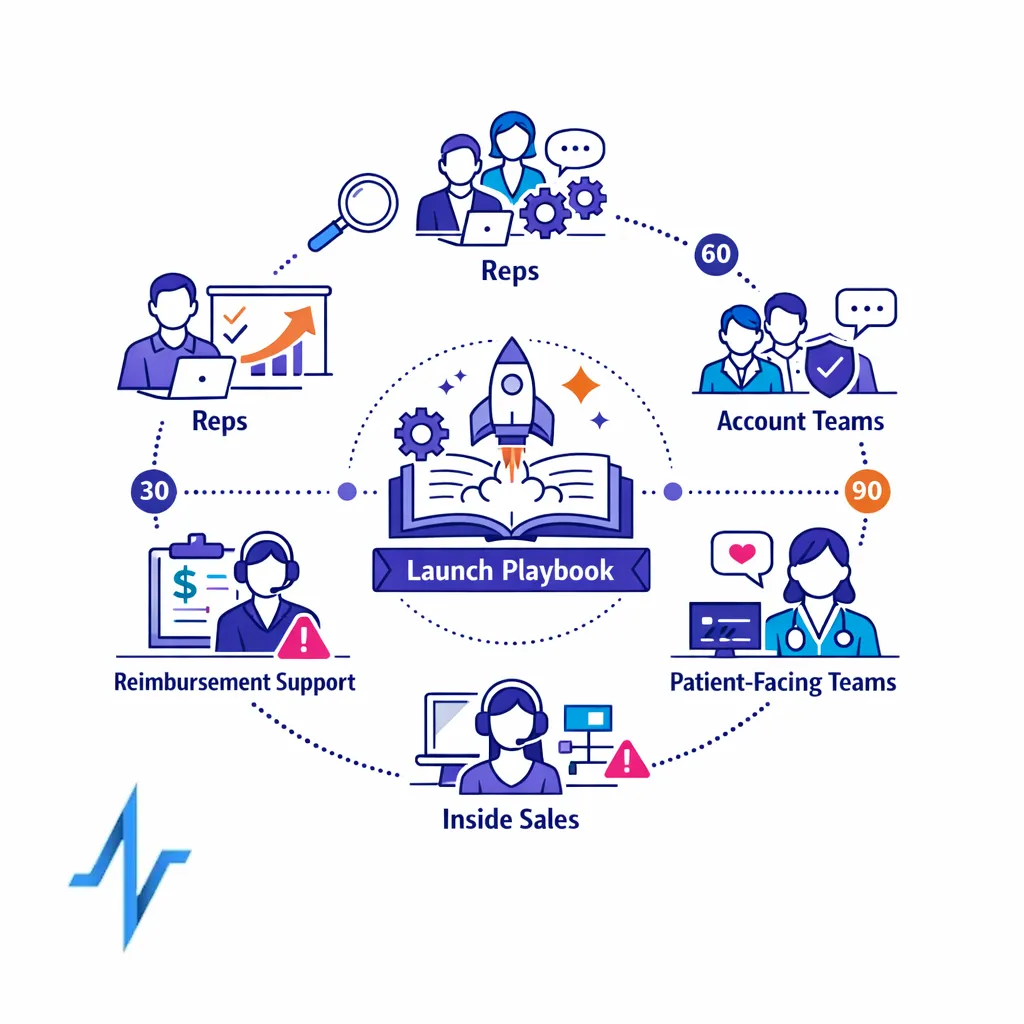
Field readiness is part training, part systems readiness, and part decision clarity. Reps, account teams, reimbursement support, inside sales, and patient-facing teams need the same operating picture, not six different versions of the story.
Enablement should cover positioning, access scenarios, channel coordination, escalation paths, and what good looks like in the first 30, 60, and 90 days. If internal teams cannot explain the launch priorities the same way, external execution will fragment.
Common launch planning mistakes that delay adoption
- Treating launch as a checklist instead of a cross-functional program. A list of deliverables does not replace a shared operating model, decision cadence, and dependency map.
- Waiting too long to define KPIs and dashboards. If measurement is designed after assets are live, teams usually discover too late that tags, audiences, and data joins were not built for the questions the brand actually has.
- Underinvesting in payer and access planning. Commercial momentum can hide the fact that access friction is often what blocks early adoption.
- Failing to connect medical, commercial, and analytics teams. When these groups work sequentially instead of together, message refinement and optimization both slow down.
- Overbuilding the launch stack. More vendors, more dashboards, and more channels do not automatically create better launch readiness. Clear ownership and reliable handoffs matter more.
Drug launch planning checklist for the final 12 months
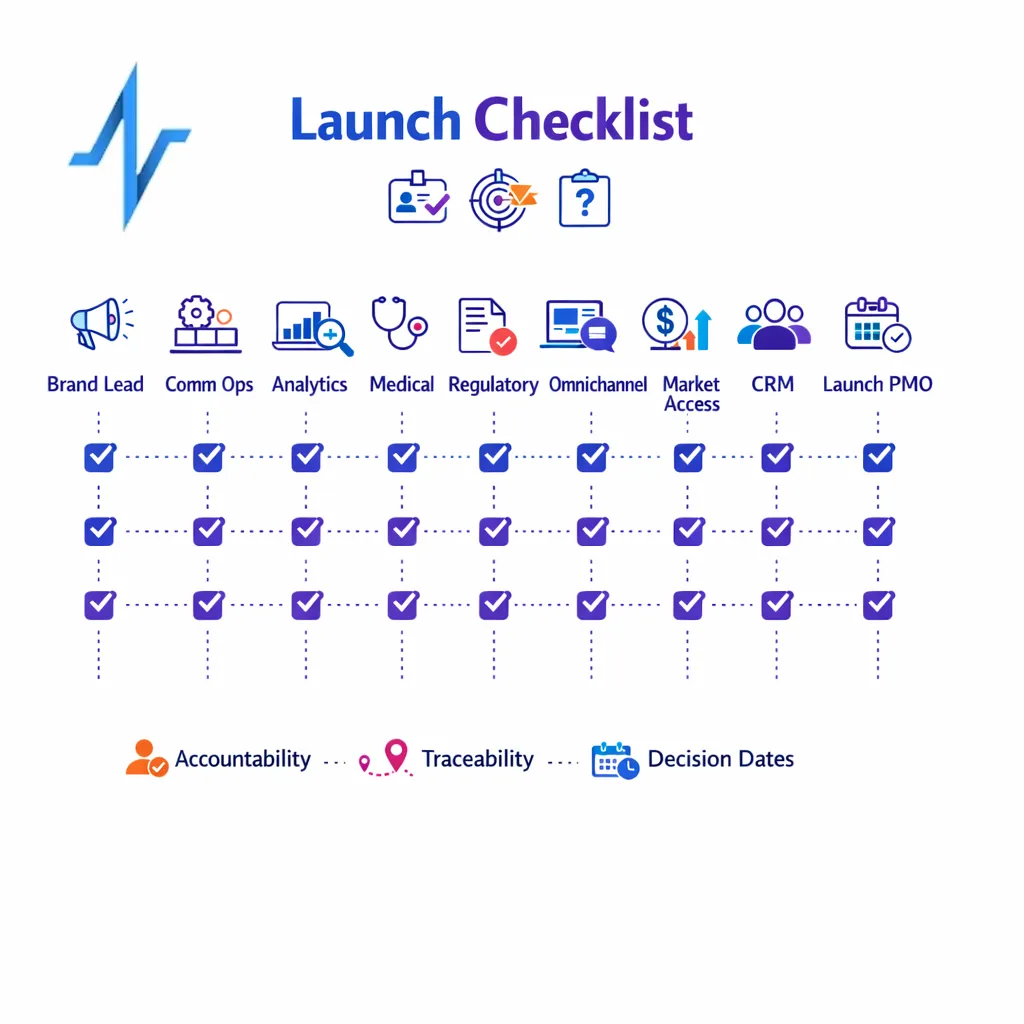
Use this launch planning checklist as an owner-based review, not a one-time worksheet. A strong drug launch plan makes every item traceable to an accountable team and a decision date.
12–9 months
- Brand lead: lock launch objectives, audience priorities, and decision criteria.
- Commercial ops: inventory platforms, data gaps, vendor dependencies, and required integrations.
- Analytics: define KPI tree, baseline views, dashboard specs, and refresh rules.
- Medical and regulatory partners: confirm evidence needs, review paths, and claims guardrails.
9–6 months
- Omnichannel lead: finalize channel roles, sequencing, and trigger logic.
- Content operations: build modular workflow, version control, and reuse rules.
- Market access: translate access scenarios into payer, field, and patient-service plays.
- CRM owner: prepare audience, consent, and identity rules for activation and reporting.
6–3 months
- Launch PMO: run readiness reviews with owners, dates, and escalation paths.
- Legal, medical, and regulatory: test review service levels and approval workflows under launch-like volume.
- Field enablement: train teams on priorities, objection handling, and escalation paths.
- Analytics and ops: validate tags, data feeds, dashboards, and alert logic.
3–0 months
- Launch command center: start daily monitoring and issue triage.
- Brand and access teams: review uptake, pull-through, affordability, and friction signals.
- Channel owners: make the first optimization changes based on real response patterns.
- Executive stakeholders: receive one concise launch view tied to decisions, not disconnected reports.
FAQs
How do you make a drug launch a success?
Start early, but focus on the right things. Strong launches align audience strategy, access planning, content operations, field execution, and measurement before launch, then use early signals to adjust quickly instead of defending the original plan.
What should be included in a pharma product launch plan?
A practical pharma product launch plan should include audience segmentation, launch goals, a KPI framework, market access assumptions, channel roles, content operations, field enablement, governance, and a post-launch optimization model. If any one of those is missing, the launch usually becomes slower and harder to read.
What are the phases of a pharmaceutical product launch?
A useful four-phase model is 12–9 months, 9–6 months, 6–3 months, and 3–0 months before launch. The work shifts from strategy and dependency mapping, to build and coordination, to readiness validation, to launch execution and optimization.
What is the difference between commercialization and launch planning?
Commercialization is the broader growth strategy across the product life cycle. Launch planning is the narrower operating program that prepares the business, systems, teams, and channels for day-one activation and the first wave of adoption.
Request a Demo
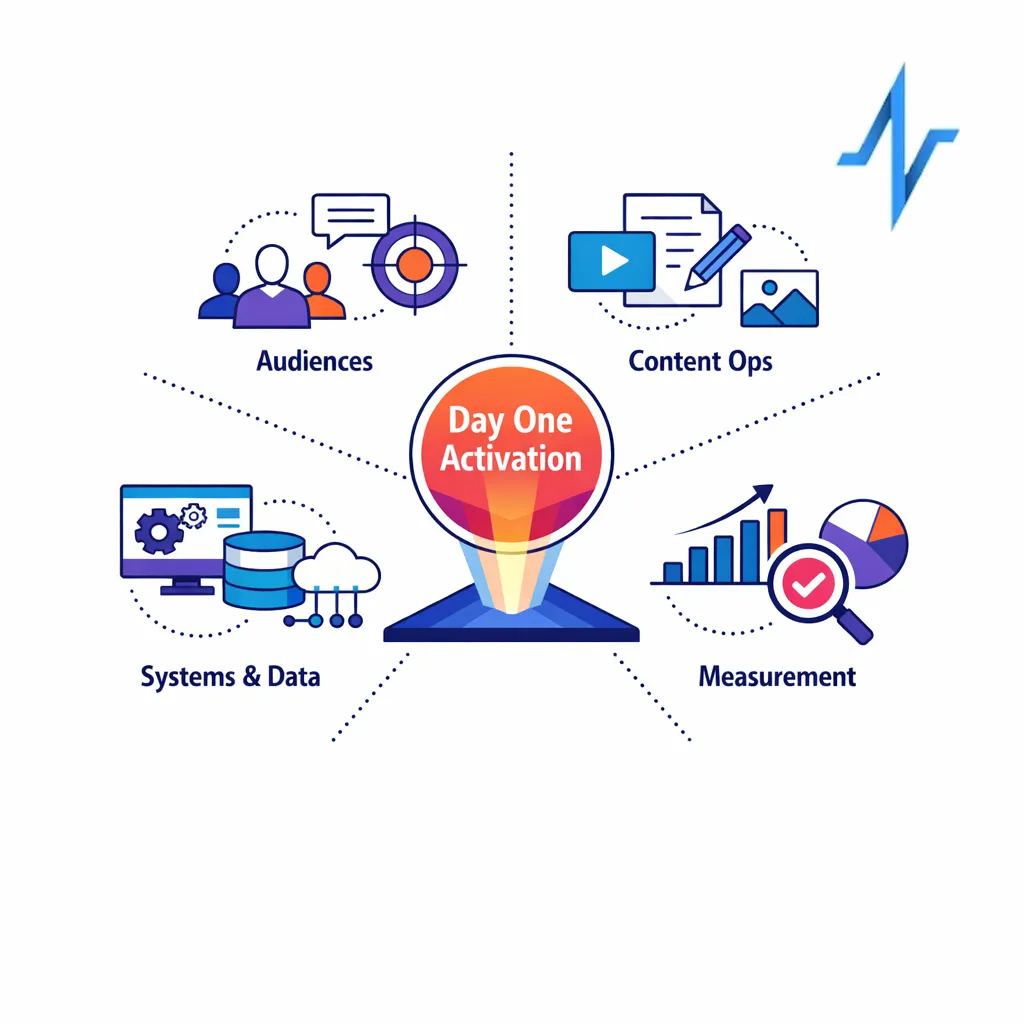
If your team needs a clearer way to connect audience intelligence, channel orchestration, approvals, and measurement, Pulse Health can help simplify the final 12 months before launch. The point is not another generic launch planning checklist. It is a tighter operating model for HCP engagement, patient programs, and launch visibility.
Request a Demo to see how Pulse Health supports launch readiness, or use the conversation to see how it works and get the platform overview for your team.