
The MLR review process is where strong pharma content operations separate themselves from reactive ones. Brand, medical, legal, regulatory, operations, and omnichannel teams have to move quickly across websites, email, CRM journeys, rep-triggered follow-up, and patient-facing experiences while still meeting FDA expectations for prescription drug advertising.
This article is for US pharma brand teams, omnichannel leads, commercial and marketing operations, CRM owners, and agency partners who need a practical way to make review cycles faster and cleaner. You will learn what the medical legal regulatory review process is, where delays usually start, how the workflow should run, and which operating-model choices reduce rework without weakening compliance.
Definition: In pharma, the MLR review process is the governed workflow used to prepare, route, assess, revise, approve, and archive promotional or regulated content before use. It brings medical, legal, and regulatory perspectives together so assets are evidence-backed, audience-appropriate, consistent with approved messaging, and ready for controlled deployment.
What is the full form of MLR review? MLR stands for Medical, Legal, and Regulatory review.
- Step 1: Build a complete submission pack with claims, references, audience, channel, and version details.
- Step 2: Route the asset by risk, content type, and required reviewers.
- Step 3: Run medical, legal, and regulatory review with clear comment ownership.
- Step 4: Reconcile feedback, revise once, and manage exception handling visibly.
- Step 5: Capture final approval, archive the approved version, and preserve the audit trail.
What is the MLR review process in pharma?
The MLR review process is the internal control system pharma companies use to govern content before it is disseminated. It exists because branded materials have to satisfy the advertising standards set out in 21 CFR 202.1, including core expectations around accuracy, balance, and presentation of risk information.
You may hear similar work described as MLR review, promotional review, PRC, or regulated content review. The terminology changes by company, but the practical objective is the same: approve content that aligns to the approved prescribing information, uses supportable claims, and is appropriate for the intended audience, context, and channel.
What is a MLR in pharma? In this setting, it means the cross-functional review of content that could create promotional, regulatory, legal, or medical risk. Outside pharma promotion, MLR can also refer to the insurance Medical Loss Ratio, which is unrelated to content approval.
MLR is broader than a pure copy edit and narrower than a full corporate governance process. It is the operational bridge between content strategy and compliant execution, which is why the best teams treat it as a workflow design problem, not just a sign-off meeting.
Why MLR review becomes a bottleneck for pharma content teams
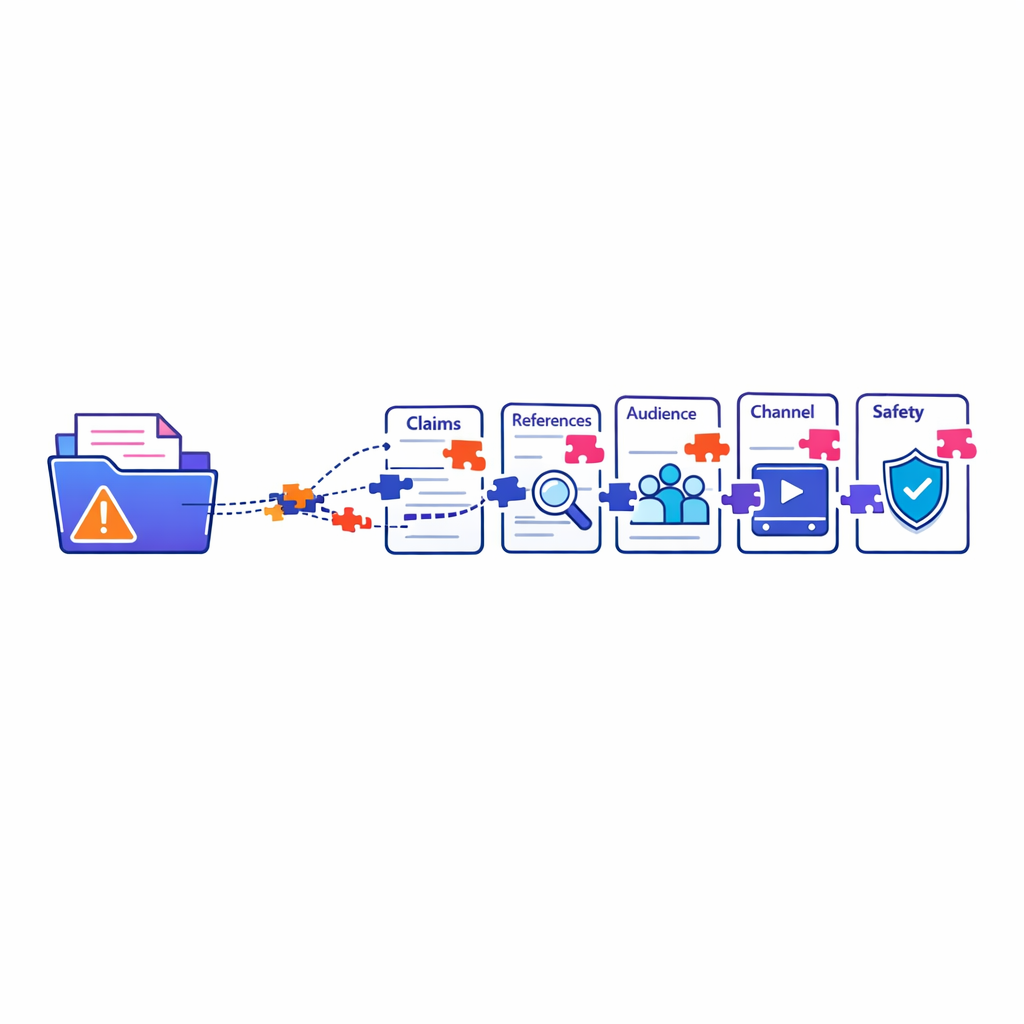
Most delays do not start when reviewers open the file. They start upstream, when the asset is submitted without a clean claim set, current references, audience context, channel placement, or a realistic view of where safety language and supporting disclosures will appear.
Omnichannel delivery makes that issue bigger. One core message may need to be adapted into HCP email, a rep-triggered follow-up, a landing page, a portal tile, a banner unit, and a patient support touchpoint, so a small intake gap can multiply into several review rounds.
- Incomplete submission packs: reviewers spend their time asking for missing evidence, screenshots, or label context instead of deciding on approval.
- Sequential reviews: medical comments arrive first, legal comments later, and regulatory comments last, so the asset changes three separate times.
- Conflicting feedback: teams collect annotations from PDFs, slides, screenshots, and email threads with no single owner for reconciliation.
- Version confusion: agencies and internal teams edit different files, then debate which one is current.
- Late-stage compliance decisions: safety placement, claim wording, and reference formatting are argued after creative and production work are already done.
- Manual routing: assets sit in inboxes because nobody can see queue status, priority, or dependency risk.
The pattern is important. Bottlenecks are rarely solved by asking reviewers to “go faster.” They are usually reduced by making submissions cleaner, routing smarter, and cutting avoidable rework before formal review begins.
Step-by-step MLR review workflow
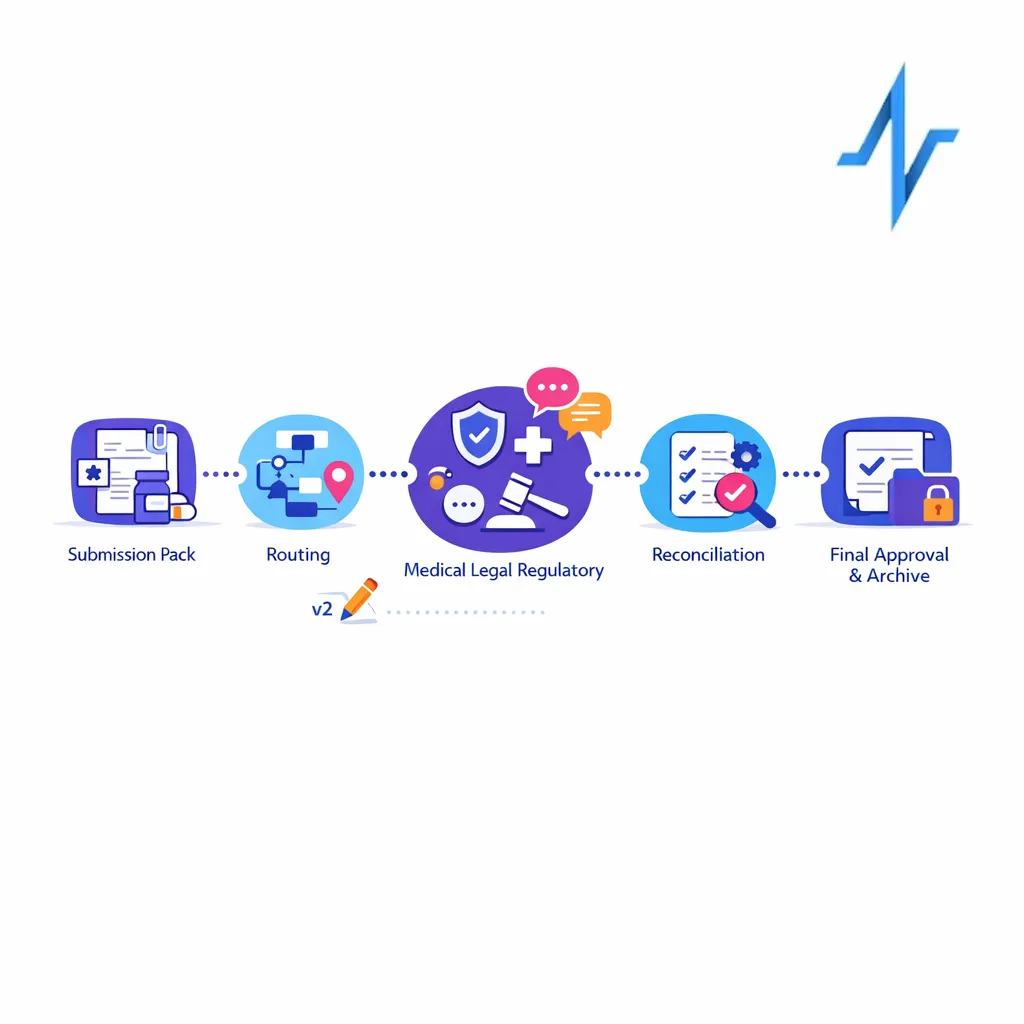
A reliable MLR review process should be repeatable, visible, and structured enough that different teams can follow the same rules. The workflow below works well for both branded campaign assets and high-volume omnichannel derivatives.
Pre-submission quality control
Before an asset enters MLR, the team should confirm that the file is actually review-ready. That means the copy is stable, claims are mapped to source references, the audience and channel are clear, the version number is assigned, and the asset shows the real layout or final-format experience closely enough for reviewers to judge context.
Pre-submission QC is also where teams should confirm label fit, core safety language, and reference completeness. If the asset is still debating its central message, missing key evidence, or changing format daily, it is not ready for formal review and should stay in working draft.
Submission and routing
Once the asset is ready, it should be routed based on content type, channel, risk, and reuse status. A net-new campaign concept, a new claim, or a first-use digital experience usually deserves broader scrutiny than a low-risk derivative that reuses approved copy and safety language without material changes.
This is also the point to decide whether a pre-MLR concept review is needed. High-risk assets benefit from early alignment on message strategy, comparative framing, audience, and fair-balance approach before the team invests heavily in design, production, or downstream localization.
Medical, legal, and regulatory review
A useful operating model is to give each discipline a defined decision lens. Medical focuses on scientific accuracy and evidence support, legal focuses on risk and usage boundaries, and regulatory focuses on promotional standards, channel fit, and any applicable postmarketing submission obligations under 21 CFR 314.81.
What matters most is not that everyone comments on everything. It is that the team knows who owns which type of issue, when comments are advisory versus blocking, and how disagreements are escalated without restarting the entire review.
Reconciliation and revision loops
This is where many processes lose time. If every reviewer comments independently and the brand team tries to reconcile feedback offline, contradictions accumulate and the next round becomes a fresh debate rather than a decision on the revised asset.
The cleaner pattern is to consolidate comments into a single working record, assign owners, resolve conflicts visibly, and send one controlled revision back for review. That reduces duplicate edits, keeps rationale attached to decisions, and makes it easier to explain why wording changed from version to version.
Final approval, archiving, and audit trail
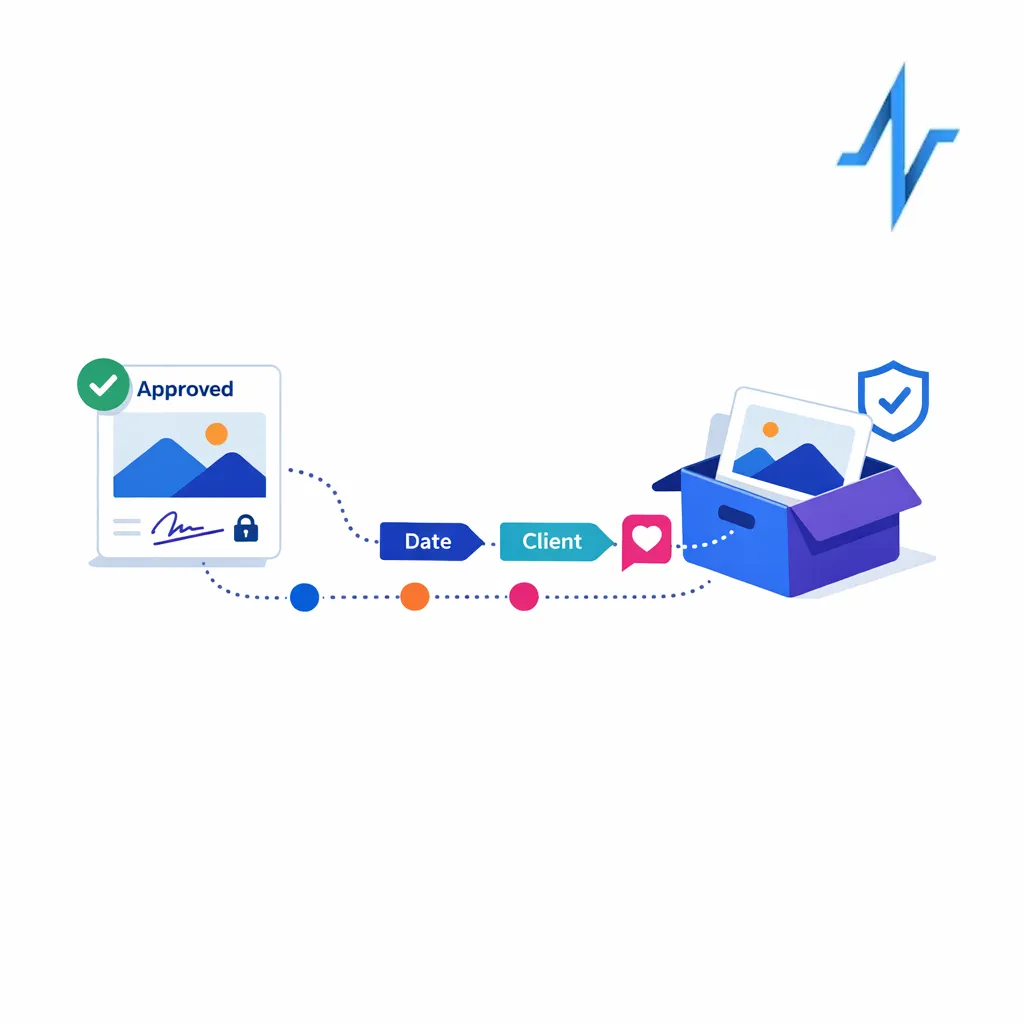
Final approval should capture more than a verbal yes. The approved package should include the final rendered asset, source file, approval date, approvers, references, metadata, and any channel or audience limitations tied to the approval.
If the workflow uses electronic records and electronic signatures, the process should be designed with 21 CFR Part 11 in mind. Even when Part 11 is not the only design consideration, auditability, version control, and retrievability are essential for a durable pharma content review process.
What does MLR approved mean? It usually means a specific version of an asset is approved for a defined use case, audience, and channel, with its required safety and supporting elements intact. It does not mean every future adaptation, crop, reuse, or personalization of that content is automatically approved.
Who is involved in the MLR process?
Titles differ by company, but the work usually spans four groups: medical, legal, regulatory, and the business operators who create, route, and deploy content. Clarity on role boundaries is one of the fastest ways to reduce wasted meeting time.
Medical reviewers
Medical reviewers typically assess scientific accuracy, data interpretation, label fit, and the clinical nuance behind claims. They are also valuable for identifying where a technically correct statement could still become misleading if context, qualifiers, or population details are omitted.
Legal reviewers
Legal reviewers usually focus on enterprise risk questions such as comparative framing, permissions, contractual constraints, copyright, testimonial use, and wording that could create exposure if taken literally. In strong workflows, legal review is focused and policy-driven rather than becoming a second general copy review.
Regulatory reviewers
Regulatory reviewers translate external requirements and internal promotional policy into content decisions. They are often the group that pushes for clarity on fair balance, required disclosures, channel appropriateness, and whether a derivative asset still fits the logic of the original approval.
Brand, operations, and agency stakeholders
Brand teams define the business objective and intended message. Operations teams manage routing, metadata, priorities, and approval records, while agencies and production partners make sure the actual asset matches what was approved and that no late production changes create new risk.
For omnichannel programs, CRM owners and channel leads also matter. They understand how content will be triggered, personalized, assembled, measured, and reused, which is critical when an approved claim is being deployed across a family of related assets instead of a single file.
What content needs MLR review?
The exact scope varies by company policy, product lifecycle stage, and intended use. A practical rule is to route any external-facing asset with product claims, safety language, comparative statements, branded disease education, or audience-facing calls to action through a governed review path.
- HCP materials: detail aids, leave-behinds, emails, banners, websites, portals, and rep follow-up content.
- Patient-facing materials: education pages, support-program journeys, sign-up flows, adherence materials, and co-pay or access communications when brand content is involved.
- Digital assets: websites, landing pages, forms, email templates, CRM-triggered messages, paid media units, and social variants.
- Commercial enablement: sales training, field materials, speaker support assets, and internal launch content tied directly to external promotion.
- Other governed communications: depending on policy, teams may also route press-related materials, response templates, or medical information support content through specialized review paths.
Not every asset needs the same review depth. A mature process distinguishes between net-new, high-risk content and lower-risk derivatives, translations, or modular reassemblies that stay within defined guardrails.
Common MLR mistakes and misconceptions
Many teams treat MLR as an unavoidable delay, but that view usually hides a design problem. The most common mistakes are operational, not philosophical.
- “MLR starts at the end.” In practice, the quality of upstream intake drives much of the downstream cycle time.
- “One approval covers every format.” Changes in channel, audience, layout, prominence, or context can change the review requirement.
- “Previously approved means reusable forever.” Claims age, references change, labels evolve, and business context shifts.
- “More reviewers means safer content.” Extra reviewers without clear decision rights often create noise rather than better risk control.
- “Compliance and speed are opposites.” The better lesson is that disciplined structure usually improves both.
How teams reduce MLR bottlenecks without slowing delivery
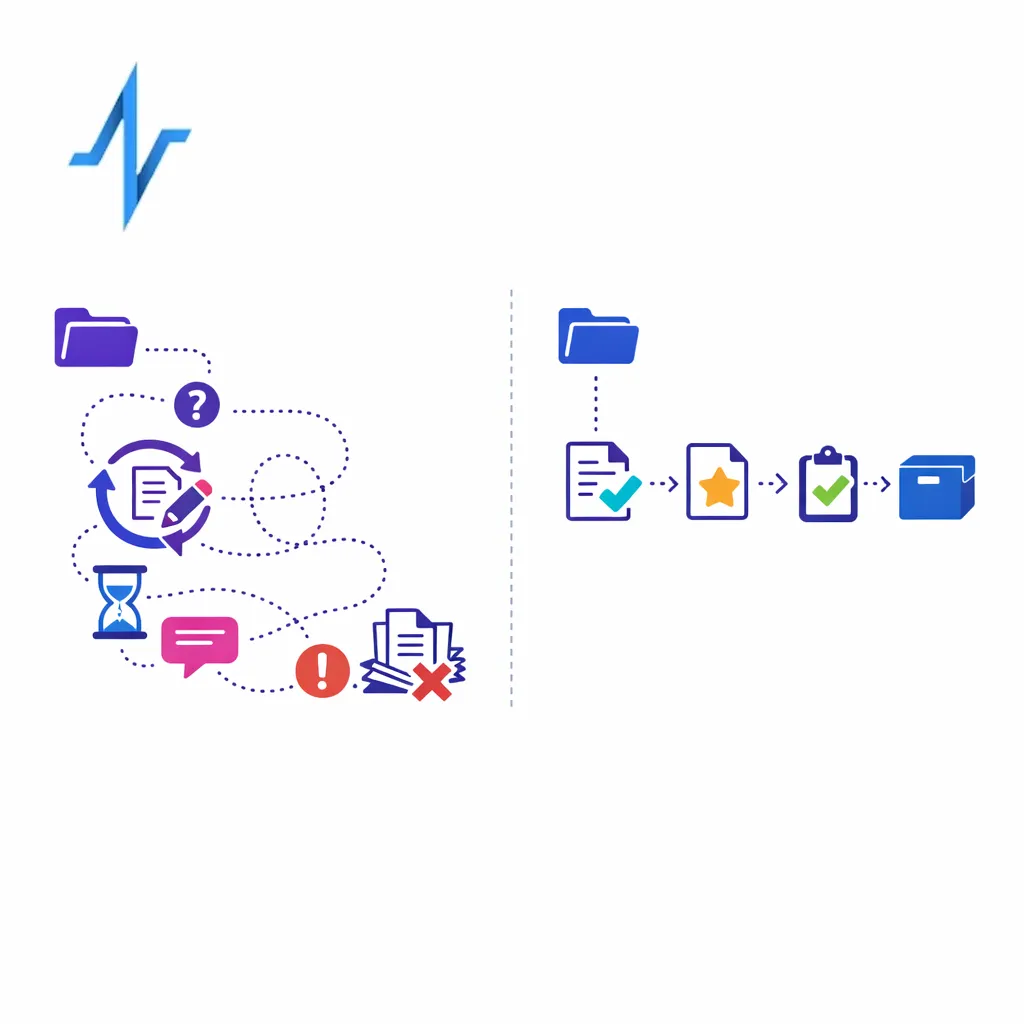
The goal is not to remove discipline from review. It is to place discipline earlier, reduce unnecessary variation, and make approval logic easier to apply at scale.
Standardize intake requirements
Every submission should require the same core fields and attachments: asset name, product, indication, audience, channel, owner, claims, references, source files, version, and review rationale. When intake standards are optional, reviewers become detectives instead of decision-makers.
Use parallel instead of sequential review
For many assets, medical, legal, and regulatory review can run in parallel with one visible comment record. That does not remove escalation when a true disagreement appears, but it does eliminate the needless delay of waiting for one function to finish before the next even sees the file.
Introduce pre-MLR concept reviews for high-risk assets
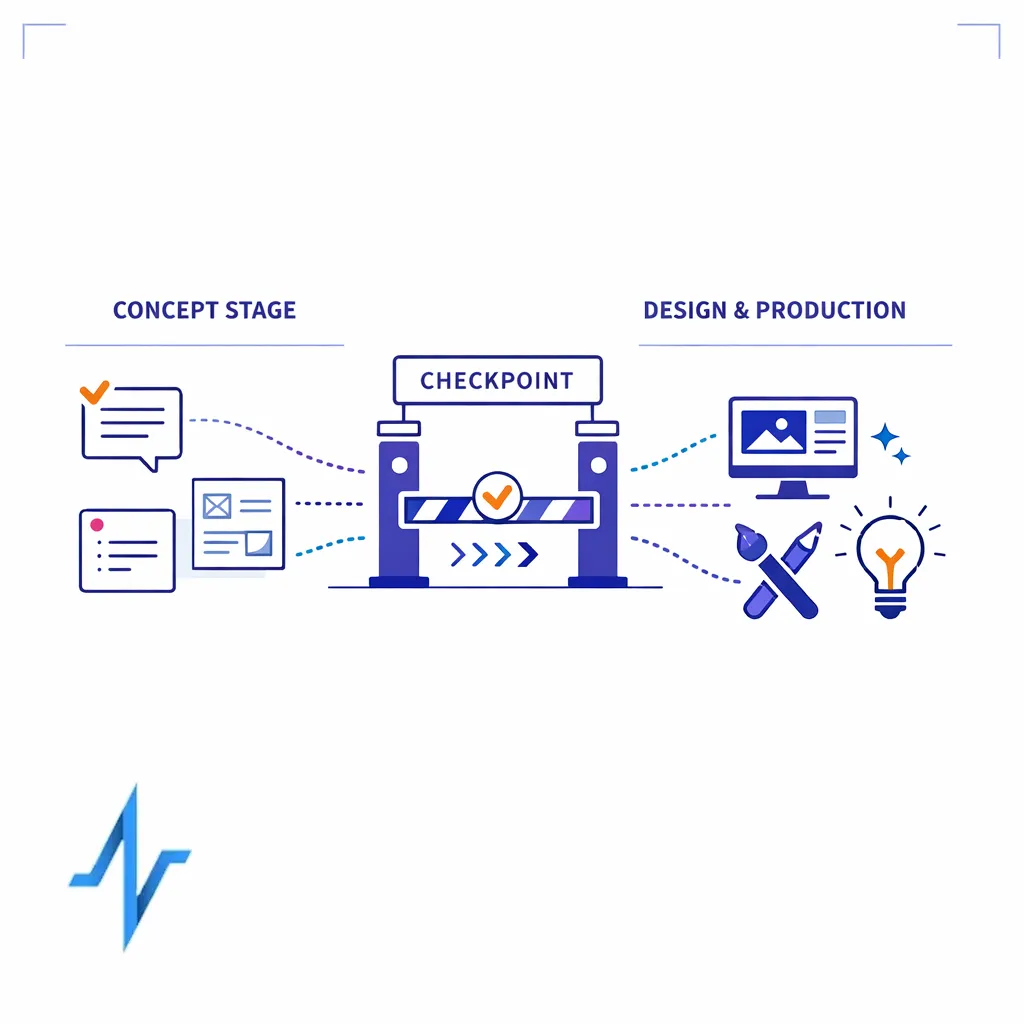
Some disagreements should happen before copy is polished. If a campaign introduces a new evidence story, a delicate comparative message, or an unusual channel experience, a concept-stage checkpoint can settle the hard questions early and spare the team expensive rework later.
Create modular, pre-approved content blocks
Modular content review is one of the most practical ways to reduce repeat work. When approved claims, safety blocks, references, disclaimers, and common CTA patterns are stored as governed modules, teams can assemble assets faster and reserve full review for what is truly new.
This does require rules. Teams need to know which modules can be combined, which require paired safety language, and when assembly creates a new context that still needs fresh review.
Build a centralized claims and reference library
A claims library should not be a folder full of old slides. It should show approved claim text, source support, label section, review date, owner, approved context, and status for reuse so teams can tell the difference between a valid module and a risky copy-paste.
Apply tier-based review by asset risk
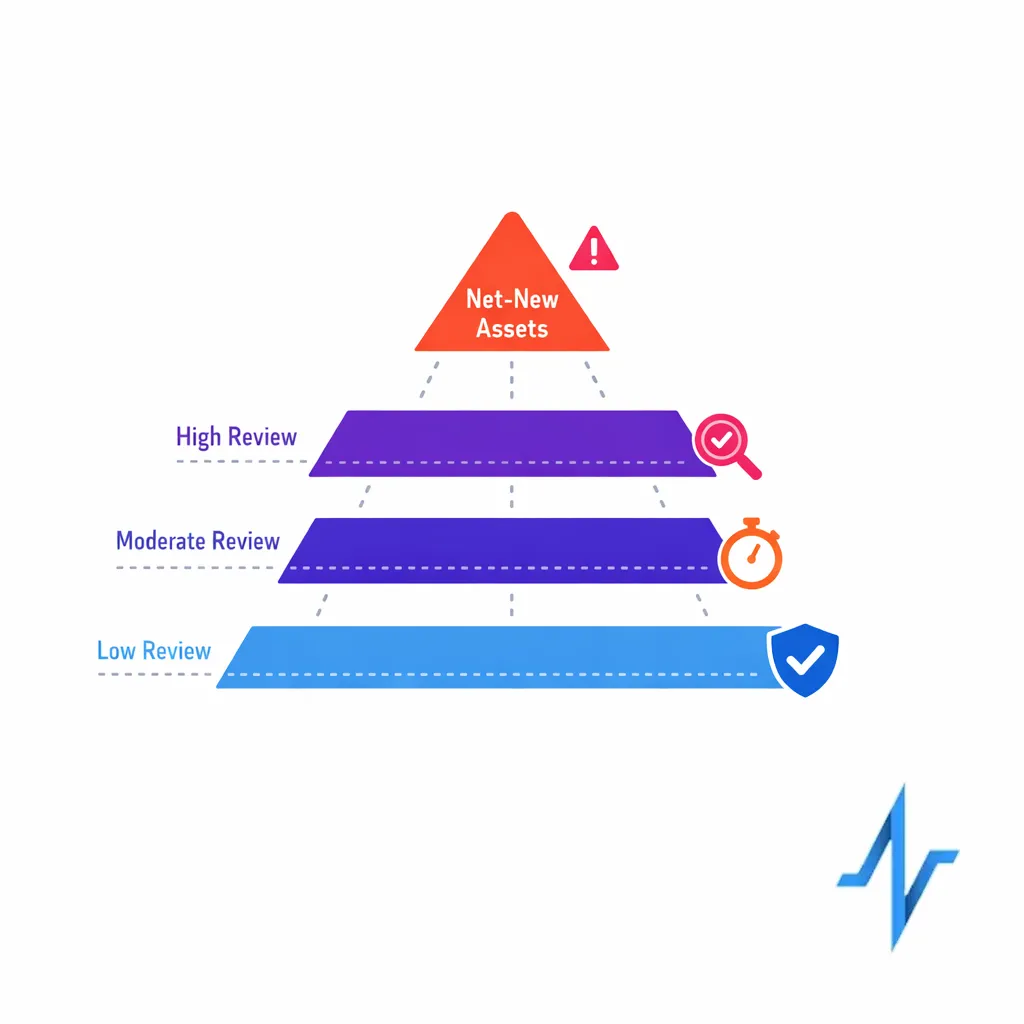
Not every asset deserves the same path. A tiered model lets teams reserve the heaviest review for net-new claims and high-visibility launches while giving lighter, faster routes to approved derivatives, localization changes, or format-only updates that stay inside policy.
Use workflow and DAM platforms for version control and auditability
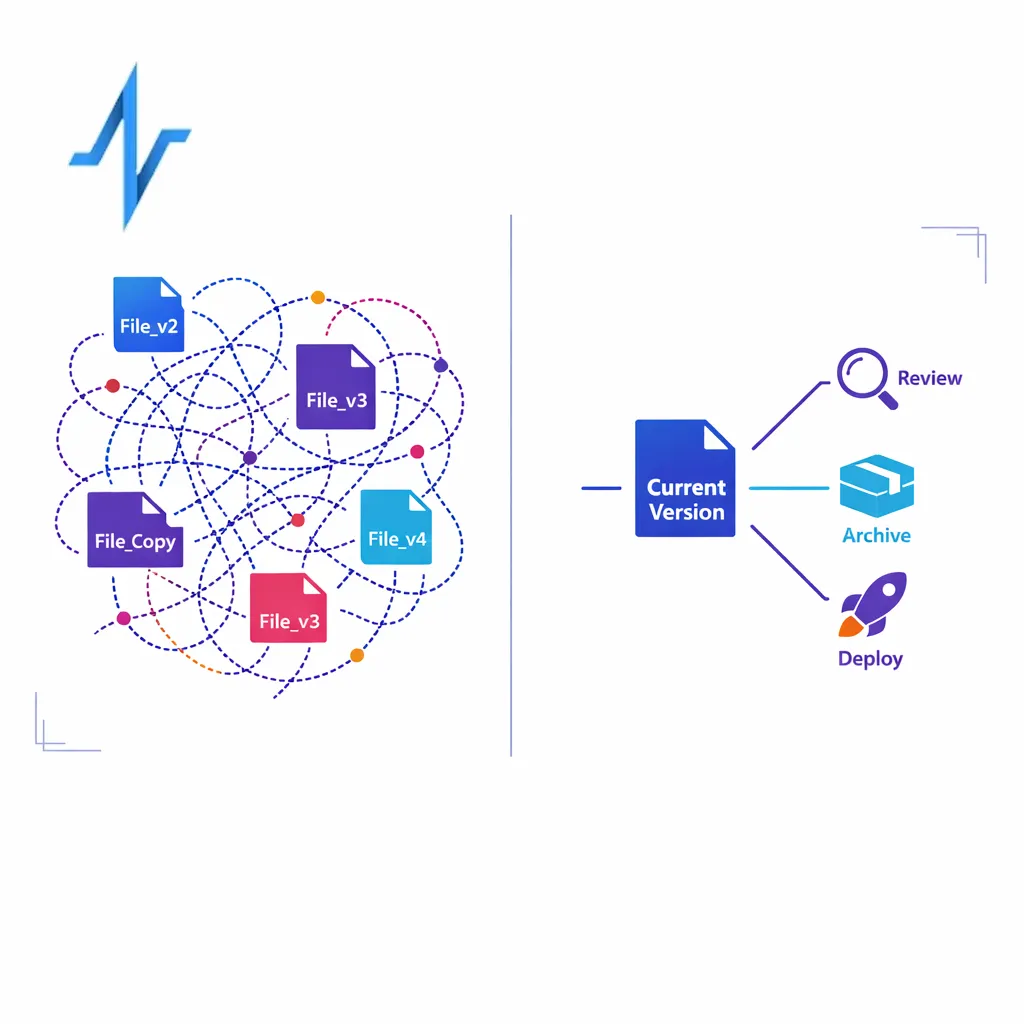
When intake, comments, source references, approvals, and final files live in separate systems, teams waste time reconstructing context. A governed workflow or DAM environment can keep the current version visible, route work automatically, compare changes, and preserve the decision history needed for auditability.
This is also where Pulse Health fits naturally for omnichannel teams. The highest-value platforms do more than store files; they connect intake discipline, modular reuse, review routing, and downstream activation so approved content can move into execution without losing control.
What is new in MLR operations
The biggest shift is not that the compliance bar is lower. It is that teams are no longer reviewing a small set of one-off assets; they are managing families of related assets, frequent derivatives, and faster reuse across channels and audience journeys.
That changes where leverage sits. Modern MLR performance comes less from heroic final-review meetings and more from better metadata, reusable modules, stronger intake rules, and clear routing logic before the asset reaches formal sign-off.
Where AI can help in MLR review
AI is most useful upstream of final approval. It can help extract claims from copy, compare wording against approved modules, flag unsupported superlatives, identify missing references, detect obvious off-label risk, check spelling and grammar, and confirm that required safety components are present before humans spend time on the asset.
The best-fit role for AI is screening, summarization, and workflow support, not autonomous approval. Final promotional content still has to meet the same standard for truthful, non-misleading, and balanced promotion, so human reviewers remain accountable for judgment, escalation, and sign-off.
- Good AI use case: pre-MLR quality checks that reduce preventable reviewer comments.
- Good AI use case: tagging assets by risk, channel, product, and reuse status for better routing.
- Good AI use case: surfacing prior approved language and reference packs for faster reuse.
- Poor AI use case: treating generated copy as approved because it resembles older assets.
- Poor AI use case: bypassing formal reviewer accountability for promotional decisions.
A practical policy is simple: use AI to make submissions cleaner and reviews easier, but keep humans responsible for approval logic. That balance gives teams speed without creating a false sense of compliance.
Operational metrics to track
If teams want to improve the MLR process, they need metrics that separate queue time from actual review time. Otherwise, it is impossible to tell whether delays come from reviewer capacity, poor submissions, too many rounds, or weak routing rules.
- Cycle time: total elapsed time from review-ready submission to final decision.
- Queue time: how long assets wait before a reviewer starts work.
- Review rounds: how many times an asset re-enters formal review before approval.
- Rejection reasons: missing references, claim issues, safety gaps, formatting problems, or routing errors.
- Meeting load: how much reviewer time is spent resolving preventable conflicts versus making decisions.
- Reuse rate: the percentage of assets built from approved modules instead of net-new copy.
- First-pass quality: how many submissions arrive complete enough to review without basic follow-up.
What is the MLR review cycle? It is the measured time between a submission being truly review-ready and the final approval or rejection decision. The most useful teams break that cycle into queue time, reviewer time, and rework time so the real bottleneck is visible.
MLR submission checklist for faster approvals
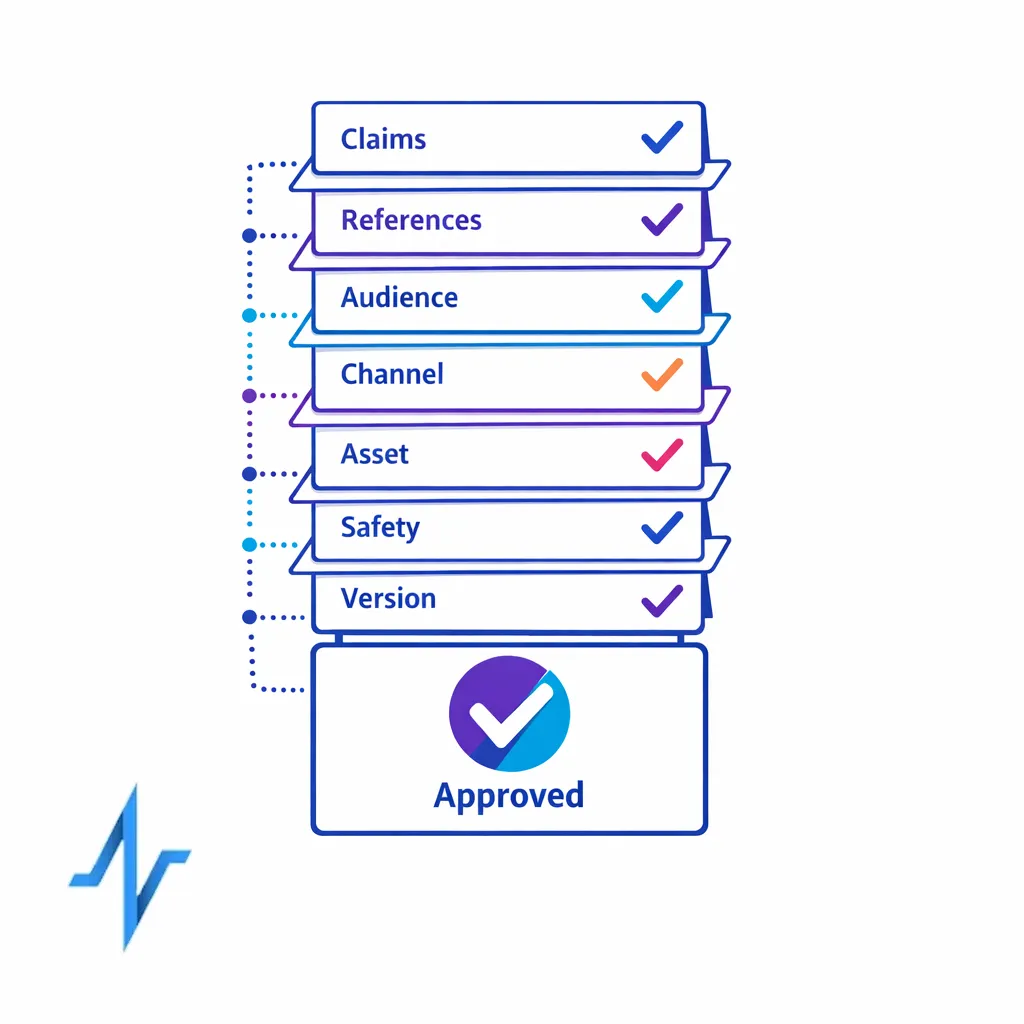
A strong submission checklist prevents the most common causes of avoidable delay. The point is not bureaucracy; it is to make sure reviewers can evaluate the actual content instead of chasing missing context.
- Claims support: every claim mapped to a current source or approved internal module.
- Label alignment: indication, patient population, and wording checked against current prescribing information.
- Safety content: fair balance, important safety information, and required disclosures included in the intended format.
- Audience and channel context: who will see the asset, where it will appear, and what action it asks the user to take.
- Version control: current file name, job code, asset ID, and owner clearly assigned.
- Rendered asset: final-format mockup, screenshot, HTML render, or live preview rather than copy pasted into email.
- References attached: source files available to reviewers without extra follow-up.
- Reuse status: which elements are net-new and which come from previously approved modules.
- Routing detail: product, indication, risk tier, required reviewers, and requested timing.
- Approval output plan: how the final approved version will be archived, deployed, and tracked after sign-off.
When this checklist is built into intake, approvals become faster because the process is easier to trust. Reviewers can focus on judgment instead of cleanup, and operations teams can see where exceptions truly deserve extra scrutiny.
Talk to Pulse Health

If your team is trying to reduce MLR bottlenecks without slowing compliant content delivery, Pulse Health can help connect intake, modular content reuse, review routing, and omnichannel execution in one governed workflow. That gives brand, medical, legal, and operations teams better visibility into where work stalls and a cleaner path from approval to activation.
Request a Demo to see how the workflow works in practice and compare your current process against a more scalable operating model.