

For US pharma brand teams, omnichannel leaders, CRM owners, and agency partners, the medical science liaison role sits at a critical junction. It shapes how healthcare professionals experience scientific engagement, how field insight reaches headquarters, and how medical affairs stays distinct from promotion.
If you own orchestration or measurement, that distinction matters. The systems, content, and follow-up logic that work for commercial outreach are not automatically right for medical exchange.
This guide explains what a medical science liaison does, how the MSL role drives HCP engagement, what responsibilities matter most, and how to avoid the operating mistakes that weaken scientific exchange.

Quick definition: A medical science liaison is a field-based medical affairs professional focused on peer-to-peer scientific exchange with healthcare professionals. In practice, that means translating clinical data into relevant conversation, answering complex medical questions, and bringing field insight back into the organization.
What is a medical science liaison?
Core definition of the MSL role

At a practical level, the medical science liaison role sits between evidence and engagement. The MSL turns dense science into useful discussion for HCPs, then turns those discussions into signal that medical affairs can act on.
That is why the role matters beyond a single meeting. A strong MSL can help an HCP interpret nuance, pressure-test assumptions, and identify what follow-up would actually be valuable.
Why the role exists in medical affairs
The role exists because some HCP conversations require more than message delivery. When the discussion moves into study design, endpoint relevance, subgroup interpretation, safety context, or unanswered evidence questions, scientific depth becomes the main job.
MSLs help medical affairs stay close to those moments. They preserve scientific credibility in the field while giving internal teams a sharper view of real-world questions, unmet needs, and educational gaps.
How MSLs drive HCP engagement
Peer-to-peer scientific exchange with HCPs and KOLs

MSLs drive engagement by making each interaction worth the HCP’s time. The best exchanges usually start with a specific clinical issue, a relevant publication, or a real practice challenge instead of a broad brand narrative.
When the conversation is anchored in evidence and context, the interaction feels peer-to-peer rather than scripted. That changes the quality of the dialogue, especially with specialists and KOLs who already see heavy commercial outreach.
Building long-term trust through non-promotional interactions

Trust grows when an HCP knows the purpose of the meeting is scientific clarity. Over time, that creates room for more candid questions, more honest feedback, and more useful follow-up than a purely awareness-driven touchpoint can produce.
The advantage is not only access. It is the ability to create a pattern of credible, low-friction exchange that makes future engagement easier and more substantive.
Tailoring engagement by therapeutic area and stakeholder need

MSLs are most effective when they adapt to the stakeholder in front of them. An academic investigator may want methodological nuance, while a community physician may want practical clarity on patient selection, safety monitoring, or where uncertainty still remains.
For CRM and omnichannel teams, this is the key design principle: do not treat field medical engagement as a generic touch. Treat it as a high-value scientific interaction with its own objective, cadence, documentation standard, and measure of success.
Key medical science liaison responsibilities
In one view, medical science liaison responsibilities usually include:
- Explaining clinical evidence in language that is accurate, balanced, and clinically relevant
- Capturing field insight, unanswered questions, and unmet needs that inform medical strategy
- Supporting scientifically grounded activities such as advisory board planning, congress follow-up, and education
- Managing complex medical questions through the appropriate medical response process
Communicating clinical data and evidence
One core responsibility is turning dense evidence into a usable exchange. That can involve discussing study design, endpoints, patient populations, limitations, and what a new publication does or does not change in practice.
The goal is not to overwhelm an HCP with information. It is to help them interpret the evidence in a way that is precise, balanced, and relevant to patient care.
Gathering field insights and unmet needs
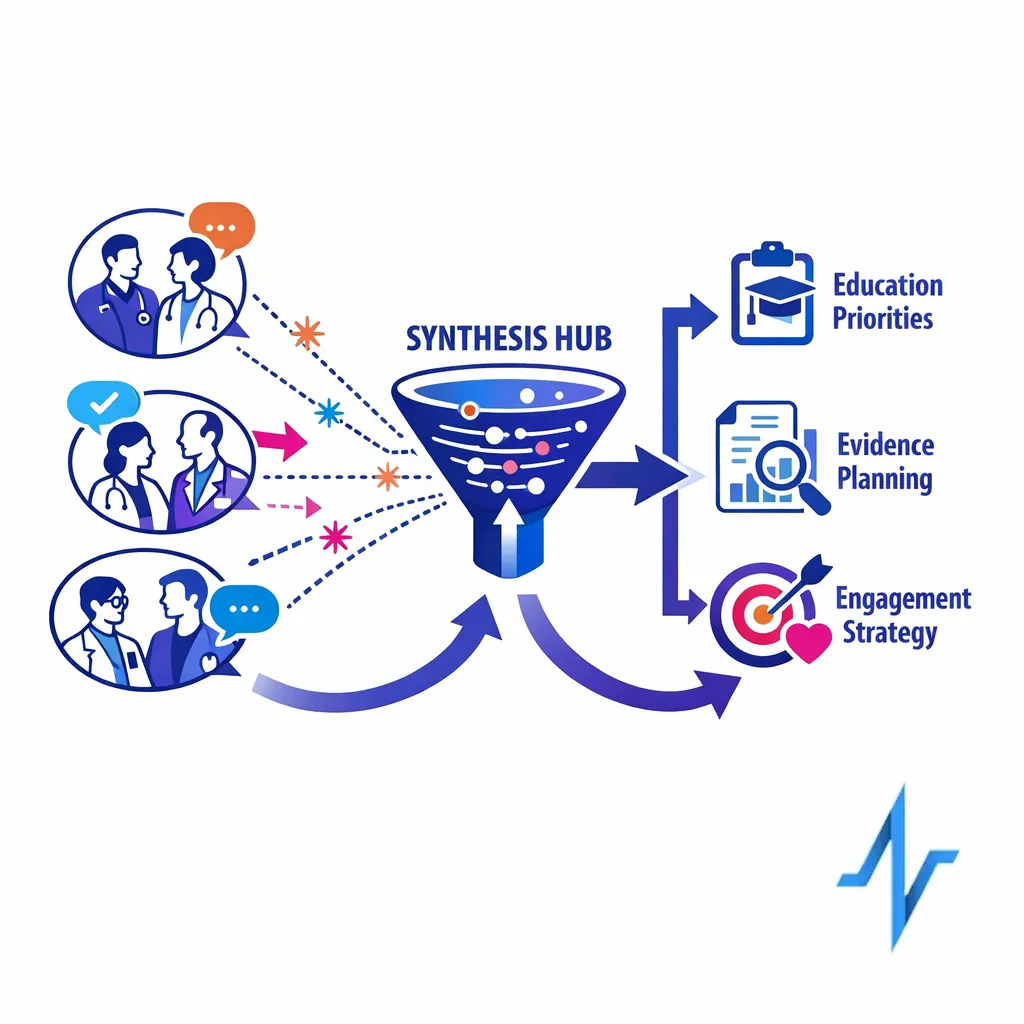
MSLs also create value on the return path. They hear recurring objections, practical barriers, unmet educational needs, and emerging scientific questions that may never appear in dashboard metrics alone.
When this insight is captured well, medical affairs can sharpen education priorities, evidence generation plans, and future engagement strategy. When it is captured poorly, the organization loses one of its most important field signals.
Supporting advisory boards, congresses, and education
When MSLs are involved in advisory board or congress follow-up, their value is rarely the event itself. It is the quality of the questions, the synthesis of what was learned, and the next medical action that follows.
If honoraria, meals, or other transfers of value are involved, teams also need processes that align with CMS Open Payments reporting requirements. That makes documentation a compliance task as well as an operational one.
Responding to unsolicited medical information requests
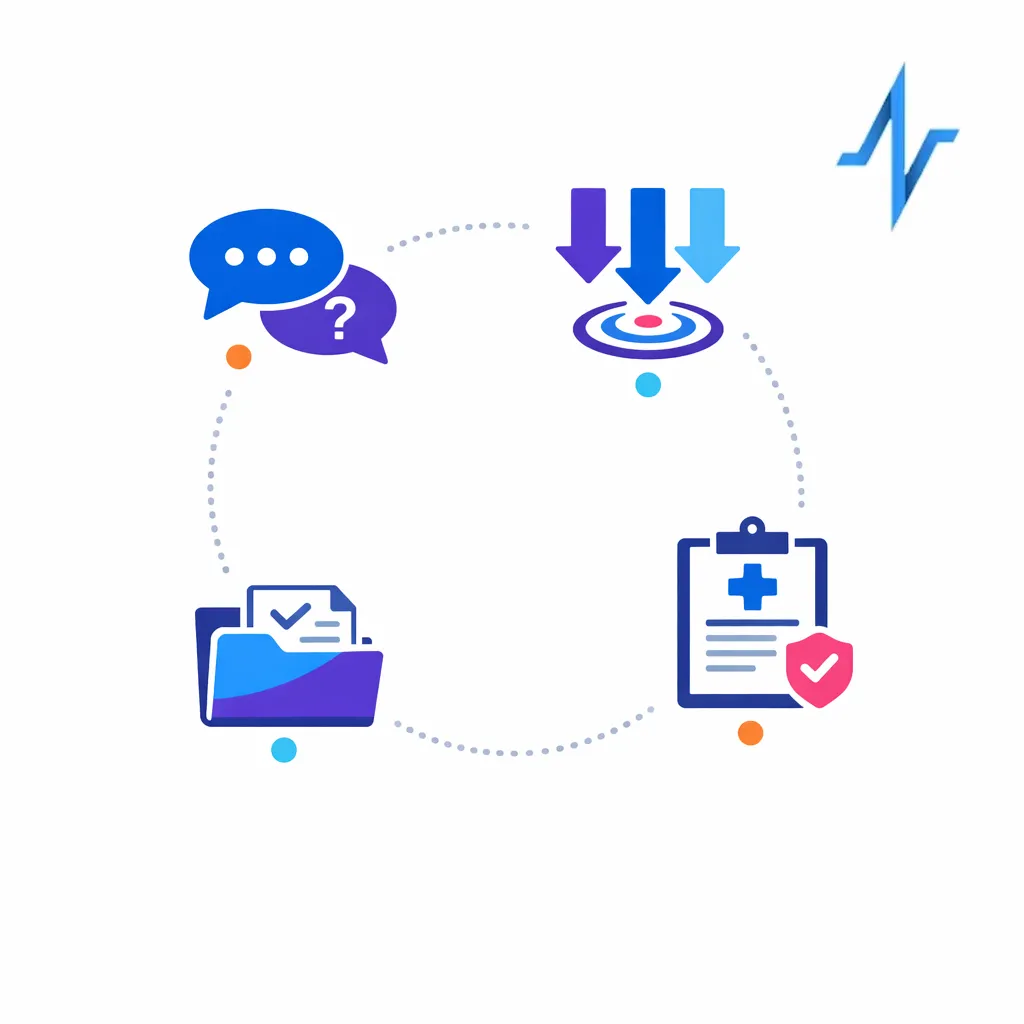
Another important responsibility is managing unsolicited medical questions with discipline. The job-to-be-done is to capture the question accurately, route it through the right medical process, and respond in a way that is scientifically sound and well documented.
This is one reason workflow design matters. If the question, response, and follow-up history live in disconnected systems, the quality of the exchange drops and the compliance burden rises.
The difference between MSLs and sales representatives
Non-promotional vs promotional roles
The simplest way to separate the two roles is by primary purpose. Commercial interactions are built around brand messaging within promotional guardrails, while MSL interactions are built around scientific exchange, evidence interpretation, and medical context.
Prescription drug advertising is regulated under 21 CFR 202.1, and industry standards such as the PhRMA Code on Interactions with Health Care Professionals shape how manufacturers structure appropriate HCP interactions. That is why strong organizations keep a clear boundary between promotional workflows and medical workflows.
Why this distinction matters for compliant HCP engagement

This distinction matters because the wrong operating model can distort both behavior and measurement. If MSLs are pushed into sales-style cadence, message discipline, or call-volume logic, the team may generate more activity while producing less scientific value.
For brand, medical, and ops leaders, the better question is not how to make MSLs behave more like sales. It is how to design systems, content, and reporting that respect the different purpose of medical engagement.
Qualifications, skills, and day-to-day work
Typical education requirements
The role rewards credibility. In practice, that usually means strong scientific training, therapeutic fluency, and the confidence to discuss evidence with expert stakeholders without oversimplifying it.
The exact background can vary by company and therapeutic area, but the core requirement stays the same: the MSL has to be trusted in a scientific conversation.
Communication, scientific fluency, and emotional intelligence
Great MSLs are rarely defined by knowledge alone. They know how to read the room, identify the real question behind the first question, and adapt the depth of the discussion without losing accuracy.
That blend of scientific fluency and emotional intelligence is what turns a data review into actual engagement. It also helps MSLs surface insight that is nuanced enough to be useful upstream.
Travel, documentation, and cross-functional collaboration
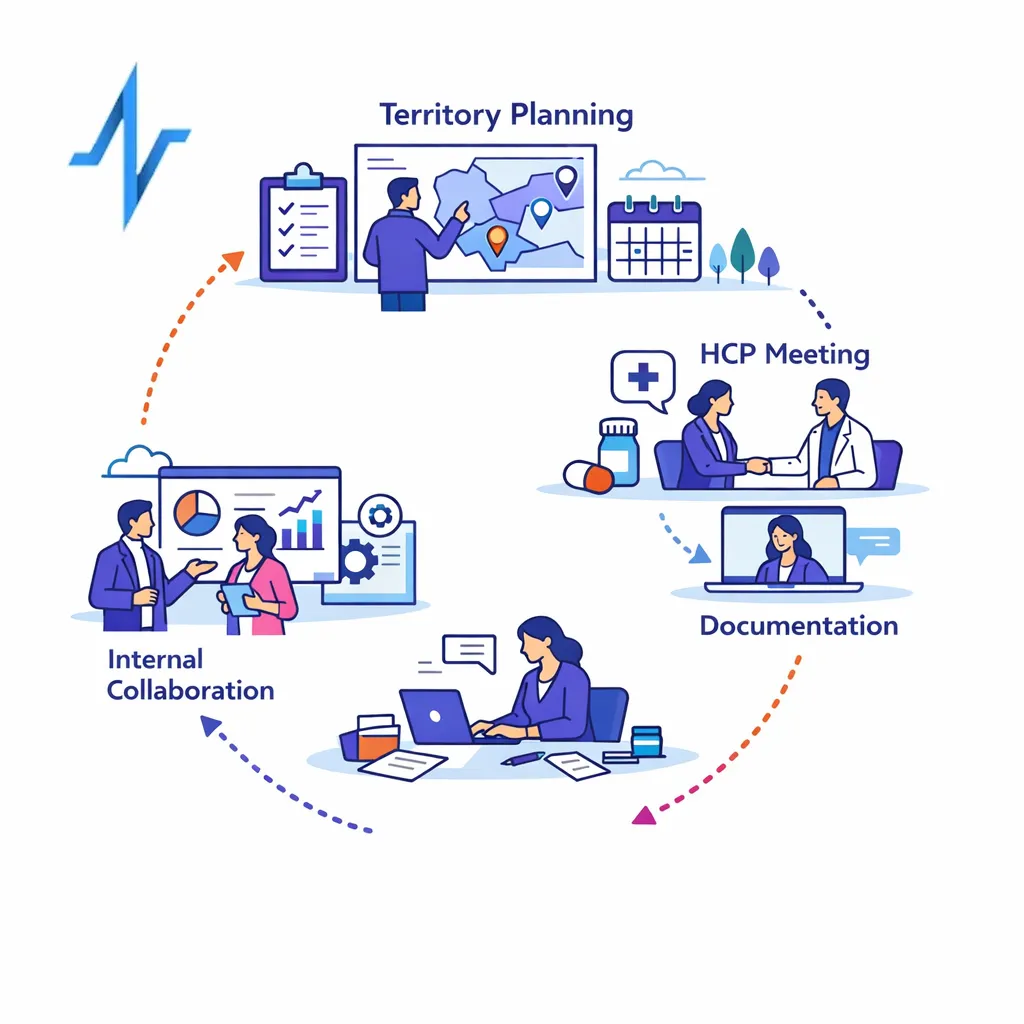
Day to day, the role mixes external and internal work. A typical rhythm can include territory planning, virtual or in-person meetings, congress follow-up, documentation, and debriefs with medical, commercial, analytics, and operations partners.
Documentation is easy to underrate, but it is where field activity becomes an organizational asset. Good notes preserve nuance, make follow-up smarter, and improve continuity across teams.

Medical science liaison career path and outlook
Entry into the role
A practical route into the MSL role is to build depth first. That depth may come from clinical practice, research, medical information, medical affairs support, or another setting where evidence interpretation and stakeholder communication are both central to the work.
For candidates, the most useful question is not only how to get the title. It is whether they can already hold a credible scientific conversation with the stakeholders the role serves.
Progression to senior MSL and medical affairs leadership

As the role matures, growth often comes through broader therapeutic ownership, mentorship, strategic input, or leadership across field medical work. Some professionals stay close to scientific exchange, while others move toward team leadership or wider medical affairs strategy.
Either way, the skill that compounds is not just expertise. It is the ability to convert field conversations into decisions the rest of the organization can use.
Common mistakes and misconceptions

The biggest misconceptions about the MSL role are usually operational. They show up in how teams brief field medical, what they measure, and how they turn conversation into action.
- Treating the MSL as a scientific version of a sales rep. That leads to the wrong content, the wrong metrics, and the wrong expectations.
- Measuring only activity volume. More meetings do not automatically create better scientific exchange, better insight, or better HCP trust.
- Capturing field insight in notes that never become usable signal. If medical affairs cannot synthesize what the field is hearing, the organization misses much of the role’s value.
- Using the same cadence for every stakeholder. Scientific engagement works better when the channel, timing, and follow-up match the HCP’s actual need.
What to do next
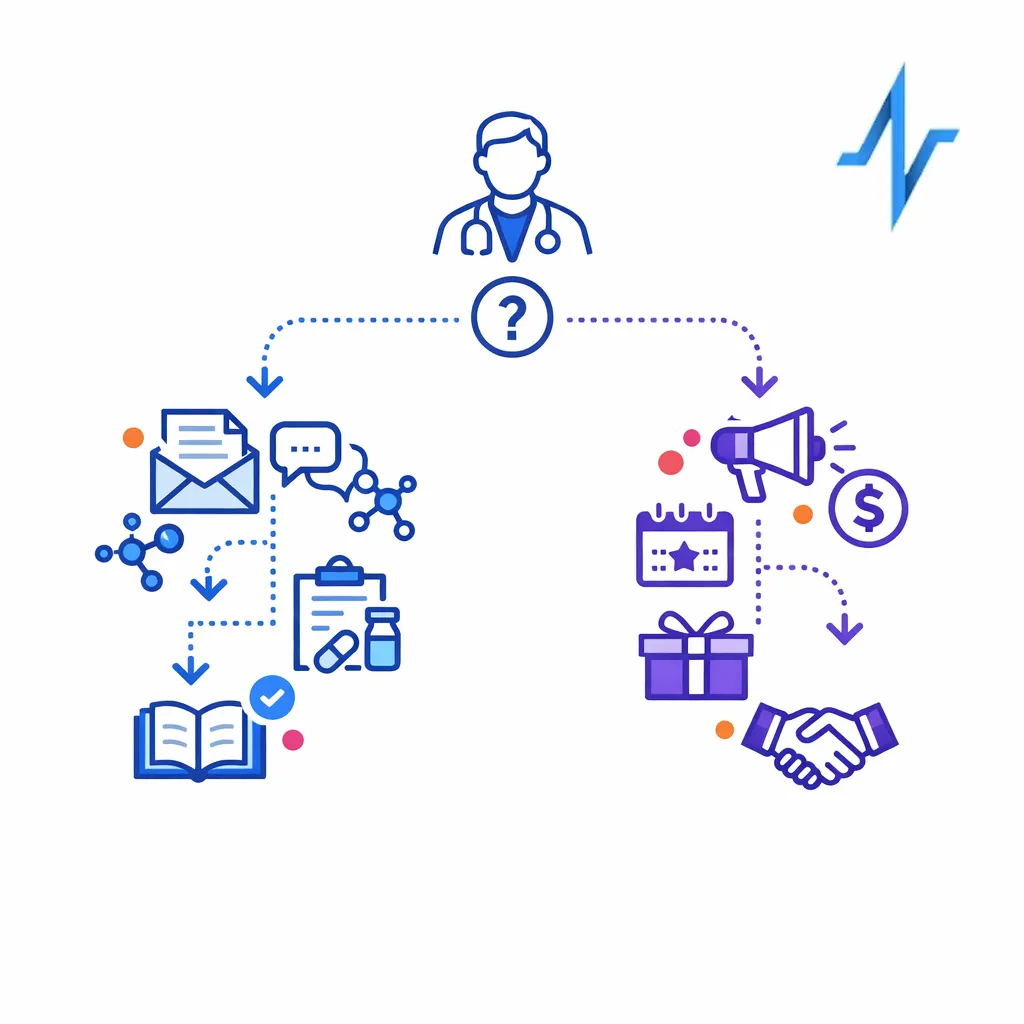
- Map which HCP moments belong in medical exchange versus commercial outreach.
- Define what a high-quality MSL interaction looks like for each therapeutic area.
- Standardize how scientific questions, insights, and follow-up actions are documented.
- Separate promotional content workflows from medical content workflows.
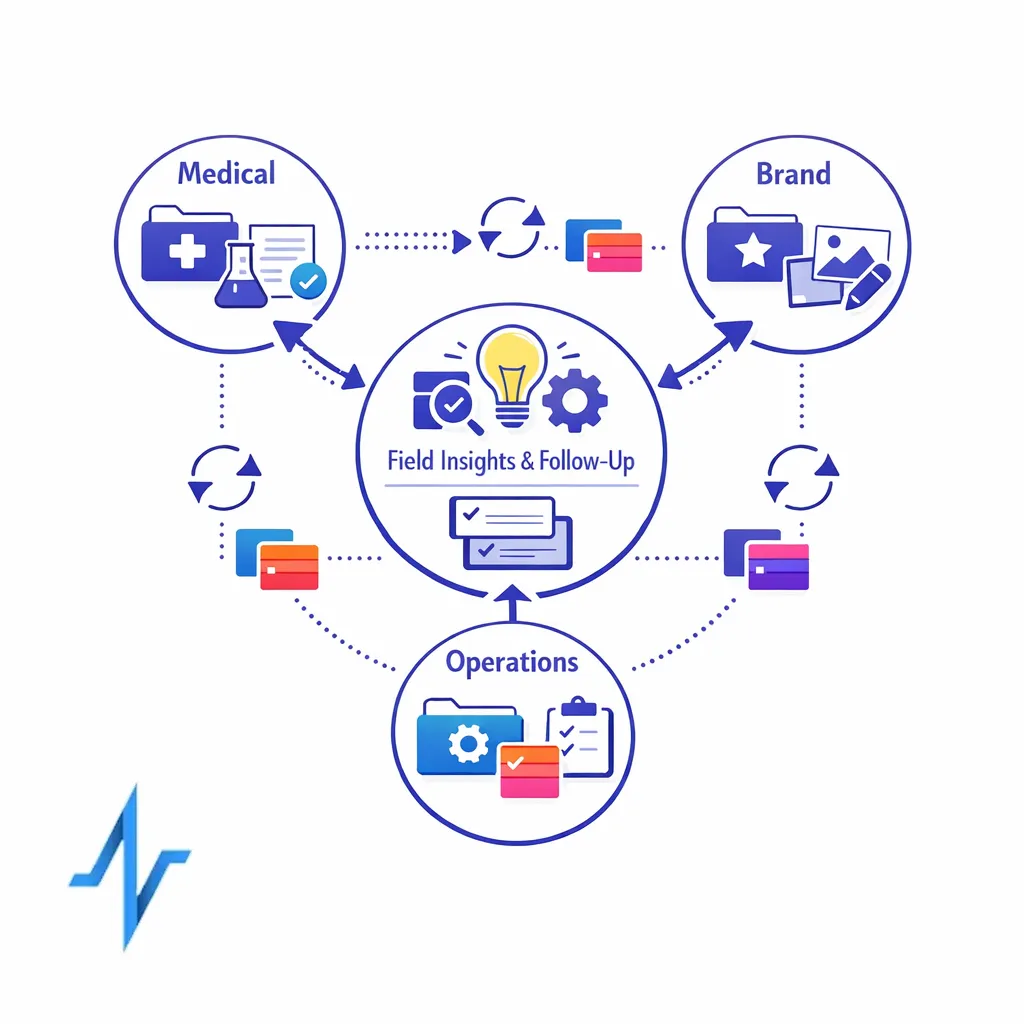
- Give field medical a clean way to share insights with brand, evidence, and operations teams.
- Measure exchange quality, insight quality, and follow-through, not just activity counts.
FAQs about the MSL role
What exactly does a Medical Science Liaison do?
A medical science liaison leads scientific conversations with HCPs, explains clinical evidence in context, captures field insight, and helps route complex medical questions through the right medical process. The role is built to improve the quality of scientific exchange rather than to deliver a promotional message.
How do you become a Medical Science Liaison?
Start by building deep therapeutic credibility and the ability to translate evidence clearly. Then develop the field skills that matter most in the role: stakeholder management, presentation quality, documentation discipline, and sound judgment in complex conversations.
What are the responsibilities of a MSL?
The core responsibilities are clinical data communication, field insight gathering, support for scientifically grounded engagement programs, and thoughtful handling of medical questions. The best MSLs also make the rest of the organization smarter by turning conversation patterns into usable strategy.
How does an MSL interact with healthcare professionals?
Usually through scheduled meetings, virtual discussions, congress follow-up, advisory board support, and question-led scientific exchange. The strongest interactions are tailored, evidence-based, and clear about the difference between medical dialogue and promotion.
Talk to Pulse Health about better scientific engagement operations
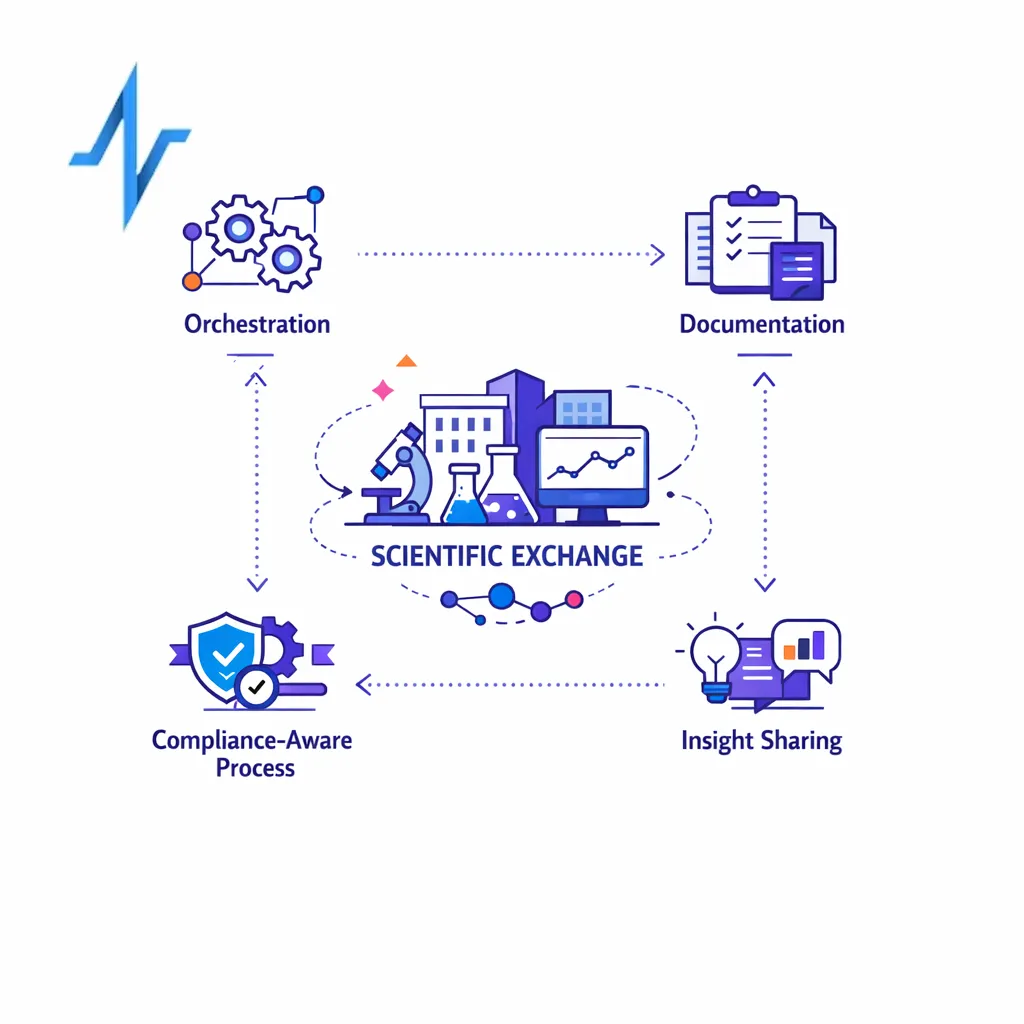
If your team is trying to support MSLs with better orchestration, clearer documentation, and cleaner handoffs across medical, brand, and operations, Pulse Health can help frame the workflow. You can Get the Platform Overview to see the approach or Book a Consultation to discuss your HCP engagement model.