

In pharma, MLR usually means medical, legal, and regulatory review: the cross-functional process used to evaluate promotional materials before they are used in market. The goal is to help ensure claims are accurate, appropriately supported, and aligned with FDA requirements for truthful, non-misleading promotion and fair balance.
This guide is for US pharma brand teams, omnichannel leads, commercial and marketing operations, CRM owners, and agency partners who need a clear view of how the MLR review process works in practice. You will learn what MLR pharma means, who is involved, where delays usually happen, and how to improve promotional review workflow design without turning speed into compliance risk.
What MLR means in pharma
What is a MLR in pharma?
MLR in pharma is an operating model for reviewing promotional content before launch or reuse. It brings together medical, legal, and regulatory perspectives so teams can assess a piece of content from more than one angle before it reaches HCPs, patients, caregivers, or the public.
In day-to-day work, an MLR review is less about a single meeting and more about a managed workflow. It starts with intake, evidence, and context, then moves through review, revision, approval, and recordkeeping.
Medical, legal, and regulatory defined
Medical reviewers typically focus on scientific accuracy, clinical context, claims substantiation, and whether references support the way information is presented. They often pay close attention to indication boundaries, safety language, and whether an asset could overstate efficacy or understate limitations.
Legal reviewers usually evaluate risk in how the message is framed, including comparative language, implied promises, testimonial issues, and the broader exposure a claim could create for the company. Regulatory reviewers focus on promotion rules, labeling alignment, required disclosures, and whether the asset fits the company’s regulatory process.
MLR vs PRC vs promotional review terminology
Different companies use different labels for similar workflows. One team may call it MLR review, another may say promotional review committee or PRC, and agencies may simply refer to pharma content review.
A common source of confusion is the acronym itself. In pharma operations, MLR usually means medical, legal, and regulatory review; in health insurance and payer discussions, medical loss ratio uses the same acronym but means something entirely different.
What content typically goes through MLR
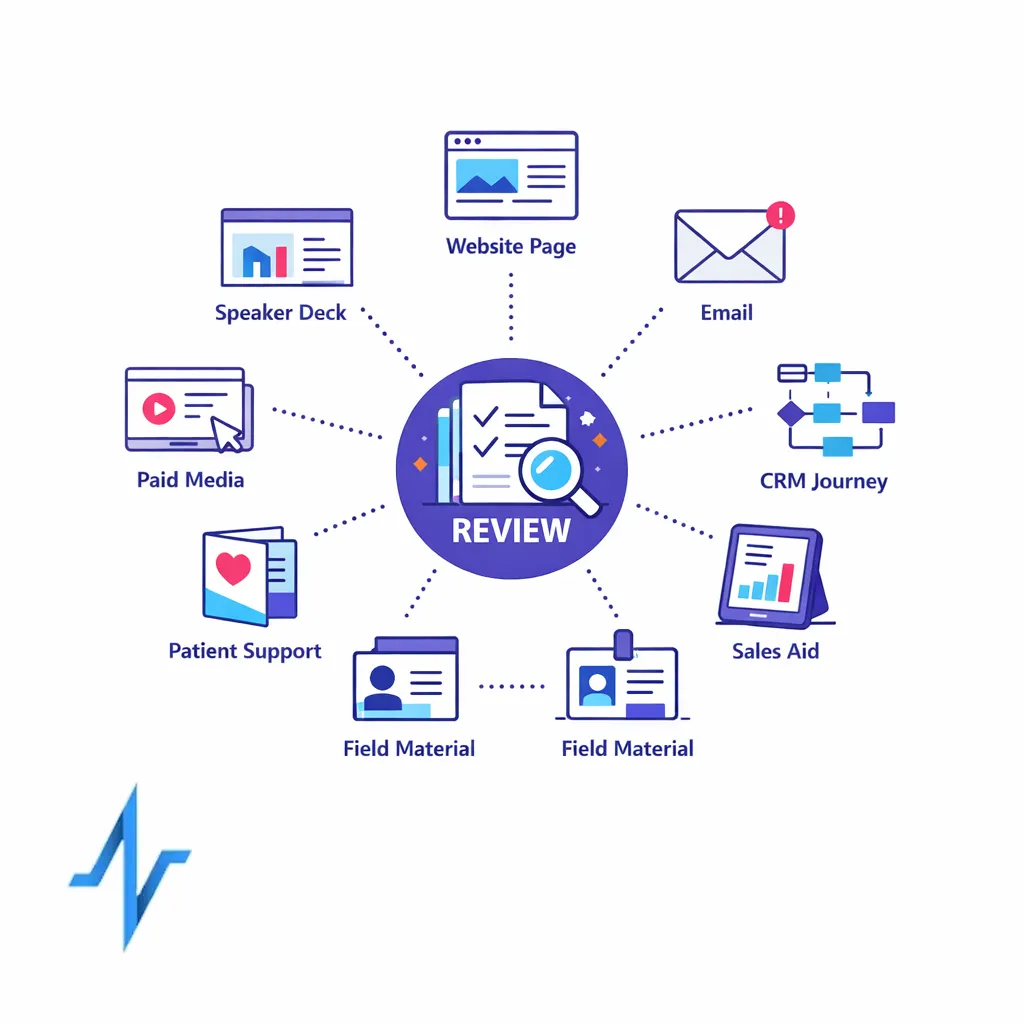
The exact scope varies by company, brand, and risk policy, but MLR commonly applies to branded and claims-based materials such as websites, emails, CRM journeys, sales aids, speaker decks, paid media, congress follow-up, patient support content, and field force materials. Some organizations also apply similar review controls to selected unbranded or disease-state assets when the audience, channel, or message creates higher sensitivity.
For commercial teams, that means MLR is usually not confined to one department. It touches HCP engagement, patient education and sign-up journeys, omnichannel campaigns, agency production, and the content operations that sit behind them.
Who is involved in the MLR review workflow
A strong medical legal regulatory review process depends on clear role design. When ownership is vague, feedback overlaps, review rounds multiply, and final approvals become harder to defend.
- Medical: checks scientific accuracy, evidence, indication, context, and safety presentation.
- Legal: assesses risk in wording, comparisons, implications, and broader commercial exposure.
- Regulatory: reviews promotion rules, labeling alignment, required elements, and submission implications.
- Brand, agency, and operations: prepare the asset, route it, track deadlines, manage versions, and consolidate decisions.
Medical reviewers
Medical reviewers are often the first line of scrutiny for claims quality. They help determine whether the asset says exactly what the evidence supports, whether nuance is preserved, and whether safety and efficacy are presented in a clinically responsible way.
They also help prevent a common MLR problem: technically correct source material being translated into promotional copy that loses context. In practice, this is where reference pack quality and source-to-claim mapping matter most.
Legal reviewers
Legal reviewers bring a different lens. They look for language that may create avoidable exposure, including unsupported superiority implications, broad promises, or wording that could be read more aggressively than the underlying evidence allows.
In many organizations, legal also helps set policy boundaries for testimonial use, endorsement issues, contracting assumptions, and how claims are expressed across channels. Their role is not to rewrite brand strategy, but to keep execution inside defensible boundaries.
Regulatory reviewers
Regulatory reviewers are usually closest to the rules governing prescription drug promotion, including how risk and benefit information are presented and whether the asset stays aligned to approved labeling. For approved prescription drugs, certain postmarketing advertising and promotional labeling are submitted to FDA at initial dissemination under 21 CFR 314.81(b)(3)(i), which is one reason final-file control and workflow discipline matter.
Regulatory reviewers also help teams think channel by channel. The same core message may need different execution standards depending on the audience, space constraints, asset type, and how benefit and risk are balanced.
Brand, agency, and operations roles
Brand teams define the objective, audience, and strategic message. Agency partners and internal creative teams turn that strategy into assets, while operations teams manage intake, metadata, routing, deadlines, version control, and the handoff from draft to approved use.
This operations layer is easy to underestimate, but it is where many MLR delays either start or get solved. If the workflow owner cannot tell which version is current, which comments are still open, or which references support which claim, the review slows down no matter how strong the reviewers are.
The core stages of the MLR process
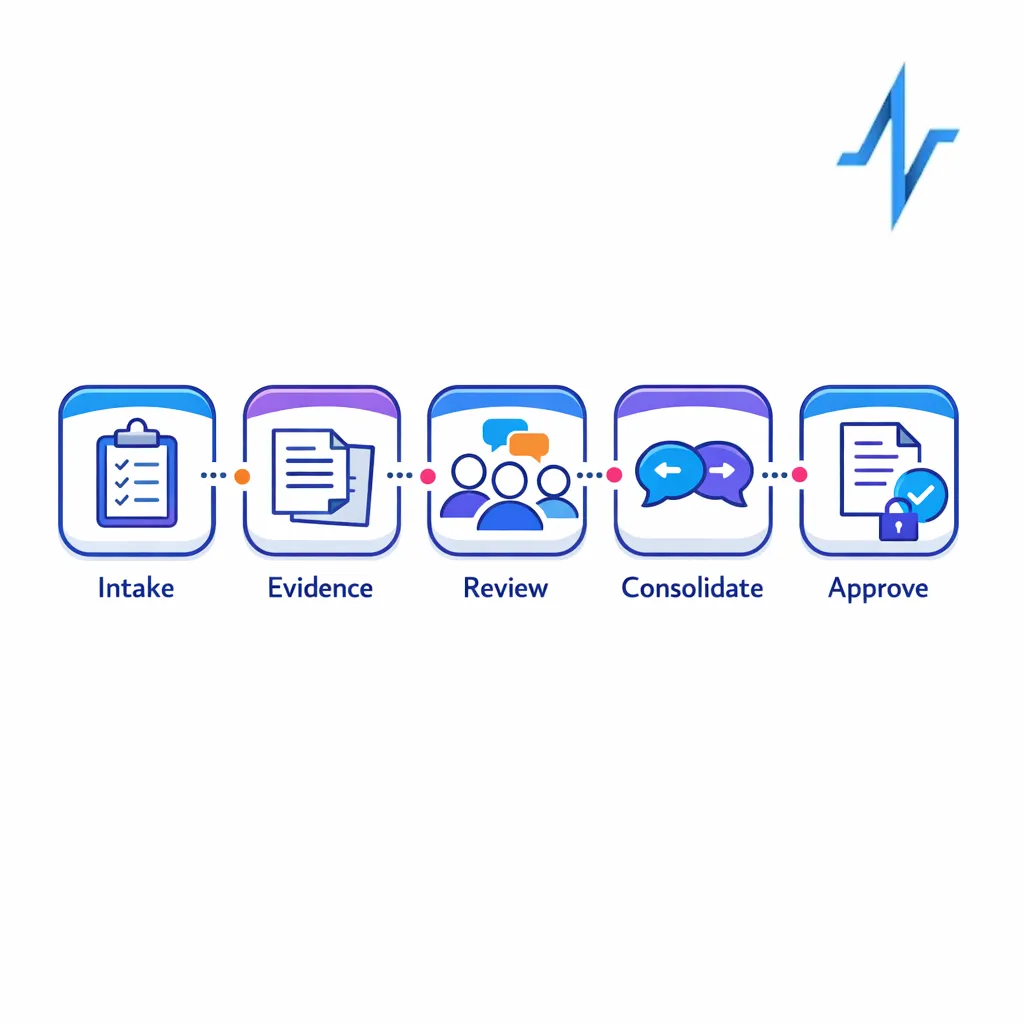
A typical MLR review process can be mapped into five practical stages:
- 1. Intake and submission prep
- 2. Evidence and reference alignment
- 3. Parallel or sequential review
- 4. Review meeting and feedback consolidation
- 5. Revision, approval, and audit trail
Intake and submission prep
The best promotional review workflows start before reviewers see the asset. Intake should capture the asset type, audience, channel, objective, due date, owner, market, and whether the piece is net new, an update, or a reuse of previously approved content.
This is also the point to confirm that the submission package is complete. If claims, references, annotations, and the intended use case are not clear up front, the MLR process turns into basic fact-finding instead of actual review.
Evidence and reference alignment
Once the asset is in queue, the next job is to align every meaningful claim with the evidence and approved source language the team intends to rely on. That usually means a reference pack, annotated copy, and clear traceability between claim statements and supporting material.
When teams skip this step or do it inconsistently, the review becomes slower and more subjective. Reviewers spend time asking what a statement is based on instead of deciding whether it should stay, change, or be removed.
Parallel or sequential review
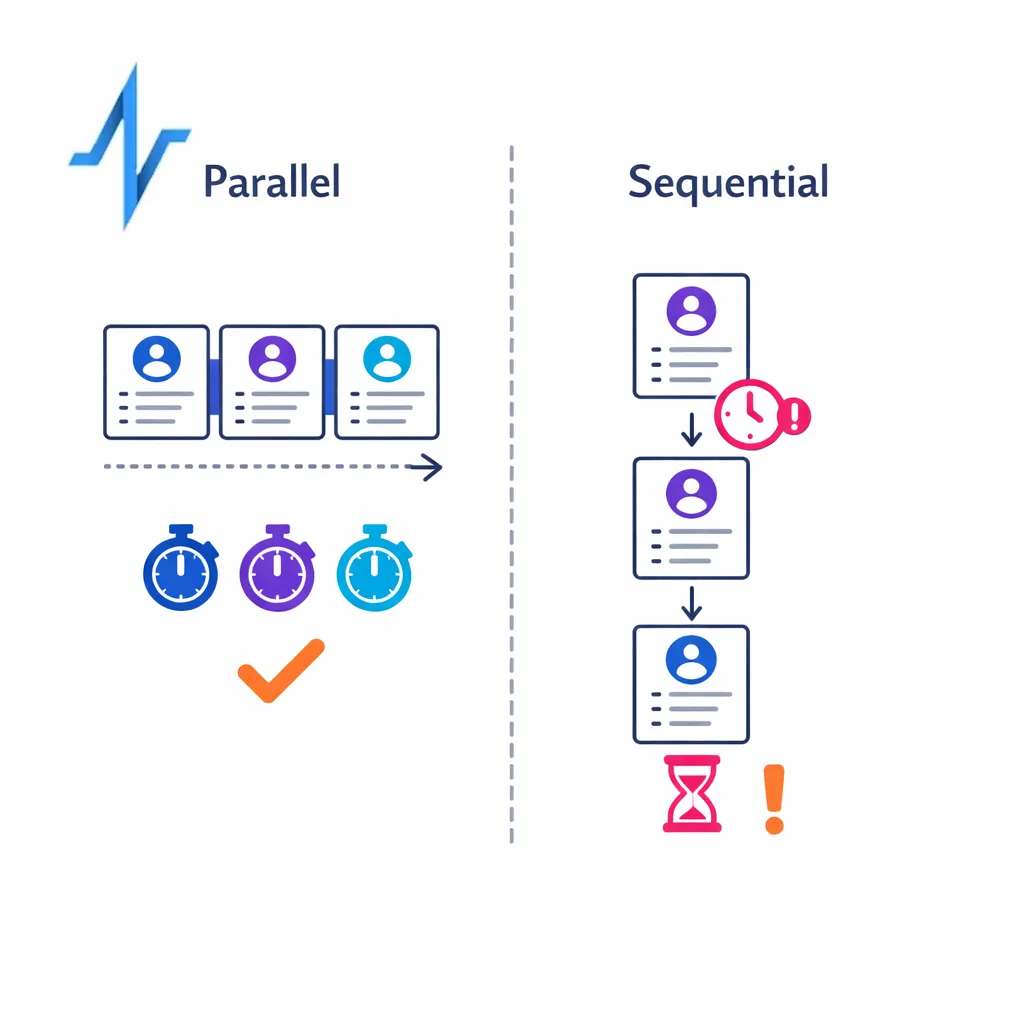
Some organizations run medical, legal, and regulatory review in parallel, while others route drafts one function at a time. Parallel review is usually faster, but it works only when roles are defined and reviewers know what they own.
Sequential review can feel safer for high-risk assets, but it often adds queue time and creates rework when later reviewers question earlier assumptions. A practical model is to use parallel review for standard assets and reserve sequential escalation for complex or unusually sensitive materials.
Review meeting and feedback consolidation
Not every asset needs a live meeting, but many teams still use one for high-value or high-risk materials. When they do, the meeting works best if there is a single owner who consolidates comments, resolves duplicates, and separates mandatory changes from preferences.
Without that discipline, reviewers can give conflicting edits, agencies can respond to the wrong version, and the asset can return to MLR with the same issue still unresolved. Much of “slow MLR” is actually poor feedback management.
Revision, approval, and audit trail
After comments are resolved, the approved version needs to be locked, labeled, and easy to retrieve with its supporting rationale. Teams should be able to show what changed, who approved it, what references were used, and whether the approval applies only to a specific channel or execution.
That rigor is not just administrative hygiene. FDA warning and notice of violation letters to pharmaceutical companies are a reminder that promotional materials can become enforcement issues when claims, context, or risk presentation fall short.
What does MLR approved mean?
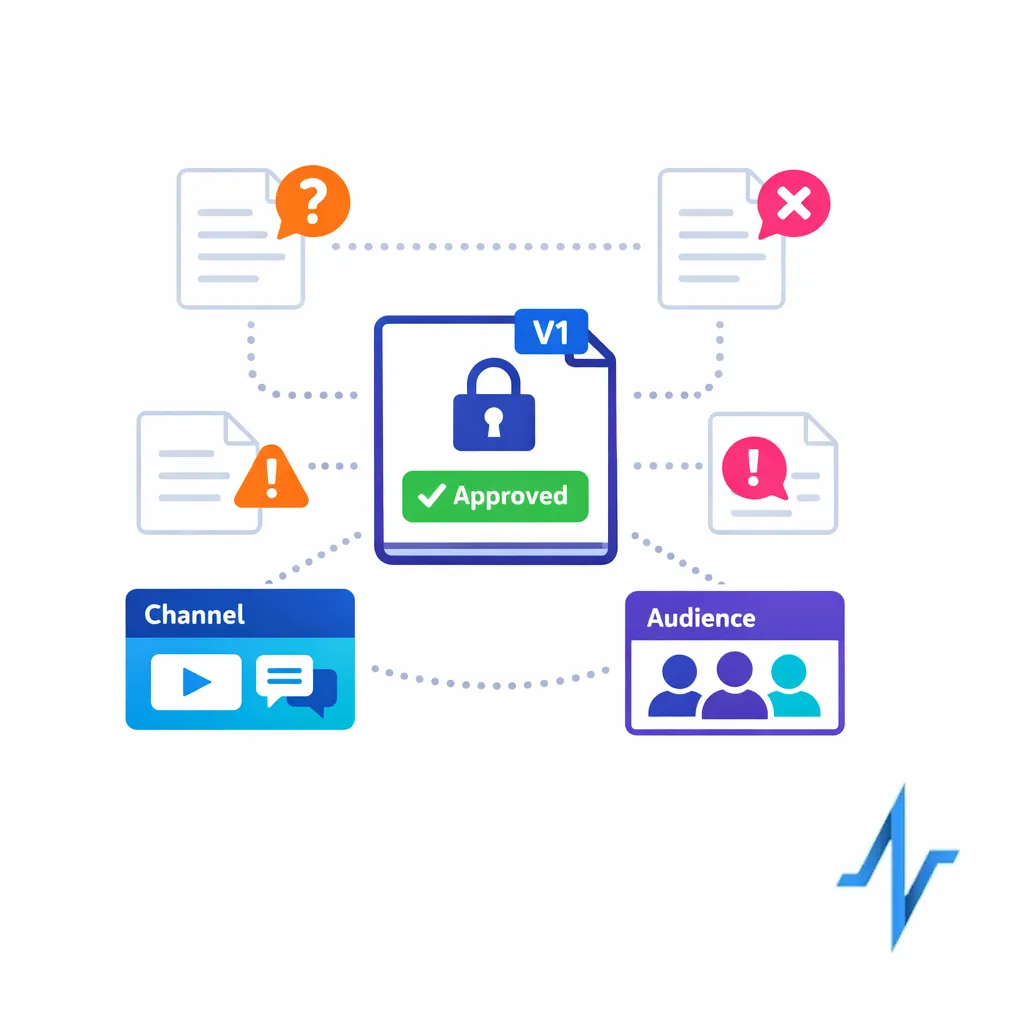
MLR approved usually means a specific version of an asset has been cleared for the defined use case in the submission. It does not automatically mean the same copy can be reused in every channel, audience context, or future campaign without another review.
That distinction matters operationally. Approval is often version-specific, context-specific, and sometimes time-sensitive, especially when source material, labeling, or campaign structure changes.
Common delays that slow MLR operations
Most MLR bottlenecks are operational before they are regulatory. The usual causes are easy to recognize:
- Incomplete submissions with missing references, unclear annotations, or weak briefs
- Sequential reviews and version confusion that create avoidable queue time
- High content volume and limited reviewer bandwidth during launches and campaign peaks
- Poor cross-functional alignment on what the asset is trying to say
- Manual workflows and fragmented systems that make status and accountability hard to see
Incomplete submissions
If a draft arrives without a clean reference pack, channel context, or clear indication of what changed from the prior version, reviewers have to reconstruct the submission before they can assess it. That adds days without improving quality.
Sequential reviews and version confusion
Version confusion is one of the most expensive hidden failures in pharma operations. When different reviewers comment in different files or an agency revises against an outdated draft, the team can lose a full round to administrative cleanup.
High content volume and reviewer bandwidth limits
Brand teams rarely submit assets at a perfectly even pace. Launches, congresses, email bursts, CRM refreshes, and field updates often hit the same reviewers at the same time, which means even good processes can stall if intake is not prioritized by risk and deadline.
Poor cross-functional alignment
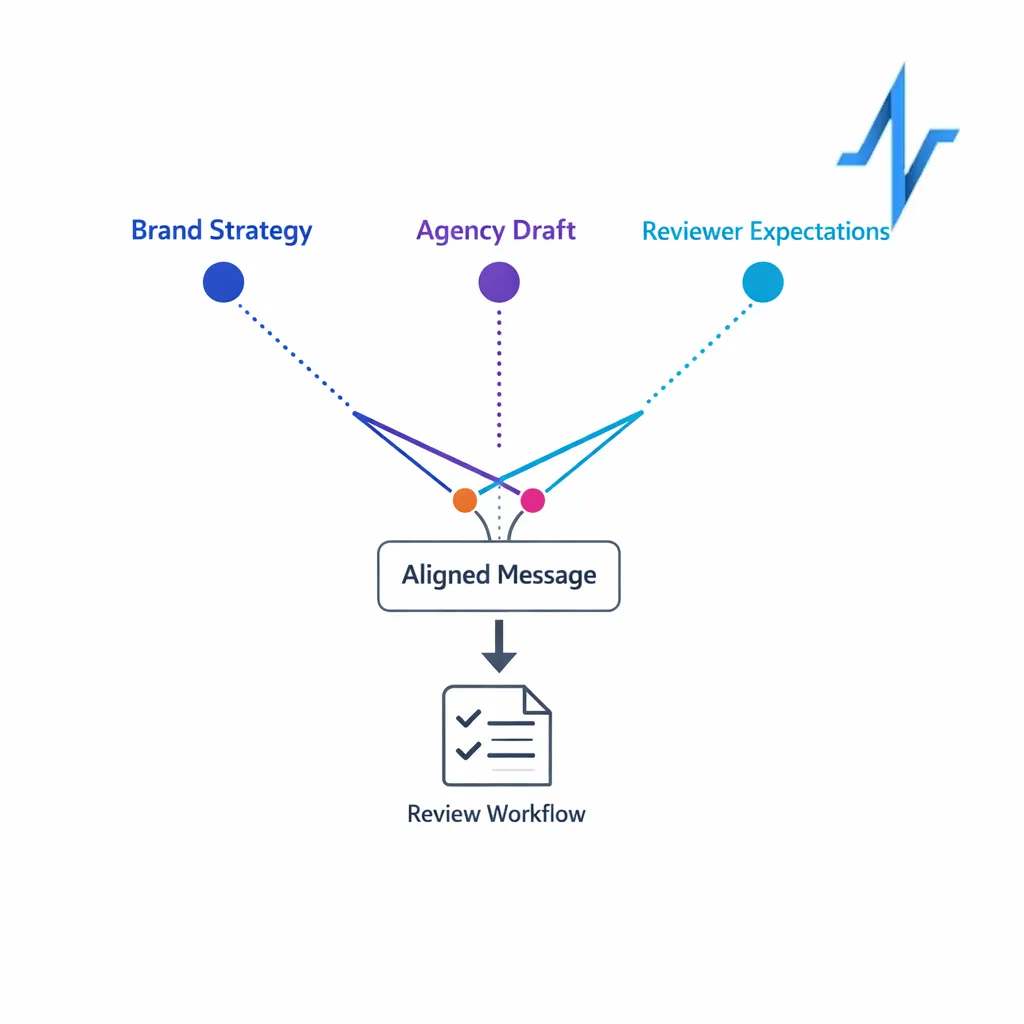
Some delays have nothing to do with compliance rules and everything to do with unresolved strategy. If medical, brand, and agency teams have not aligned on the core message before submission, MLR becomes the place where positioning debates are replayed.
Manual workflows and fragmented systems
Email chains, shared drives, disconnected DAM tools, and spreadsheet trackers make it harder to know what is ready, what is blocked, and who owns the next step. Teams then spend time chasing status instead of advancing the asset.
Common mistakes and misconceptions
Several misconceptions make the MLR review process slower than it needs to be:
- “MLR is just the approval meeting.” In reality, the outcome is shaped much earlier by intake quality, claim mapping, and reviewer routing.
- “More reviewers always reduce risk.” More reviewers can also create conflicting edits, longer queues, and weaker accountability.
- “Every asset needs the same review path.” Standard emails, local edits, and net-new campaigns rarely carry the same risk profile.
- “Approved once means approved everywhere.” A message cleared in one format or audience context may still need review elsewhere.
Teams that internalize these points usually get faster without becoming less careful. They stop treating MLR as a single gate and start treating it as a designed operating system.
How pharma teams improve review speed without sacrificing compliance
The biggest gains usually come from reducing avoidable review work, not pushing reviewers to move faster. Whether a team builds internally or uses workflow support from a platform such as Pulse Health, the principle is the same: standardize the inputs, simplify the path, and make exceptions visible.
Submission checklists and pre-review QA
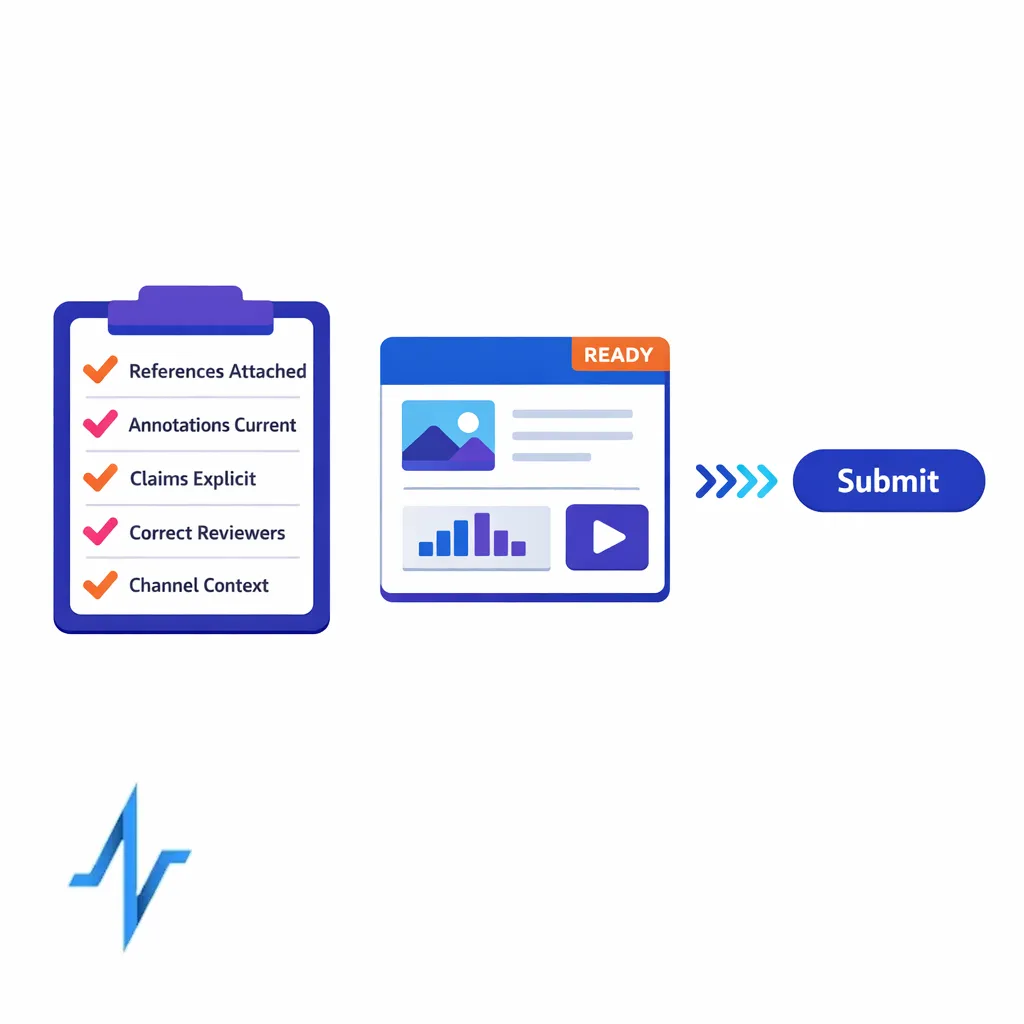
A structured intake checklist removes preventable back-and-forth. Before an asset enters MLR, someone should confirm that references are attached, annotations are current, intended claims are explicit, and the right reviewers have been selected.
Standardized claims and reference libraries
When teams can pull from approved claims language, prior rationale, and reusable reference packs, they spend less time re-arguing settled points. This also helps agencies draft closer to approvable language on the first pass.
Modular content and reusable approved components
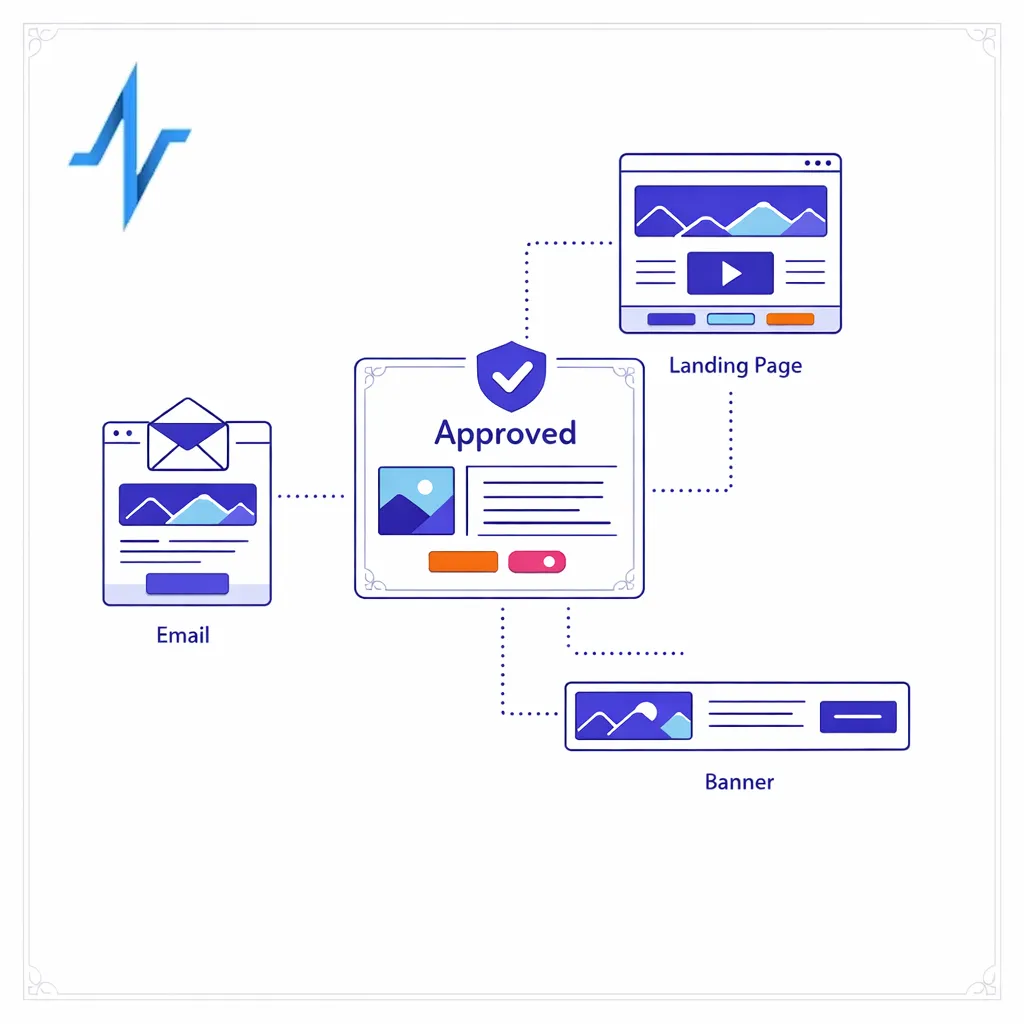
Modular content lets teams review and reuse approved components rather than rebuilding every asset from scratch. The benefit is not only speed; it also improves consistency across HCP emails, landing pages, banners, and follow-up content.
Risk-based or tiered review paths
Not every asset needs the same level of scrutiny. A tiered model can route low-change or low-risk updates through a lighter path while reserving fuller review for net-new claims, sensitive audiences, or complex scientific messaging.
AI-assisted pre-checks with human oversight
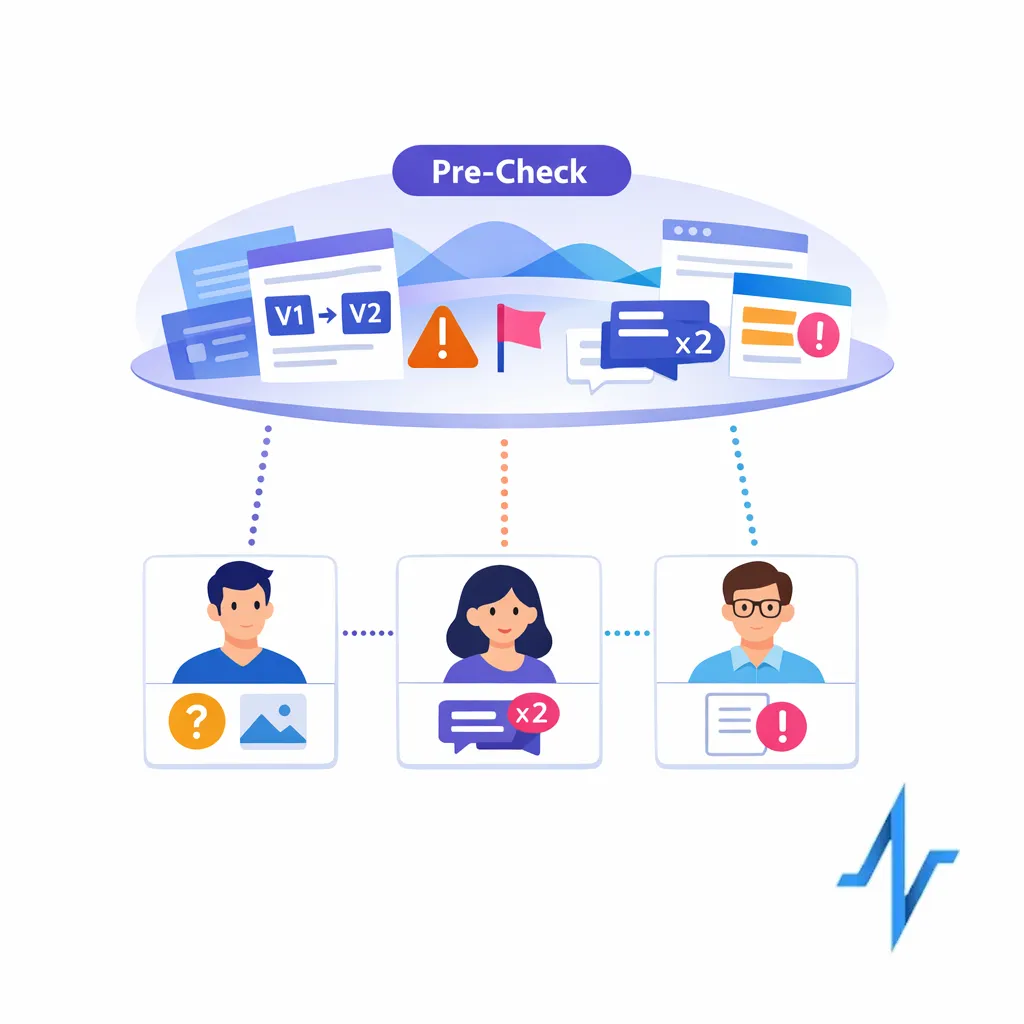
AI can be useful before formal review starts, especially for tasks like comparing versions, spotting duplicate comments, flagging missing references, and identifying text that may need closer human review. It is most useful as a pre-check layer, not as a substitute for medical, legal, or regulatory judgment.
Metrics and operating practices that support better MLR performance
If you want to improve MLR pharma operations, measure the workflow and not just the outcome. A team cannot fix bottlenecks it cannot see.
Cycle time
Track total cycle time from submission to approval, but also break it into segments such as intake wait time, active review time, revision time, and resubmission time. That shows whether the real issue is reviewer capacity, agency turnaround, or poor submission quality.
Review rounds per asset
Count how many rounds an asset needs before approval. A high round count usually points to unclear briefs, weak first drafts, or inconsistent reviewer expectations.
On-time approval rate
This metric shows whether the workflow is dependable enough for launches, CRM programs, and field execution. Teams with good on-time performance usually have better intake discipline and clearer review prioritization.
Rejection reasons and bottleneck tracking
Document why assets are sent back or escalated. When you categorize issues such as missing references, unsupported claims, safety presentation, or version errors, patterns emerge quickly and training becomes more targeted.
Good operating practice usually includes a weekly triage rhythm, visible queues, SLA expectations by asset type, and a single source of truth for comments and final approvals. Those basics are not glamorous, but they are what make faster promotional review workflow performance repeatable.
FAQ
What does MLR review mean?
MLR review means a medical, legal, and regulatory review of pharma promotional content. In practice, it is the workflow used to evaluate whether an asset is accurate, supportable, compliant, and ready for the specific use case described in the submission.
What is the MLR process?
The MLR process usually includes intake, evidence alignment, reviewer routing, comment consolidation, revision, approval, and recordkeeping. Different companies structure it differently, but the core purpose is the same: review promotional content before use and create a clear approval history.
Is MLR review the same as legal approval?
No. Legal is one part of the process, but MLR review combines medical, legal, and regulatory perspectives. A piece may be legally acceptable in one sense and still need medical or regulatory changes before it is ready for use.
Does MLR-approved mean the asset can be reused everywhere?
Usually not. MLR approval is often tied to a specific version, audience, channel, and context. Reuse may be possible, but teams should confirm whether the approved language still fits the new execution and whether a new review is required.
Improve MLR operations with Pulse Health
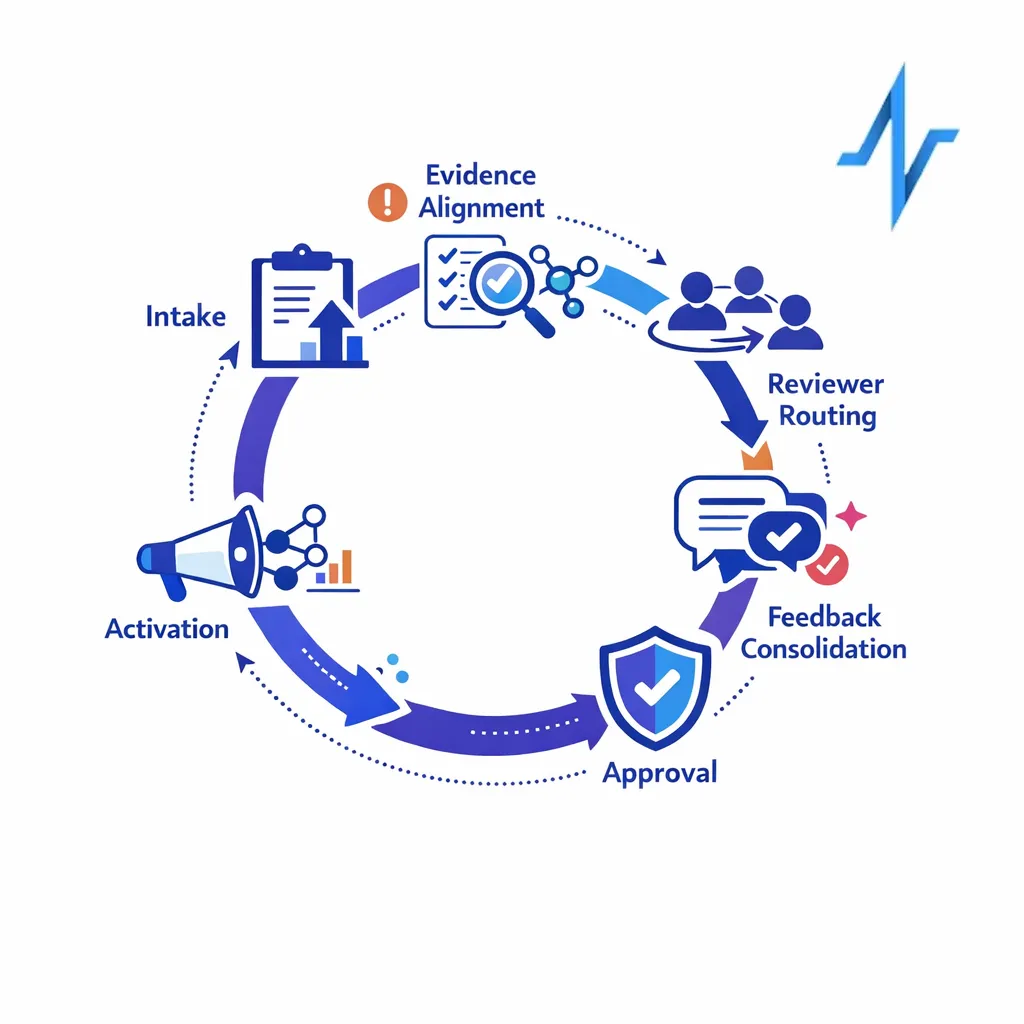
If your team is trying to reduce review cycle time, clean up submission quality, and create better visibility across HCP, patient, and omnichannel workflows, Pulse Health can help you design a more reliable operating model. The goal is not just faster approvals, but fewer avoidable rounds, clearer ownership, and better coordination from intake through activation.
- Request a Demo if you want to see a more efficient path from submission to approval.
- Book a Consultation if you are redesigning brand, regulatory, or commercial operations workflows.
- See How It Works to understand the platform approach for orchestrating compliant execution.
- Explore Integrations and get the platform overview for teams connecting review operations with downstream activation.