

Medication adherence can be the difference between a prescription that exists on paper and a treatment that works in real life. For teams responsible for patient education, journey orchestration, and measurement, it sits at the center of outcomes, experience, and program efficiency.
This article is for US pharma brand teams, omnichannel leads, CRM owners, and agency partners building medication adherence programs. It explains what medication adherence means, why patients stop treatment, which engagement models help, and how to design a measurable program that improves execution across the patient journey.
What medication adherence means in patient care
Definition of medication adherence
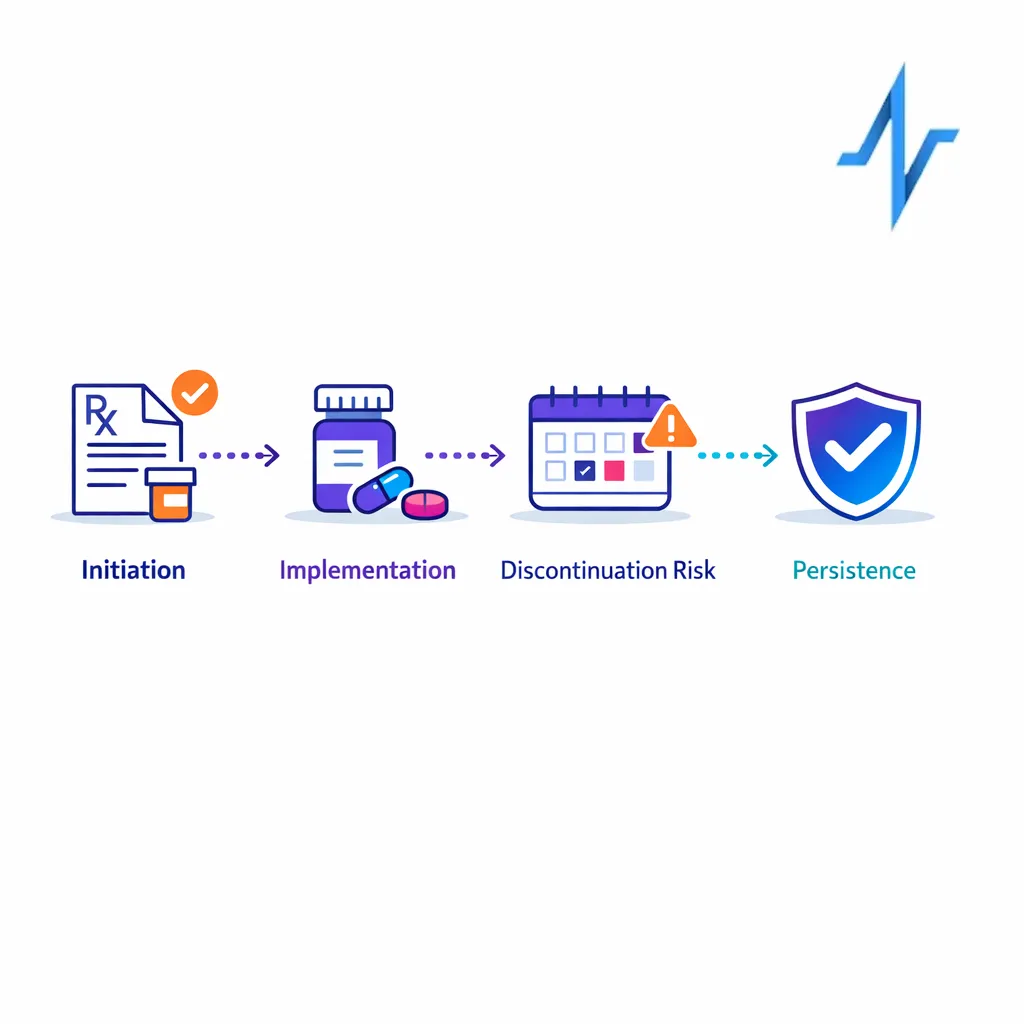
Medication adherence is commonly defined as the extent to which a person’s medication-taking behavior matches agreed recommendations from a healthcare provider. In practical terms, it means the patient starts therapy, takes it in the intended way, and stays on it long enough for treatment to have a fair chance to work.
Adherence vs compliance vs persistence
Modern medication-use research separates the journey into initiation, implementation, discontinuation, and persistence. That distinction matters because a patient who never starts treatment needs a different intervention than a patient who starts, struggles with side effects or routine, and then stops.
Some teams still use the older term medication compliance, but adherence is usually more useful for program design because it focuses attention on the patient’s real barriers. Persistence is also important because it measures how long a patient remains on therapy, not just whether a prescription was ever filled.
Why adherence matters for outcomes and cost
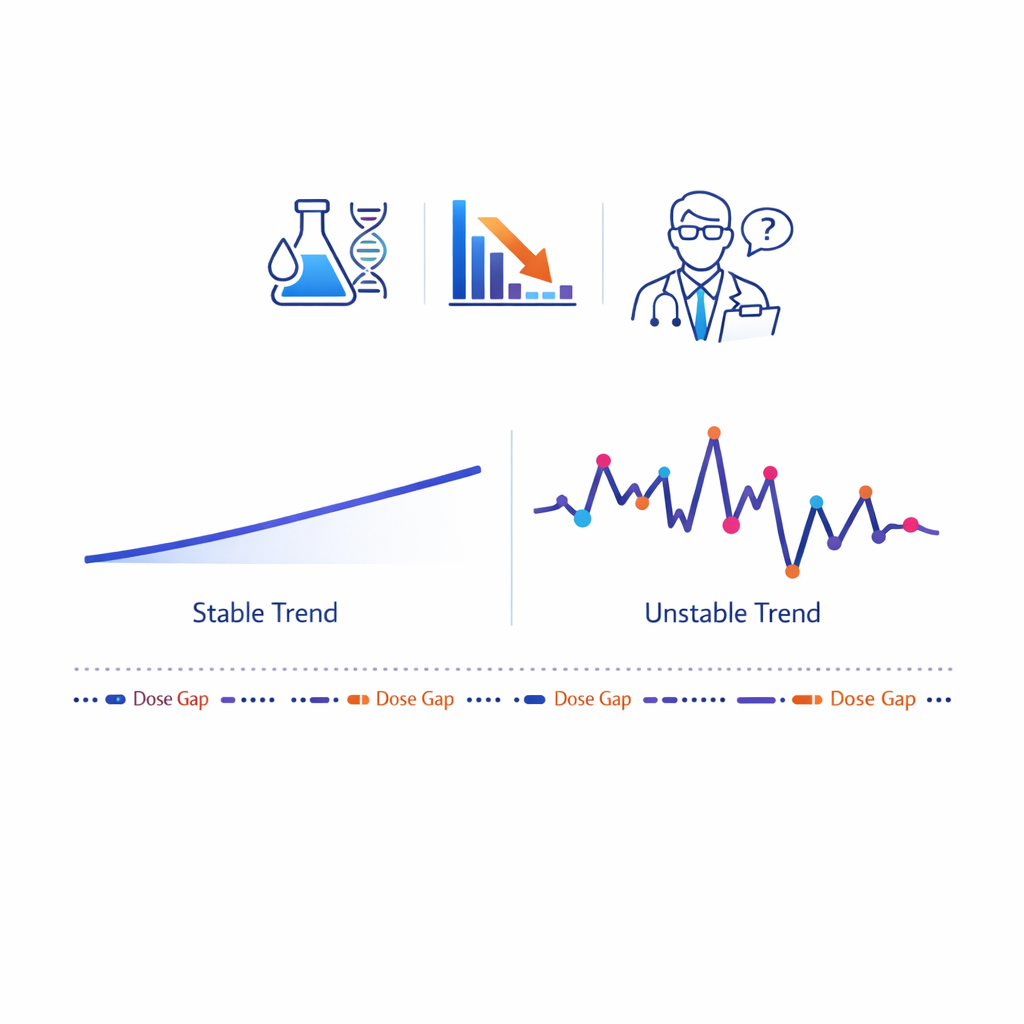
In chronic disease care, poor adherence is associated with worse outcomes and higher healthcare use. For commercial and engagement teams, that makes adherence less of a reminder problem and more of a journey-design problem.
When therapy is not taken as intended, organizations can misread the signal. A patient may look unresponsive, disengaged, or clinically unstable when the actual issue is access, understanding, tolerability, or simple execution.
Why patients stop treatment
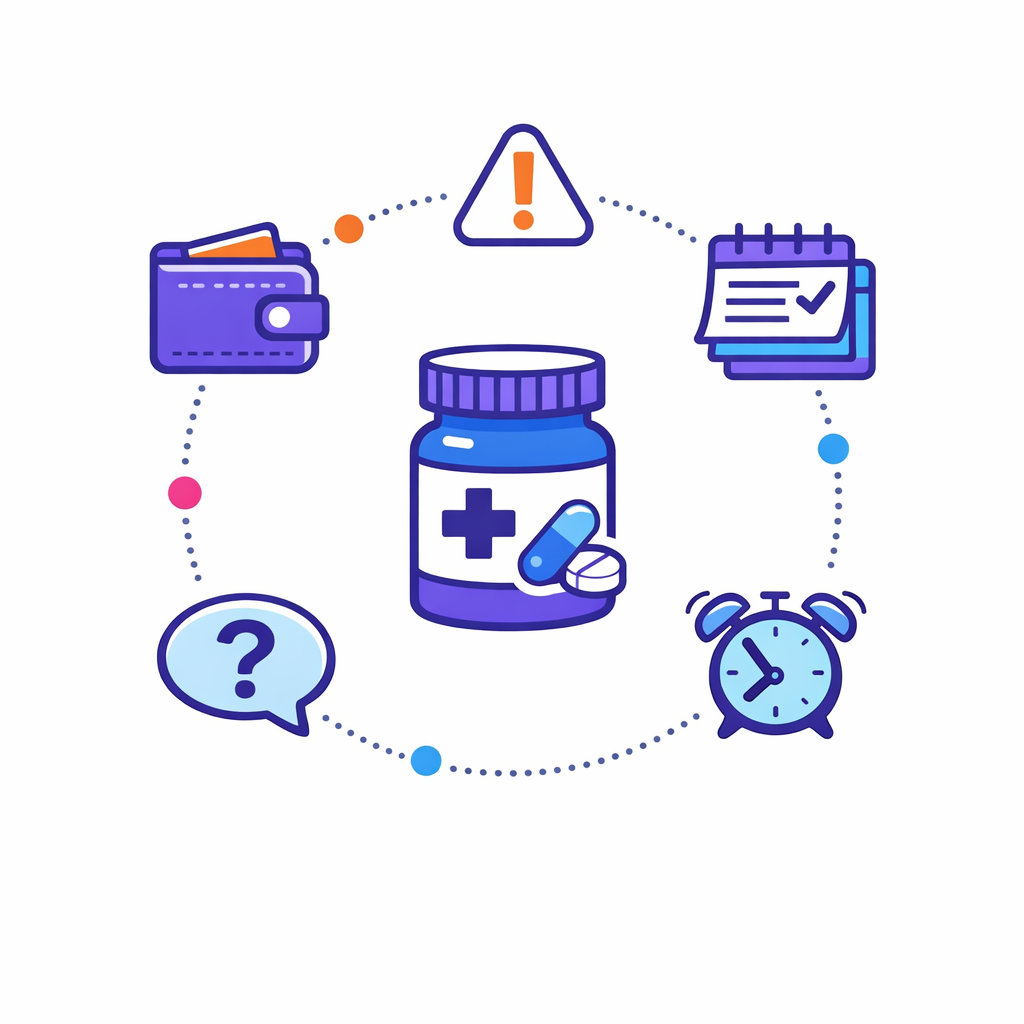
The main drivers of nonadherence span therapy, patient, condition, socioeconomic, and health-system factors. That is why a single message, sent the same way to everyone, usually underperforms.
- Cost and access friction can block first fills or create refill gaps.
- Side effects or fear of side effects can stop therapy early.
- Complex regimens and polypharmacy add daily friction.
- Forgetfulness, weak routines, and low health literacy make correct use harder.
- Low trust, low perceived need, and asymptomatic disease reduce motivation to continue.
Cost and affordability barriers
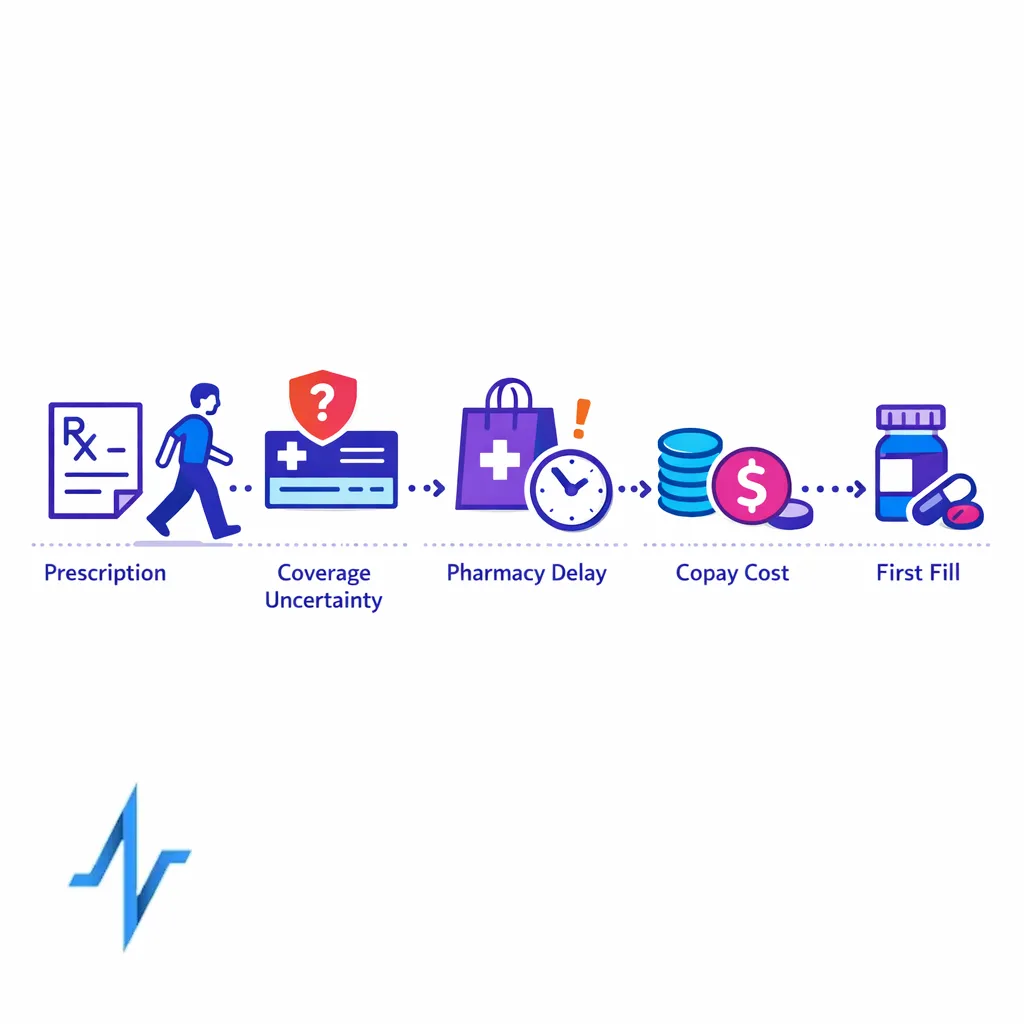
Affordability problems are not limited to a high copay. Coverage uncertainty, prior authorization delays, transportation, refill timing, and confusion at the pharmacy can all make a motivated patient abandon therapy.
For program owners, this means patient education alone is not enough. If the patient needs access support, the journey has to identify that need early and route it fast.
Side effects and fear of adverse events
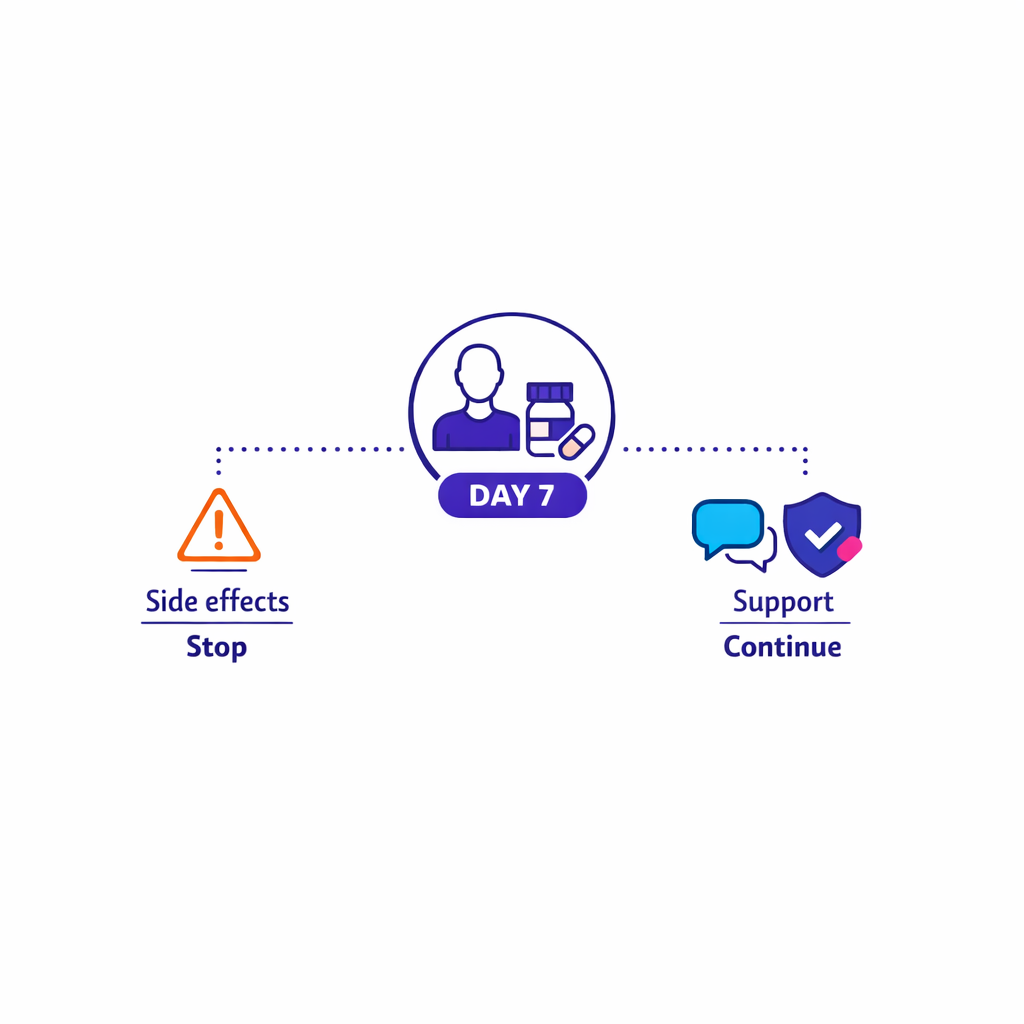
Many patients stop treatment after the first unpleasant experience or after reading risk information that feels abstract and alarming. If nobody checks in early, silence can look like stability even when the patient has already disengaged.
A better adherence design anticipates that first vulnerable window. It sets expectations, explains what to watch for, and makes it easy to get back to a clinician, pharmacist, or support team before the patient gives up.
Complex regimens and polypharmacy
The harder a regimen is to fit into daily life, the more fragile adherence becomes. Multiple dosing times, titration steps, food instructions, monitoring requirements, or device training can each add enough friction to break a routine.
Polypharmacy makes the challenge larger. Even capable patients can struggle when several medicines compete for attention, timing, and understanding.
Forgetfulness, routines, and health literacy
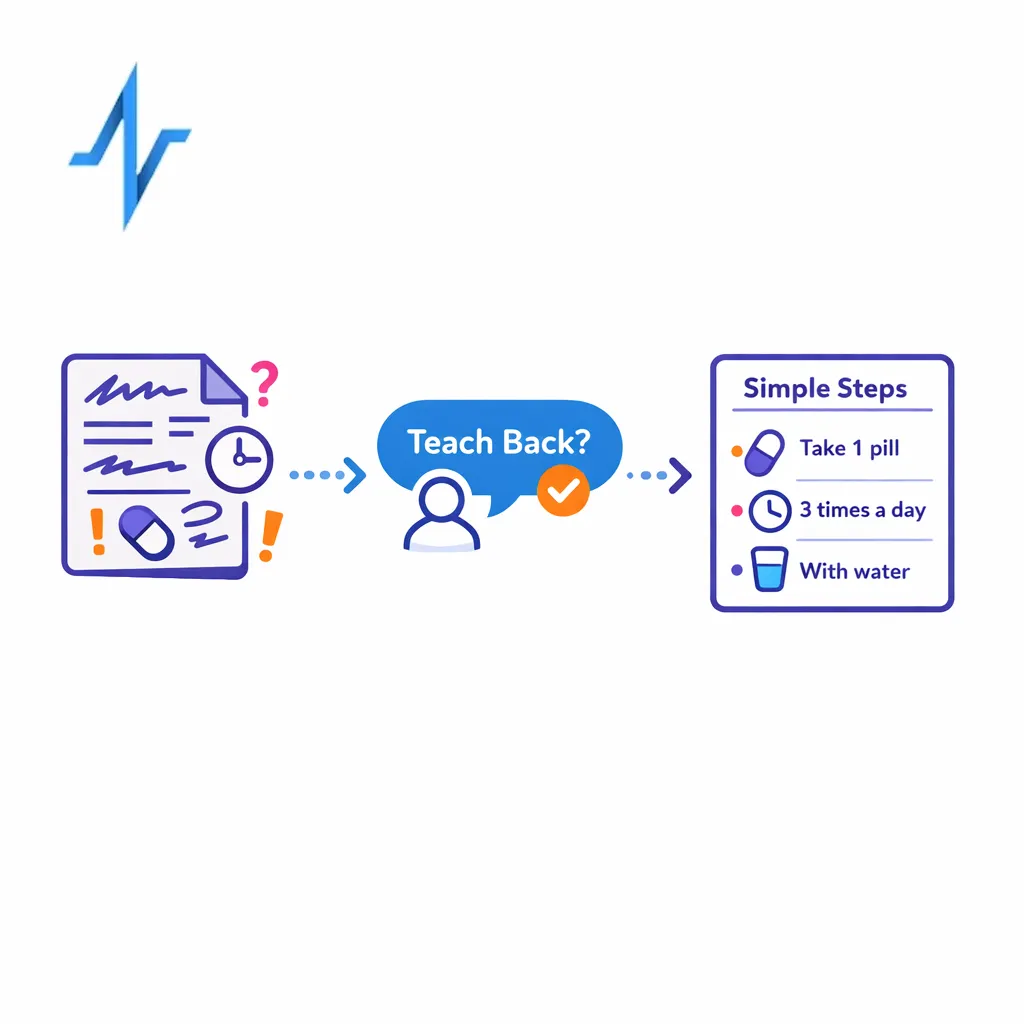
Not every missed dose comes from lack of motivation. Sometimes the medicine was never anchored to a stable habit, or the patient understood the label at a surface level but not the purpose, timing, or what to do after a missed dose.
This is where plain language matters. Programs that assume understanding often overlook the practical gap between receiving instructions and using them correctly every day.
Low trust, low perceived need, and asymptomatic disease
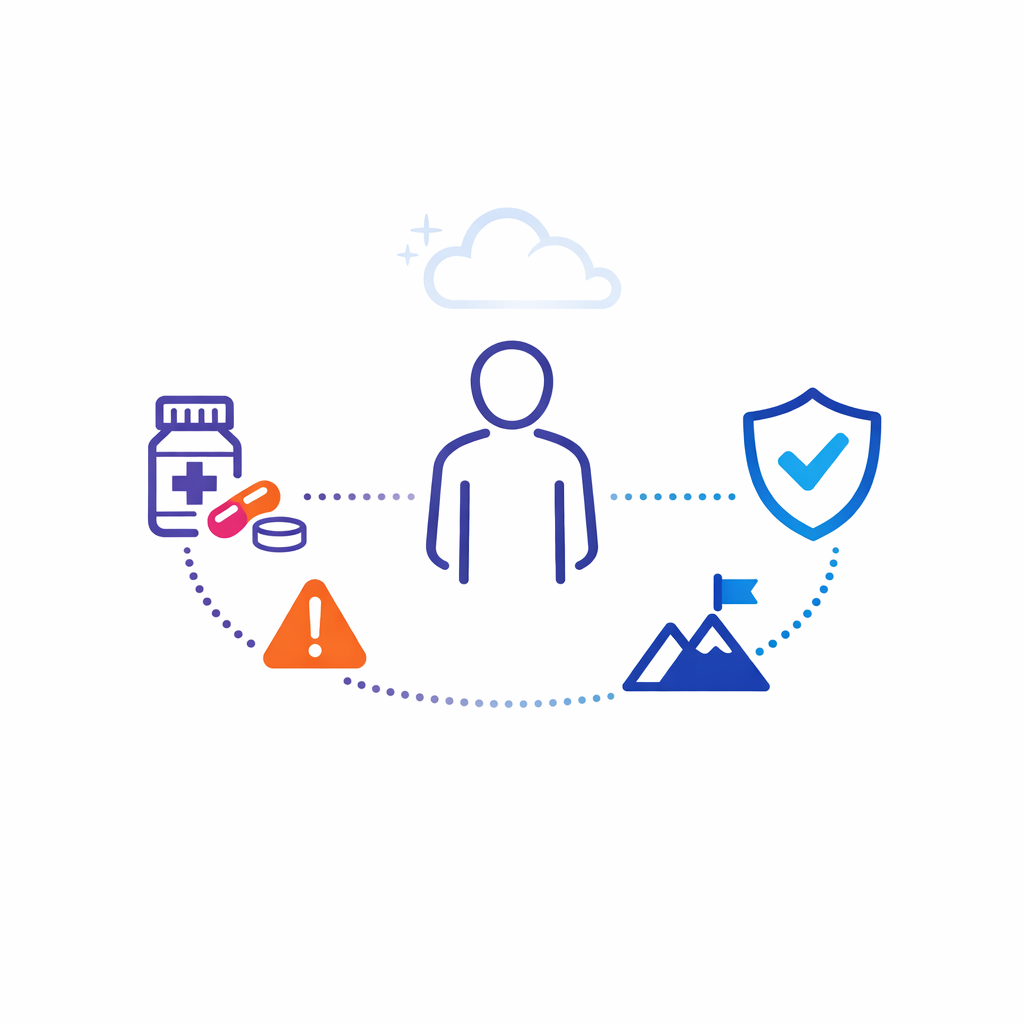
If a condition is quiet, long-term benefit can feel less real than short-term inconvenience. Patients may also pause treatment when they do not fully trust the recommendation, do not see improvement quickly, or feel overwhelmed by competing information.
That is one reason adherence in medication is not only a logistics problem. Beliefs, expectations, and the patient’s sense of need can be just as important as refill timing.
What poor adherence leads to
Clinical deterioration and preventable utilization
Poor adherence creates noisy clinical signals. Symptoms may worsen, biomarkers may drift, and the care team may see disease instability before anyone sees the fill gap, misunderstanding, or access issue behind it.
That makes adherence relevant well beyond patient support. It affects how providers interpret treatment response and how teams evaluate whether a therapy is working in the real world.
Impact on chronic disease management
Chronic disease management depends on repetition over time. When patients stop and restart, stretch doses, or never establish a routine, the care plan becomes harder to execute and harder to evaluate.
For brand and engagement teams, this also complicates measurement. It becomes difficult to tell whether weak performance came from message quality, channel mix, affordability, patient fit, or a breakdown in the handoff between education and access support.
Why escalation of therapy can miss the root cause
A common mistake is to treat every control problem as evidence that the therapy itself failed. If the real issue is that the medicine was not started, not tolerated, or not refilled, adding complexity may increase burden without solving the original barrier.
This is why improving medication adherence should be part of the operating model, not an afterthought. A clean view of the barrier often matters as much as the next treatment decision.
How engagement programs improve medication adherence
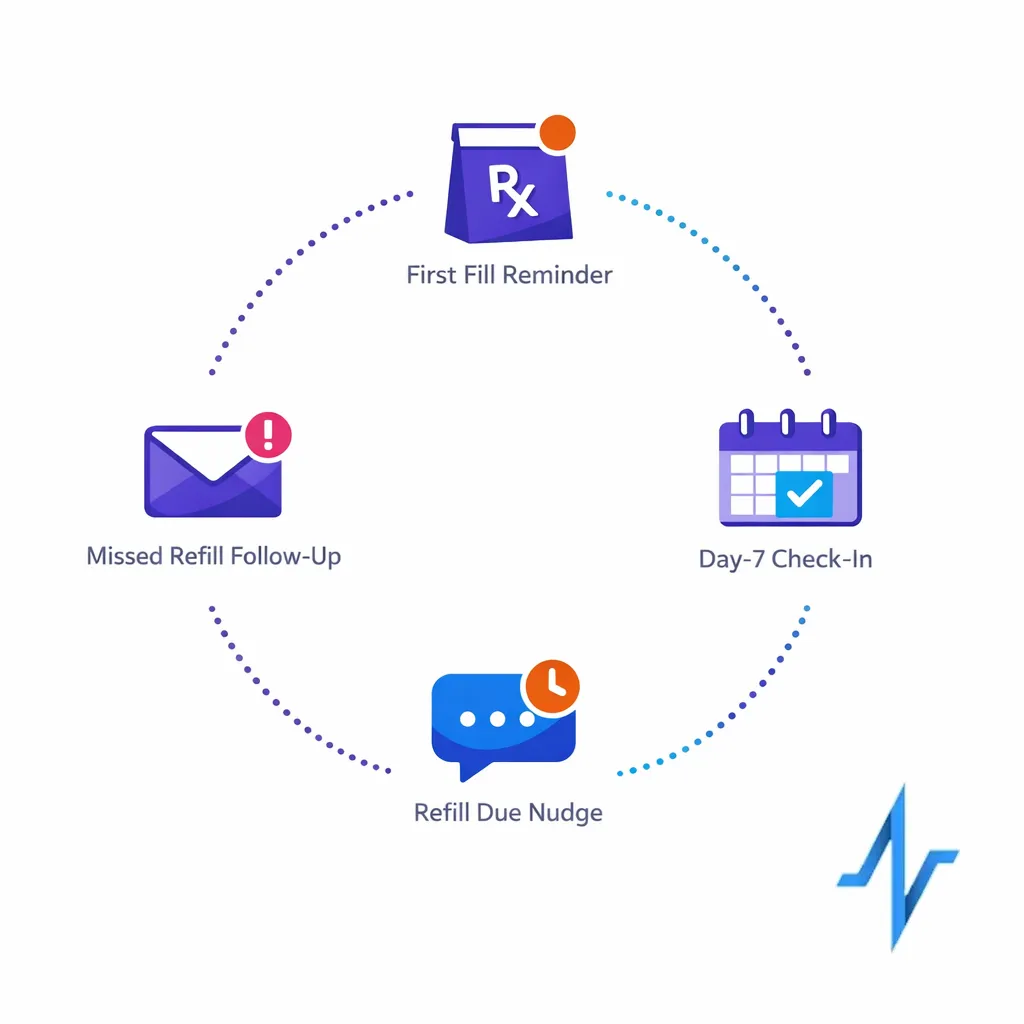
CDC has highlighted several approaches that can improve adherence, including reminders, simpler regimens, pharmacist involvement, and lower out-of-pocket costs. The strongest programs combine those tools instead of betting on one tactic alone.
- Reminder workflows tied to first fill, day-7 tolerance, refill due, and refill missed moments.
- Refill support that reduces friction before a gap opens.
- Education in plain language focused on why the medicine matters and how to use it.
- Human outreach for patients who need reassurance, triage, or escalation.
- Packaging and simplification that make daily use easier.
- Affordability and access support that keeps administrative friction from becoming nonadherence.
Reminder workflows and digital nudges
Reminder programs work best when they are timed to the actual point of failure. A first-fill reminder solves a different problem than a refill nudge, and a tolerance check-in solves a different problem than a routine reminder.
For omnichannel teams, this is where orchestration matters. The workflow should respond to what the patient has or has not done, not just to a calendar.
Medication synchronization and refill support
Refill support lowers the monthly effort required to stay on therapy. Even simple coordination, such as prompting action before a gap opens or helping align refill timing, can turn adherence from a recurring scramble into a repeatable routine.
This is especially useful when patients manage several medicines at once. The goal is to reduce the number of decisions and recovery steps the patient must remember on their own.
Education, teach-back, and pharmacist outreach

When the barrier is confusion or low confidence, patient education on medication adherence needs to be conversational, not just informational. AHRQ recommends strategies such as encouraging questions, using teach-back, and making medication instructions easier to understand, which makes them a natural fit for pharmacist, nurse, or hub outreach.
Human support adds value when the patient has real-world questions that a static message cannot resolve. A digital reminder can prompt action, but a trained person can uncover misunderstanding, fear, or competing medicines and guide the next step.
Packaging, pillboxes, and simplified regimens
Medication adherence tools do not need to be flashy. Clear instructions, easier packaging, pill organizers, device demonstrations, and simpler regimens can reduce daily friction more effectively than another generic nudge.
For engagement teams, the lesson is straightforward: if the patient’s day-to-day experience is hard, better messaging should be paired with changes that make execution easier.
Financial assistance and access support
Some dropoff is really an access problem wearing an adherence label. If the patient is motivated but blocked by benefit issues, copay burden, or a slow approval path, the right intervention is navigation rather than persuasion.
That is one reason medication adherence programs should include operational routing, not just communications. Patients need the next useful action, not one more reminder that they are overdue.
What effective adherence programs include
Barrier assessment and segmentation
The first design choice is not channel. It is segmentation.
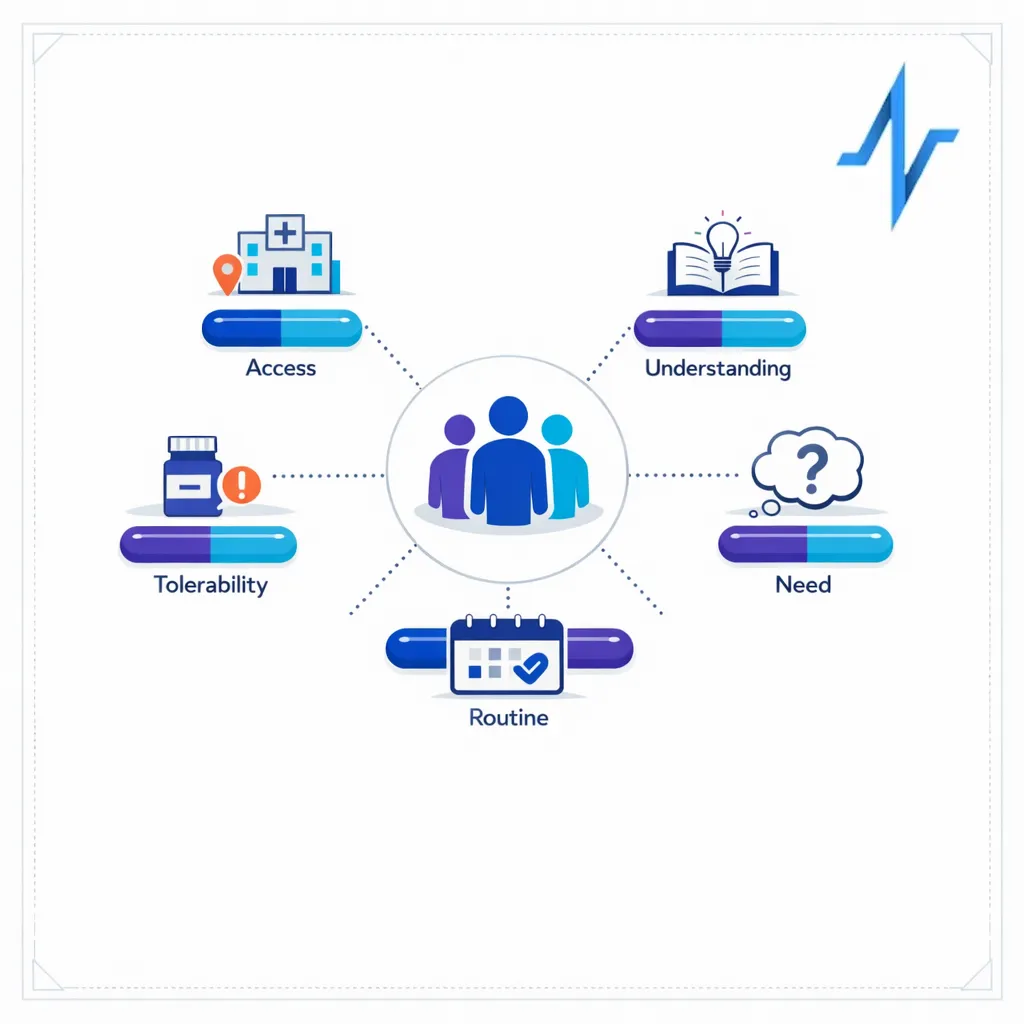
Group patients by the barrier most likely to stop them, such as access, understanding, tolerability, routine, or low perceived need. Once that is clear, teams can match the intervention to the problem instead of pushing every patient through the same journey.
Multichannel engagement across patient journeys
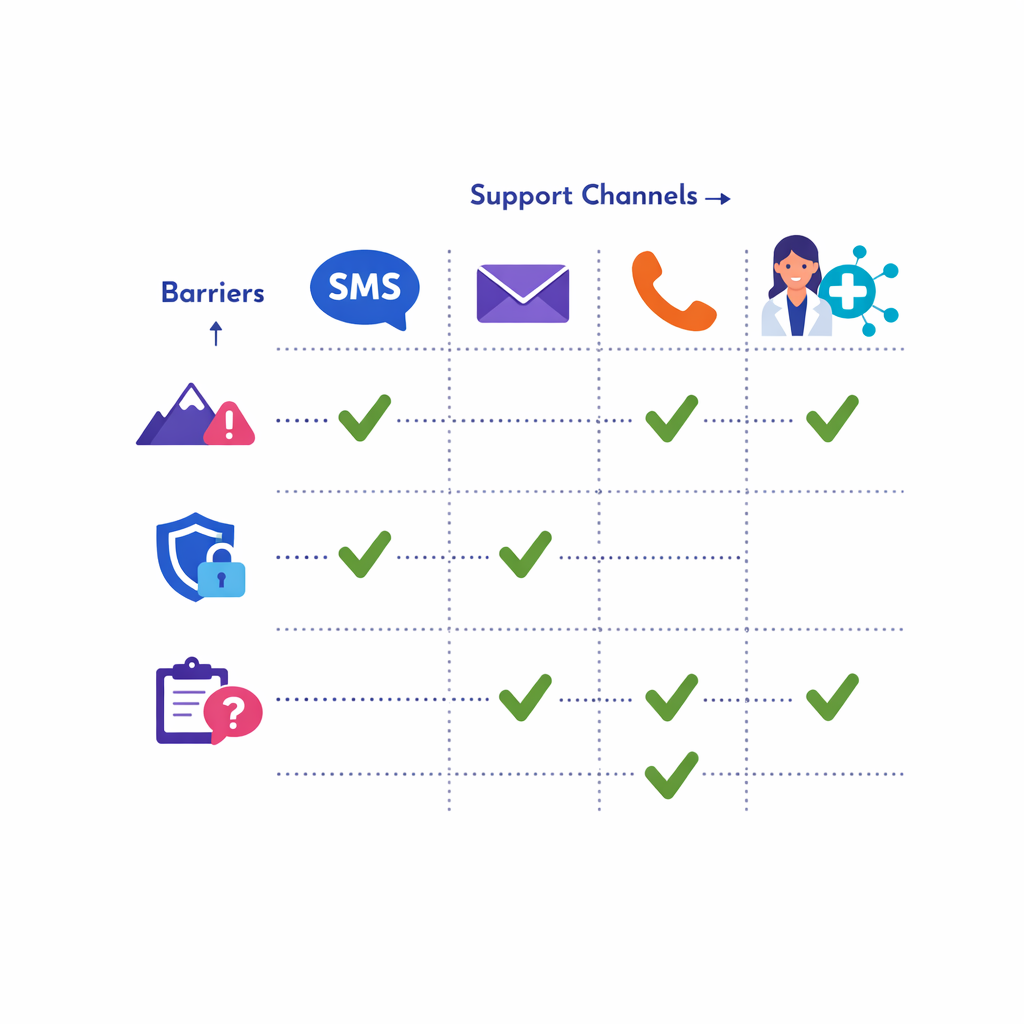
Effective medication adherence programs treat the journey as a sequence, not a blast. SMS may be enough for a refill reminder, email may work for education, and a live call may be reserved for high-risk patients or unresolved access issues.
That approach also supports cleaner measurement. Teams can see which channel works at which stage instead of asking one aggregate metric to explain the whole journey.
Human plus digital support models
Digital touches scale. Human touches resolve ambiguity.
The best adherence models use automation to detect the moment of risk and reserve pharmacist, nurse, or support-staff time for the patients who need explanation, triage, reassurance, or escalation. This is usually more efficient than either a fully manual program or a fully automated one.
Measurement frameworks and success indicators
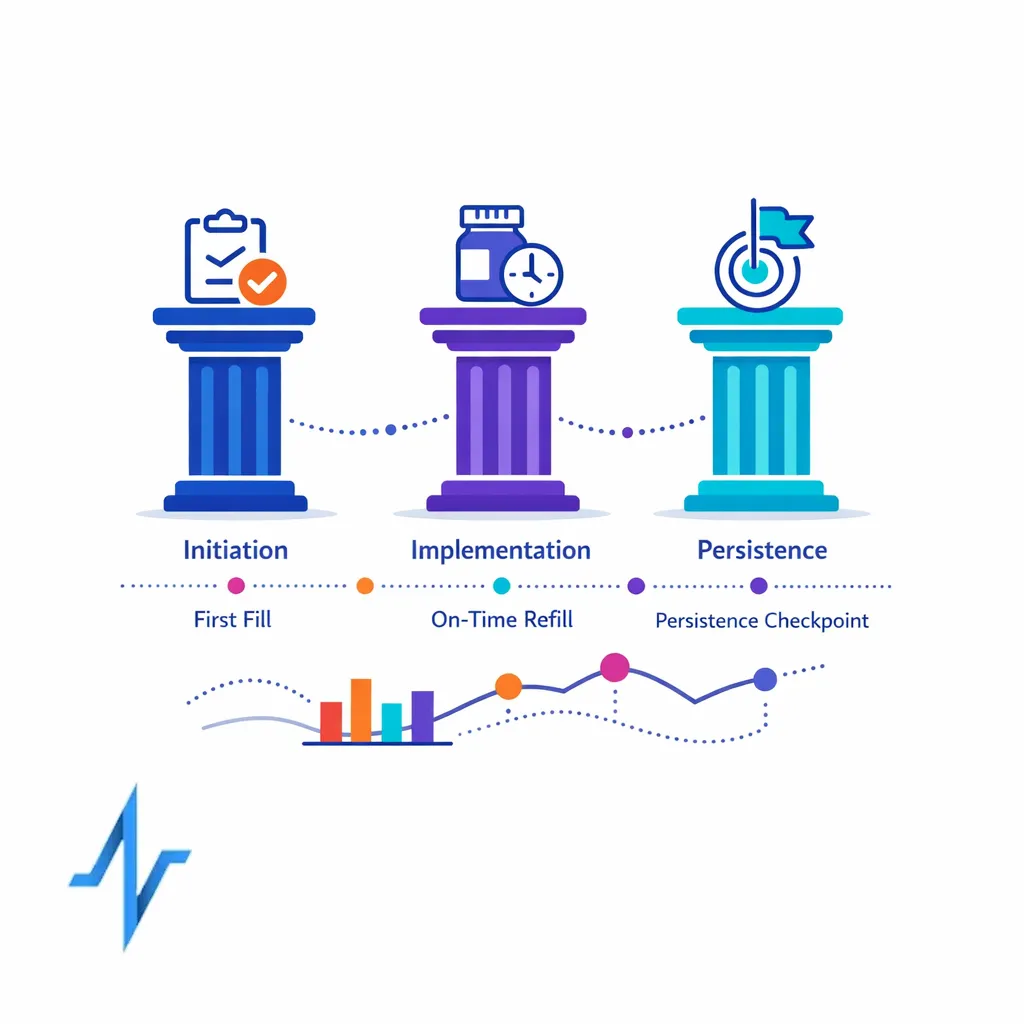
Many teams make measurement harder than it needs to be by using one blended rate for every stage. A better approach is to track initiation, implementation, and persistence as separate behaviors, then connect those behaviors to outreach, access support, and care-team action.
- Access measures: first-fill completion, time to support resolution, unreachable rate.
- Behavior measures: refill-gap closure, on-time refill behavior, early persistence checkpoints.
- Experience measures: patient understanding, channel preference, opt-out patterns.
- Operational measures: outreach completion, escalation completion, handoff speed.
Common mistakes and misconceptions
- Assuming every gap is forgetfulness. The real barrier may be affordability, tolerability, or low perceived need.
- Sending more reminders when the barrier is access. Messages cannot solve benefit or pharmacy friction by themselves.
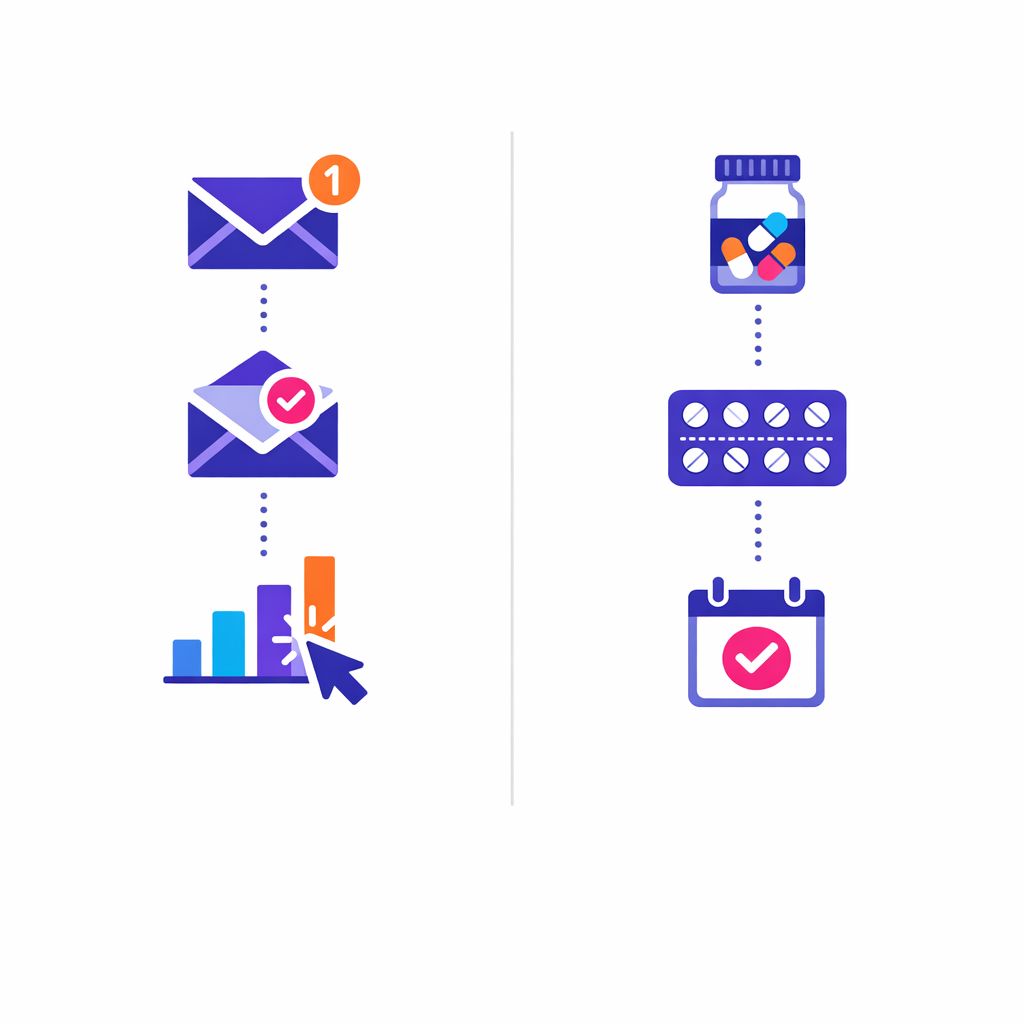
- Optimizing clicks instead of treatment behavior. Engagement metrics matter only if they connect to starts, refills, or persistence.
- Skipping first-fill failure. A program that begins after dispensing misses patients who never truly started.
- Using a judgmental tone. Blame reduces the chance that patients will share the information needed to solve the problem.
Best practices for providers, health plans, and patient engagement teams
Nonjudgmental communication

Start with open questions. Ask what got in the way, what feels hardest about the medicine, and what happens on the days it does not get taken.
That framing makes it easier to uncover access, understanding, and tolerance issues. It also gives teams better data for segmentation and follow-up.
Brown bag review and medication reconciliation
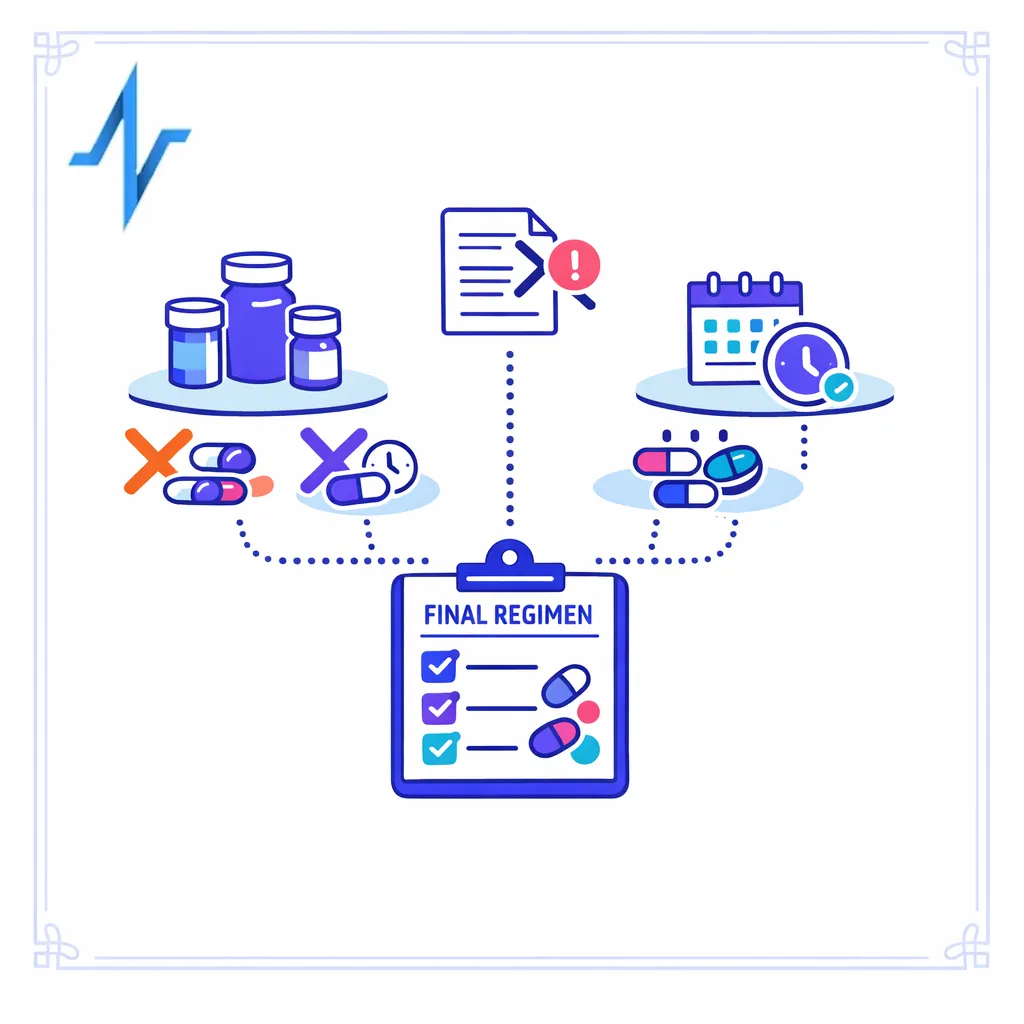
A practical tactic is a regular medicine review using every prescription, OTC product, and supplement the patient actually takes. This often exposes duplicate therapy, old instructions, or competing schedules that no reminder would fix.
It is especially useful when polypharmacy or multiple prescribers are involved. Even a short review can surface the reason a regimen feels too hard to sustain.
Tailoring interventions by population risk
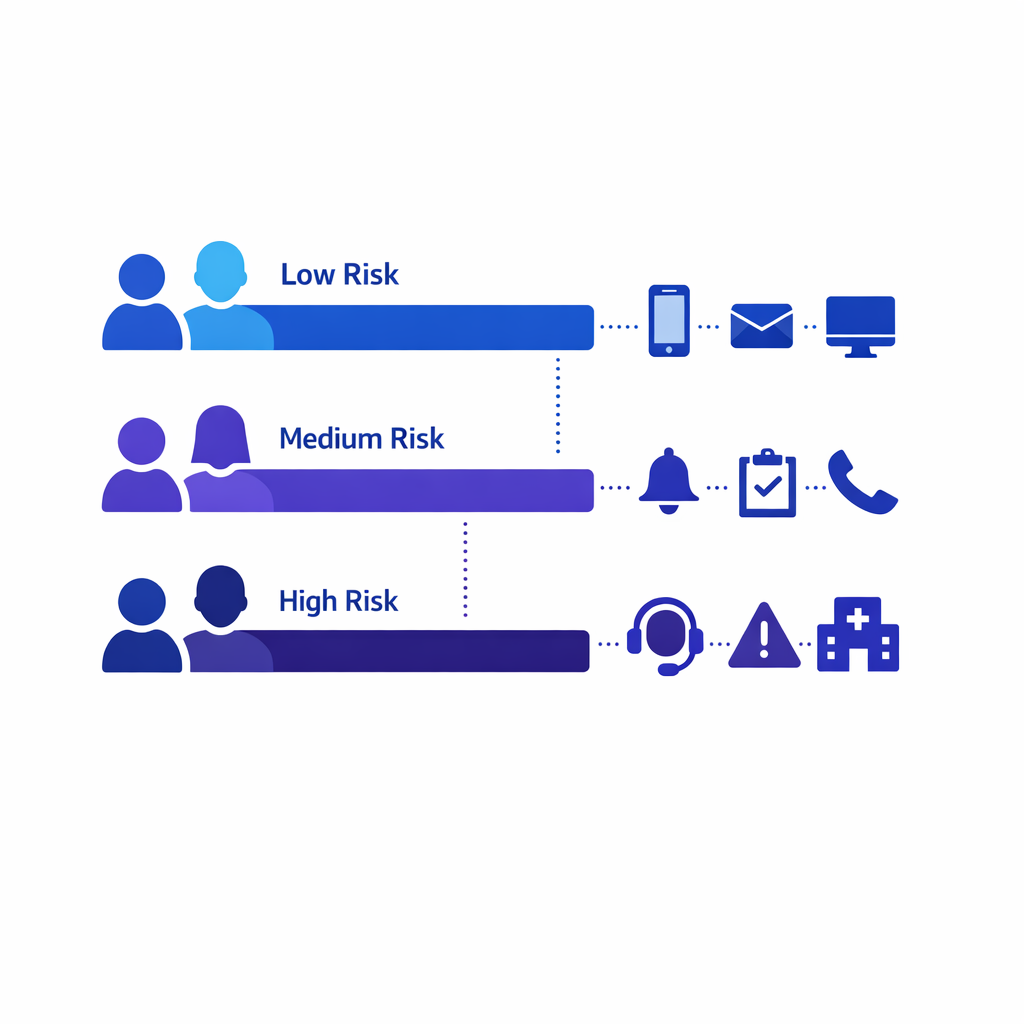
High-risk populations usually need more than a reminder cadence. Use available signals such as therapy class, prior gaps, reported side effects, channel responsiveness, and support history to decide who needs digital self-service and who needs a live touch.
That helps teams spend resources where they can create measurable lift. It also improves the patient experience by avoiding unnecessary outreach for people who are already on track.
Frequently asked questions
What are the 5 R’s of medication adherence?

There is no single official 5 R’s model used across every adherence program. As a practical checklist, teams often focus on five basics: the right patient, the right therapy, the right understanding, the right routine, and the right refill plan.
What causes poor medication adherence?
Poor medication adherence usually comes from a mix of access barriers, side effects, complexity, weak routines, low health literacy, and low perceived need. The key is to identify the dominant barrier instead of assuming every patient needs the same fix.
How do you measure medication adherence?
Measure the stage you are trying to improve. First-fill completion, refill-gap closure, and persistence checkpoints answer different questions than message opens, clicks, or call volume.
How can medication adherence be improved?
Improving medication adherence usually means combining reminders with education, refill support, access navigation, and timely human follow-up for higher-risk patients. The best intervention is the one that removes the barrier actually causing the dropoff.
What to do next
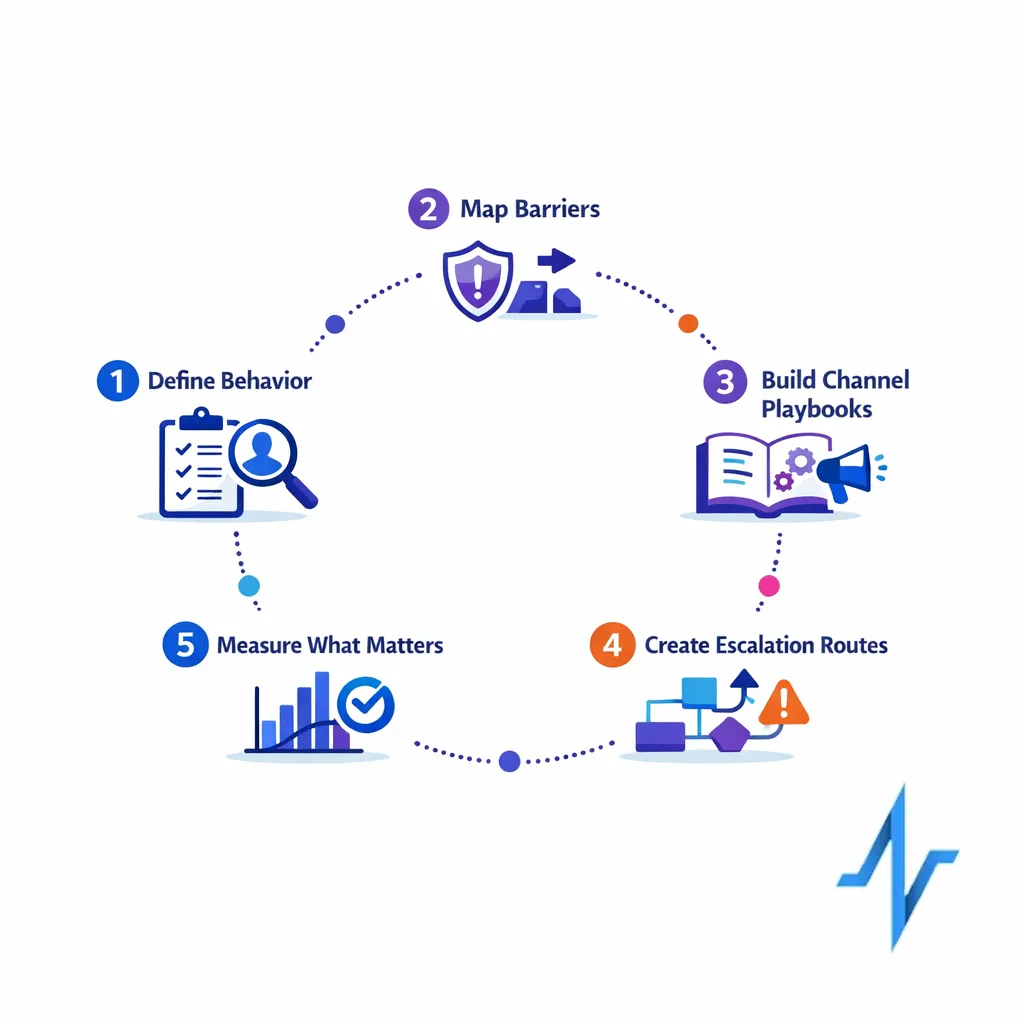
- Define the behavior you want to change. Separate first fill, refill, and long-term persistence.
- Map the top barriers. Start with access, understanding, tolerability, routine, and perceived need.
- Build channel-to-barrier playbooks. Match SMS, email, call-center, hub, and pharmacist actions to the problem.
- Create escalation routes. Make sure affordability and clinical questions move quickly to the right team.
- Measure what matters. Tie outreach data to starts, refills, persistence, and operational resolution.
See How Pulse Health Supports Adherence Programs
If your team needs a cleaner way to segment patients, orchestrate compliant outreach, and report measurable lift, Pulse Health can help. To see how the platform supports real medication adherence programs, Request a Demo and ask the team about integrations, how it works, or a platform overview.