
Choosing a crm for life sciences is harder than choosing a generic sales platform. Pharma commercial teams often need workflows shaped by FDA prescription drug advertising requirements, the federal Open Payments program, and, when patient-support or sign-up programs handle protected health information, the HIPAA Privacy Rule. This article is for pharma brand teams, omnichannel leads, CRM owners, and commercial ops leaders deciding whether a life sciences-specific CRM or a general CRM model fits better.
You will learn where each model works well, where customization debt starts to build, and how to evaluate the tradeoff across data structure, compliance workflows, orchestration, integrations, mobile field execution, and measurement. The goal is not to crown a universal winner. It is to help you choose the model that creates the least friction for your operating model.
What is a life sciences CRM?
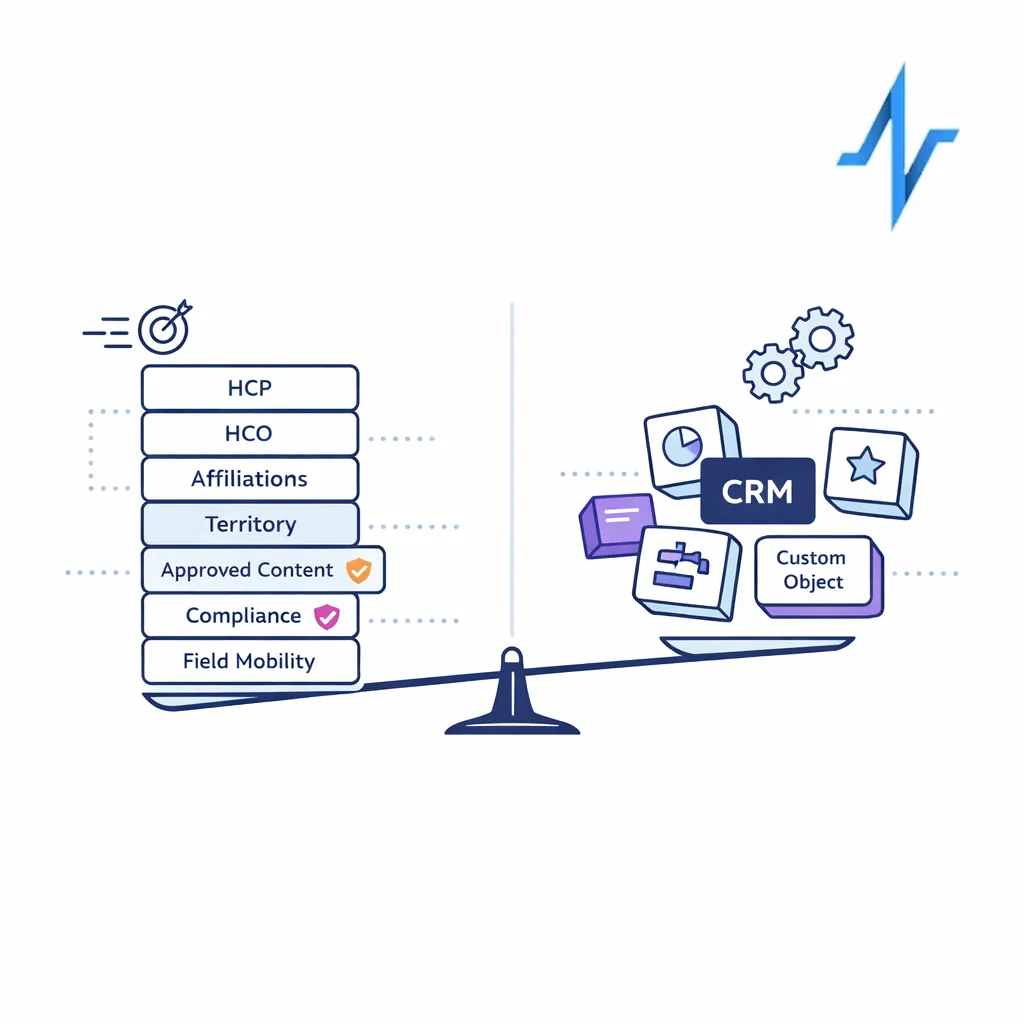
A life sciences CRM is a customer relationship platform built around pharma and healthcare-specific entities and workflows, such as HCPs, HCOs, field activity, approved engagement, and compliant multichannel execution, which is how purpose-built products like Veeva Vault CRM are structured. In pharma, CRM is not just contact management. It becomes the operating layer for HCP engagement, patient programs, and coordination across brand, sales, and medical.
That is why pharma teams often outgrow a general-purpose CRM. Once customer relationship management in the pharmaceutical industry starts depending on affiliation logic, territory design, approved content, field force workflows, and auditable activity, the CRM has to do more than store contacts and trigger emails.
Life sciences CRM vs general CRM at a glance
A useful comparison is between purpose-built life sciences systems and configurable enterprise platforms. For example, general CRM platforms such as Salesforce Sales Cloud are designed to be broadly configurable, while life sciences-specific products start closer to pharma operating needs. The more useful question is not “What are the top 3 CRM systems?” but which model will require fewer workarounds as your commercial model matures.
- Data model: If you want HCP, HCO, KOL, affiliation, and territory logic available early, a life sciences CRM is usually faster. If you prefer a blank-sheet design with custom objects and enterprise-standard architecture, a general CRM is often more flexible.
- Compliance: Choose life sciences CRM when auditability, approval states, and controlled execution need to be embedded in daily workflows. Choose general CRM when compliance is lighter or handled elsewhere in the stack.
- HCP and HCO hierarchy: Life sciences CRM tends to fit better when account relationships are complex and change often. General CRM can work if your hierarchy is simple or your team is willing to model it carefully.
- Omnichannel orchestration: Life sciences CRM is usually stronger when sales, marketing, and medical need to coordinate engagement around the same customer record. General CRM works well when channels can remain more loosely connected.
- Approved content: If the right asset, version, audience, and expiration status matter every time, purpose-built systems usually create less operational risk. If content review lives outside the CRM and stays simple, a general platform can be enough.
- Sample management: If sampling or tightly structured field activity is core, life sciences CRM is usually the better fit. If your model is mostly digital and non-field, that specialization may be unnecessary.
- Medical affairs workflows: If customer visibility and handoffs between medical and commercial need clear boundaries, life sciences CRM often maps better. If those workflows are limited, a general CRM may be sufficient.
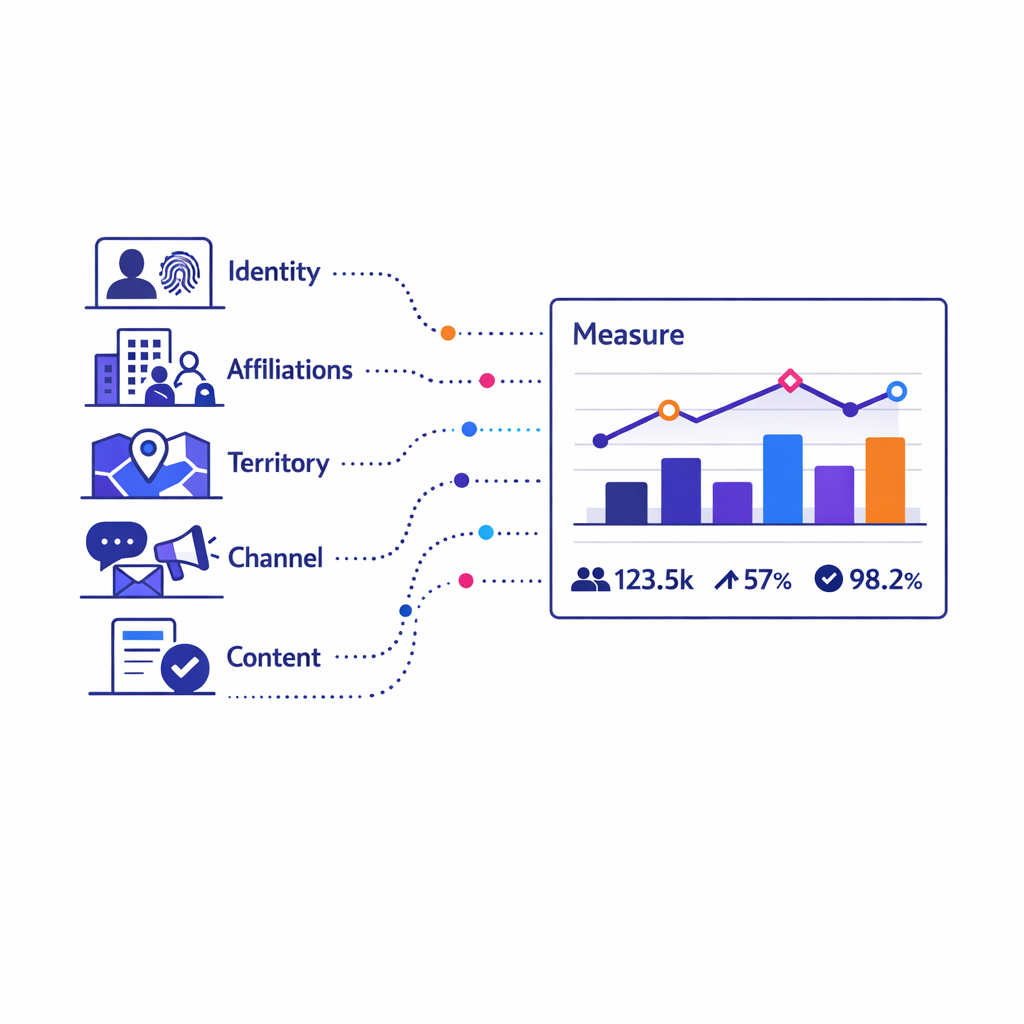
- Reporting and measurement: Life sciences CRM helps when identity, affiliation, territory, and channel data must line up for trusted performance reads. General CRM works when reporting can remain closer to standard funnel and campaign metrics.
- Offline and mobile: For heavy field execution, purpose-built mobile workflows usually matter more. For desk-based teams, general CRM usability can be perfectly adequate.
- Integrations and AI: General CRM may offer broader enterprise tooling and a wider app ecosystem. Life sciences CRM usually wins when AI, next-best-action, and orchestration have to respect healthcare-specific data, content, and role constraints.
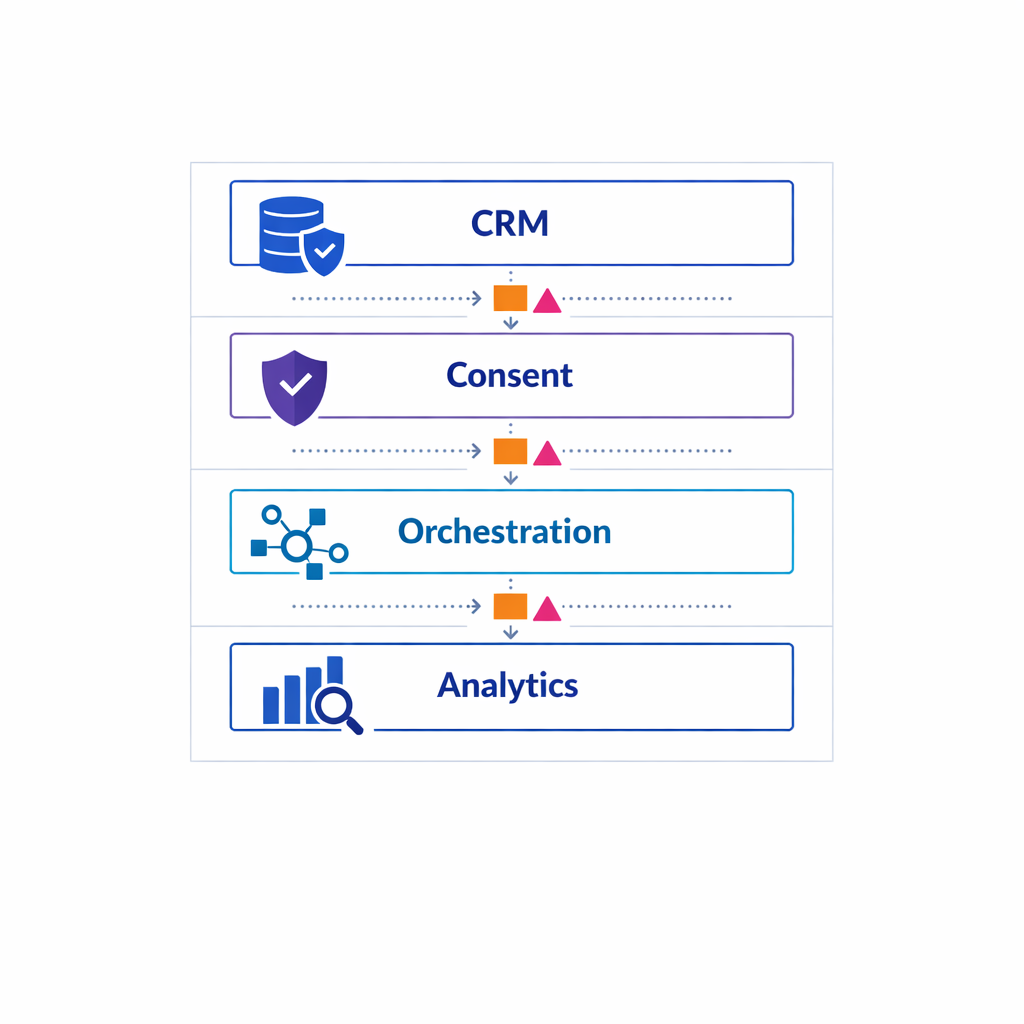
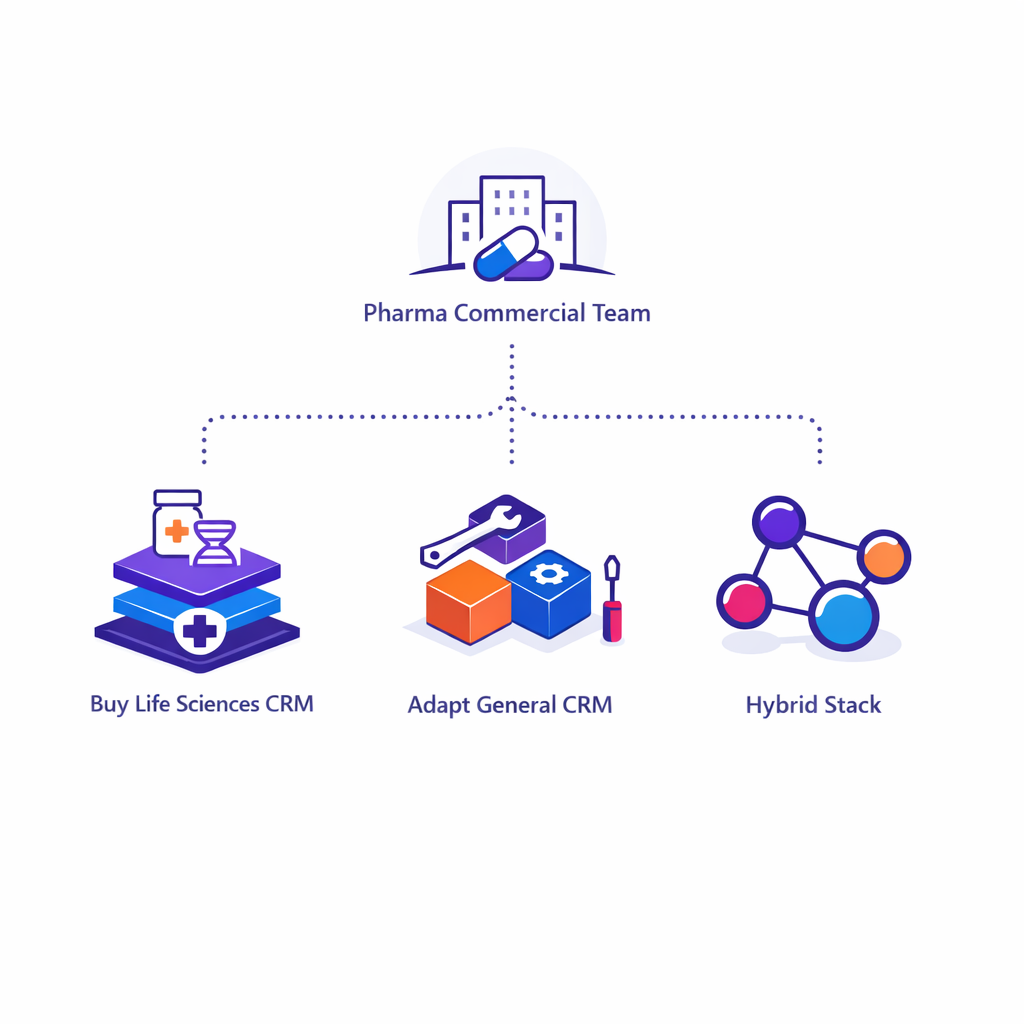
A practical way to think about current CRM options for life sciences companies is three model types: a life sciences CRM, a general enterprise CRM adapted for pharma, or a hybrid stack where CRM, consent, orchestration, and analytics are split across tools. Most teams are really choosing among those models, not just among vendor names.
Where general CRM platforms work well
Flexible workflow design
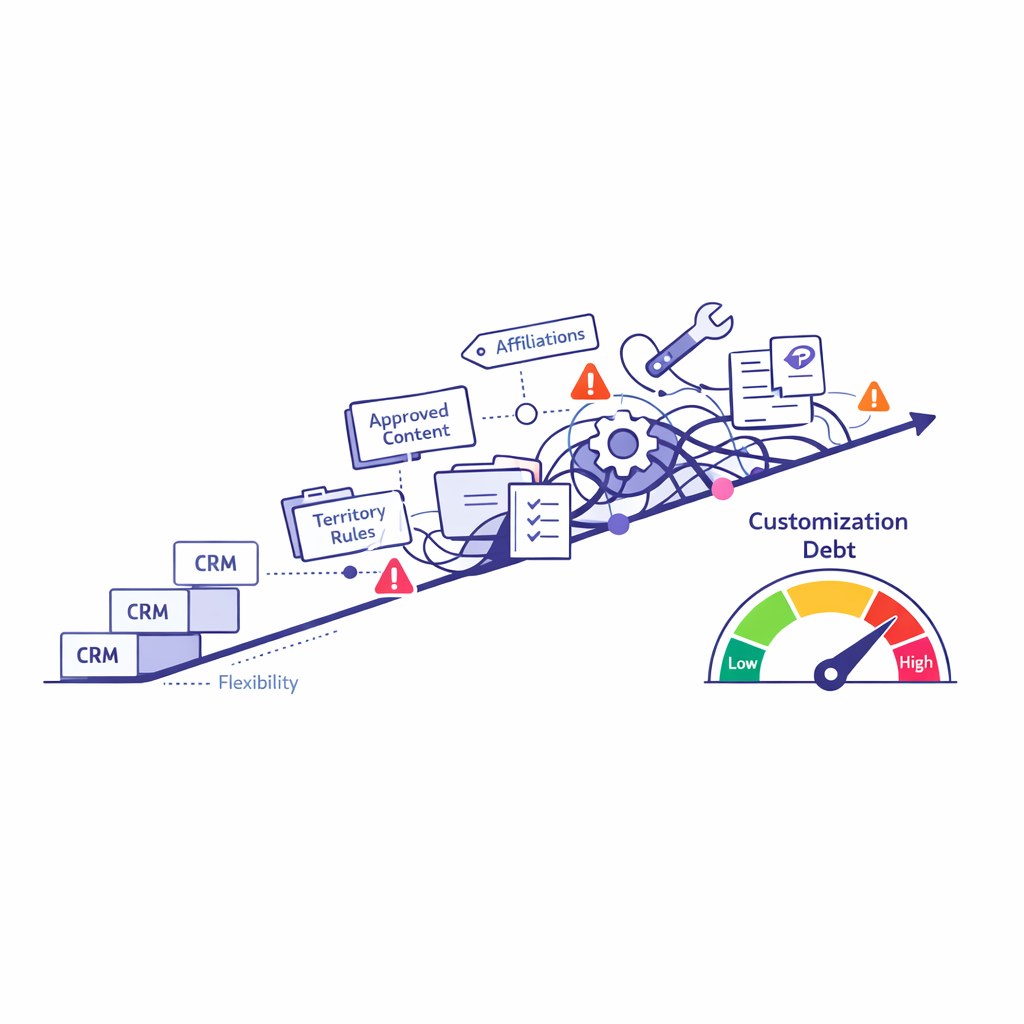
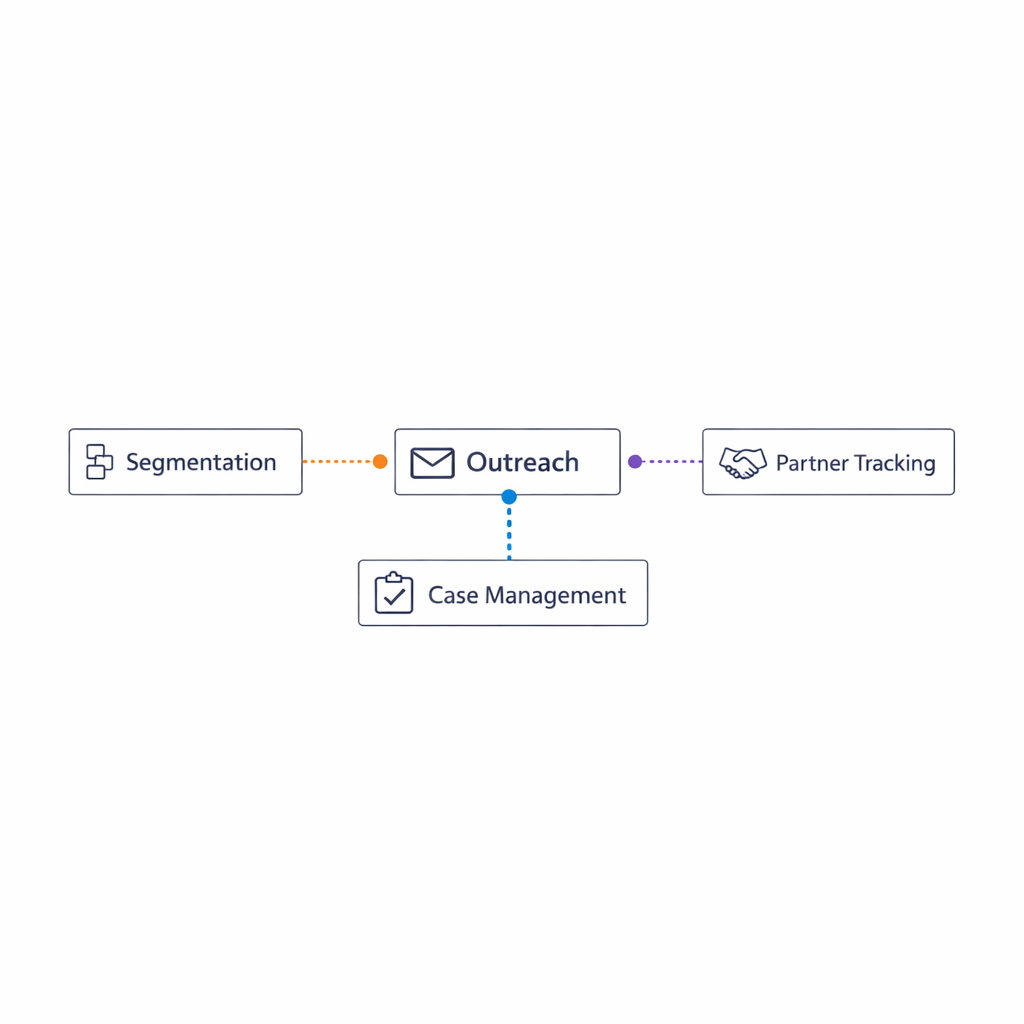
A general CRM is often the right choice when your commercial model is still evolving. If your team mainly needs segmentation, activity tracking, case management, simple partner workflows, and campaign coordination, the extra structure of a pharmaceutical CRM may feel heavy at first.
This model is especially attractive when the organization wants one enterprise platform across multiple business units. If pharma is only one part of a broader operating model, platform consistency can matter more than industry specificity.
Broad ecosystem and lower entry complexity
General CRM platforms usually have a larger pool of admins, consultants, and agency partners. That can make the first implementation easier, especially when the immediate goal is basic visibility rather than deep orchestration.
The tradeoff is that easy starts can hide later complexity. Once you need affiliation logic, compliant content distribution, rep-to-marketer coordination, territory rules, or a more specialized healthcare CRM platform, “we can just customize it” can become a long and expensive backlog.
Fit for less regulated or earlier-stage teams
This model often fits emerging brands, smaller field teams, or narrow commercial footprints. If your highest-value use cases are simple outreach, partner relationship tracking, or early digital nurture, a general CRM can be enough.
It is also a reasonable fit when most activity is nonpromotional and the compliance model is relatively light. The key question is whether that simplicity is temporary or structural.
Where life sciences CRM platforms outperform
Industry-specific data structures for HCPs, HCOs, KOLs, and affiliations
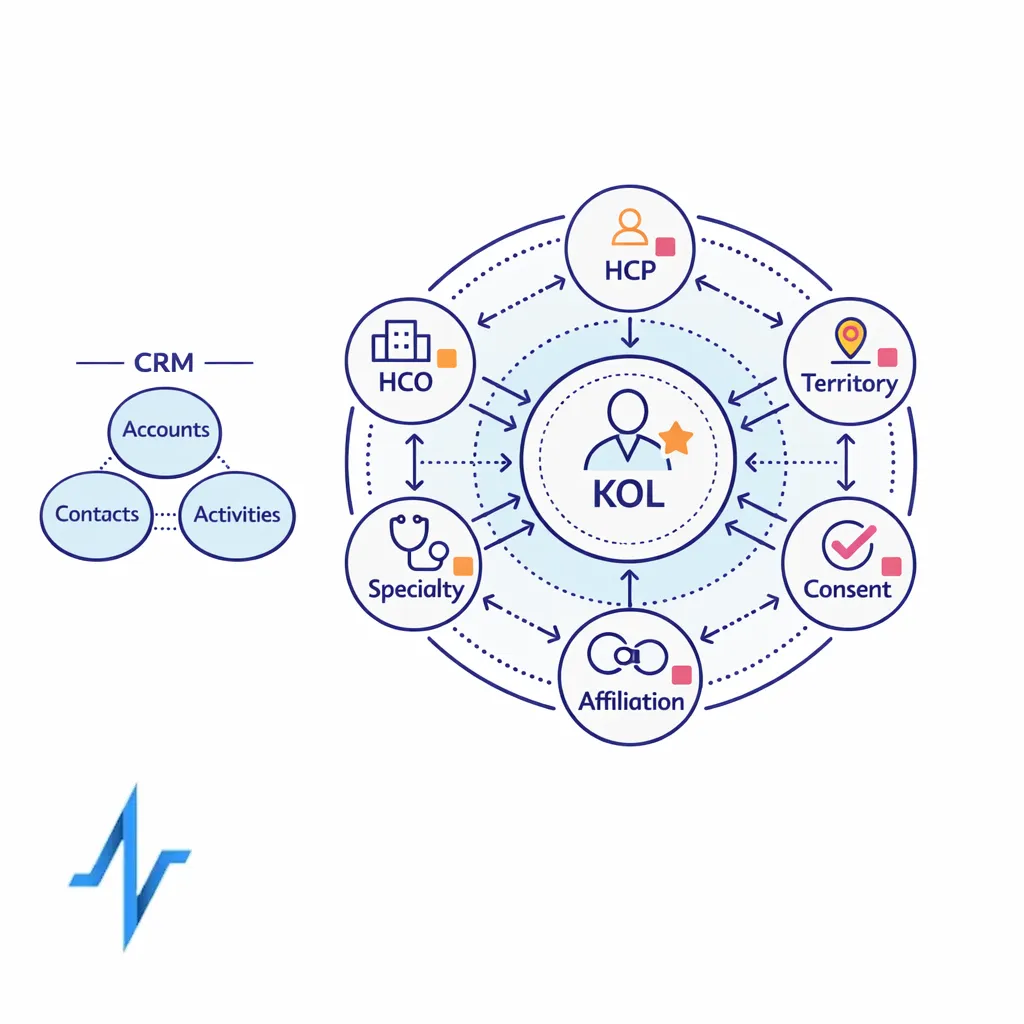
This is usually the point where general CRM teams start to feel strain. If you need one view of HCPs, HCOs, KOLs, affiliations, specialties, territories, and channel permissions, a life sciences CRM reduces the amount of custom data design you have to create and maintain.
That matters for measurement as much as for execution. Better identity and affiliation logic make it easier to answer basic questions, such as which HCPs were reached, which accounts were influenced, and which channels contributed to action.
Compliance guardrails and auditability
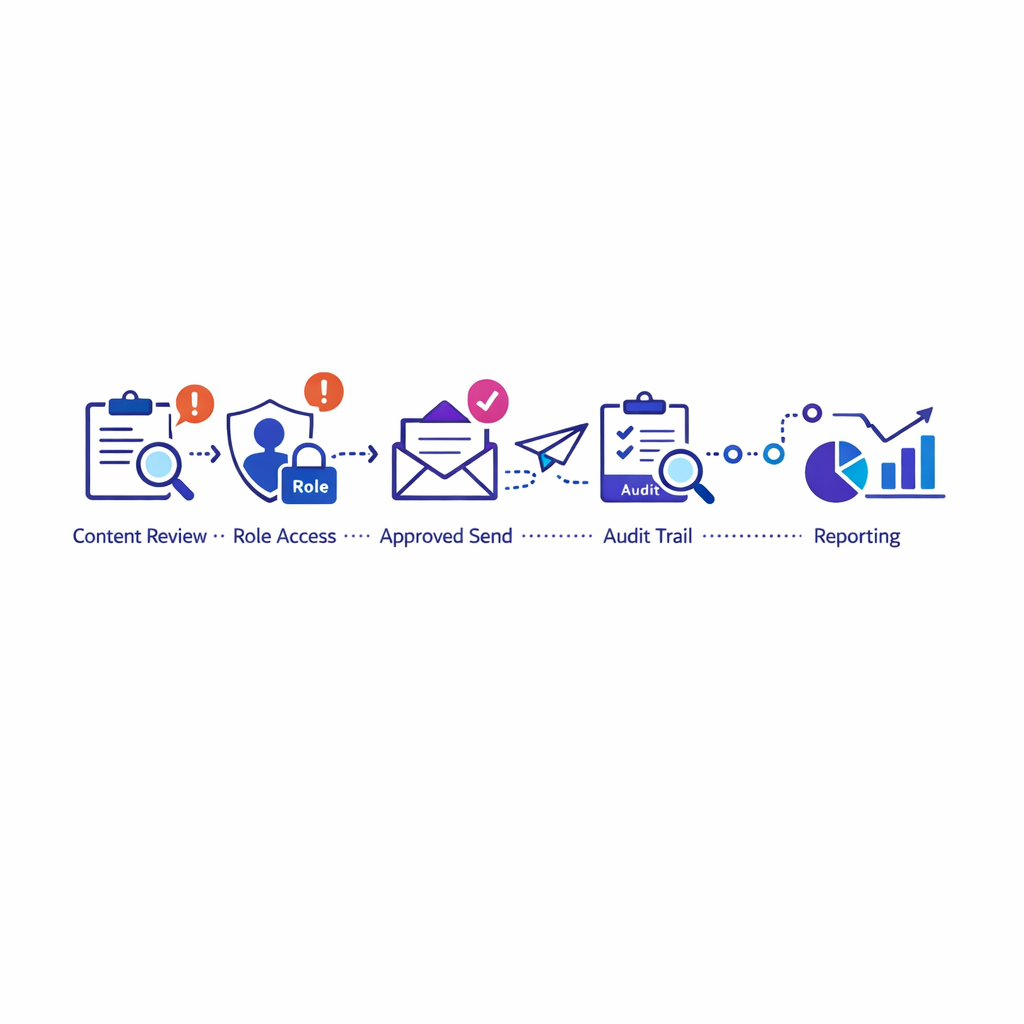
In pharma, speed without control usually creates rework. Teams often need approval states, audit trails, role-based access, and controlled engagement patterns so commercial activity is easier to inspect and defend.
This becomes more important as more teams touch the same customer journey. When marketing, sales, patient support, and external partners all interact with the same audience, manual exceptions become the weak point of the model.
Approved content and MLR workflow alignment
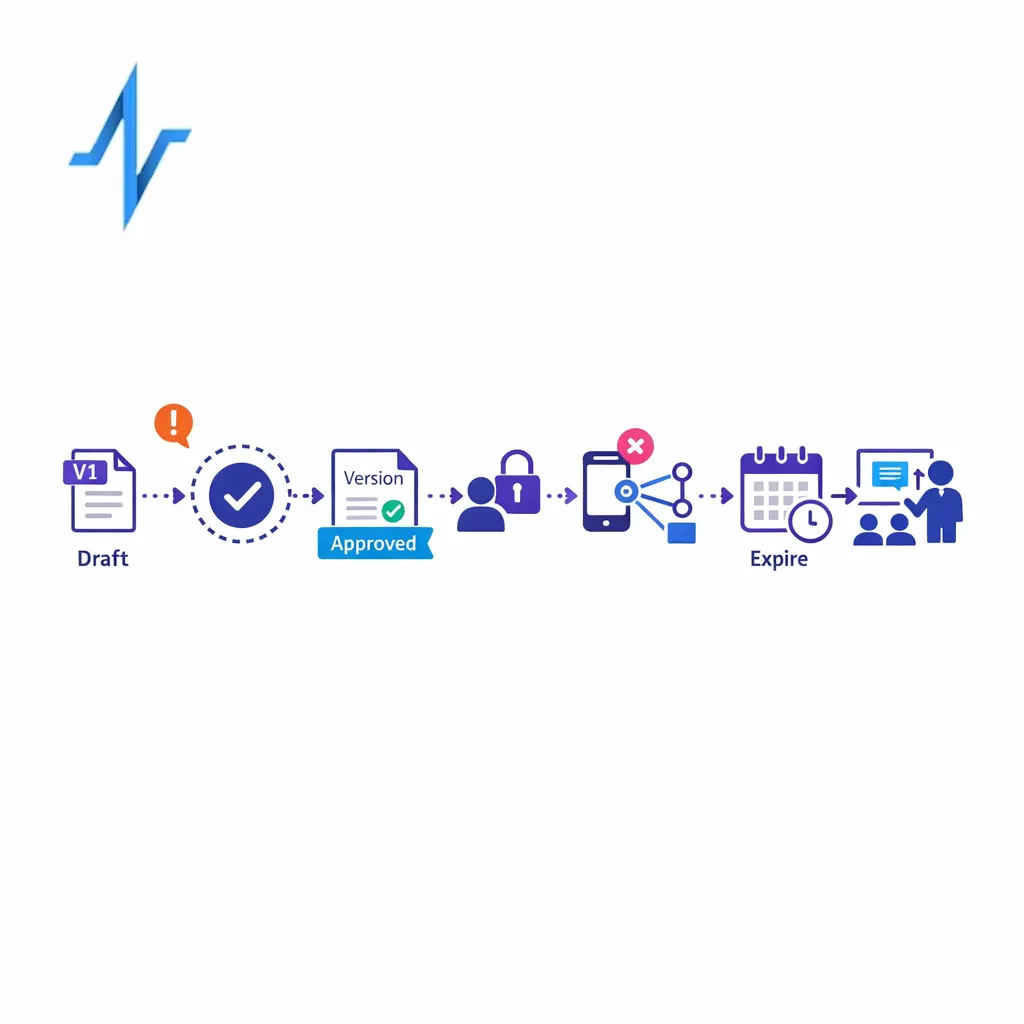
A life sciences CRM fits better when content cannot simply be uploaded and sent. If assets need routing, version control, audience restrictions, expiration rules, or approved variants by channel, native guardrails save time and reduce avoidable risk.
This is where many teams learn that CRM and content operations are tightly connected. A clean orchestration plan breaks down fast if the system cannot reliably govern what content is allowed to move through it.
Field force automation, territory planning, and offline mobility

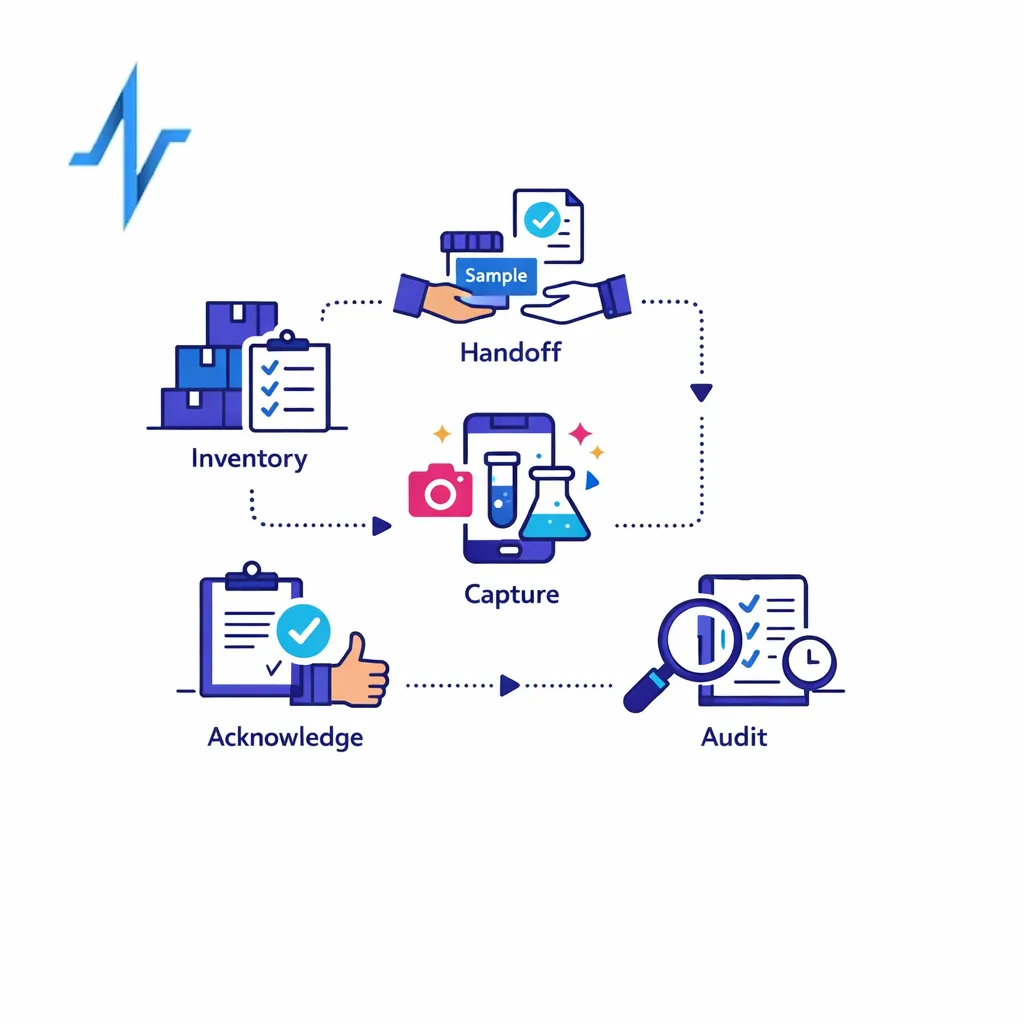
Rep workflows are still different from standard B2B sales motions. Call planning, scheduling, structured activity capture, territory alignment, and mobile usability have to work for people in the field, not just for dashboard users at headquarters.
If your field teams work in low-connectivity environments or depend on repeatable call flows, purpose-built mobile design matters. In those situations, a life science software stack built for field execution can be more valuable than a more generic interface with broader theoretical flexibility.
Omnichannel orchestration across sales, marketing, and medical
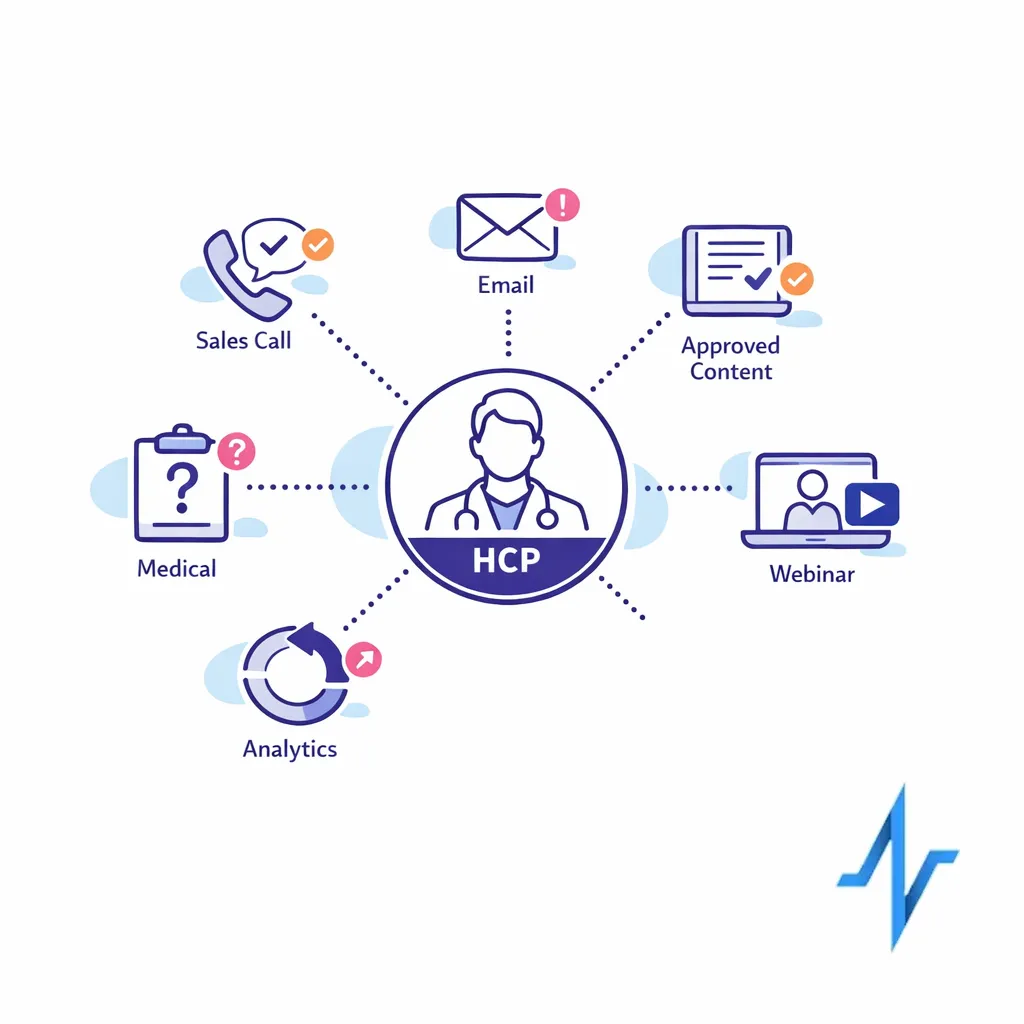
The strongest case for a life sciences CRM is not just sample tracking or rep activity. It is coordinated engagement across functions, where the same customer record informs who is contacted, in which channel, with which approved message, and under what rules.
That matters when brand teams want connected HCP engagement, CRM owners want cleaner identity and consent logic, and commercial ops wants measurement that can be trusted across channels. In that sense, a pharma CRM is really an orchestration layer, not just a database.
Decision framework for pharma commercial teams
Team size and market complexity
If you support multiple brands, large field teams, specialty coverage, or frequent affiliation changes, specialization usually pays back faster. Complexity is not only about headcount. It is about how many exceptions your CRM must handle without creating manual work.
Compliance burden and geographic footprint
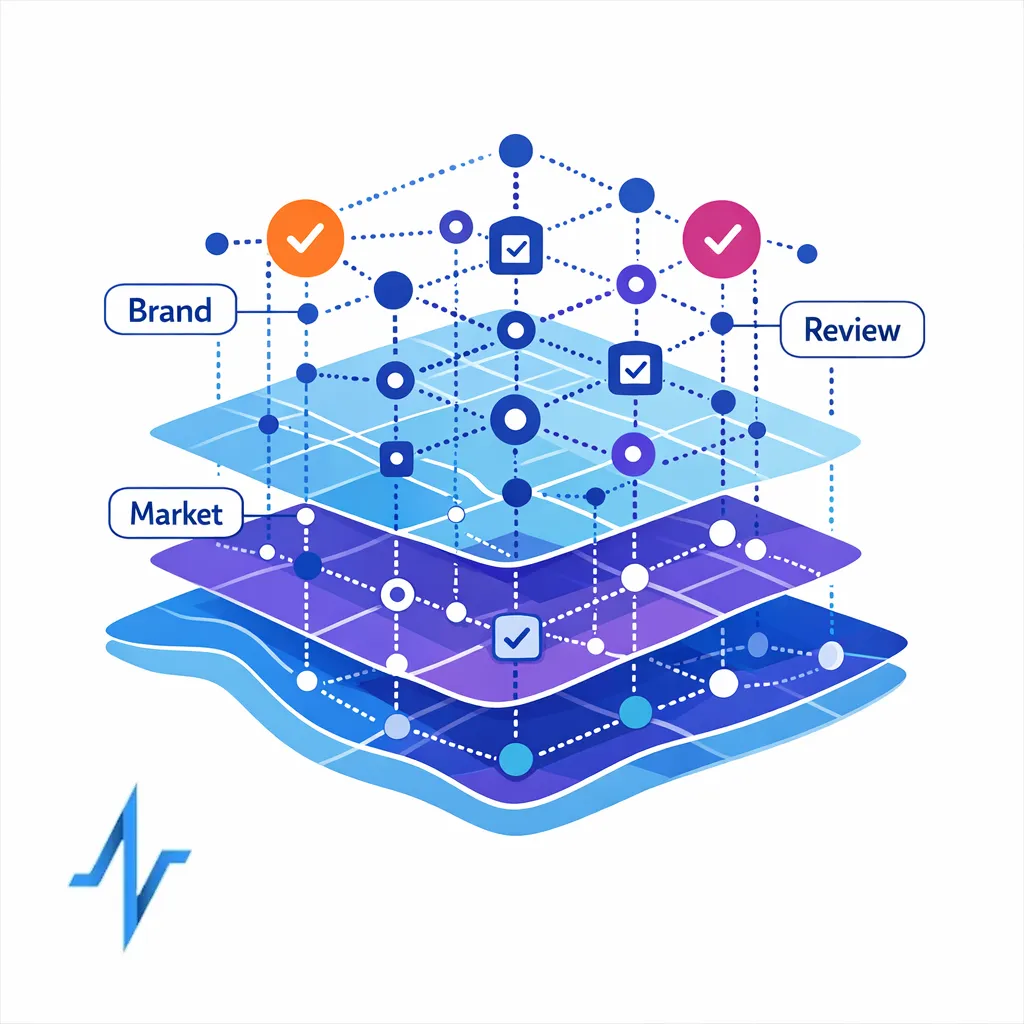
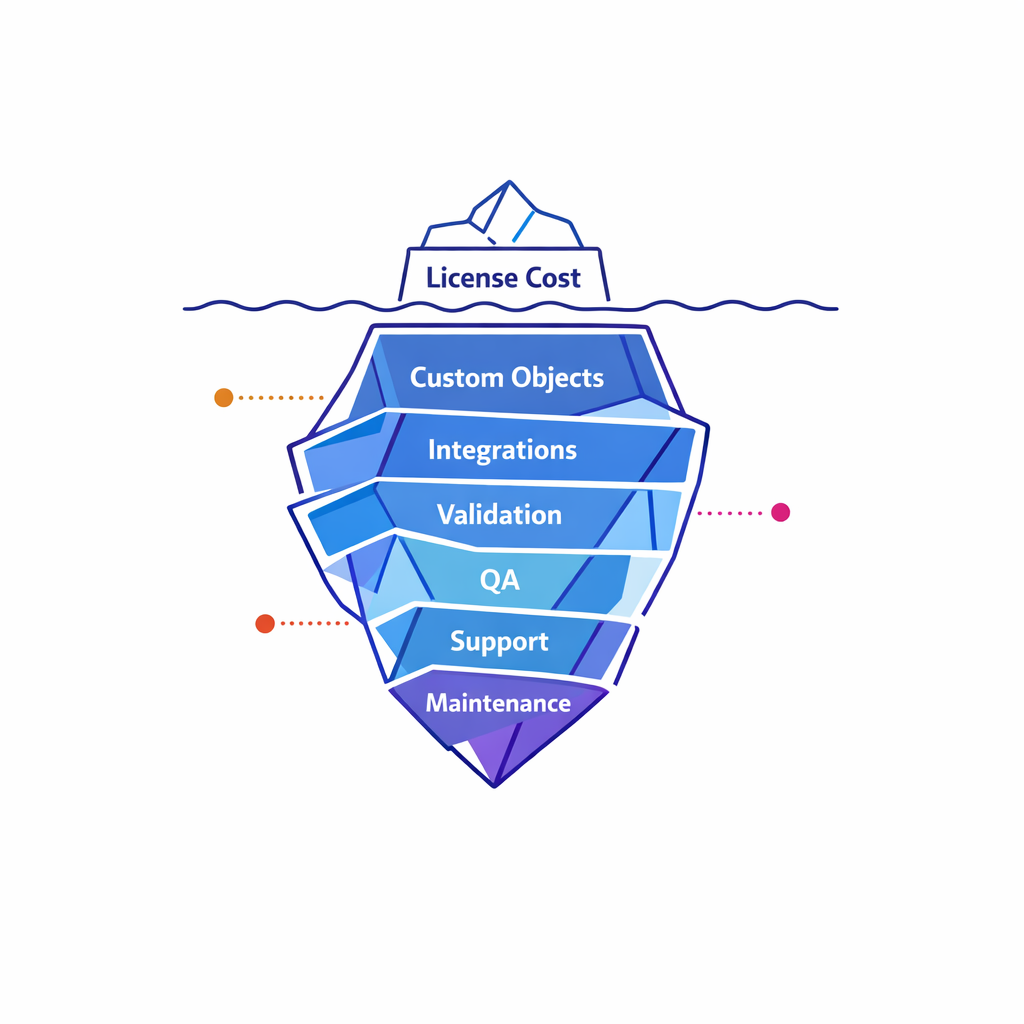
The more markets, brands, and review paths you operate across, the more valuable consistent controls become. A CRM that looks cheaper at the license level can become more expensive once every region or function needs its own custom workaround.
Existing ERP, data, and content stack
Ask where customer identity, consent, approved content, and measurement already live. The best crm for pharma is rarely the one with the most features. It is the one that connects cleanly to the systems you are not replacing.
This is also the best way to answer the question, “What are the current CRM options for life sciences companies?” You are choosing between a purpose-built platform, a configurable enterprise platform, or a hybrid model that splits responsibilities across multiple systems.
Need for AI, analytics, and next-best-action capabilities
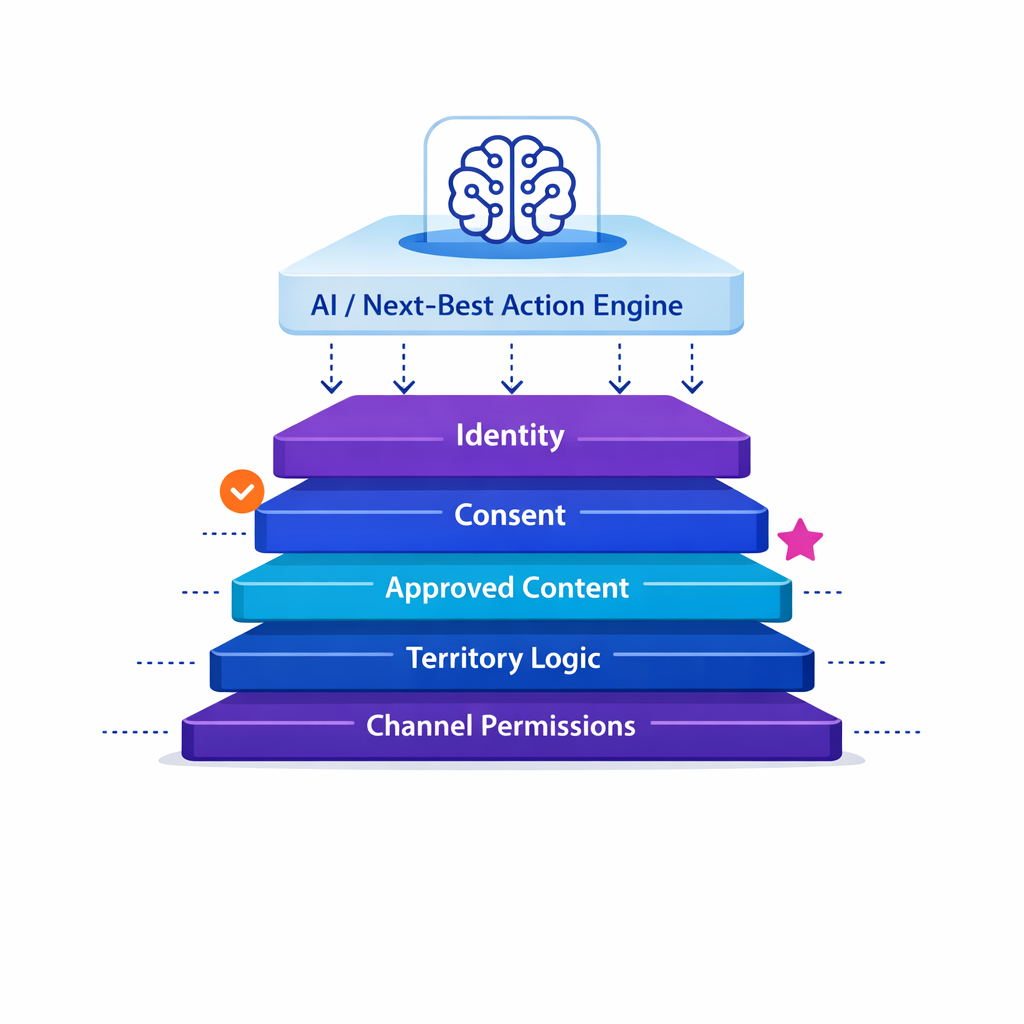
Do not evaluate AI as a separate add-on. Evaluate whether your data model, identity resolution, channel permissions, content controls, and territory logic are strong enough for AI recommendations to be trusted.
Next-best-action sounds sophisticated, but weak foundations create bad recommendations quickly. For commercial ops CRM owners, the quality of the underlying model is usually more important than the flashiness of the interface.
Common use cases by commercial team
Brand teams
Brand teams usually care about audience reach, channel mix, message sequencing, and speed to optimization. They benefit from systems that make approved content, audience logic, and orchestration easier to update without opening a long queue of configuration tickets.
CRM owners and commercial ops
CRM owners care about governance, durability, reporting logic, and integration maintenance. They usually feel the cost of a bad platform decision first, because every workaround eventually becomes an admin, data, or QA burden.
Sales leadership and field teams
Sales leaders want visibility into activity, coverage, execution quality, and territory performance. Field teams want something simpler: a system that is fast, mobile, and easy to use in the moment.
Medical affairs collaboration points
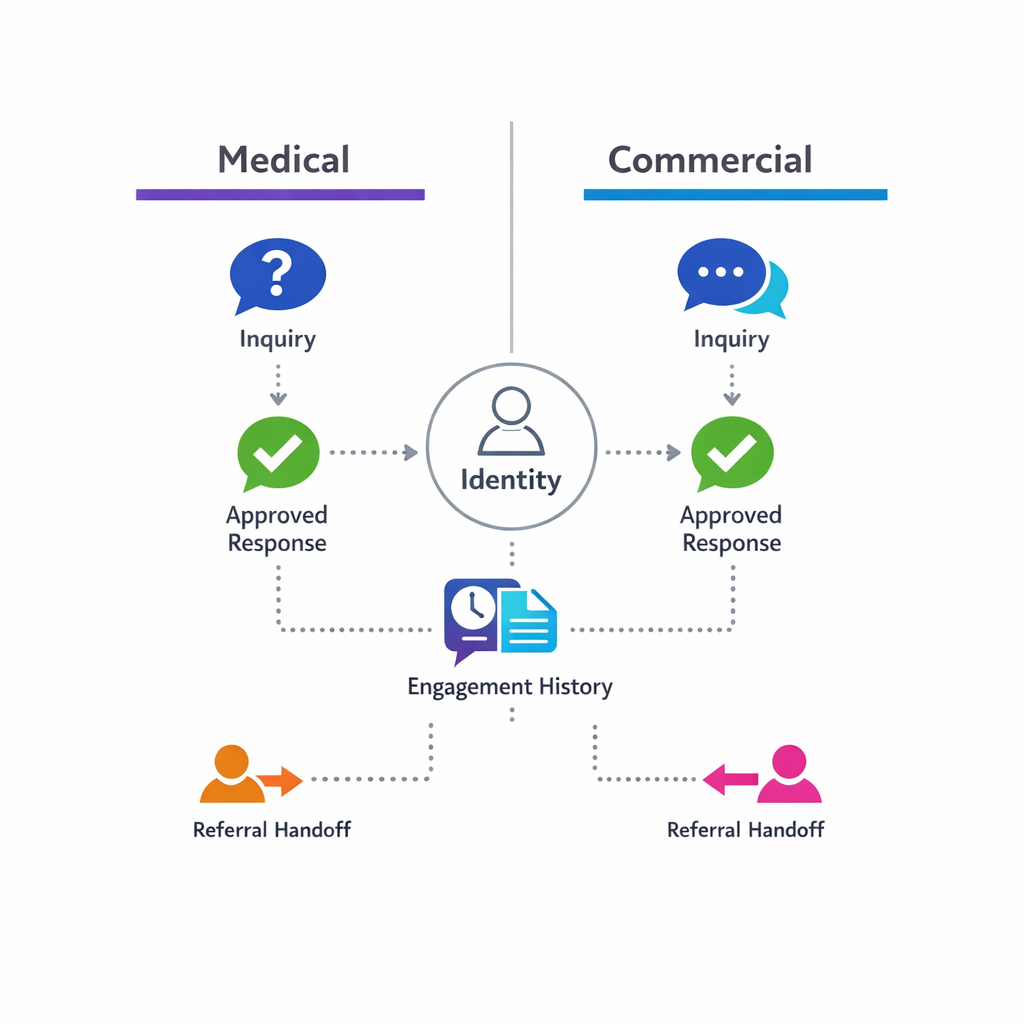
Medical does not need to live inside the same exact workflows as commercial to benefit from a better CRM model. Shared customer identity, clearer handoffs, and cleaner interaction history can improve coordination while still respecting functional boundaries.
Common mistakes and misconceptions
- Assuming a general CRM is automatically cheaper: lower starting license costs do not guarantee lower total operating cost once you add custom objects, integrations, validation, and ongoing support.
- Assuming a life sciences CRM is only for very large pharma: smaller teams can also benefit if their workflows are highly regulated or field-heavy.
- Treating content, consent, and measurement as separate projects: those choices directly affect CRM fit and should be evaluated together.
- Choosing based only on sales needs: brand, medical, patient, and operations workflows often determine long-term fit more than pipeline-style features do.
- Overvaluing flexibility in the abstract: flexibility is useful only if your team can govern and maintain what it builds.
The biggest misconception is that this decision is mostly about feature lists. It is really about operating model fit. The right platform is the one that lets your team run repeatable, compliant, measurable workflows with the fewest fragile workarounds.
Build vs buy vs adapt a general CRM
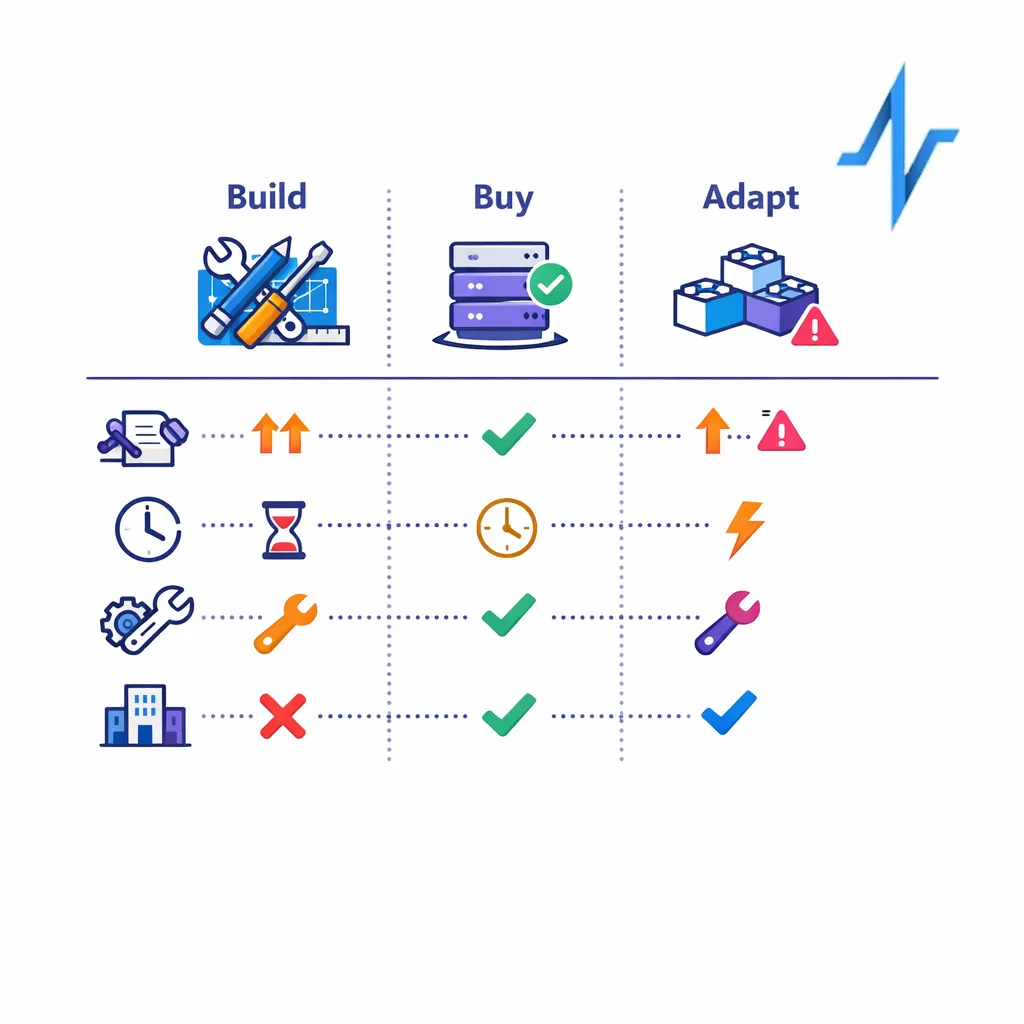
Build on a general CRM when your specialized requirements are still limited and your organization values enterprise standardization above industry depth. Buy a life sciences CRM when specialized workflows are core, repeated, and costly to custom-build. Adapt a general CRM when corporate platform constraints are real, but define a clear threshold for when customization stops making economic sense.
Customization usually becomes expensive when core capabilities are being recreated from scratch rather than configured. If you are repeatedly building affiliation logic, approved content controls, field call workflows, territory rules, or complex measurement mappings, you are no longer implementing a simple general CRM. You are building your own pharma layer on top of it.
- Build if differentiation lives in a unique process and your regulatory complexity is still manageable.
- Buy if you need faster time to value on pharma-specific workflows and less custom architecture.
- Adapt if enterprise standards are fixed, but be disciplined about what you will and will not customize.
Which model fits best?
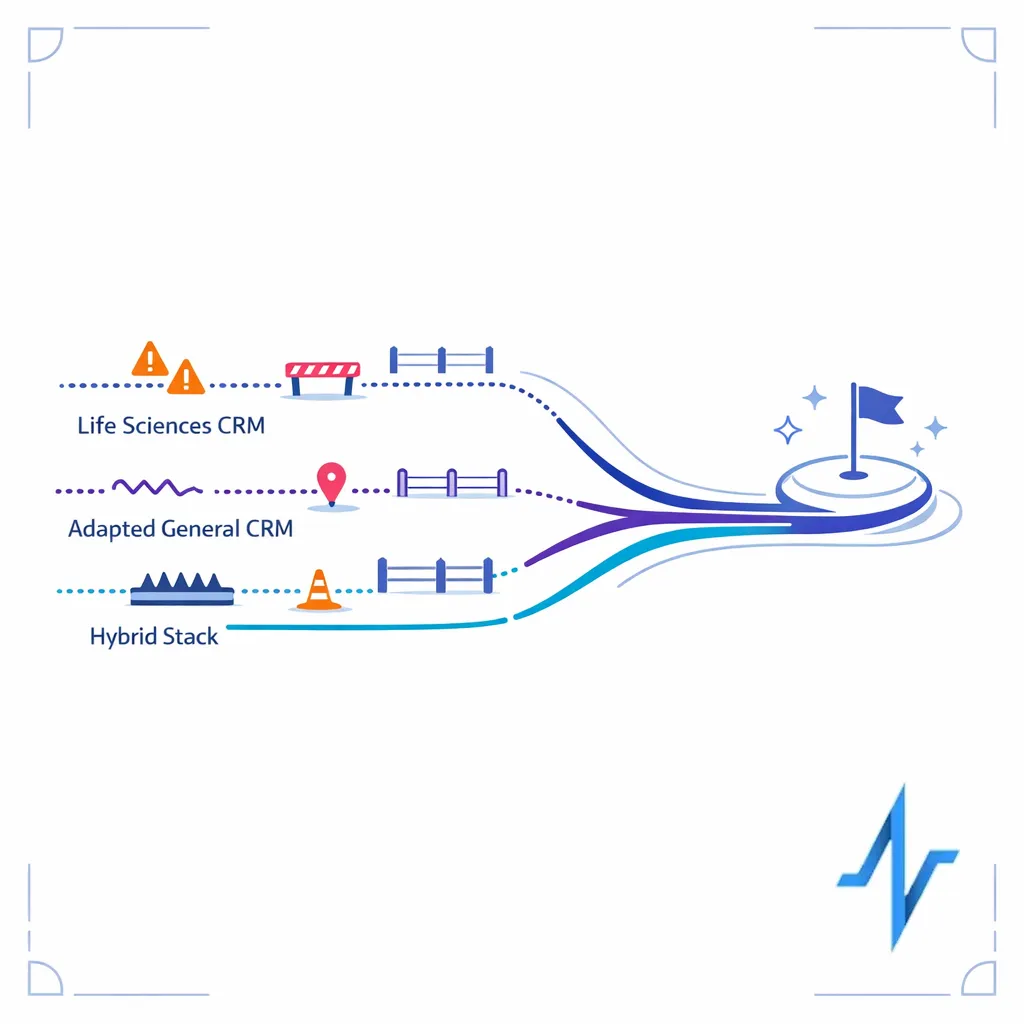
If your team is early-stage, commercially simple, and mainly needs flexibility, a general CRM can be the right answer. If your model depends on structured HCP engagement, field execution, approved content, and auditable orchestration across commercial functions, a life sciences CRM is usually the better fit.
A hybrid model is often best when enterprise CRM standardization is nonnegotiable but specialized layers for consent, identity, orchestration, or measurement still need to exist. That approach can work well, but only if ownership boundaries are clear and the integration design is strong.
What to do next
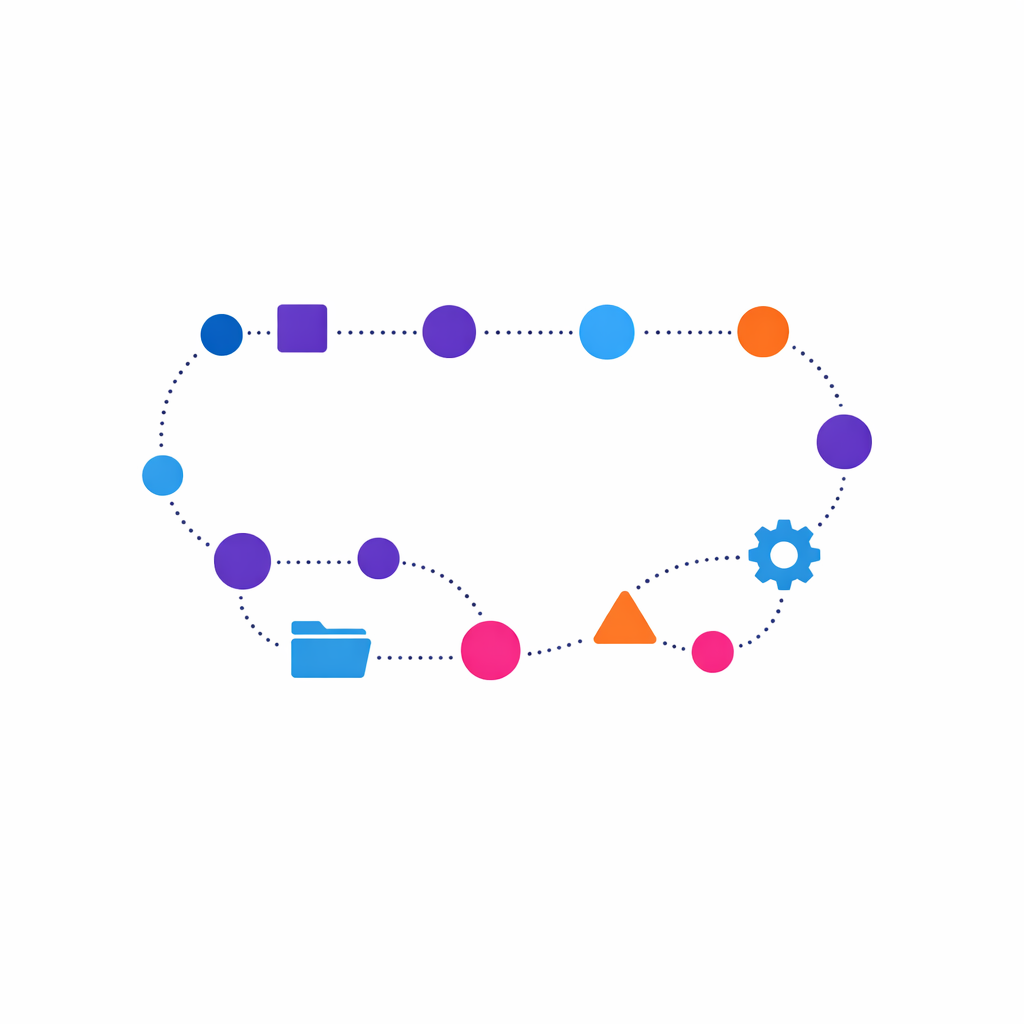
- Map your top 10 workflows across brand, sales, operations, medical, and patient-facing programs.
- List the data objects you truly need, including affiliations, territories, consent states, content status, and account hierarchy rules.
- Identify the controls that must be native versus the controls you can safely manage in adjacent systems.
- Document the systems you are not replacing, especially customer data, content, analytics, and ERP tools.
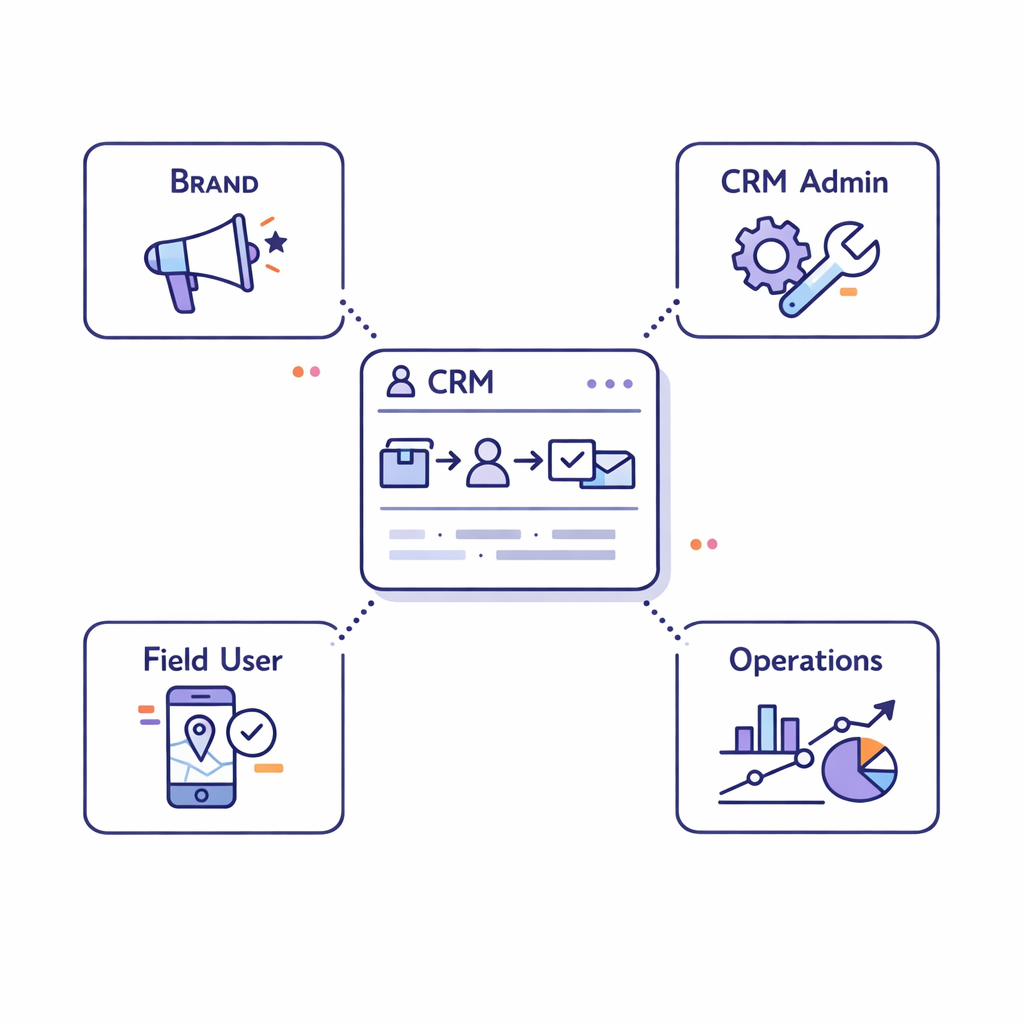
- Run role-based demos for brand, CRM admin, field user, and ops stakeholders using the same scenario.
- Set decision triggers for when a general CRM stops being enough, so the organization is not surprised by future replatforming.
Talk to Pulse Health
If you are comparing a pharmaceutical CRM against a general platform, Pulse Health can help you map the decision to real commercial workflows instead of a vendor checklist. That is especially useful when your team needs better HCP engagement, patient education or sign-up flows, identity resolution, and measurable orchestration without adding unnecessary stack complexity.
- Request a Demo to see how Pulse Health supports life sciences-ready commercial execution.
- Book a Consultation if you want a working session on whether to buy, adapt, or replace your current CRM model.