

Choosing a cloud based CTMS is not just a software purchase. For sponsors, it is a decision about how study teams, CROs, sites, finance, and quality will share operational truth across a portfolio. The wrong system creates more reconciliation work; the right one makes oversight faster, cleaner, and easier to defend.
This guide is for sponsor-side clinical operations leaders, study managers, functional heads, and digital or IT partners who are evaluating CTMS software. You will learn how to assess usability, data flow, interoperability, sponsor oversight, security, and implementation readiness before you go into demos, pilots, or RFPs.
A cloud based CTMS is a trial management system delivered through the cloud computing model defined by NIST and configured to support the study workflows addressed in FDA guidance on computerized systems used in clinical investigations. In practice, buyers usually expect it to coordinate startup, site activity, monitoring follow-up, milestones, and portfolio reporting from a browser-based platform.
What is CTMS software? Think of CTMS software as the operational layer for running a study. It does not replace every adjacent system, but it should give the sponsor a reliable way to see what is happening, what is late, who owns the next action, and where handoffs are breaking down.
What a cloud based CTMS is and why sponsors are reevaluating adoption now
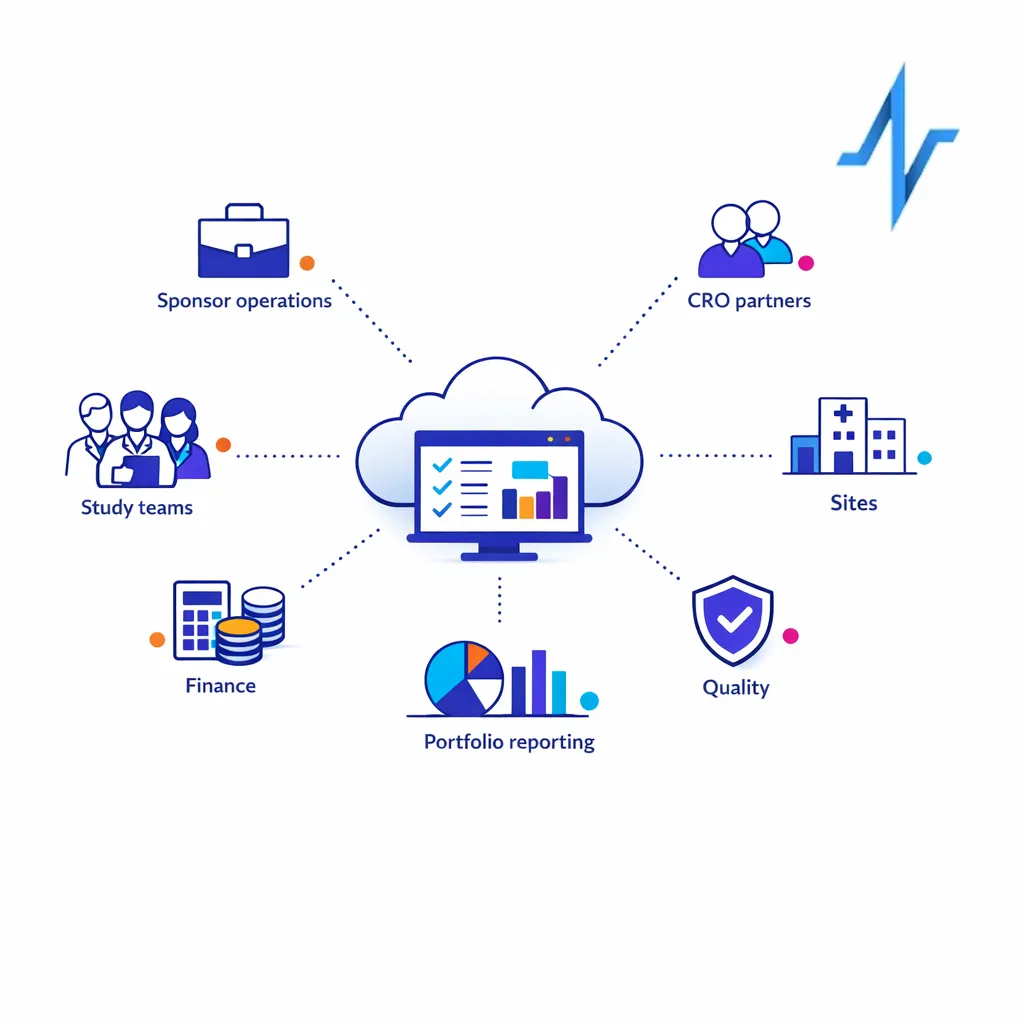
Many sponsors are reevaluating CTMS adoption because the question is no longer just whether they need a system. The better question is whether the system fits the sponsor operating model across internal teams, outsourced partners, and a broader clinical technology stack. Buyers want fewer spreadsheets, less email chasing, and faster answers during governance reviews.
What has changed in evaluations is the balance between convenience and control. Sponsors now expect modern user experience and quicker access, while still needing workflows that stand up to expectations around electronic records and electronic signatures under 21 CFR Part 11 and support the sponsor view needed for a risk-based approach to monitoring. That is why adoption decisions are increasingly about governance, interoperability, and evidence of control, not just a feature checklist.
The practical implication is simple: cloud hosting alone is not the value. The value comes from how quickly the platform helps your teams see study status, standardize workflows, and act on risk without turning every change into a custom IT project.
Cloud based CTMS vs on-premises CTMS for sponsor operating models
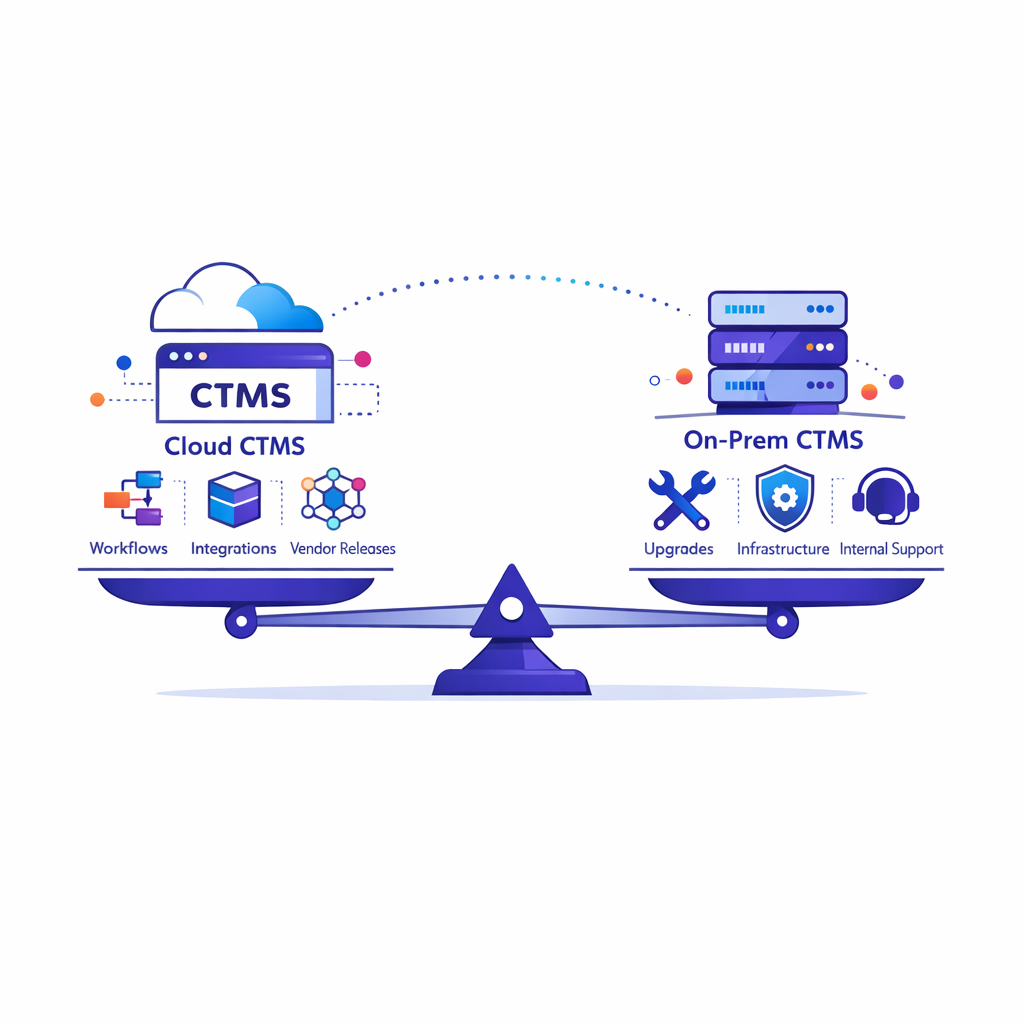
The cloud versus on-premises question should start with operating model, not architecture preference. If your organization runs lean internal IT, works with multiple service providers, or wants standardized processes across new studies, a cloud based CTMS may be the simpler fit. If your environment is heavily customized, approval-heavy, or constrained by internal hosting policy, an on-premises path may still feel more comfortable.
The tradeoff is usually not flexibility versus rigidity. It is where complexity lives. In a cloud model, complexity often shifts toward configuration discipline, vendor release management, and integration testing. In an on-premises model, complexity often shifts toward infrastructure, upgrade planning, and internal support burden.
For sponsors, the better buying question is this: which deployment model lets us standardize core processes without creating a long tail of exceptions? That answer will vary by portfolio size, outsourcing model, internal validation maturity, and the number of connected systems you need on day one.
Core evaluation criteria before adoption
Usability and role-based workflows for study teams, CRAs, and oversight leaders
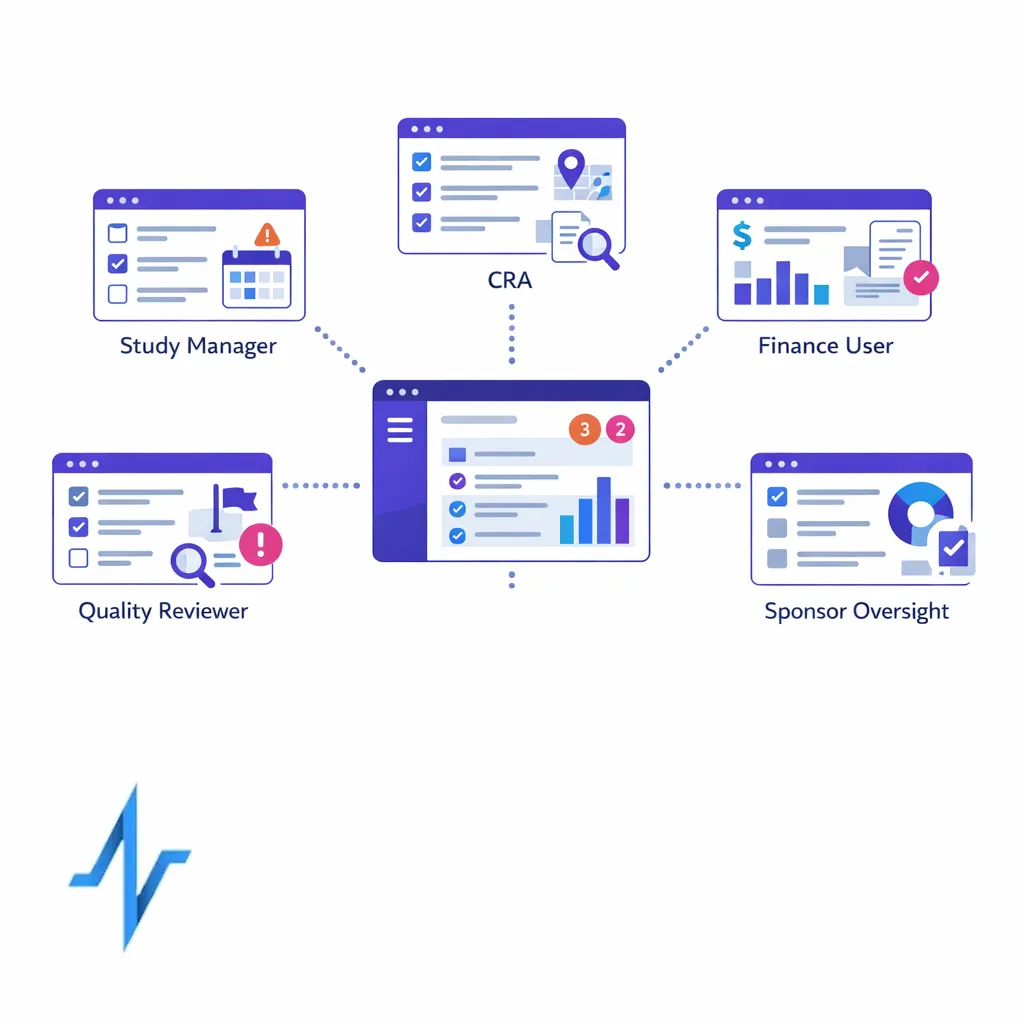
Usability is not just about a clean interface. It is about whether each role can complete its real work with minimal navigation and minimal duplicate entry. Ask the vendor to show the system from the perspective of a study manager, CRA, finance user, quality reviewer, and sponsor oversight lead, not just an administrator.
Look for role-based dashboards, task queues, overdue-action views, configurable alerts, and fast drill-down from portfolio metrics to a study or site record. A good demo should show how a user spots a problem, assigns ownership, and documents follow-up in a few steps. If the workflow only looks smooth in a scripted happy path, keep pushing.
Data flow and source-of-truth design across studies, sites, and vendors
Before you compare vendors, define your source-of-truth model. Decide where protocol metadata lives, how study and site identifiers are governed, which system owns milestone dates, and how vendor-supplied status updates are accepted or challenged. This matters more than any individual dashboard.
Strong sponsor CTMS design starts with object-level ownership. For example, you may want one authoritative location for study status, another for subject data, and another for essential documents, while still exposing a unified sponsor view. If you skip this design step, the CTMS can become a second spreadsheet with better branding.
Interoperability with EDC, eTMF, RTSM, payments, startup, and analytics
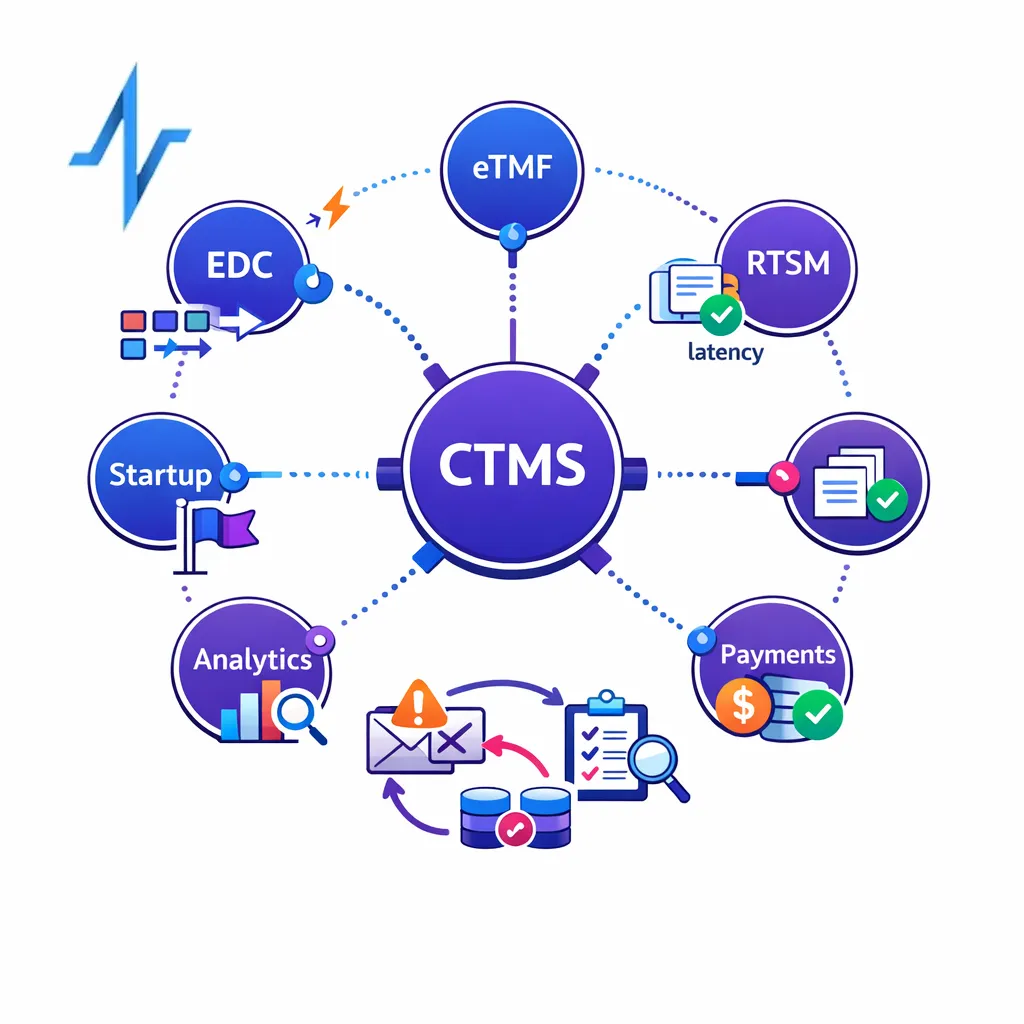
Do not ask only whether the platform integrates. Ask what object moves, in which direction, on what trigger, with what latency, and how errors are surfaced. A real integration conversation should cover field mapping, business rules, duplicate prevention, monitoring, and support ownership after go-live.
Quick comparison: EDC, CTMS, and eTMF
- Treat EDC as the home for subject-level clinical data capture and query management.
- Treat CTMS as the home for study operations such as milestones, site activity, visit planning, issue follow-up, and sponsor reporting.
- Treat eTMF as the home for essential documentation and related document management.
The most useful cloud CTMS platforms do not try to be every system. They make boundaries clear, move data cleanly, and help users trust what they are seeing. Ask vendors to show failed-message handling and reconciliation, not just the success case.
Sponsor oversight, audit trails, and inspection readiness
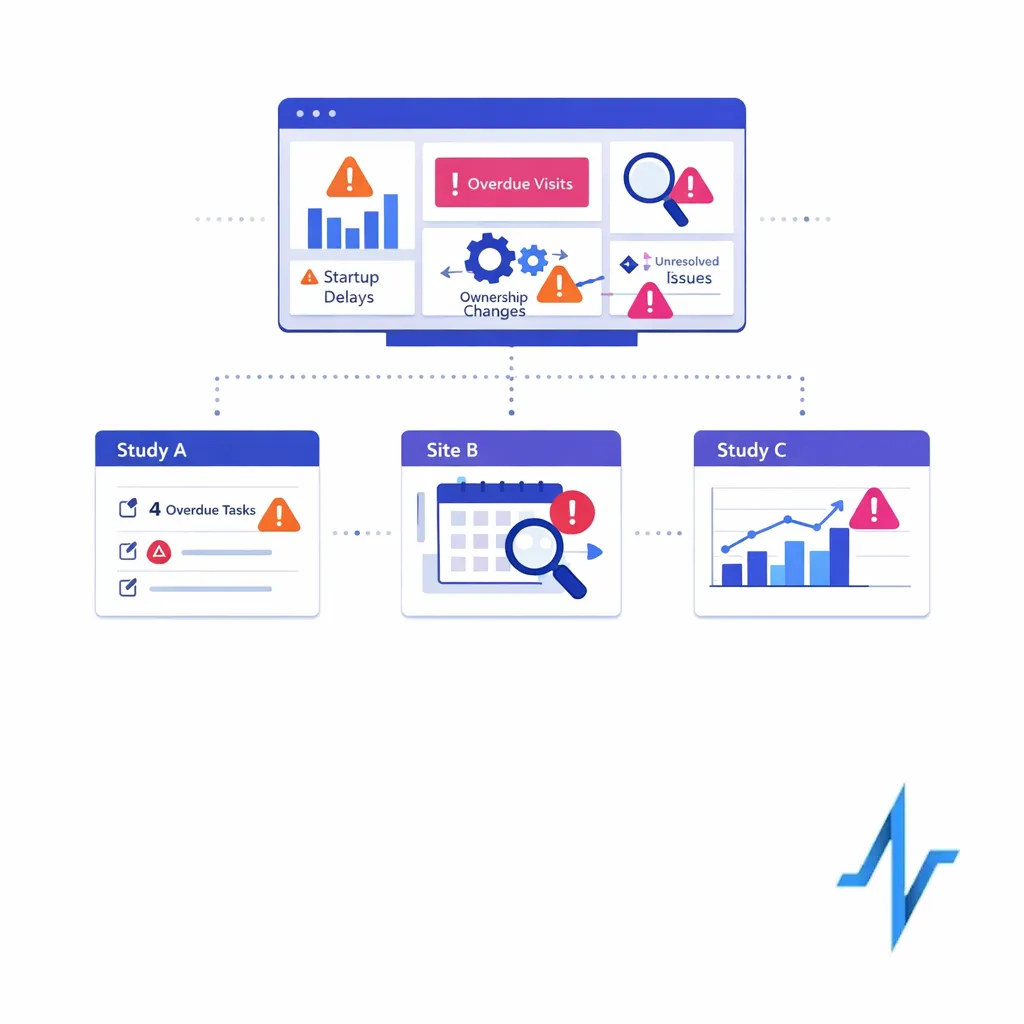
A sponsor CTMS should make oversight operational, not ceremonial. That means you can quickly see delayed startup tasks, missing follow-up, overdue monitoring activities, unresolved findings, and study-level exceptions without waiting for a weekly report pack. If the system cannot expose those gaps clearly, it will struggle when leadership or quality asks for answers fast.
Ask how the platform records status changes, ownership changes, approvals, and exceptions. Then ask how easy it is to reconstruct the story of a decision. Inspection readiness is rarely about one perfect dashboard; it is about whether the sponsor can trace what happened, why it happened, and what action followed.
Security, access controls, and deployment governance
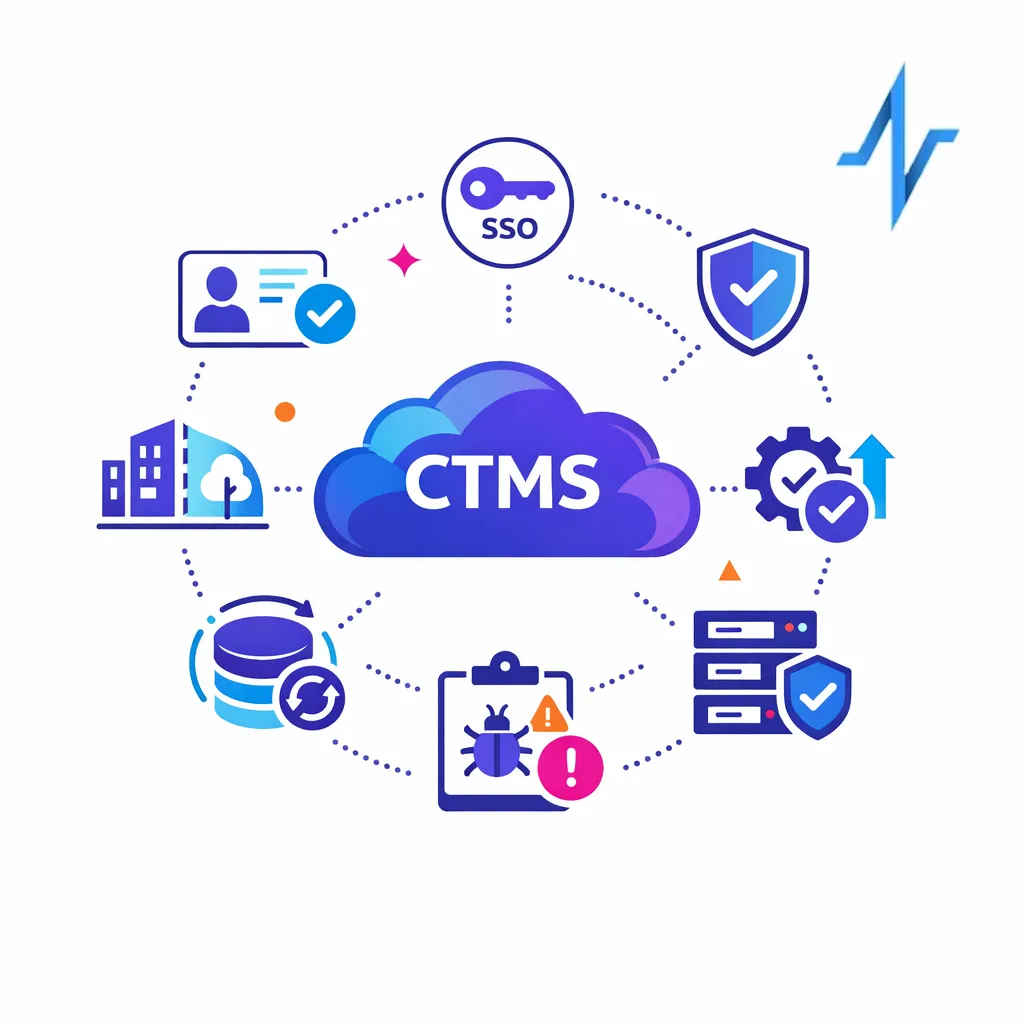
Security review should go beyond a vendor trust page. If the platform stores or transmits protected health information, its design and operating model should align with the HIPAA Security Rule. Even when the CTMS holds limited patient detail, sponsors should still ask about least-privilege access, single sign-on, multi-factor authentication, environment separation, backup strategy, and incident response.
Deployment governance matters just as much. Ask how releases are communicated, how configuration changes are approved, what testing is expected from the sponsor, and how emergency fixes are handled. A cloud platform is easier to consume when the vendor change process is predictable and your own governance is explicit.
Implementation readiness, migration effort, and change management
Many CTMS projects succeed or fail before the software is configured. Sponsors should map core workflows, define reporting requirements, rationalize legacy fields, and decide what historical data is truly worth migrating. If you try to preserve every old exception, you will slow the program and dilute standardization.
Ask vendors to separate configuration from customization, and to show the effort required for templates, user roles, reports, integrations, and validation support. Also ask who owns training, who approves process changes, and how success will be measured in the first 90 days after launch. Adoption is usually won in those details.
How to assess vendor fit by sponsor size, portfolio complexity, and outsourcing model
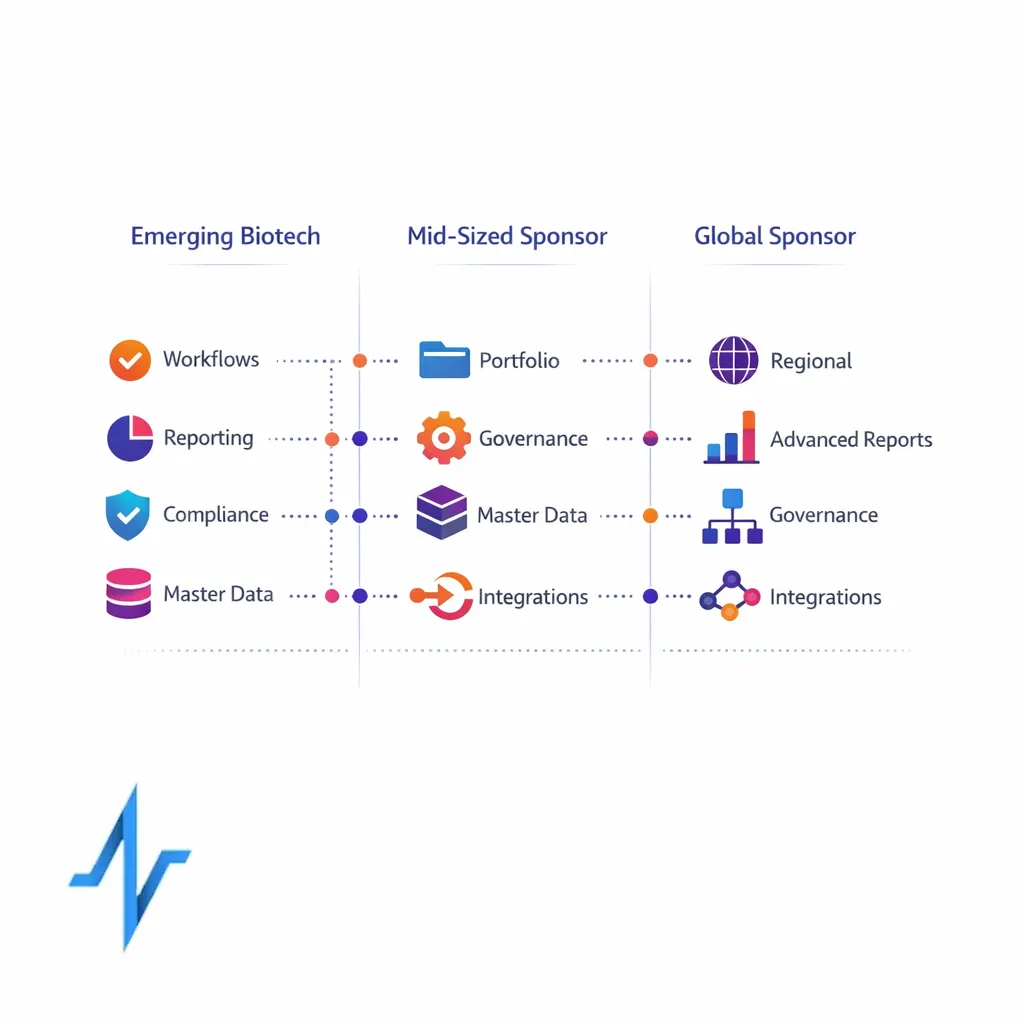
There is no universally best cloud CTMS platform. The right fit depends on how many studies you run, how standardized your processes are, how many partner organizations touch the workflow, and how much internal system ownership you want to carry.
- Emerging biotech sponsors usually benefit from faster setup, lighter administration, and strong out-of-the-box workflows that do not require a large systems team.
- Mid-sized sponsors often need multi-study templates, portfolio reporting, cross-functional visibility, and enough flexibility to support both internal and outsourced execution.
- Large or global sponsors often need deeper governance, stronger master-data discipline, complex role models, and a clear plan for integrations, regional processes, and legacy migration.
- Heavily outsourced sponsors should focus on shared visibility, vendor handoff design, partner permissions, and sponsor-side reporting that does not depend on a CRO assembling slides.
Reference checks should follow the same logic. Ask for customers that look like your operating model, not just your therapeutic area. A sponsor running six studies through two CROs needs a different proof point than a large enterprise standardizing a global portfolio.
CTMS evaluation checklist for sponsors
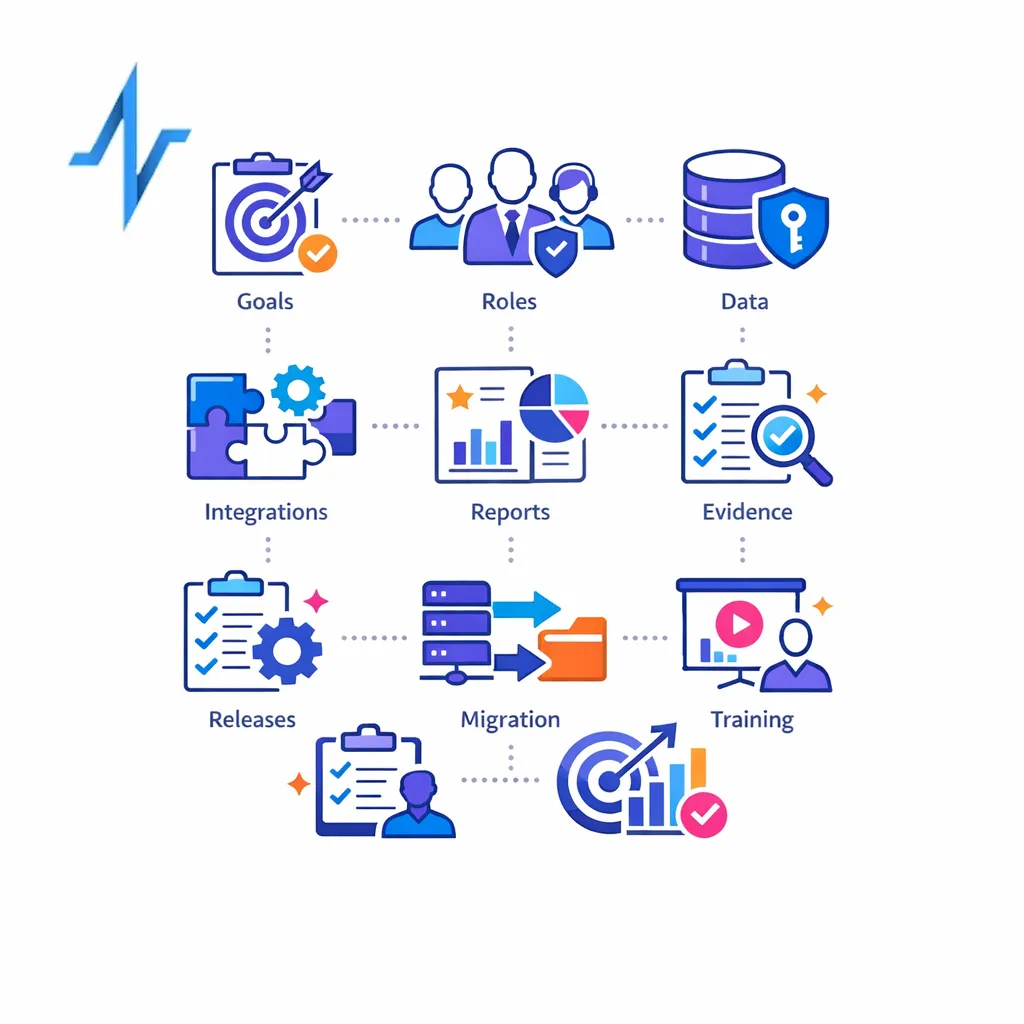
Use this short list before demos, pilots, or an RFP. If your team cannot answer these questions internally, the buying process will become reactive and the implementation will be harder than it needs to be.
- Define the primary job the CTMS must do in year one: portfolio visibility, startup control, monitoring oversight, financial tracking, or workflow standardization.
- List the roles that will use the system and the five highest-frequency tasks for each role.
- Decide which data objects the CTMS will own and which will remain mastered in other systems.
- Map every required integration by object, direction, frequency, and support owner.
- Document the sponsor reports and alerts leadership will expect in routine governance.
- Clarify what evidence of control you need for approvals, change tracking, and operational traceability.
- Set rules for configuration, release review, user provisioning, and exception management.
- Choose what historical data must migrate and what can remain archived elsewhere.
- Plan training by role, not just a generic system walk-through.
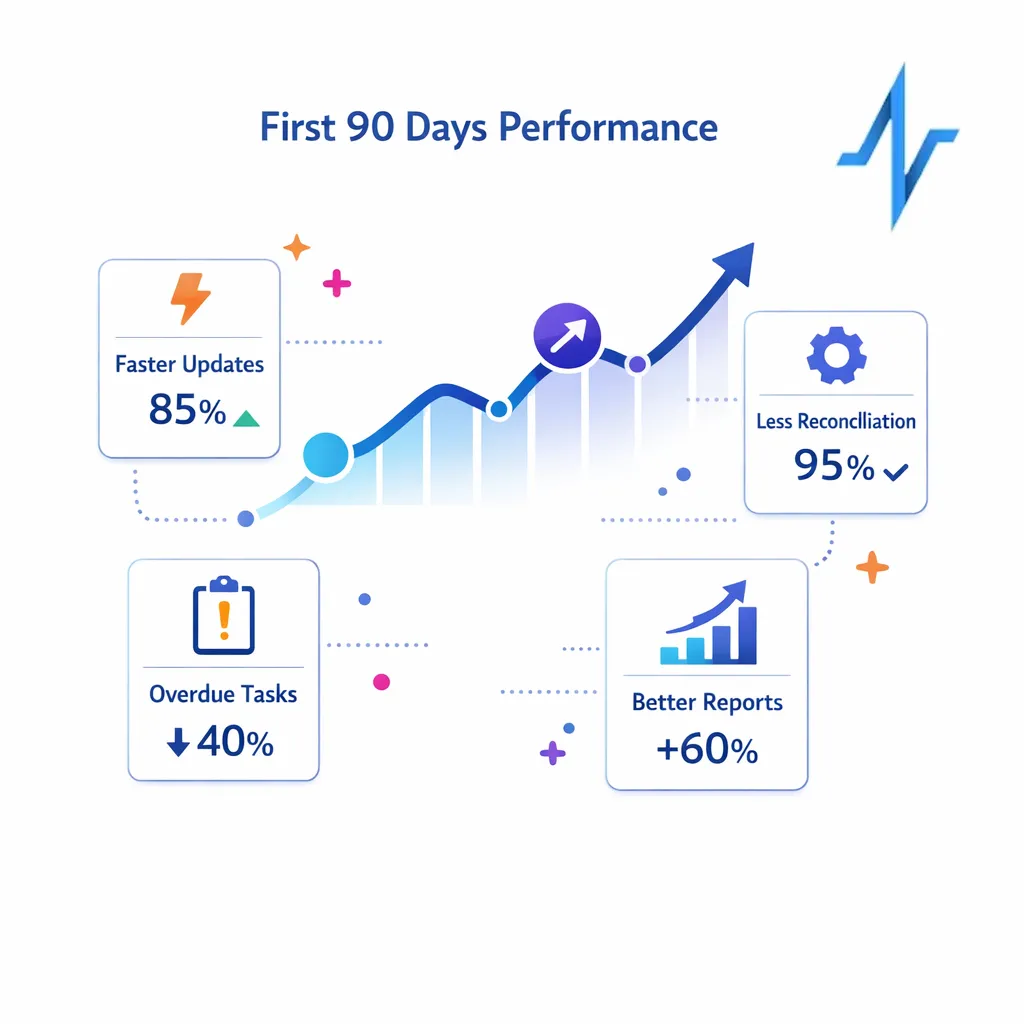
- Define success metrics for the first quarter after go-live, such as faster status visibility, fewer manual reconciliations, or improved overdue-task follow-up.
Common adoption mistakes and how to avoid them

Mistake: buying on feature volume instead of workflow fit. Better approach: score vendors on the speed and clarity of the workflows your users perform every day.
Mistake: treating interoperability as an IT question to solve later. Better approach: design the source-of-truth model before selection and make vendors prove how data moves in real scenarios.
Mistake: letting a CRO-friendly workflow replace sponsor visibility. Better approach: define the sponsor reports, alerts, and exception views you need before the first demo.
Mistake: migrating every field and every legacy quirk. Better approach: keep the migration focused on data that supports current processes, compliance needs, and meaningful trend analysis.
Mistake: assuming the vendor package is the whole compliance answer. Better approach: align system configuration, internal procedures, training, and testing to the way your teams will actually use the platform.
FAQs
What is the difference between TMF and CTMS?
A useful sponsor-side distinction is that the TMF centers on the essential documents expected under Good Clinical Practice, while the CTMS manages operational execution such as milestones, activities, assignments, and follow-up. One is document-centric; the other is operations-centric. They work best when they are connected but not confused.
What is the difference between EDC and CTMS?
In most sponsor stacks, teams use EDC for subject-level data capture in computerized clinical systems, while CTMS handles the operational work around the study. EDC tells you what data was collected. CTMS helps tell you whether the trial is being executed on plan.
What is the purpose of a CTMS?
The purpose of a CTMS is to give the sponsor an operational system of record for running a study and overseeing progress. A strong CTMS helps teams plan work, assign ownership, track status, spot delays, and produce consistent reporting across a portfolio. Its value is not just storage; it is coordinated execution and clearer oversight.
How much does a CTMS cost?
CTMS cost varies with study volume, user count, modules, integrations, validation support, implementation services, and migration scope. Sponsors should model total cost of ownership, not just subscription price. A lower license number can become more expensive if it requires heavy customization, manual reconciliation, or a large internal support footprint.
Book a consultation with Pulse Health
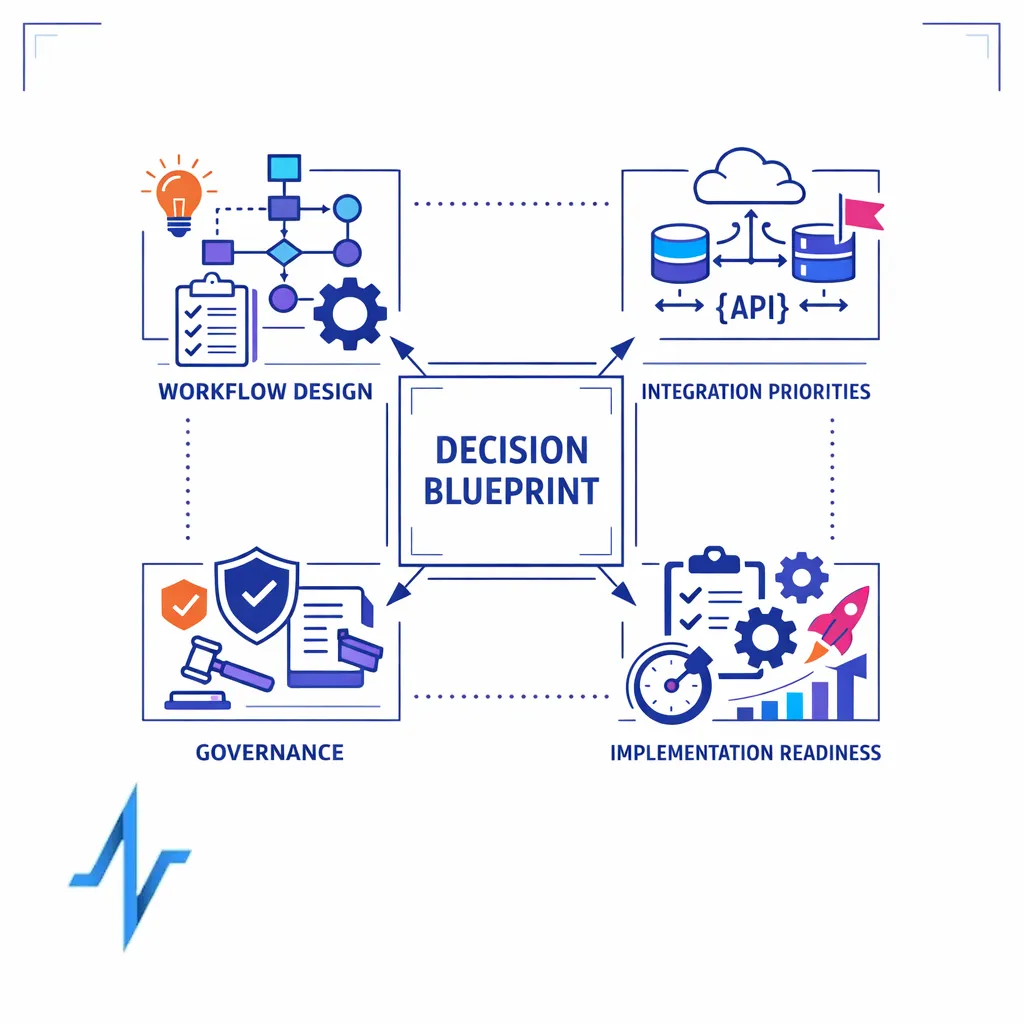
If your team is building a CTMS evaluation framework and wants a practical view of workflow design, integration priorities, and implementation readiness, Pulse Health can help you structure the decision. Use that conversation to sharpen your demo script, reduce blind spots in vendor selection, and connect the CTMS choice to the rest of your operating model. Book a Consultation.