
Pharma teams are not short on data. They have campaign metrics, CRM activity, field notes, consent records, content interactions, patient program signals, and channel performance reports. The harder problem is turning that activity into actionable insights that improve HCP engagement, patient education, and omnichannel execution without creating compliance risk.
This article is for US pharma brand teams, omnichannel leads, commercial ops, marketing ops, CRM owners, and agency partners. You will learn what actionable insights mean in healthcare analytics, why teams struggle to operationalize them, how to build a practical data-to-action framework, and which metrics matter most when the goal is better decisions rather than busier dashboards.
What actionable insights mean in healthcare analytics
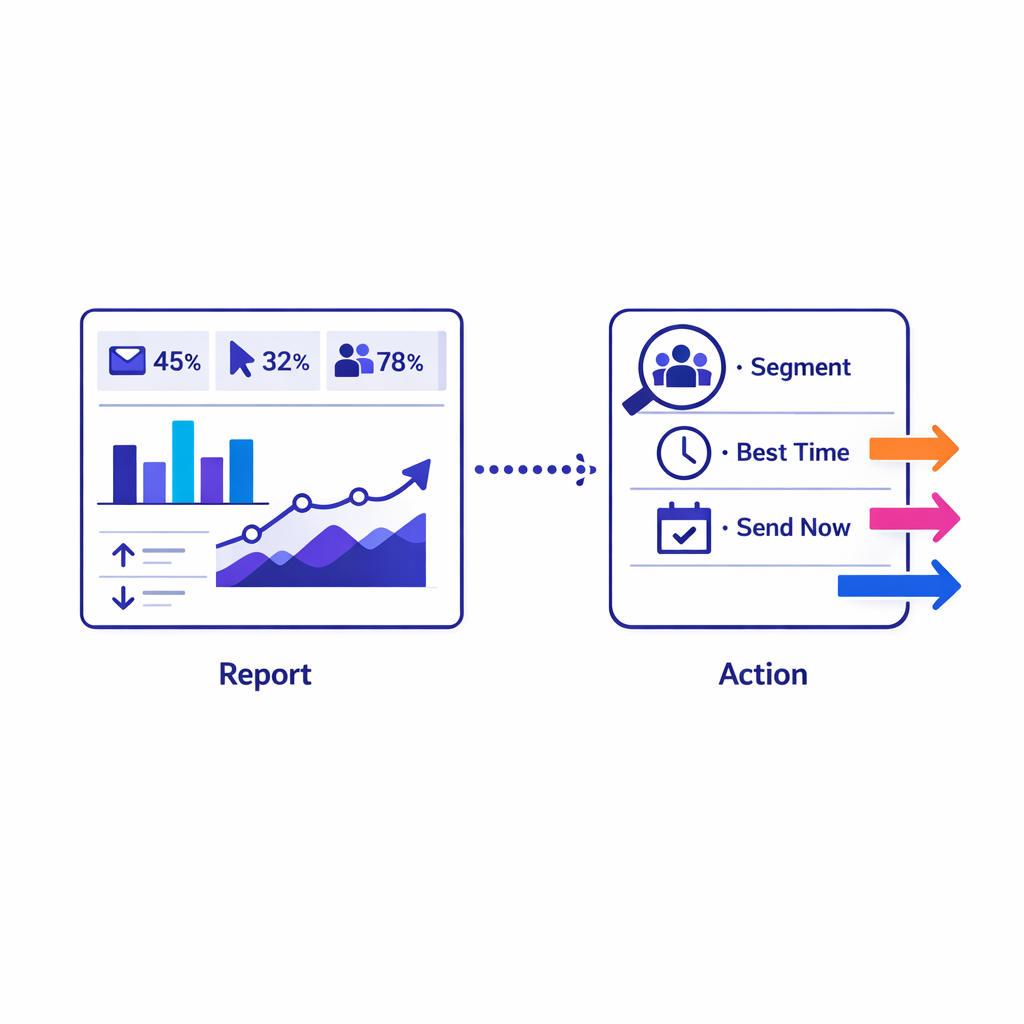
An actionable insight in healthcare analytics is a finding tied to a specific audience, decision, and next step. It explains what happened, why it matters, who it affects, what action is feasible now, and how the team will measure whether that action worked.
That is different from raw data, reporting, or a dashboard. Raw data shows events. Reporting organizes those events. An insight identifies a pattern or cause that matters. An action turns that insight into a concrete next-best step for a real workflow, such as changing follow-up timing, adjusting channel mix, or refining audience segmentation.
A useful test is simple: if a team member cannot say what should happen next after reviewing the analysis, the output is informative, but it is not yet actionable. In healthcare analytics and pharma analytics, that distinction matters because every extra step between analysis and action slows decision-making.
Example
A report might say webinar attendance was strong but post-event email engagement was weak. An actionable insight says first-time HCPs in one specialty engage more when rep follow-up happens within two days of the event and the next message points to the same clinical topic, so the team should trigger a timed follow-up sequence and track meeting-booked rate or qualified next-step conversion.
What changed
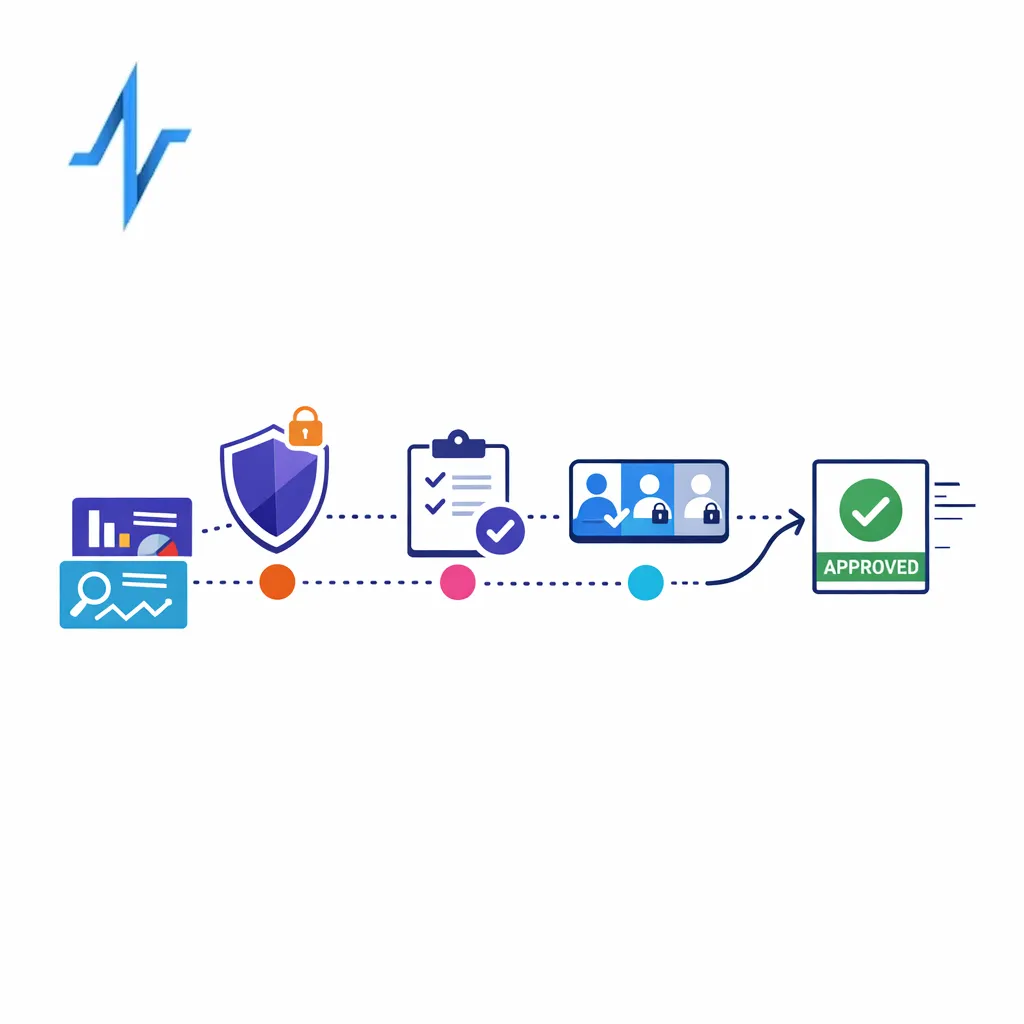
The biggest change is not simply that teams collect more signals. It is that commercial analytics now has to deliver speed and precision inside tighter rules for privacy, governance, and review. When engagement data includes information handled by covered entities or business associates, the HIPAA Privacy Rule shapes how that data can be used and disclosed, while the HHS de-identification guidance outlines pathways for using data in ways that reduce re-identification risk.
At the same time, prescription drug promotional communications remain subject to oversight from the FDA Office of Prescription Drug Promotion. That means faster insight only creates value if the organization can route recommendations into approved, reviewable, and role-appropriate actions.
Why pharma teams struggle to turn engagement data into decisions
Data silos across commercial and patient workflows
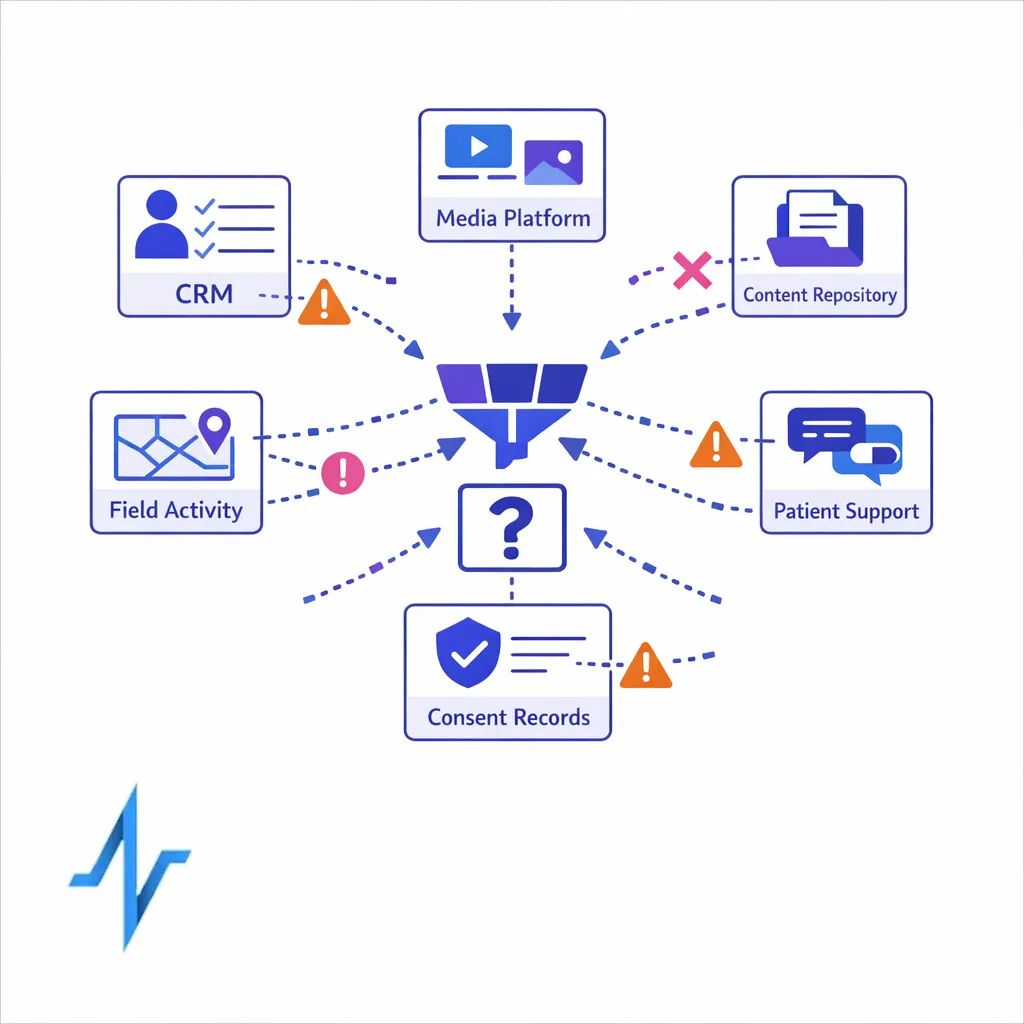
In many organizations, the question is not whether data exists. The question is whether the right data can be connected at the moment of decision. CRM, media platforms, field systems, content repositories, consent records, and patient support tools often describe the same person or journey in different ways, which makes identity, timing, and attribution hard to interpret.
Even when source systems are accessible, the mapping work is substantial. The HL7 FHIR standard helps structure healthcare data exchange, but commercial teams still need a business layer that aligns engagement events, audience definitions, content tags, and decision rules across systems.
Vanity metrics vs decision-ready metrics
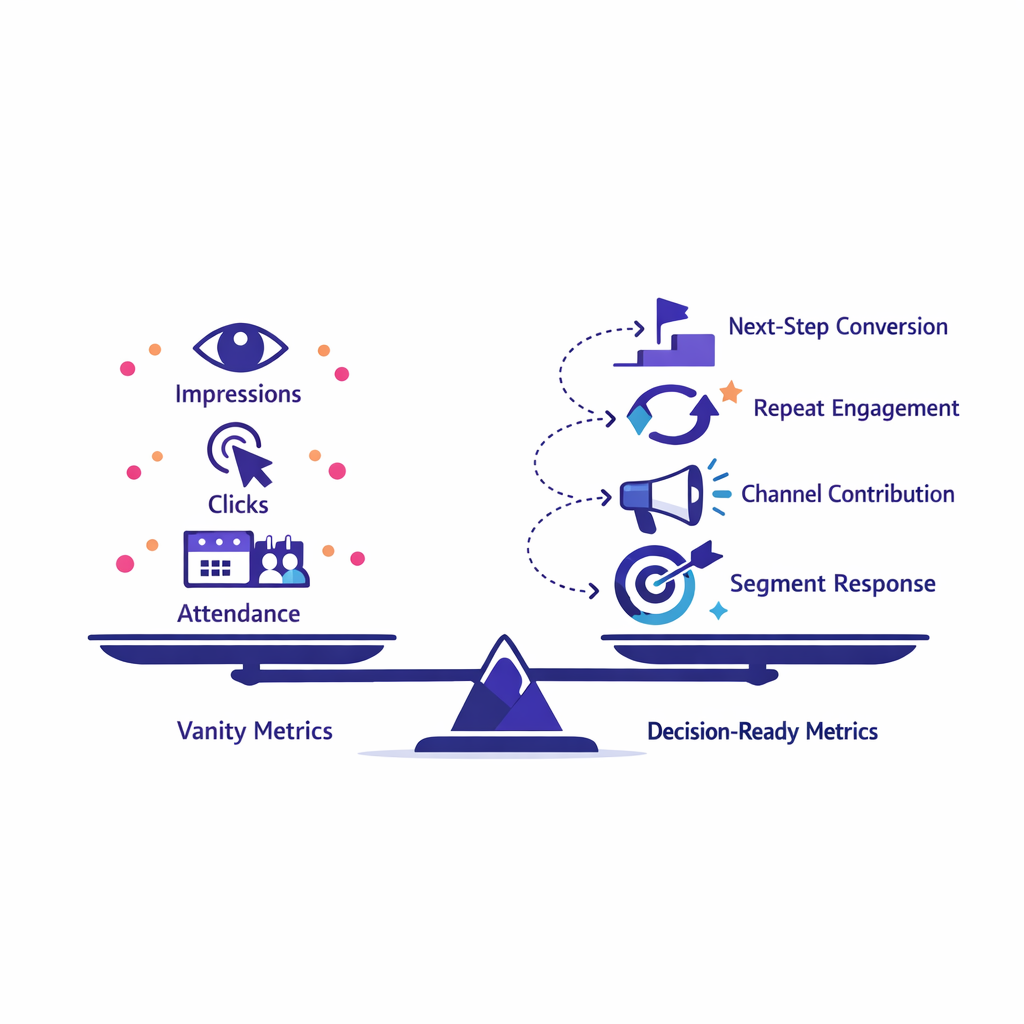
Open rate, impressions, clicks, and attendance are useful signals, but they rarely answer the question a brand or ops leader actually has. They say something happened. They do not always explain whether the activity moved the audience toward the next desired step, whether one segment responded differently than another, or whether a change in timing or content would improve performance.
Decision-ready metrics are narrower and more practical. They connect audience, stage, channel, content, and timing to an intended business outcome. That is what turns marketing analytics in healthcare from retrospective reporting into commercial analytics that can guide orchestration.
Compliance, privacy, and governance constraints
In regulated environments, not every signal should trigger automation. If an insight-driven workflow relies on electronic records or signatures, teams also have to think about requirements in 21 CFR Part 11. The operational implication is clear: analytics has to be auditable enough for the organization that uses it.
That is why strong pharma teams do not stop at dashboards. They define who can see which data, who can approve which actions, and which changes require human review before anything reaches the field, an HCP, or a patient-facing program.
A practical framework for turning engagement data into actionable insights
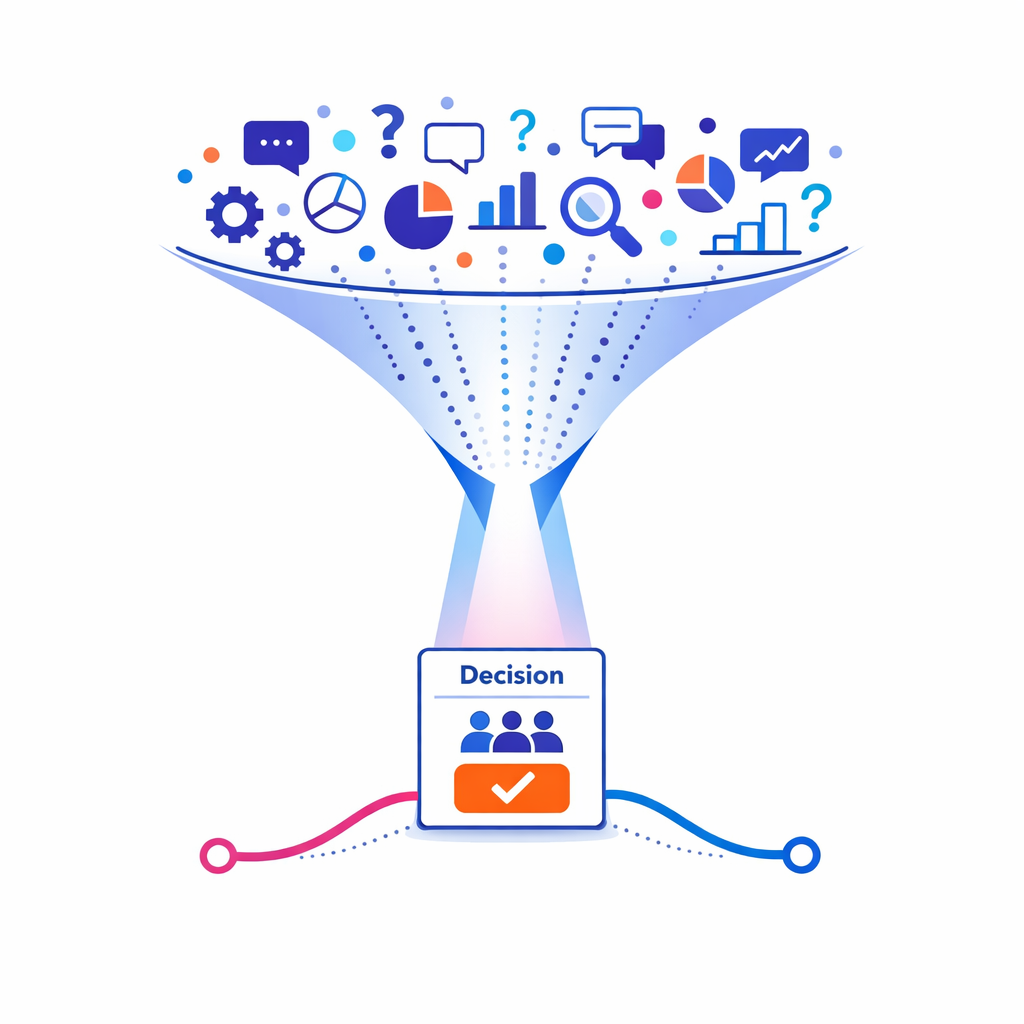
The fastest way to improve engagement measurement is to stop treating analysis as a reporting exercise. Start with a business question, connect only the data needed to answer it, then translate the answer into a specific next-best action with a clear owner.
Define the business question
Good questions are narrow. They focus on a real decision, not general curiosity. Instead of asking, “How did the campaign perform?” ask, “Which HCP segment is most likely to respond to a rep follow-up after viewing this content?” or “Where do patient education journeys lose momentum before enrollment?”
Clear questions create better analytics because they force agreement on audience, timing, and success criteria before anyone opens a dashboard. They also reduce the odds that teams drown in data they do not need.
Connect the right data sources
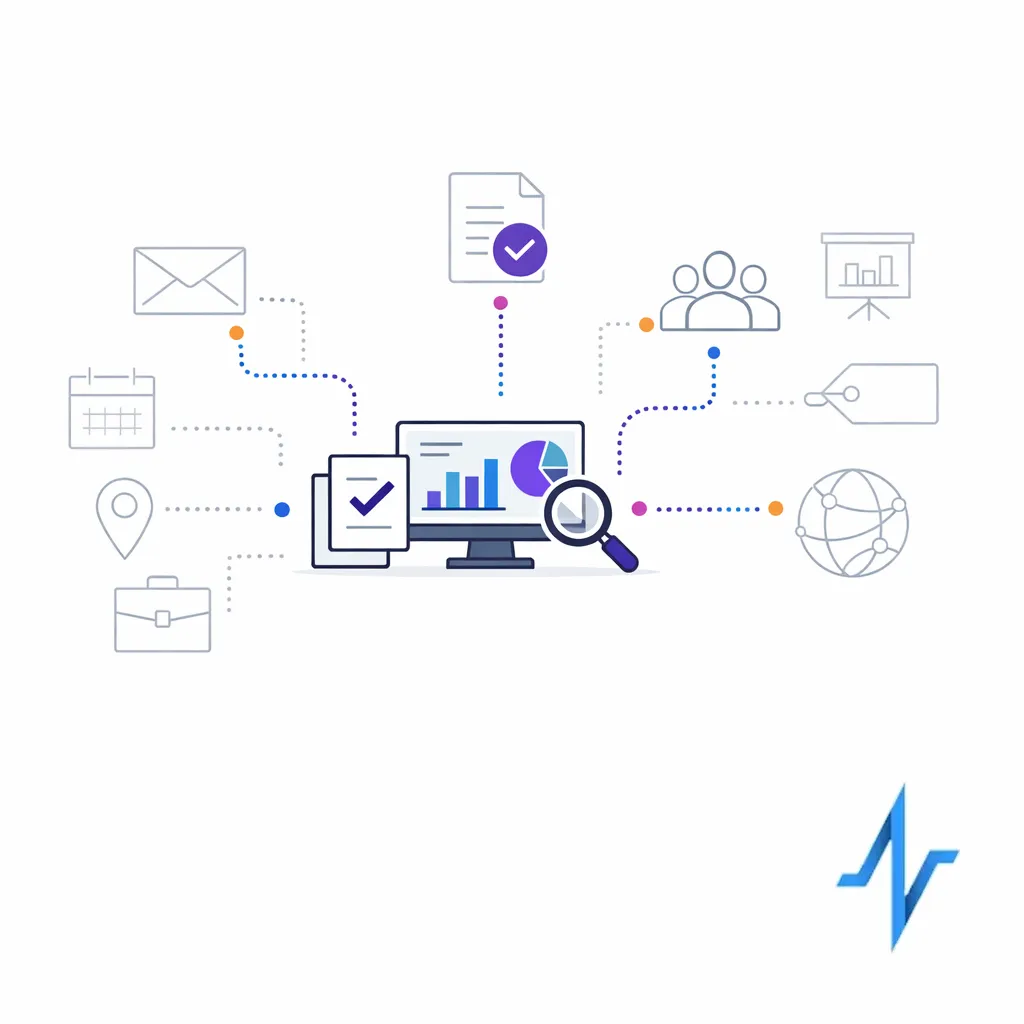
Not every source belongs in every analysis. Pull the minimum set needed to explain the decision: engagement events, audience identifiers, channel exposure, content metadata, timing, and the outcome you care about. If the analysis is for HCP engagement, that may mean CRM activity, approved content interactions, email performance, event participation, and field follow-up data.
If the analysis is for patient education or sign-up journeys, the source set may look different. The principle stays the same: connect data based on the decision you need to make, not because the platform makes it possible to ingest one more feed.
Add context and segmentation
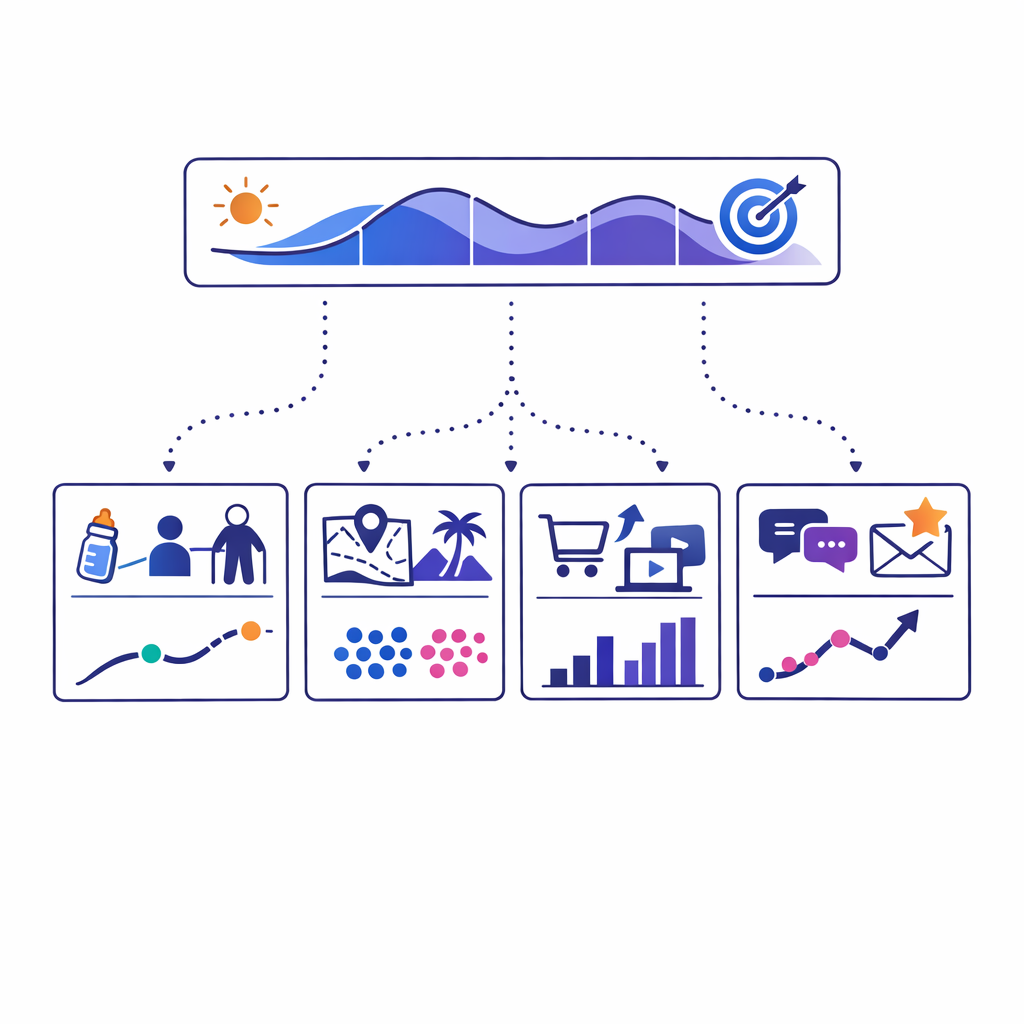
Actionable insights are rarely found in totals. They show up in differences between specialties, account types, lifecycle stages, territories, prior content exposure, channel preferences, or the time elapsed since a key interaction. Context turns a broad pattern into something a team can actually use.
This is where many healthcare data insights fall short. A high-level average can hide the fact that one segment is over-messaged, another is under-served, and a third simply needs a different next step.
Identify signals, patterns, and outliers
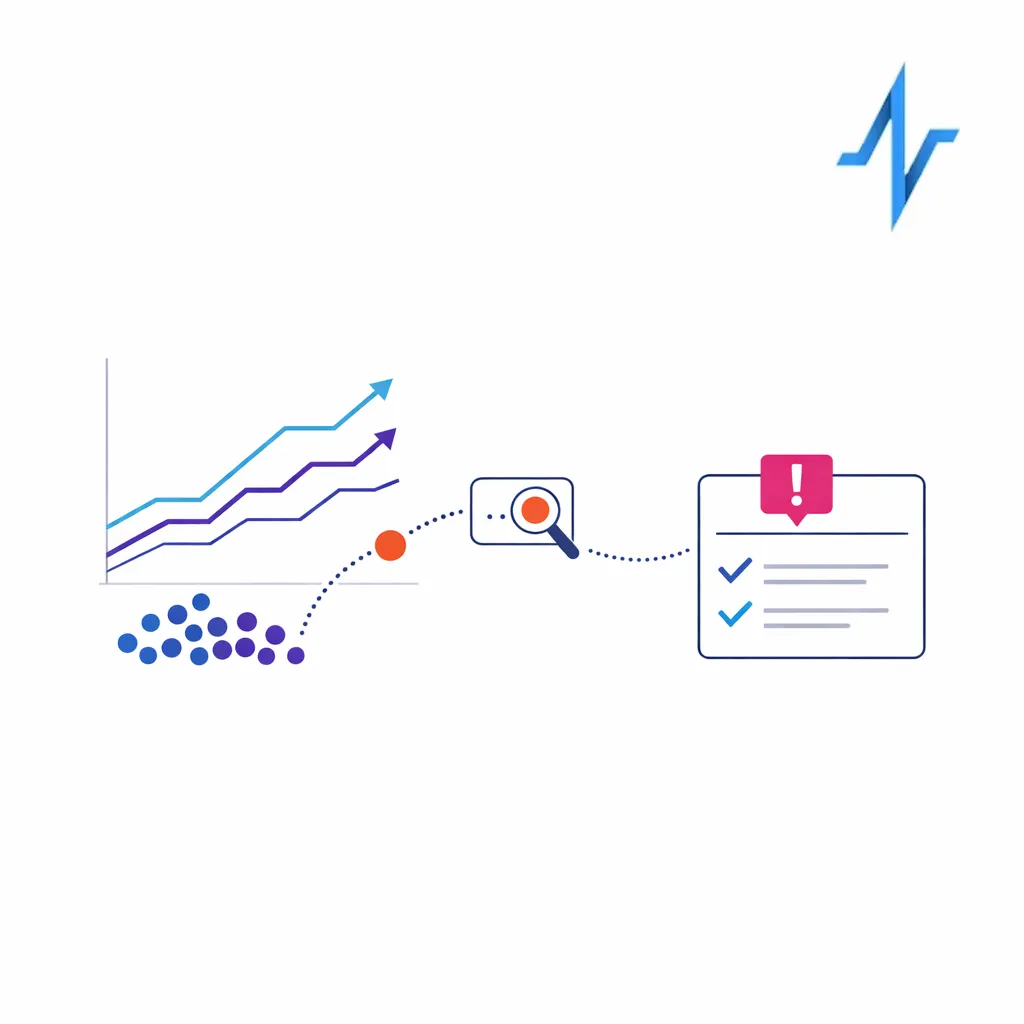
Look for meaningful change, not just activity. Which content sequence increased progression to the next step? Which audience segment stopped responding after the third touch? Which territories show strong event attendance but weak follow-up conversion? Which patient journey stage shows repeated drop-off?
Patterns matter because they suggest a cause. Outliers matter because they expose something your average performance hides. Both can produce actionable insights if the analysis stays close to an operational decision.
Translate findings into next-best actions
An insight becomes useful when it tells a team what to change. That change might be a new suppression rule, a different follow-up window, a segment-specific content path, a field alert, or a revised channel sequence. The best next-best actions are specific enough to execute and small enough to test.
If the recommendation cannot be assigned to an owner, timed, and measured, it is still an observation. Useful analytics does not end with a sentence. It ends with a workflow.
Measure outcomes and close the loop
Before launching the action, define how success will be judged. That may be progression to the next step, qualified engagement, repeat interaction, improved conversion by segment, or reduced drop-off at a critical journey point. Closing the loop matters because it tells the organization whether the action improved performance or simply changed activity patterns.
Use cases for actionable insights in healthcare and pharma
HCP engagement optimization
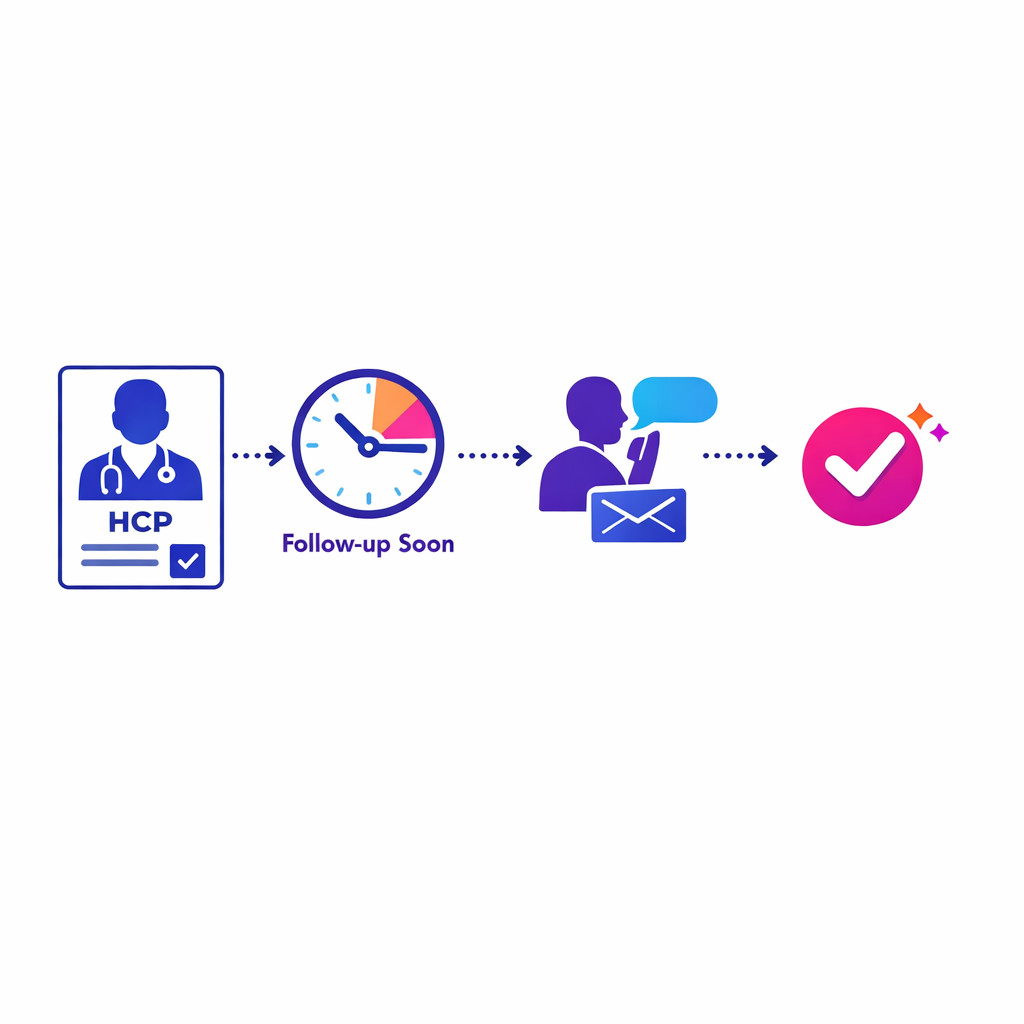
For HCP engagement, actionable insights help teams move beyond broad campaign reporting. Instead of asking which channel generated the most activity, a brand team can ask which combinations of content, timing, and follow-up move a specialty segment toward a meeting request, repeat content consumption, or another qualified next step.
Patient support and education programs
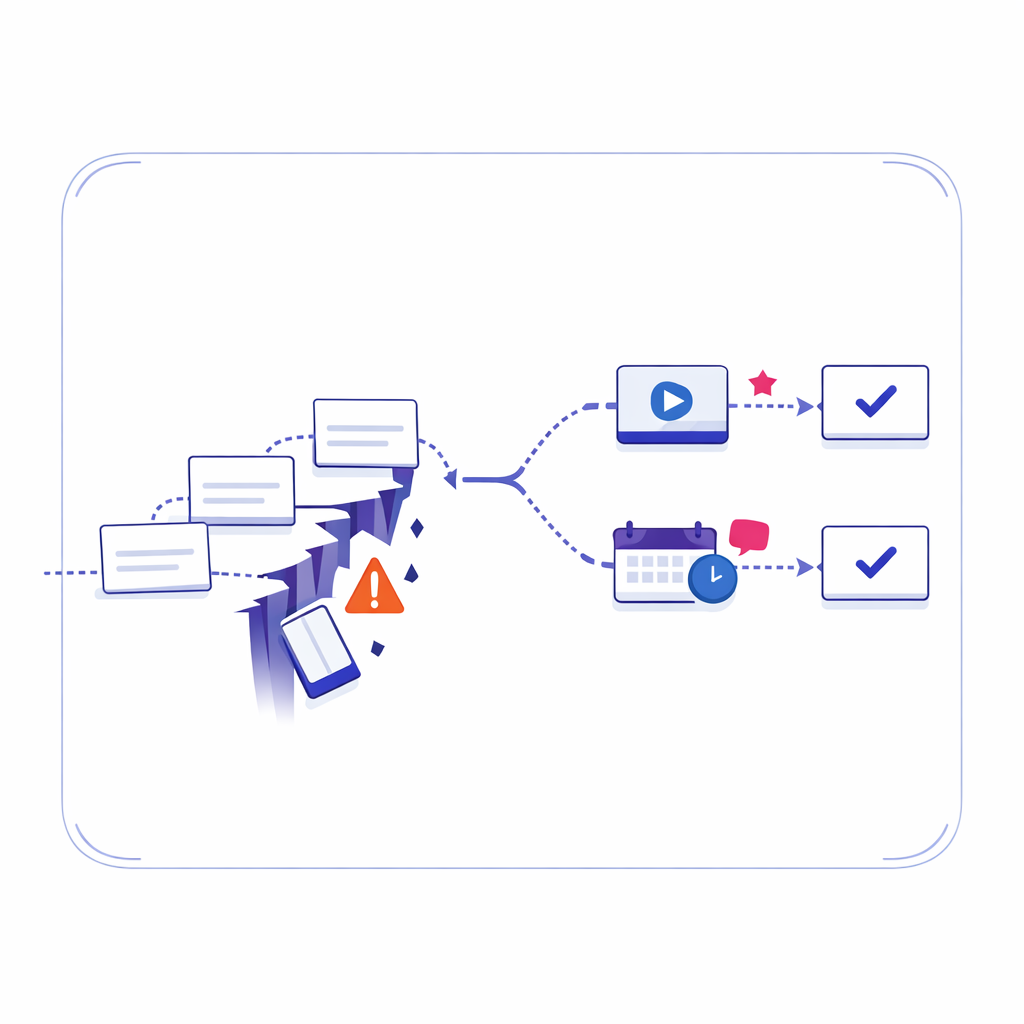
For patient programs, the priority is often journey progression rather than raw engagement. Teams can use actionable insights to spot where education sequences lose attention, which messages are most associated with completion of the next step, and when a patient or caregiver would benefit from a different content format or outreach timing.
Omnichannel campaign refinement

In omnichannel measurement, the goal is not to prove every channel touched the audience. It is to understand contribution and sequence. A useful insight might show that awareness channels create reach, but progression improves only when a specific content interaction is followed by a field or email touch within a defined window.
Field team prioritization and follow-up timing
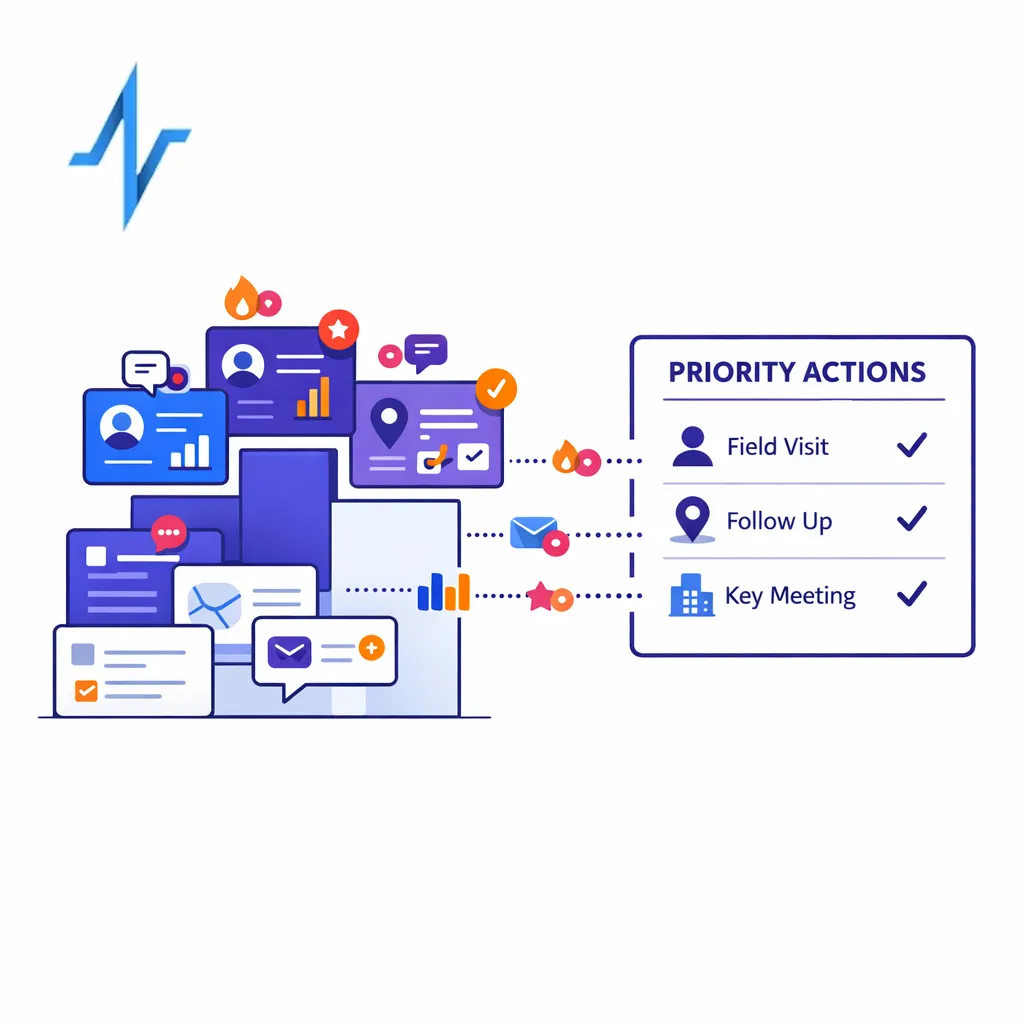
Commercial ops teams can use engagement data to improve rep prioritization. The insight is not “these accounts are active.” The insight is “these accounts show a recent cluster of high-intent signals tied to one topic, so the field team should follow up now with a relevant approved message.”
Content effectiveness and journey drop-off analysis
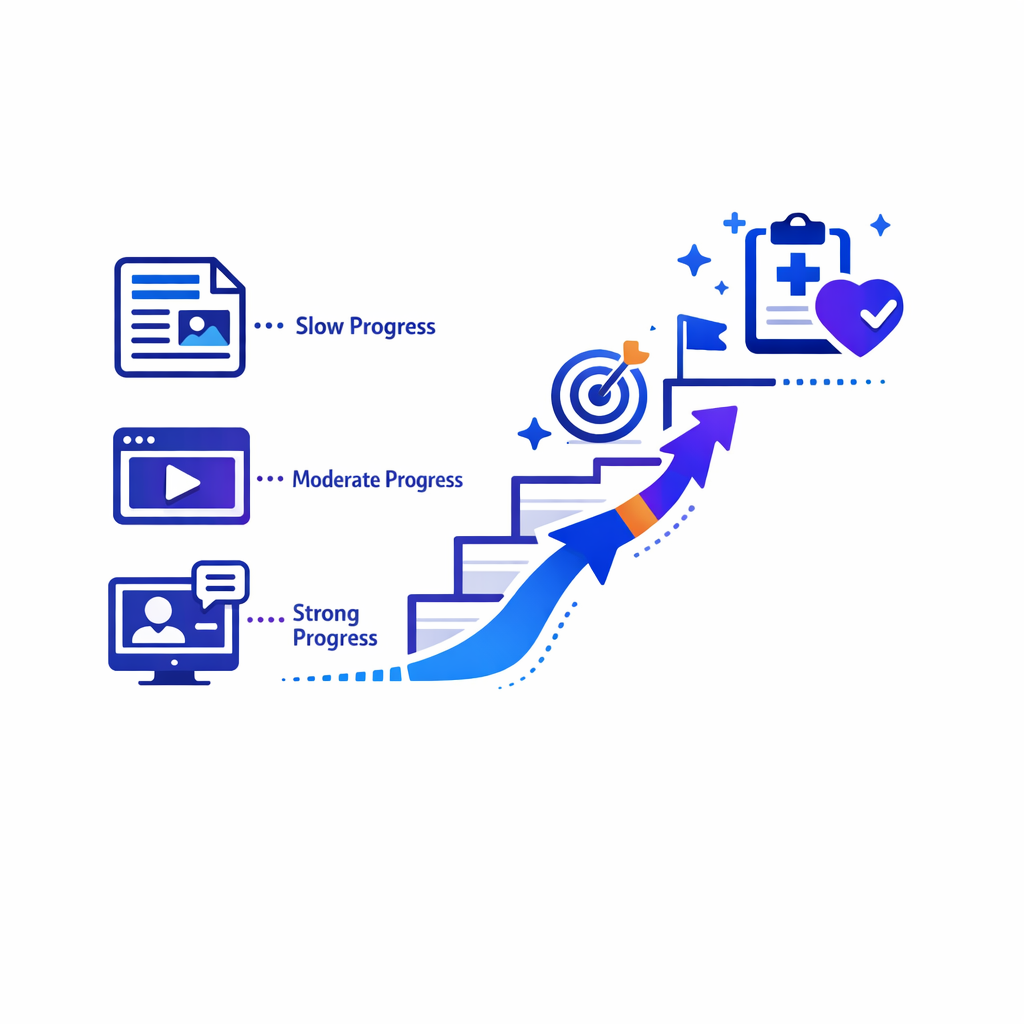
Content teams often report downloads, views, or dwell time. More actionable analysis asks which asset types move audiences forward, which messages stall progression, and where the journey loses momentum. That is the difference between content reporting and decision-ready healthcare analytics.
For teams building this capability, Pulse Health’s value is not just collecting engagement events. It is helping turn those events into decision-ready workflows that support orchestration, measurement, and governed execution.
What makes an insight truly actionable
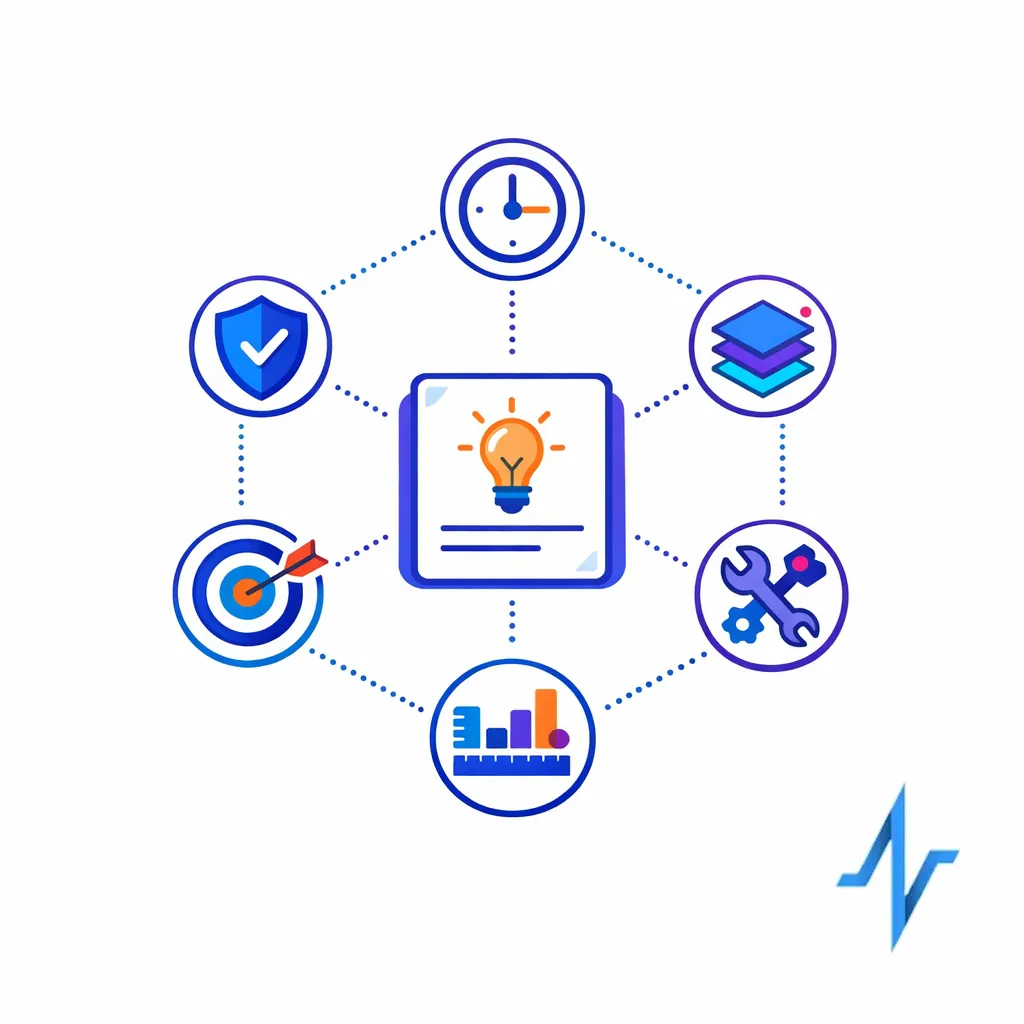
- Specific: It points to a defined audience, stage, and decision.
- Timely: It arrives early enough to influence the next step.
- Contextual: It explains the pattern behind the metric, not just the metric itself.
- Feasible: The team has a realistic way to act on it with current tools and approved processes.
- Measurable: Success can be tracked through a clear outcome metric.
- Governed: The action fits the organization’s privacy, review, and compliance requirements.
If even one of those elements is missing, the insight may still be interesting. It just may not be operational.
How to operationalize insights responsibly in regulated environments
Data quality and integration
Actionable insights depend on reliable identifiers, consistent timestamps, clean content labels, and definitions that match across teams. If sales, marketing, analytics, and agency partners all define “engaged HCP” differently, even sophisticated measurement will produce debate instead of action.
Consent, privacy, and governance
Responsible operationalization starts with policy-aware design. Teams should know which data can be used for which purposes, which audiences can be joined across systems, which workflows require de-identified views, and where access should be segmented by role. In practice, good governance makes action easier because it reduces uncertainty at the moment a decision is needed.
Human review and auditability
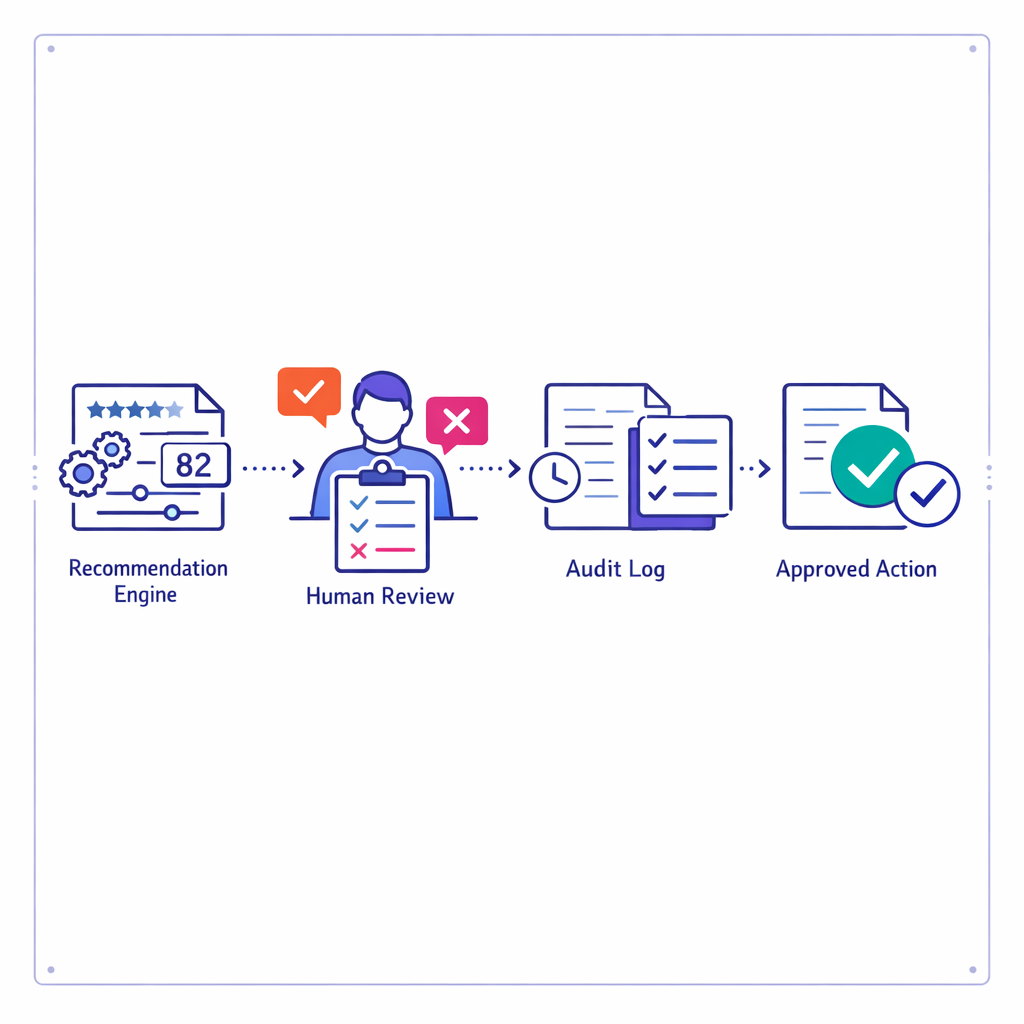
When models, scoring rules, or automated recommendations are part of the process, governance needs to extend beyond data handling. The NIST AI Risk Management Framework provides a useful structure for governing, mapping, measuring, and managing AI-related risk. In plain terms, teams should be able to explain how a recommendation was generated, who reviewed it, and what changed after it was used.
Cross-functional workflows
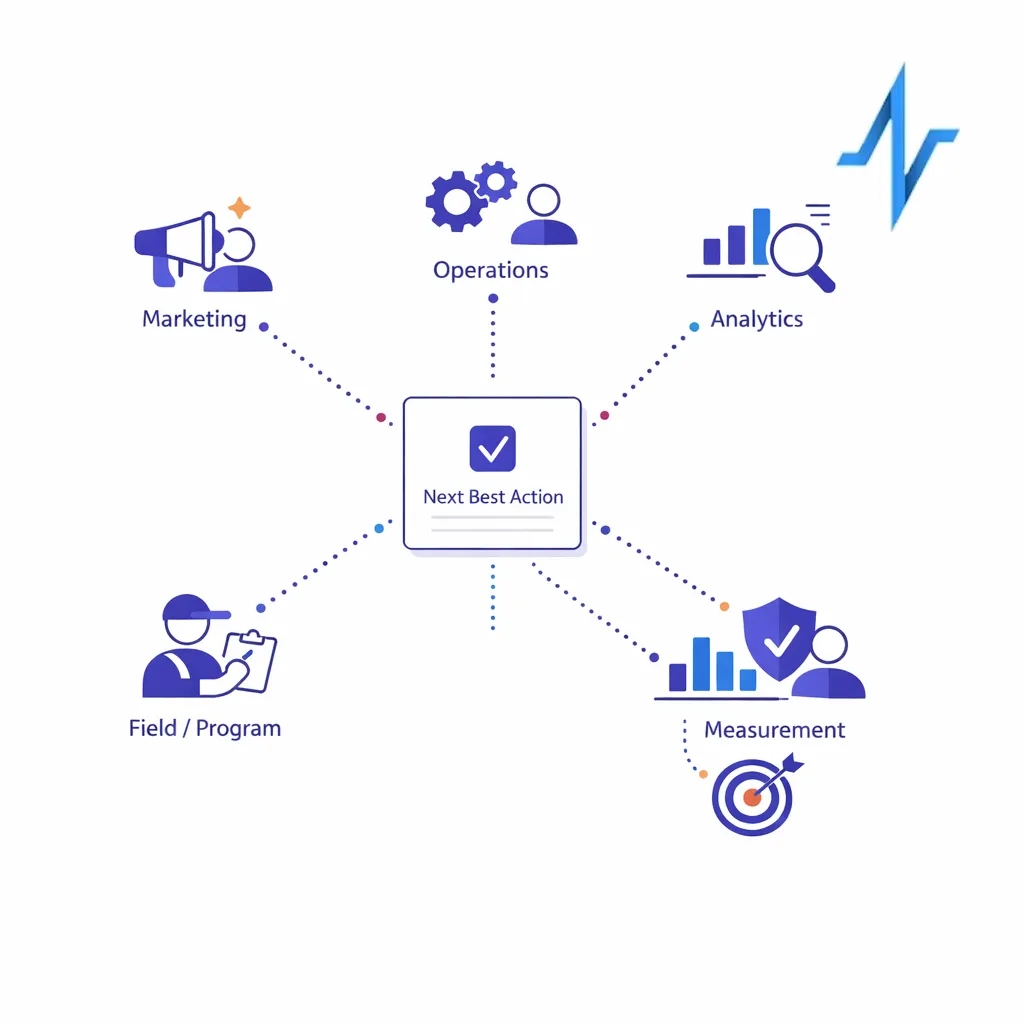
In pharma, actionable insights usually sit between teams, not inside one team. Marketing identifies the question, ops defines the workflow, analytics builds the logic, compliance reviews the guardrails, and field or program teams execute the action. The operating model matters as much as the model itself.
Metrics that matter more than surface engagement
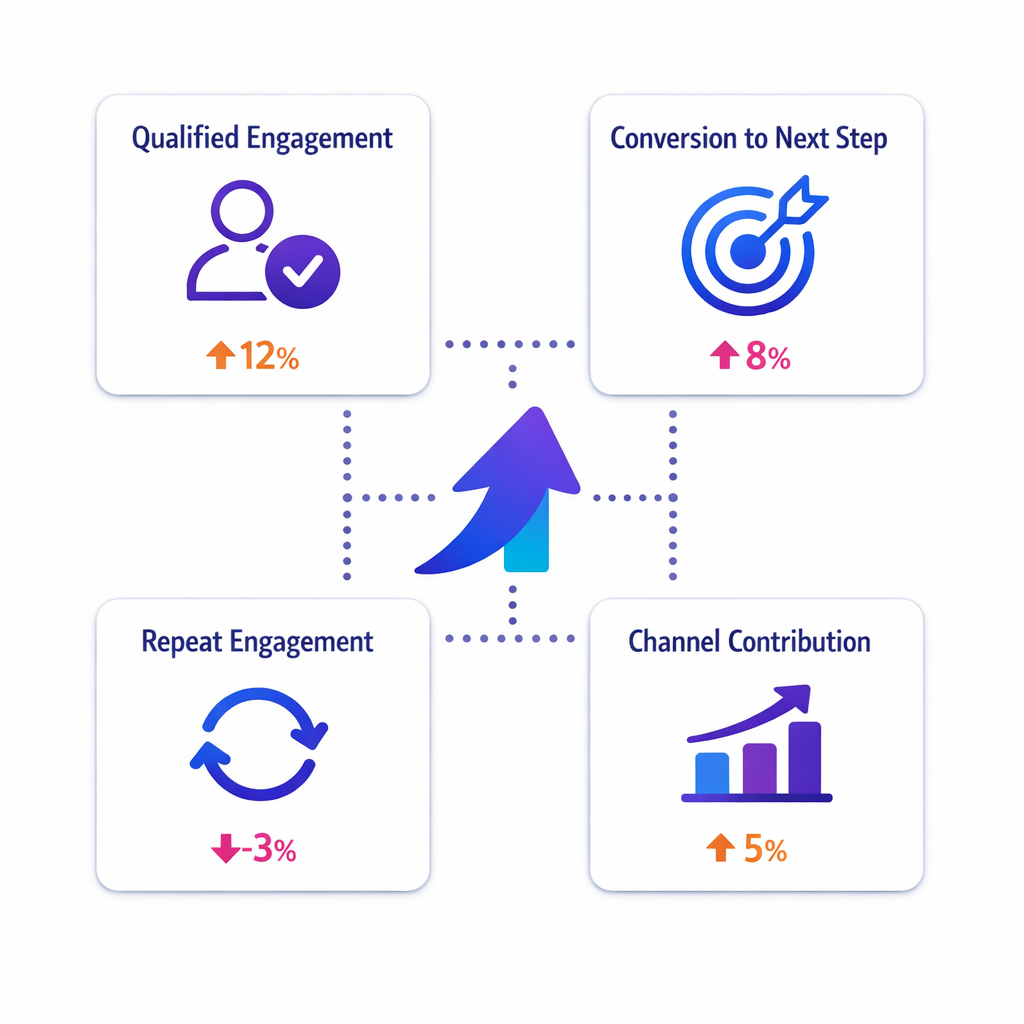
Surface engagement still has a role, but stronger healthcare analytics programs emphasize metrics that connect activity to progression.
- Qualified engagement: interactions that signal relevance, not just exposure.
- Conversion to the next step: the share of users who move from one intended stage to the next.
- Repeat engagement: whether an audience comes back or continues through the journey.
- Channel contribution: which channels influence progression, not just reach.
- Segment response: how different specialties, territories, or audience cohorts behave.
- Downstream impact: whether the action improved business-relevant outcomes after the recommendation was used.
These are the measures that help brand teams and commercial ops leaders decide what to do next. They are also more useful for omnichannel measurement because they reveal whether coordination across channels is actually working.
Common mistakes and misconceptions
- “More data automatically means better insight.” It usually means more noise unless the business question is clear.
- “A dashboard is the same thing as an insight.” Dashboards organize information. Insights change decisions.
- “One engagement metric works for every audience.” HCP journeys, patient journeys, and field workflows often need different definitions of success.
- “Automation removes the need for human judgment.” In regulated settings, human review often becomes more important as automation increases.
- “Compliance only slows action down.” Well-designed governance reduces ambiguity and makes it easier to scale trusted actions.
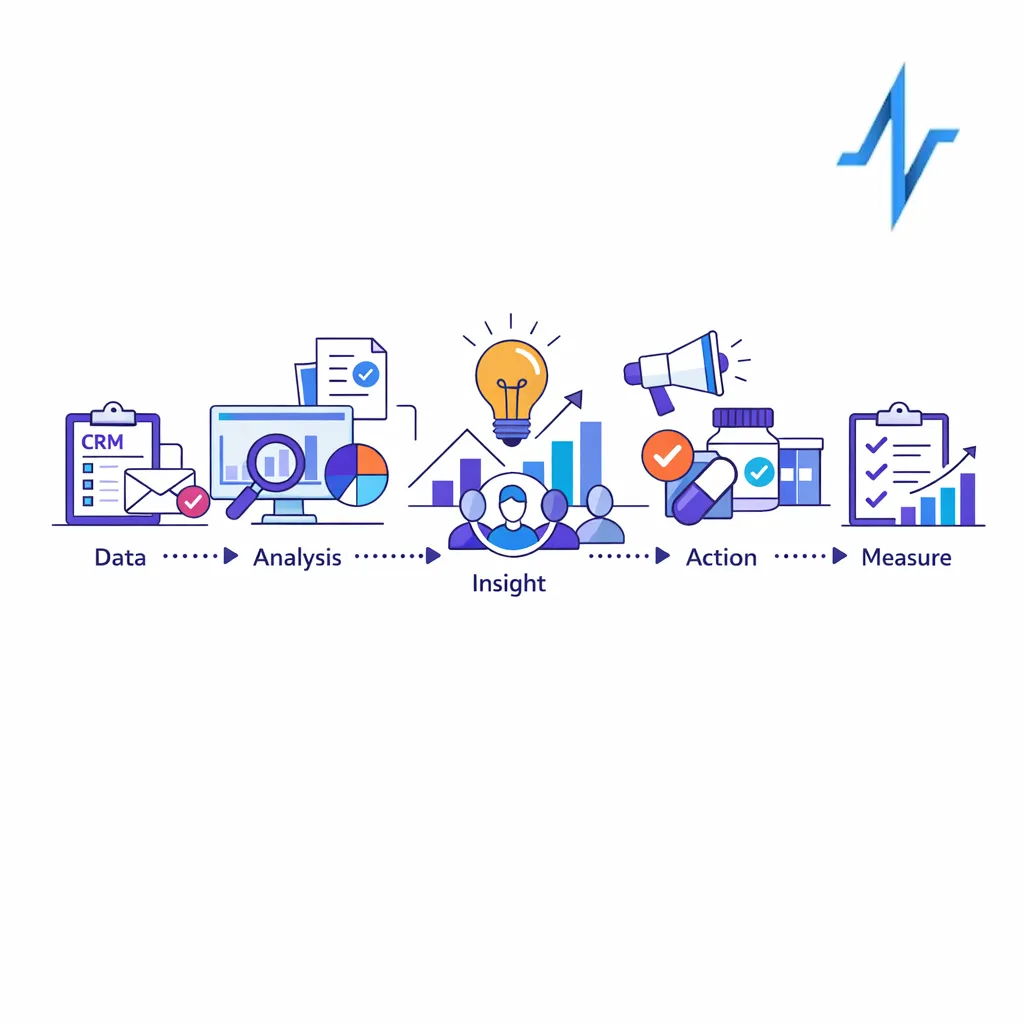
Featured framework: from raw data to next-best action
- 1. Data: collect the minimum relevant signals from the systems tied to the decision.
- 2. Analysis: organize the data by audience, timing, content, and outcome.
- 3. Insight: identify the pattern that explains what changed and for whom.
- 4. Action: assign a specific next step, owner, channel, and time window.
- 5. Measurement: track whether that action improved the intended outcome.
That simple sequence is the core of turning data into actionable insights. It is also the difference between passive reporting and active decision support.
FAQ
What is an actionable insight?
An actionable insight is a finding that directly informs a decision. It goes beyond describing performance and tells a team what to do, for which audience, at what moment, and how the result should be measured.
What is an example of an actionable insight?
An example would be learning that newly engaged cardiology HCPs respond better when educational content is followed by rep outreach within a short time window. The action is to change the follow-up rule for that segment and measure lift in the next desired step.
How do you turn healthcare data into actionable insights?
Start with a narrow business question, connect the smallest useful set of data, segment the audience, identify meaningful patterns, turn the finding into a clear next-best action, and measure whether the action improved the outcome. In healthcare and pharma, the process also needs privacy, review, and governance controls built in from the start.
What makes an insight actionable in pharma?
In pharma, an insight becomes actionable when it is specific, timely, feasible, measurable, and compliant with the organization’s governance model. If a team cannot execute it through an approved workflow, it is not operational yet.
What to do next
- Choose one high-value decision, such as HCP follow-up timing or patient journey drop-off.
- List the exact data sources required to answer that question and ignore the rest for the first pass.
- Define one decision-ready metric, not ten surface metrics.
- Document the next-best action, the owner, the approval path, and the success measure before launch.
- Review results quickly and feed the learning back into the next cycle.
Turn engagement data into better decisions
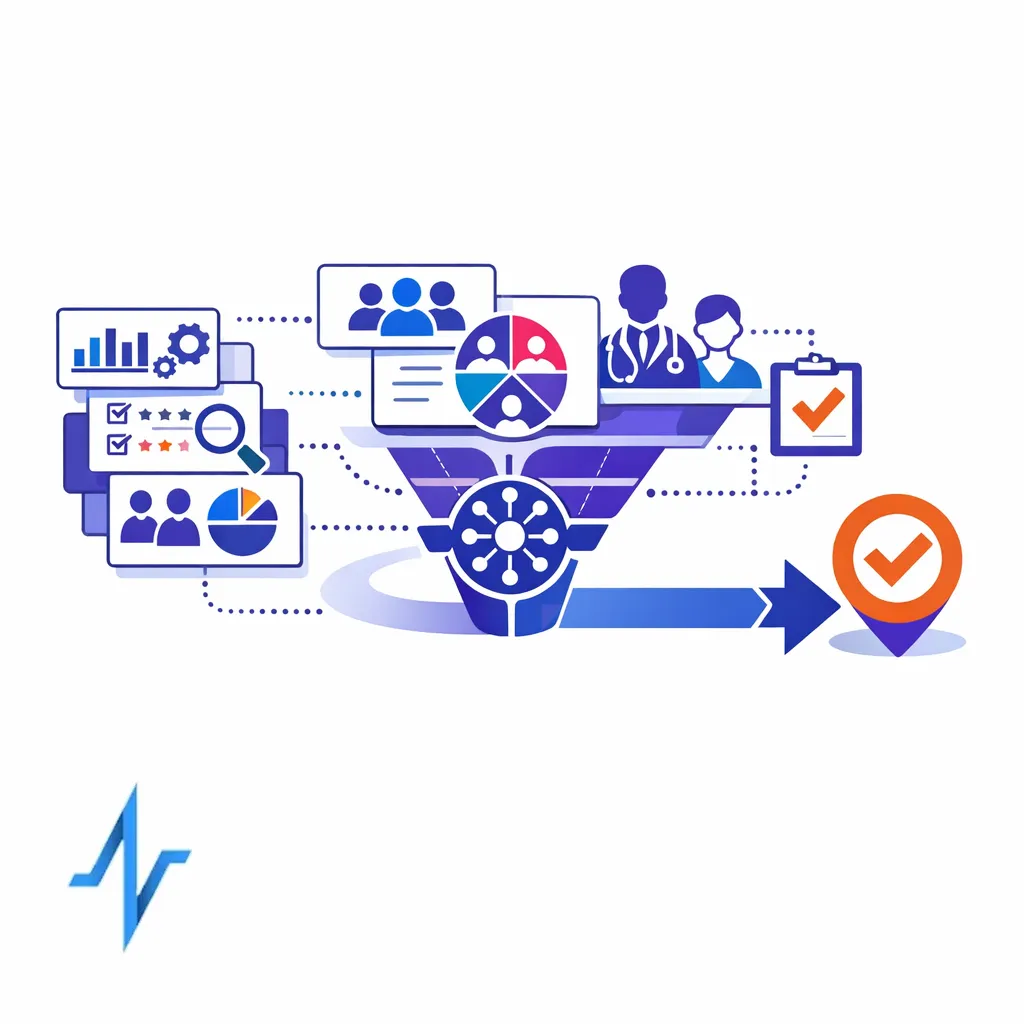
If your team is trying to improve HCP engagement, patient education, identity and measurement, or omnichannel orchestration, the next step is not another dashboard. It is a governed workflow that turns healthcare data insights into actions your teams can actually execute.
Request a Demo to see how Pulse Health helps teams move from reporting to next-best action, or See How Pulse Health Works if you want a practical view of the platform, the operating model, and the integration approach behind measurable commercial decisions.