
US pharma teams are expected to deliver relevant, coordinated HCP experiences across reps, email, SMS, and digital, while still moving at brand speed and staying compliant. The challenge is not “more channels.” It is turning real signals into the right next step, then executing consistently across systems and teams.
This guide is for brand teams, omnichannel leads, commercial ops, marketing ops, CRM owners, and agency partners who need a practical blueprint for pharma orchestration and HCP journey orchestration. You will learn how trigger-based marketing in pharma works end-to-end, what decisions belong in orchestration versus channel tools, and how to design an HCP engagement workflow that aligns field and digital execution.
What “pharma orchestration” actually means
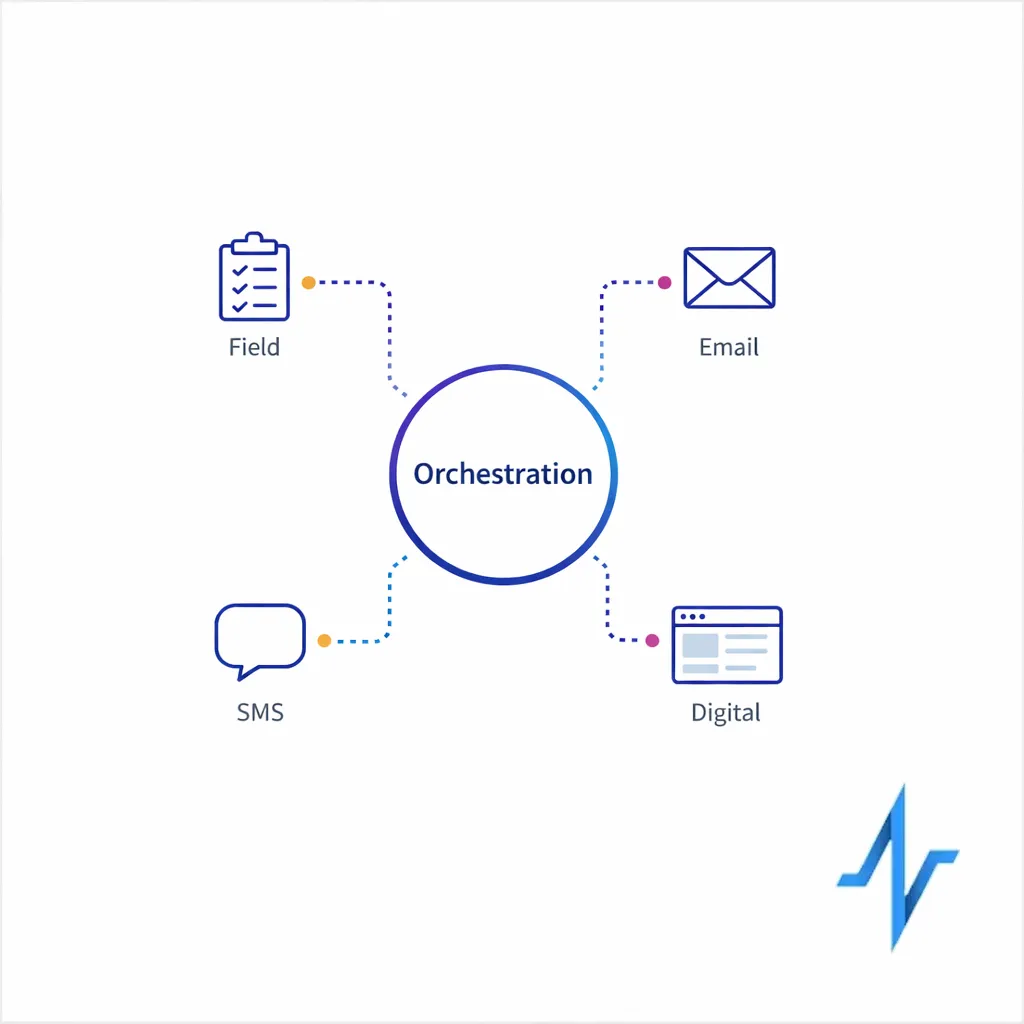
Pharma orchestration is the discipline of deciding what should happen next for a given HCP (or account) and then coordinating how it happens across channels and teams. It is broader than campaign automation because it includes decisioning, guardrails, and cross-channel sequencing, not just sending messages.
In an omnichannel execution model for life sciences, orchestration becomes the “traffic controller” between data signals, content, and channel delivery. The outcome is a measurable, repeatable system for next best action pharma marketing rather than a set of disconnected tactics.
The building blocks of trigger-based HCP journey orchestration
1) Triggers (signals) that start or change the journey
Triggers are events or conditions that indicate intent, readiness, or a change in status. Good triggers are timely, attributable, and action-oriented, so they can power a trigger-based marketing pharma approach without guesswork.
- Behavioral: site engagement, webinar attendance, email interactions, sample or resource requests
- Field-driven: call outcomes, objections logged, follow-up commitments, formulary or access updates from the territory
- Data-driven: new prescriber, changing adoption patterns, specialty/role changes, account-level changes
2) Identity and consent (who is this, and what are we allowed to do?)
Orchestration depends on reliable identity resolution so the “same HCP” is not treated as multiple people across CRM, email, SMS, and digital platforms. In parallel, consent and preferences must be captured and enforced per channel, so compliant HCP messaging is embedded in the workflow, not handled manually at send time.
3) Decisioning (the rules that pick the next step)
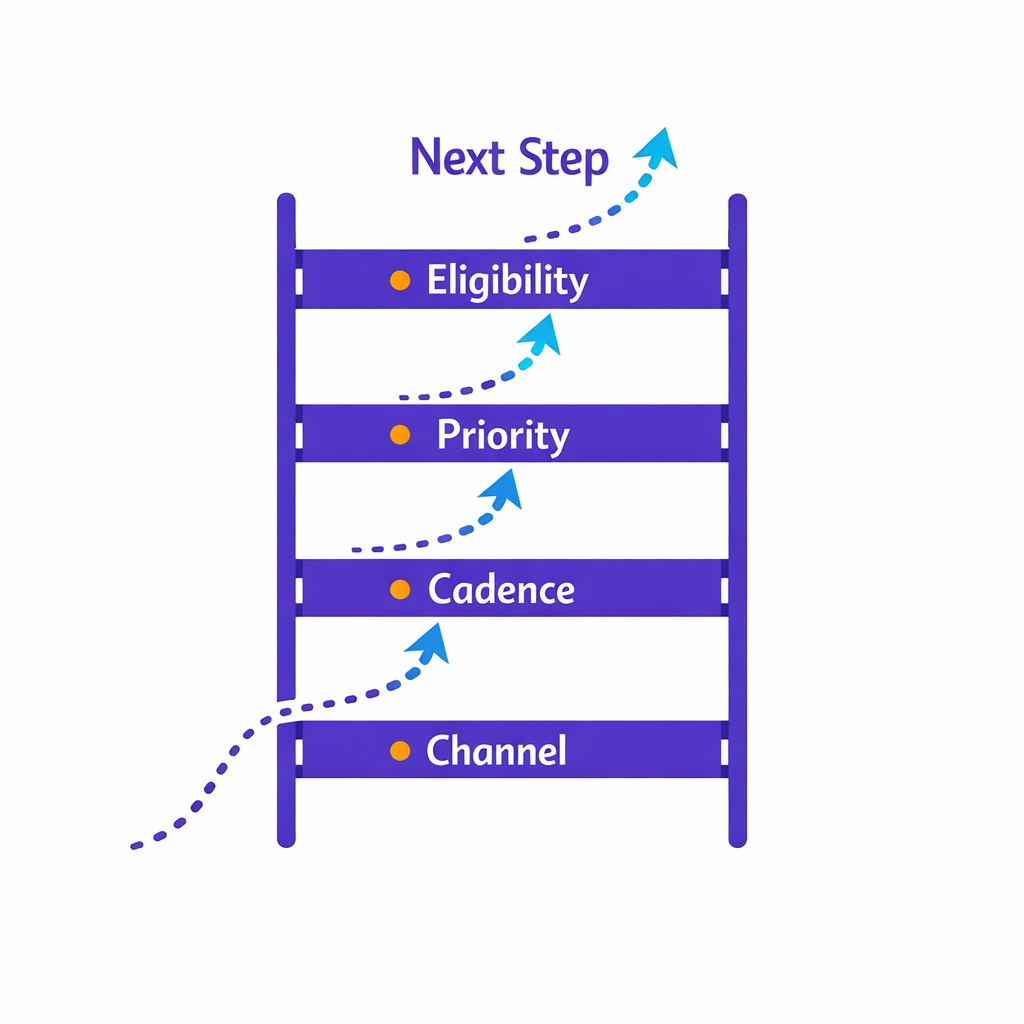
Decisioning can be rule-based, model-assisted, or hybrid. Regardless of sophistication, orchestration needs explicit logic for eligibility, prioritization, and sequencing so that “next best action” is explainable, auditable, and operationally maintainable.
- Eligibility: who can receive what, and under what conditions
- Priority: when multiple triggers fire, what wins
- Cadence: how often, how soon, and when to pause
- Channel selection: field task vs email vs SMS vs digital retargeting
4) Content and modular assembly
HCP journeys work best when content is designed as modular building blocks: indication-safe claims, balanced risk language where needed, and clear “what to do next” steps. This makes it easier to scale across segments while maintaining consistency and reducing repeated review cycles.
5) Execution across systems (the handoffs)
Orchestration is rarely “one platform does everything.” A practical CRM orchestration pharma architecture coordinates between CRM (field), marketing automation (email), messaging vendors (SMS), and ad platforms (digital), with consistent IDs, suppression logic, and logging.
6) Measurement and closed-loop learning
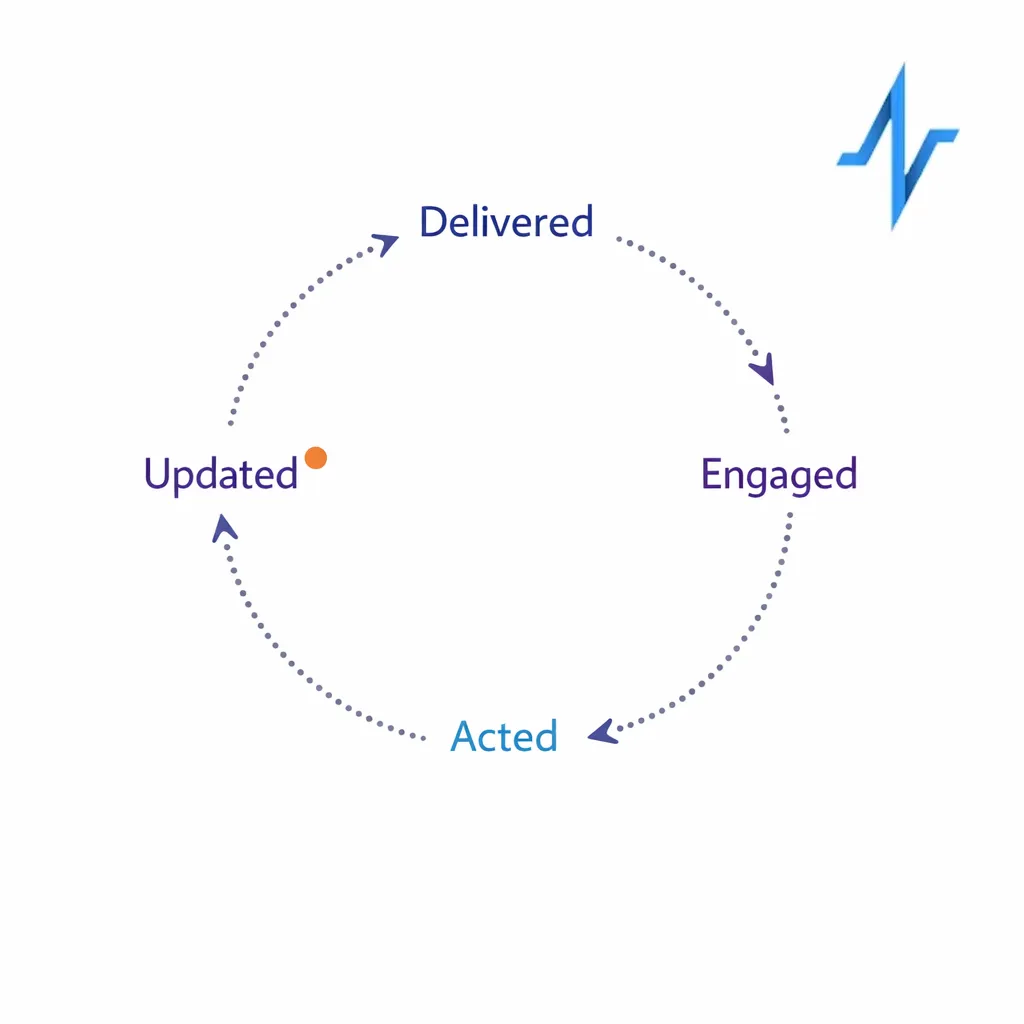
To improve over time, each step in the journey needs outcome tracking: delivered, engaged, acted, and advanced. Measurement should connect to business questions (coverage, engagement quality, rep productivity, progression to next stage), not just channel metrics.
Where triggers come from (and how to make them usable)
Most teams have plenty of signals, but only a small subset are “journey-ready.” The goal is to standardize triggers so they are consistent, trustworthy, and actionable across brand teams, agencies, and commercial ops.
Field triggers
Field signals are often the highest-intent triggers because they reflect real conversations. Examples include call outcomes, documented objections, request for specific resources, or a rep-logged commitment like “send patient starter materials.”
- Make it usable: define a small set of structured call outcomes and follow-up reason codes
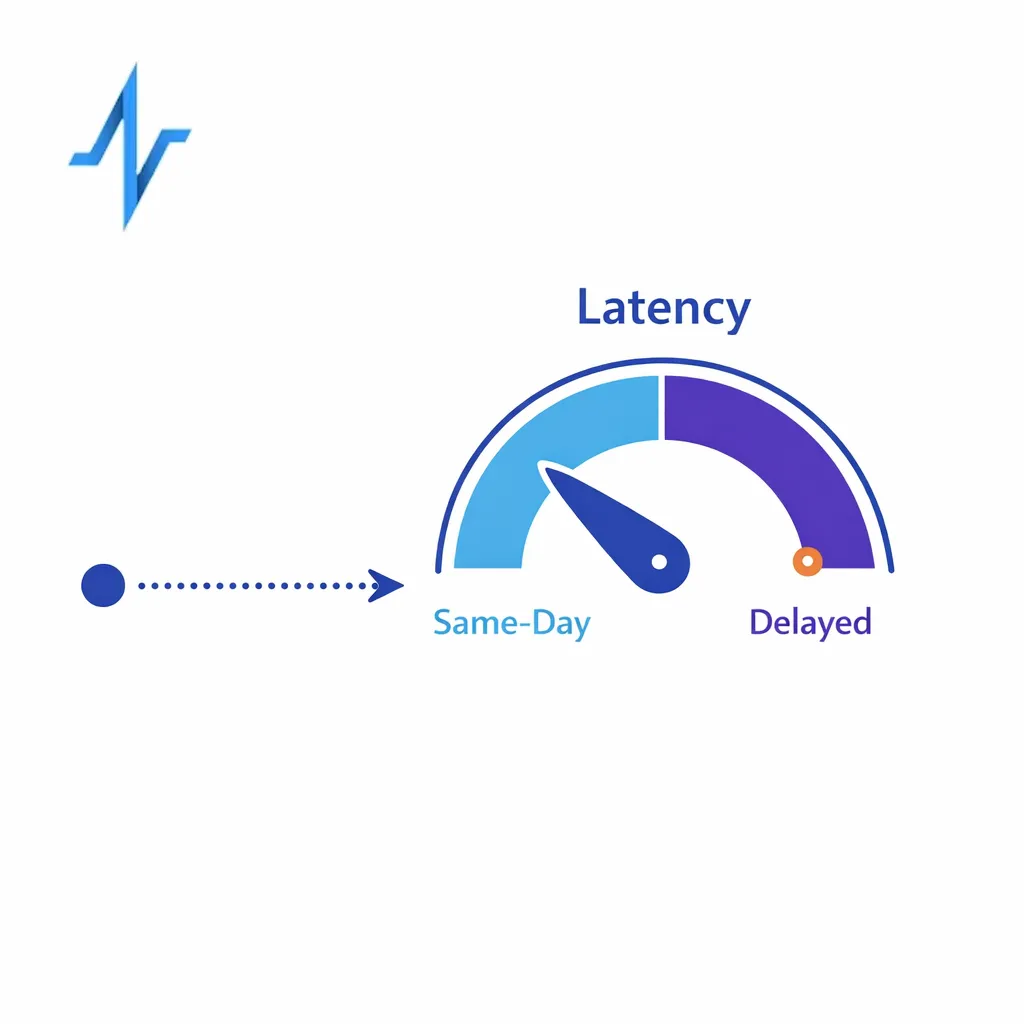
- Make it timely: push events same-day so orchestration can respond while context is fresh
- Make it coordinated: automatically suppress digital touches when a rep follow-up is pending
Email triggers
Email is still a core channel for HCP engagement workflows, but it only works when it is integrated into a broader sequence. Opens and clicks can be useful, but “high-signal” triggers are usually downstream actions like a resource request or a verified RSVP.
When using commercial email, ensure your workflow and operations meet requirements described in the CAN-SPAM Act compliance guidance, including identification, opt-out handling, and honoring unsubscribe requests promptly.
SMS triggers
SMS can be powerful for time-sensitive logistics (confirmations, reminders) and, when appropriate, opted-in promotional or educational messages. In the US, SMS programs should be designed with consent, opt-out, and governance consistent with the FCC’s consumer guidance on unwanted robocalls and texts (TCPA-related).
- Make it usable: reserve SMS for specific moments (confirmation, reminder, urgent update) rather than “another blast channel”
- Make it safe: apply stricter frequency caps and quiet hours than email
Digital triggers
Digital triggers often arrive as engagement events from HCP portals, media exposure, or educational content interactions. The orchestration challenge is separating “anonymous interest” from known HCP identity, then deciding whether the next step should be digital-only, a rep task, or a permissioned direct message.
A practical trigger-based journey example (field + email + SMS + digital)
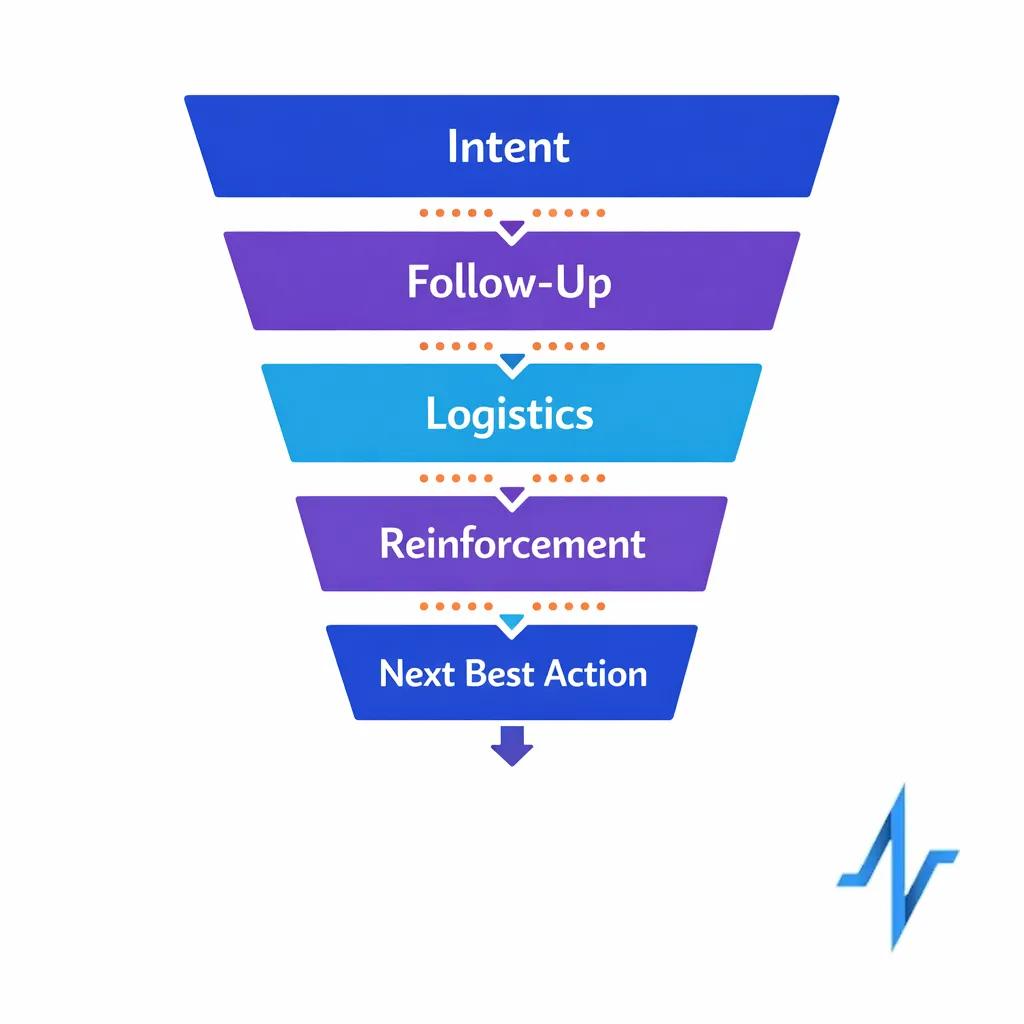
Below is an example pattern you can adapt for a brand initiative such as an indication education push, a guideline update, or a formulary change. The point is not the exact steps, but how the orchestration layer coordinates sequencing, suppression, and handoffs to support field and digital alignment in pharma.
Stage 1: Detect intent and assign the right owner
- Trigger: HCP downloads a dosing guide from an authenticated portal
- Decision: if the HCP is “field-eligible” and no recent rep contact exists, create a rep task; otherwise route to a digital follow-up sequence
- Execution: CRM task for the rep plus suppression of overlapping promotional email for 72 hours
Stage 2: Deliver an immediate, compliant follow-up
- Trigger: rep marks “left voicemail; requested resources” or the portal download event confirms interest
- Decision: send a single follow-up email with the requested resource and a clear next step (for example: request additional materials)
- Execution: marketing automation send with opt-out compliance and logging back to the HCP profile
Stage 3: Use SMS selectively for logistics (not redundancy)
- Trigger: HCP schedules a brief educational call or requests a reminder
- Decision: send an SMS reminder only if consent is present and frequency caps allow
- Execution: SMS vendor delivery, with immediate opt-out capture and status written back to the orchestration record
Stage 4: Reinforce digitally without overwhelming
- Trigger: no response to email within a defined window, but the HCP remains in a “high relevance” segment
- Decision: start a short digital reinforcement flight and hold further direct messages until a new trigger appears
- Execution: digital activation tied to the same journey stage for consistent reporting
Stage 5: Close the loop into next best action
Every interaction should update journey state so the next best action pharma marketing logic stays accurate. If the HCP engages, the workflow can advance to deeper education or a rep follow-up; if they disengage, cadence decreases and the journey pauses.
Compliance and omnichannel governance (the parts you cannot “bolt on”)
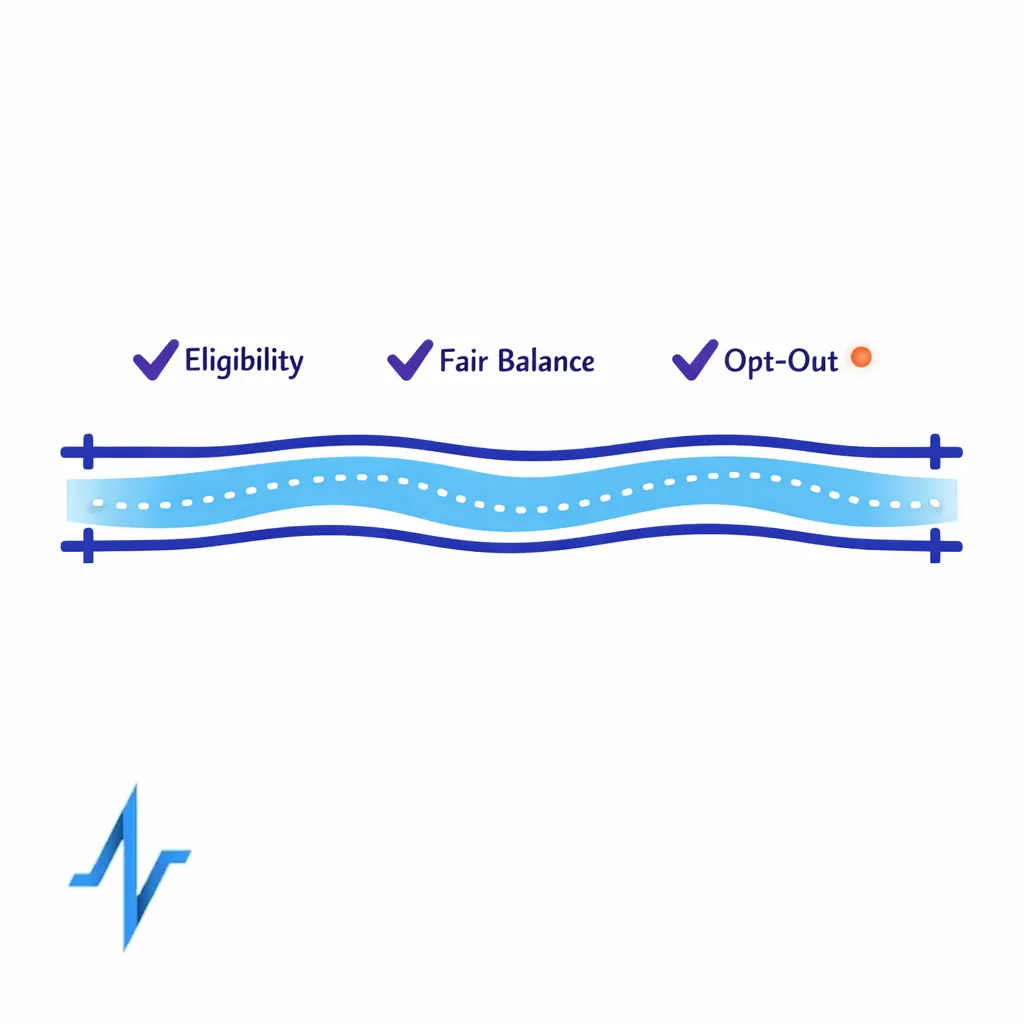
Effective pharma marketing automation orchestration is built to operate inside promotional, privacy, and interactions governance. This is not just about avoiding risk; it is how you scale execution without creating one-off exceptions.
Promotional standards: fair balance, labeling, and oversight
For prescription drug promotion, teams should design journeys so promotional claims and risk information are handled consistently with requirements described in 21 CFR 202.1 (prescription drug advertising). The operational reality is that orchestration must know which assets are promotional, which are non-promotional, and which require specific disclosures or risk presentation.
In the US, the FDA’s Office of Prescription Drug Promotion (OPDP) provides oversight related to prescription drug promotion, which is why many teams bake review, approval status, and expiration dates directly into the orchestration metadata.
Interactions, value, and transparency
If your journeys include items of value (meals, travel, certain fees, or other transfers), your operational logging should support transparency expectations. Public reporting of certain transfers of value to covered recipients is central to the CMS Open Payments program, which makes governance and accurate attribution part of the orchestration design, not an afterthought.
Many companies also align policies with industry standards such as the PhRMA Code on interactions with health care professionals, which can influence how you structure field touchpoints, educational events, and permissible support within journeys.
Operational guardrails that scale
- MLR-friendly content strategy: modular assets, clear intended use, explicit channel eligibility
- Frequency caps and suppression: prevent channel pile-on and reduce HCP fatigue
- Auditability: log triggers, decisions, and deliveries so “why did this happen?” is answerable
- Expiration and recall: automatic removal of outdated assets from active journeys
What’s new: why orchestration matters more now
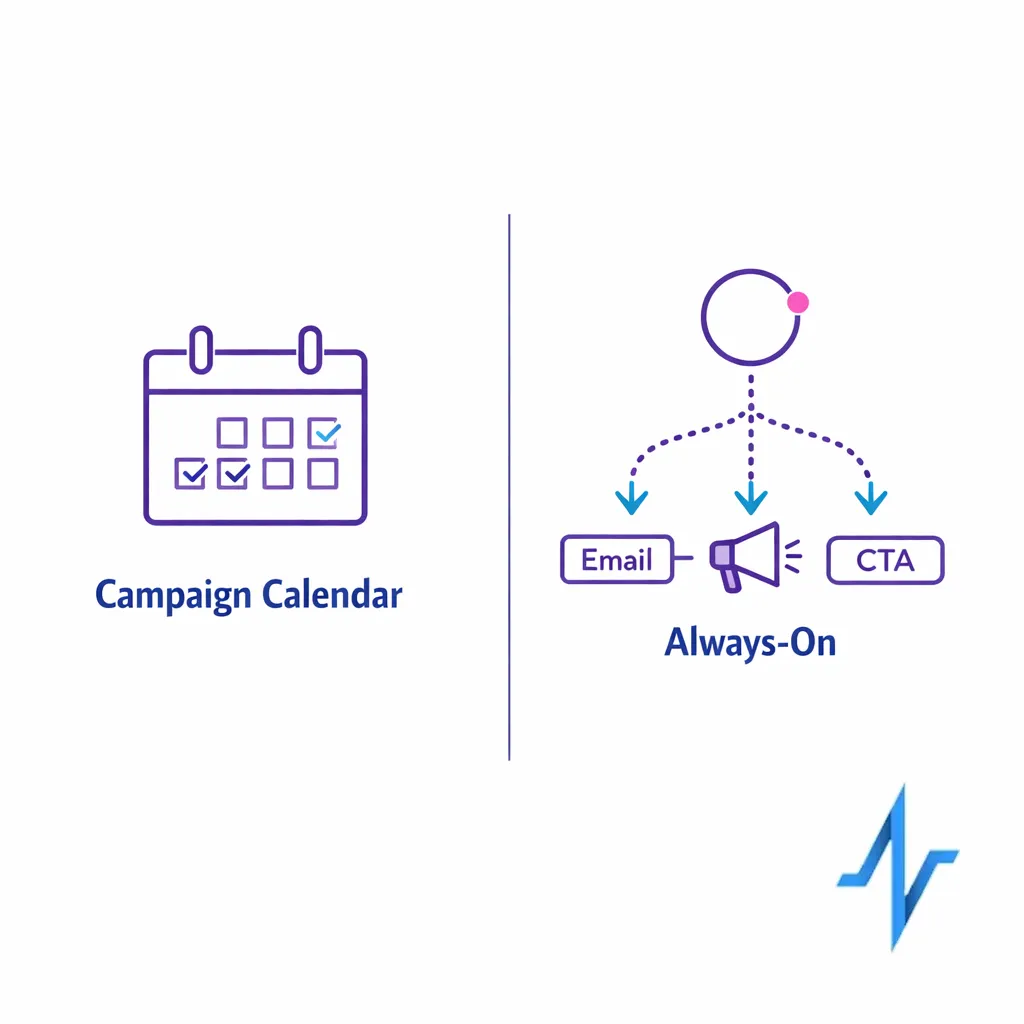
Even if your channel tools are strong, orchestration is becoming the differentiator because execution complexity is compounding. Journeys now span more vendors, more data sources, and more operational stakeholders, while HCP attention is harder to earn and easier to lose.
In practice, this is pushing teams away from static “campaign calendars” and toward always-on decisioning: fewer, better touches; more responsive field support; and measurement that ties engagement to progression. For omnichannel leads, the win is a system that can flex when the market shifts without rebuilding everything from scratch.
Common mistakes and misconceptions
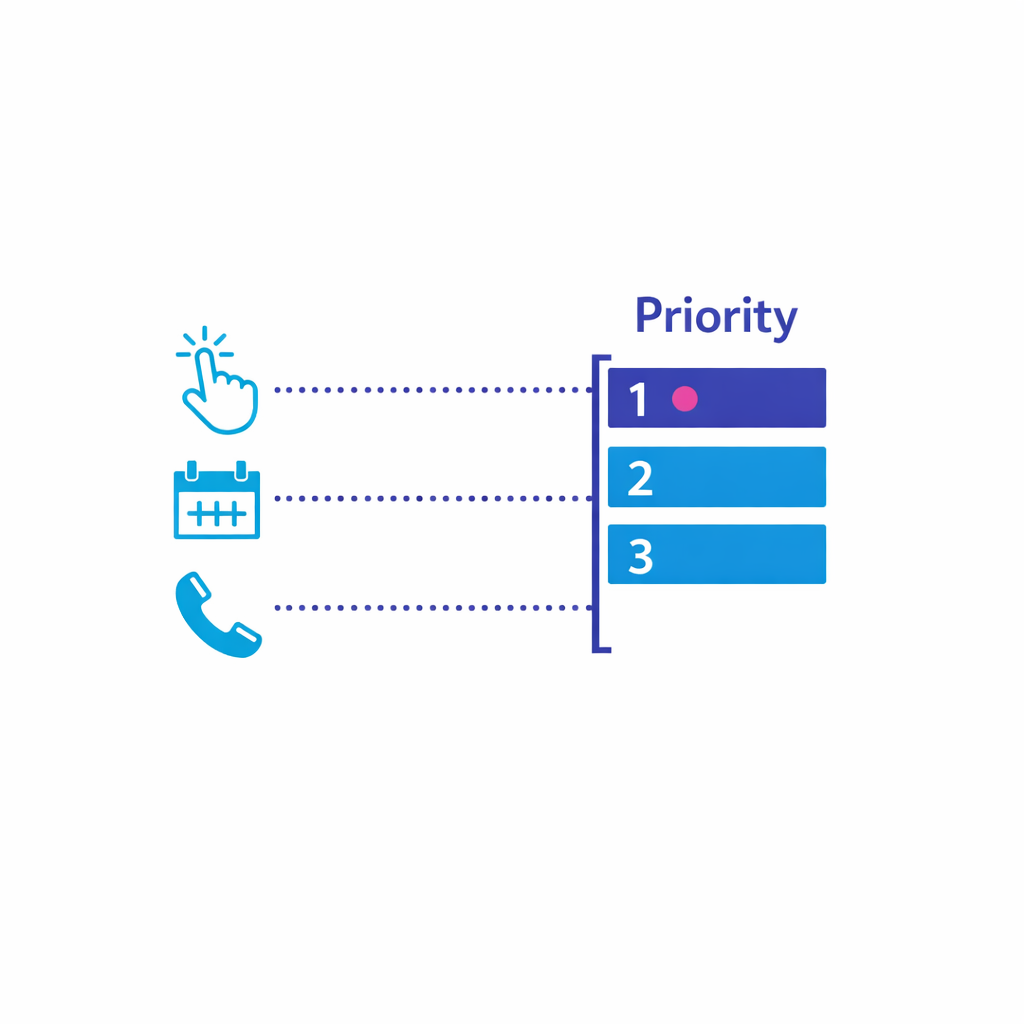
Mistake: treating orchestration as “just sending more messages”
Orchestration is not a volume strategy. If you do not have suppression logic, prioritization, and clear exit criteria, adding channels tends to increase noise and compliance burden rather than improving outcomes.
Mistake: building journeys without explicit field alignment
Field and digital alignment in pharma is not achieved by putting reps “in the loop” on a slide. It requires operational rules: when a rep task should preempt digital, how long suppression lasts, and what constitutes completion.
Mistake: assuming next best action must be a black box
Next best action works when stakeholders trust it. Start with transparent rules, document the intent of each rule, and only add model-driven prioritization when your trigger quality and measurement are stable.
Mistake: measuring only channel metrics
Opens, clicks, and impressions are useful diagnostics, but orchestration success is better assessed by journey progression, time-to-follow-up, rep productivity signals, and consistent stage movement across segments.
How to operationalize orchestration across teams and partners
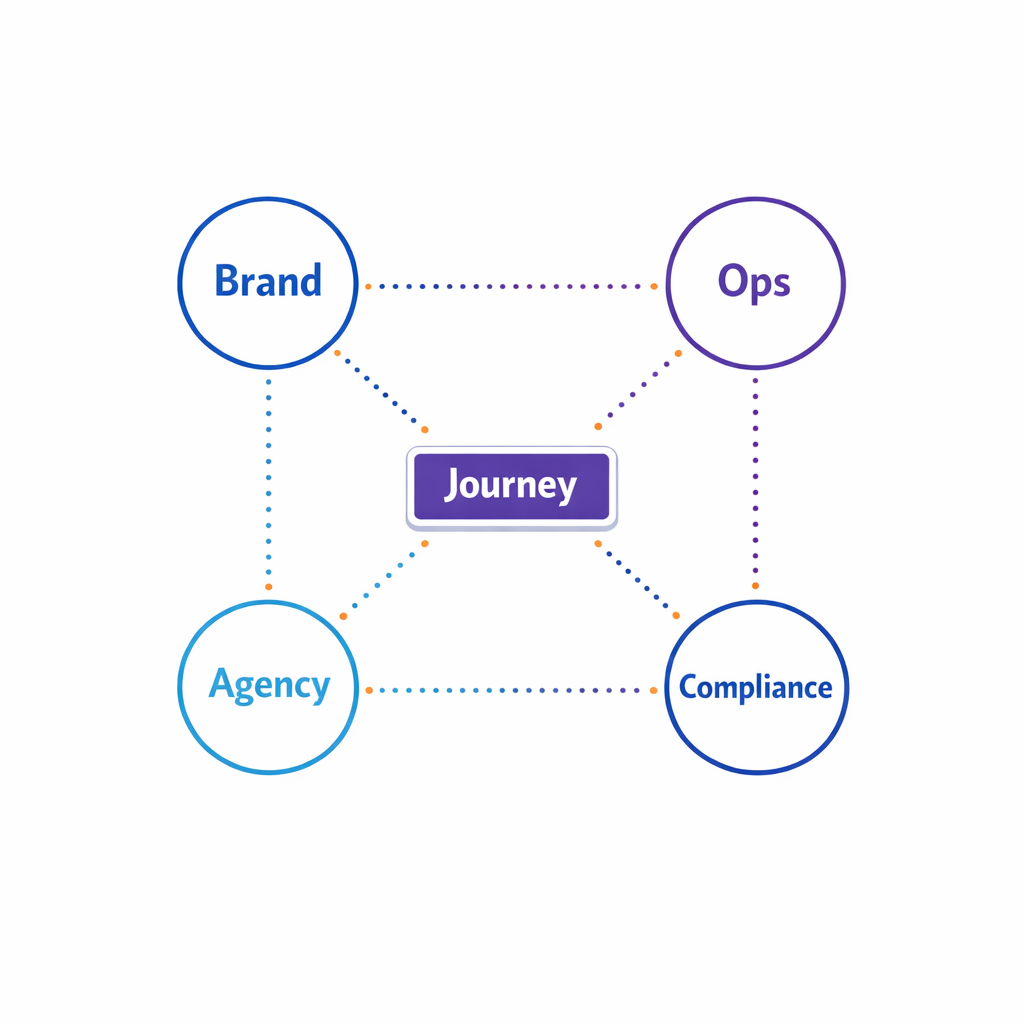
Orchestration succeeds when ownership is explicit and the workflow is designed for handoffs. Most organizations benefit from a shared operating model where brand teams define the intent, ops teams industrialize execution, and agencies help build and optimize within guardrails.
- Brand and omnichannel leads: define journey stages, triggers, and experience principles
- Commercial ops / CRM owners: standardize data, identity, field workflows, and logging
- Marketing ops: implement segmentation, suppression, and channel execution patterns
- Agency partners: develop modular content and testing plans that fit the orchestration logic
- Compliance and legal: clarify categories, review routes, and audit expectations
What to do next (checklist)
- Pick one high-value journey: start with a measurable use case (for example: post-field follow-up, formulary update, event-to-rep handoff).
- Define “journey-ready” triggers: document trigger definitions, required fields, and acceptable latency.
- Map consent and preferences: ensure email and SMS eligibility logic is enforceable at execution time.
- Write decision rules in plain language: eligibility, priority, frequency caps, suppression windows, and exit criteria.
- Design modular assets: label content by intended use, channel suitability, and approval status.
- Instrument measurement: track stage progression and outcomes, not only channel engagement.
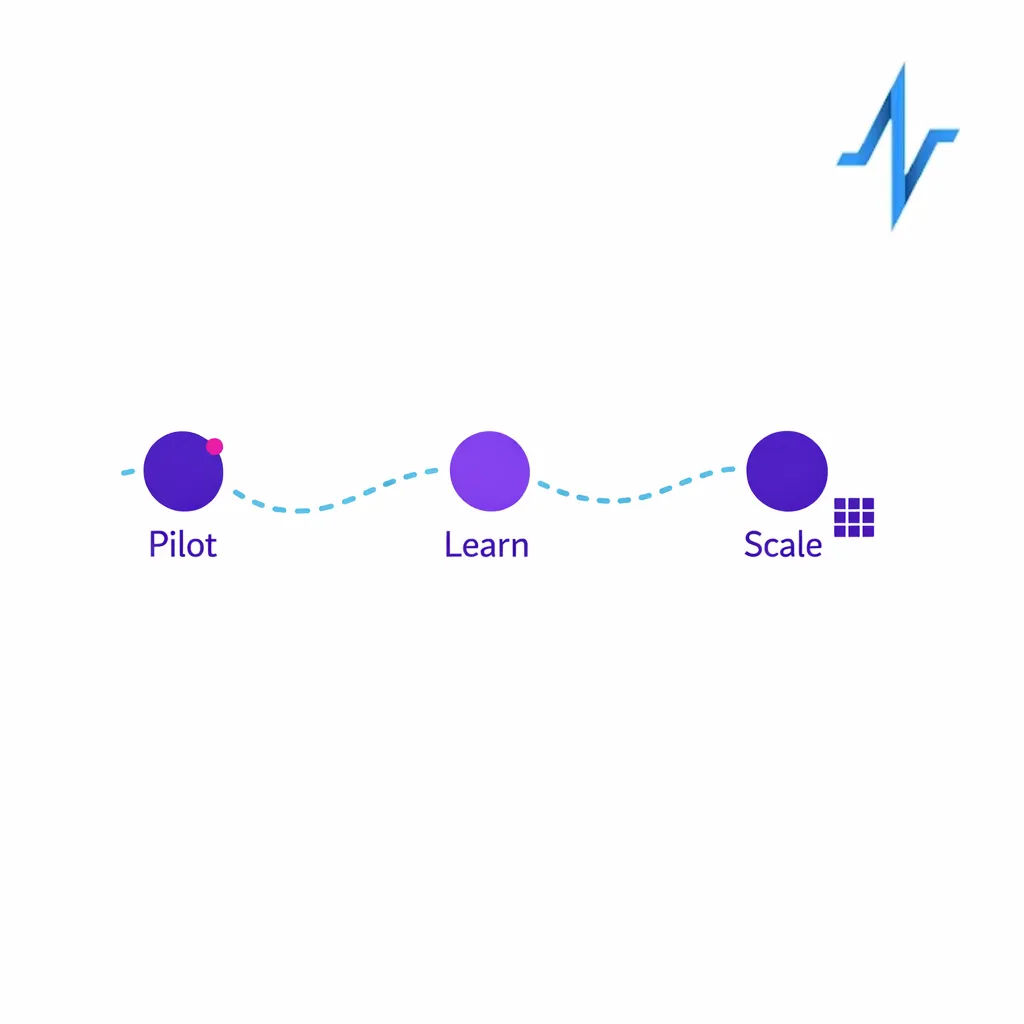
- Run a controlled pilot: test with one segment or one region, then expand with what you learn.
- Operationalize governance: build audit logs and expiration handling into the workflow.
Build compliant trigger-based journeys with Pulse Health
If your team is trying to coordinate field, email, SMS, and digital without duplicating effort across tools, an orchestration layer can simplify execution while strengthening omnichannel governance pharma teams need. Pulse Health is designed to help teams build trigger-based HCP journeys that are explainable, auditable, and practical for day-to-day operations.
If you want to see how this can work with your existing CRM, marketing automation, and data stack, you can Request a Demo or Book a Consultation. If you are earlier in the process, you can also Talk to Pulse Health about journey design patterns, integration options, and how to structure decisioning so it scales across brands.